Partially Different Mechanisms of Social and Nonsocial Attention: Evidence From Changes in Cueing Effects and Underlying Frontal Cortex Processing Over Time
Michael K. Yeung, Yvonne M. Y. Han

TL;DR
This study shows that social cues like gaze and nonsocial cues like arrows use partly different brain mechanisms for attention, with gaze cues showing stronger effects over time.
Contribution
This is among the first studies to demonstrate partially distinct psychological and neural mechanisms for social and nonsocial attention over time.
Findings
Gaze cues showed a greater alerting effect than arrow cues in the second session.
Gaze cues led to significantly greater activation in the left posterior dorsomedial frontal cortex compared to arrow cues in Session 2.
Behavioral and neural findings suggest partially different mechanisms for gaze and arrow cueing over time.
Abstract
Gaze conveys important information about one's intentions and likely object of reference. Because processes of attention may change over time, for reasons including fatigue or experience, this study aimed to compare mechanisms of gaze and arrow cueing effects by measuring across sessions. On two separate occasions, 39 young adults underwent a cueing paradigm with valid or invalid gaze or arrow cues, as well as neutral cues. Activation in frontal cortex regions implicated in the dorsal and ventral attention networks was examined during task performance using functional near‐infrared spectroscopy. Behavioral results showed comparable orienting (valid vs. neutral) and reorienting (invalid vs. valid) responses following gaze and arrow cues, which did not significantly change over sessions. However, the gaze cue elicited a significantly greater alerting effect (i.e., more benefits from the…
Genes, proteins, chemicals, diseases, species, mutations and cell lines named across the full text — each resolved to its canonical identifier and authoritative record.
Click any figure to enlarge with its caption.
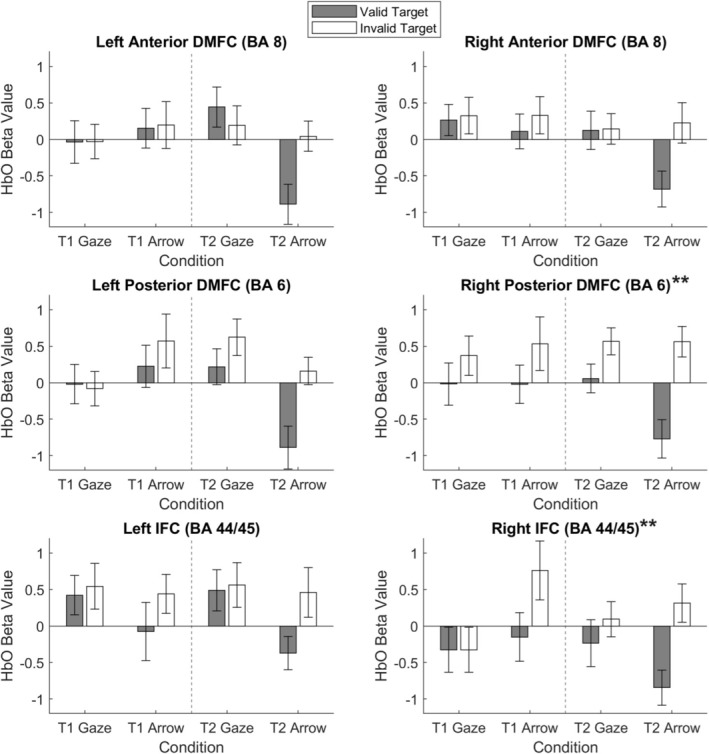 Figure 1
 Figure 2
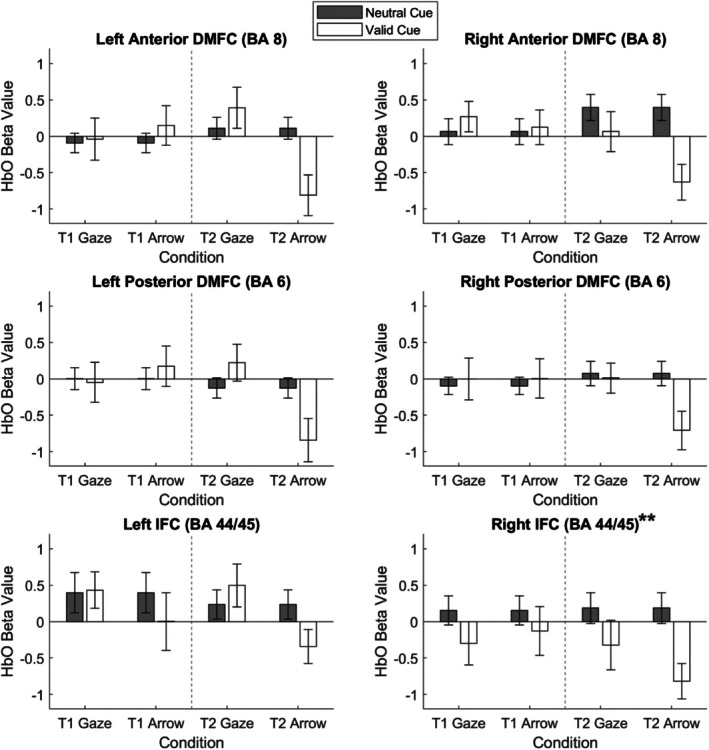 Figure 3
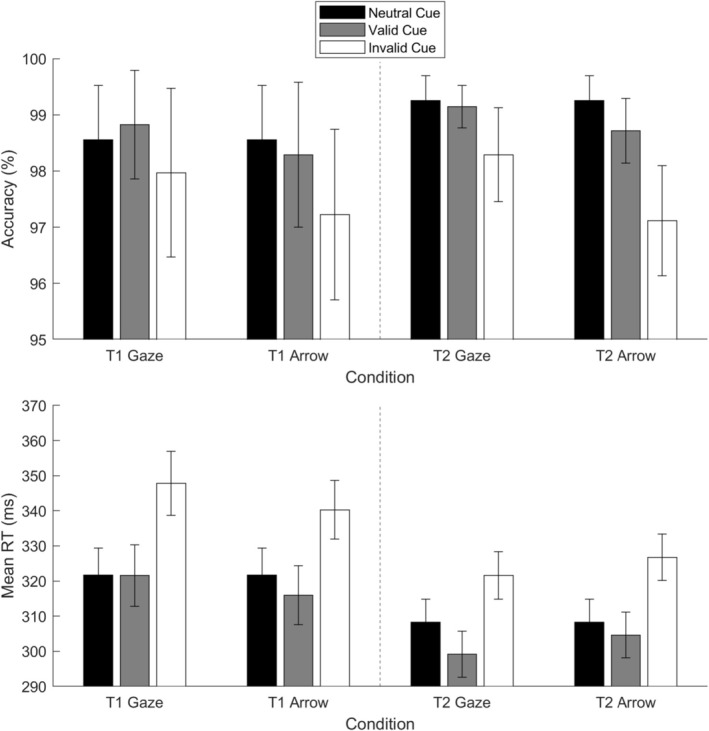 Figure 4
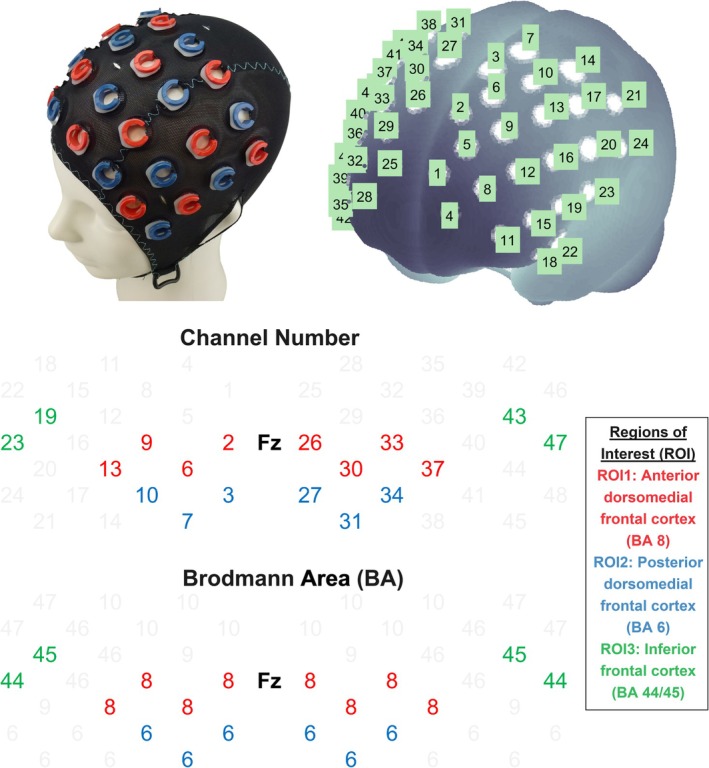 Figure 5
Peer Reviews
No public reviews on file for this paper yet. If you reviewed it on a platform where reviews are public (OpenReview, ICLR, NeurIPS, ICML), you can paste yours below so the community can read it here.
Videos
No videos yet. Explain this paper in a talk, walkthrough, or lecture? Add one.
Taxonomy
TopicsFace Recognition and Perception · Neural and Behavioral Psychology Studies · Memory and Neural Mechanisms