Human islet isolation optimization: Insights from donor and isolation procedural factors
Qin Yang, Yinsheng Xi, Zhihong Yang, Hongping Deng, Zhenjuan Wang, Guoping Li, Kerry Augusta, Shimul Shah, James F. Markmann, Ji Lei

TL;DR
This study identifies factors affecting islet yield during human islet isolation for transplantation, emphasizing donor characteristics and procedural controls.
Contribution
The study reveals new insights into how donor BMI, height, and procedural temperature control influence islet isolation success.
Findings
Higher donor BMI and height over 170 cm are independently associated with successful islet isolation.
Enzyme perfusion temperature exceeding 14°C for ≥50% of the perfusion duration increases isolation failure risk.
A logistic regression model incorporating body surface area, tissue volume, and digestion time moderately predicts isolation success.
Abstract
This study investigated donor and islet isolation procedural factors influencing the islet yield during human islet isolation for transplantation. We retrospectively analyzed 133 islet isolations from deceased donors performed over 15 years at a single center. Isolations were stratified by post-purification islet yield (≥400,000 islet equivalents [IEQ], successful; <400,000 IEQ, unsuccessful) and by intent (clinical vs research). Higher donor body mass index and height over 170 cm were independently associated with successful isolation, whereas an enzyme perfusion temperature exceeding 14°C for ≥50% of the perfusion duration emerged as an independent risk factor for isolation failure. Clinically intended isolations exhibited tighter thermal control during Phase 1 digestion, greater digestion efficiency, and lower undigested tissue weight. A logistic regression model incorporating body…
Genes, proteins, chemicals, diseases, species, mutations and cell lines named across the full text — each resolved to its canonical identifier and authoritative record.
Click any figure to enlarge with its caption.
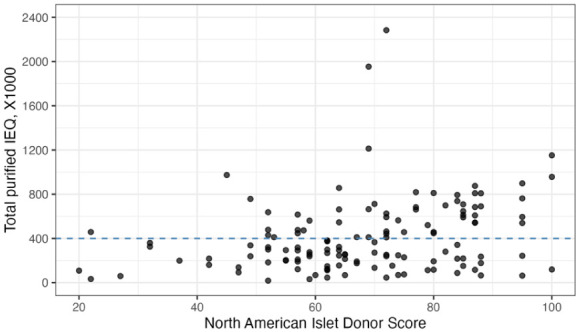 Figure 1
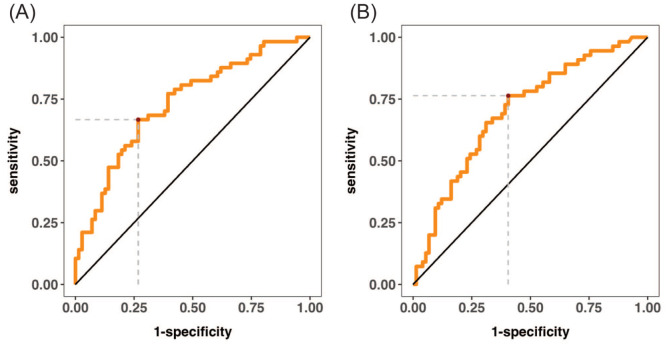 Figure 2
 Figure 3
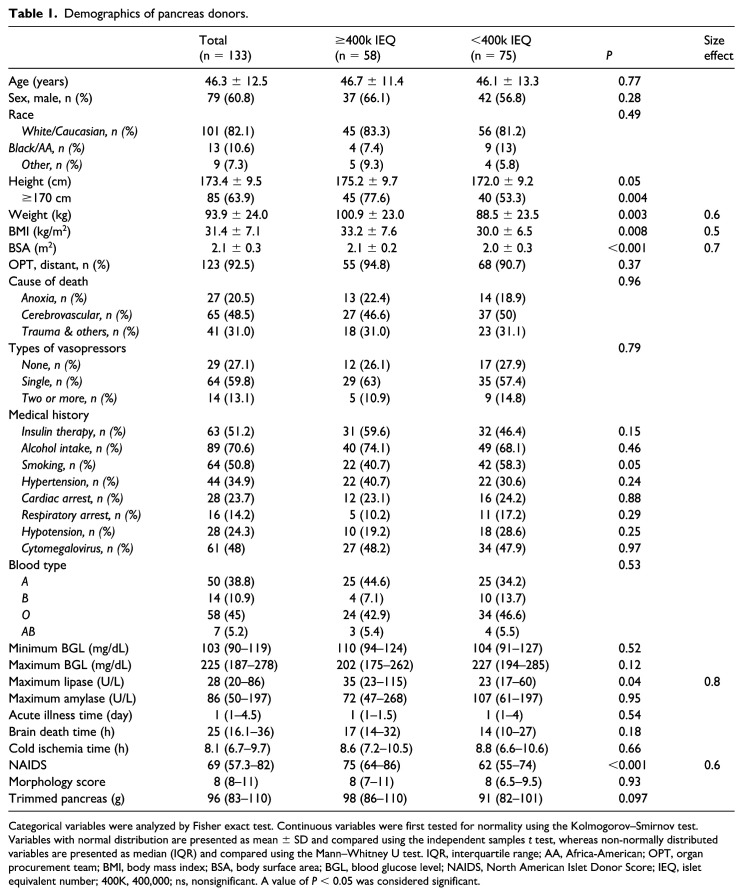 Figure 4
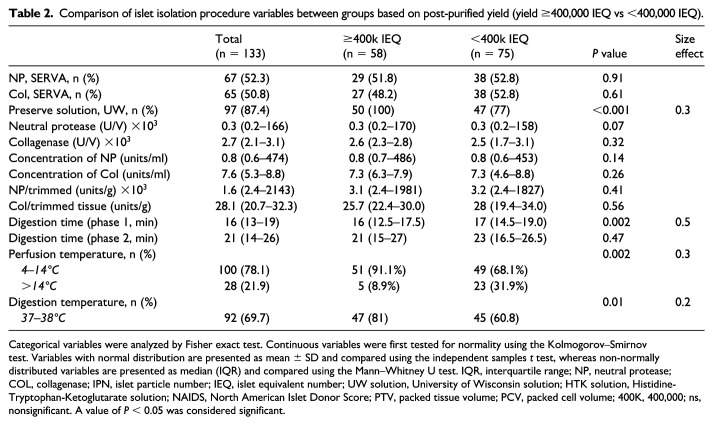 Figure 5
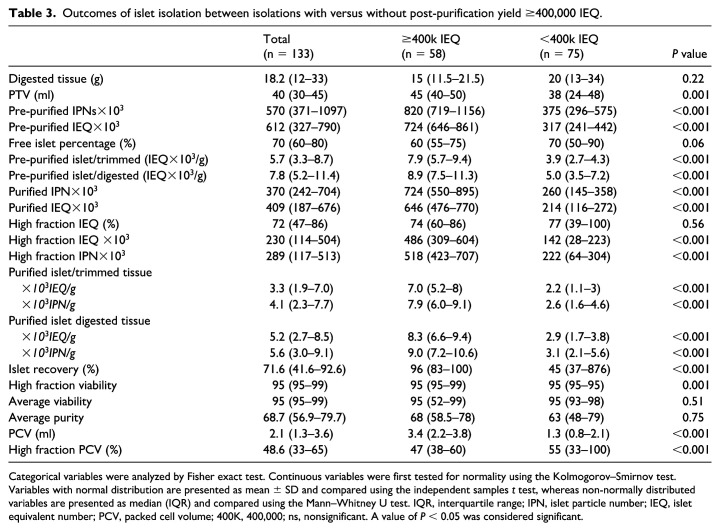 Figure 6
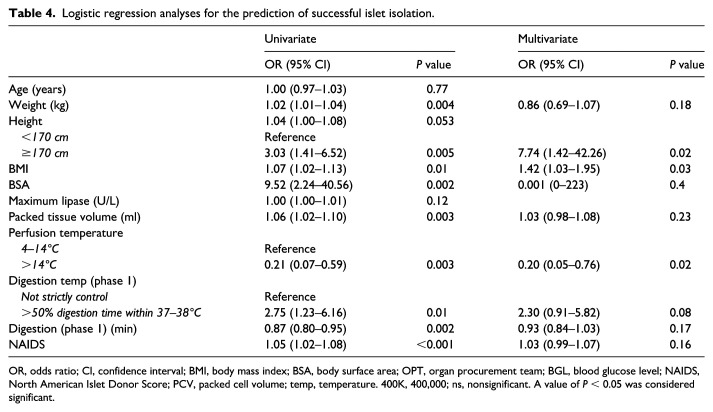 Figure 7
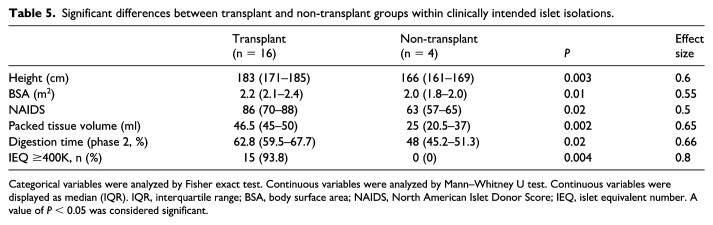 Figure 8
 Figure 9
Peer Reviews
No public reviews on file for this paper yet. If you reviewed it on a platform where reviews are public (OpenReview, ICLR, NeurIPS, ICML), you can paste yours below so the community can read it here.
Videos
No videos yet. Explain this paper in a talk, walkthrough, or lecture? Add one.
Taxonomy
TopicsPancreatic function and diabetes · Cannabis and Cannabinoid Research · Aldose Reductase and Taurine