Integration of intragraft transcriptomics and urinary cytokines identifies CXCL10 and FasL signature in subclinical acute rejection
Sharon Natasha Cox, Samantha Chiurlia, Emanuela Pasculli, Luigi Biancone, Davide Diena, Vincenzo Cantaluppi, Andrea Airoldi, Ilaria Gandolfini, Umberto Maggiore, Nicola Bossini, Michele Rossini, Graziano Pesole, Francesco Paolo Schena, Luigi Biancone, Luigi Biancone

TL;DR
This study identifies CXCL10 and FasL as potential non-invasive urinary biomarkers for detecting subclinical acute rejection in kidney transplant patients.
Contribution
The study links intragraft transcriptomics to urinary cytokine levels, proposing a novel composite biomarker signature for subclinical acute rejection.
Findings
CXCL10 and FasL levels were significantly higher in subclinical acute rejection patients compared to controls.
The composite biomarker signature (CXCL10 + FasL) showed 50% sensitivity and 84% specificity for detecting subclinical acute rejection.
Transcriptomic profiling identified NFKBIZ, TNFSF14, SLAMF8, and CD247 as upregulated in subclinical acute rejection.
Abstract
Subclinical acute rejection (SCAR) in kidney transplantation, defined by histologic lesions without clinical dysfunction, remains a major cause of allograft injury and is currently detectable only by invasive protocol biopsies. We conducted a multicenter study in which transcriptomic profiling of Formalin-Fixed, Paraffin-Embedded biopsies from SCAR and control patients revealed a distinct signature with upregulation of NFKBIZ, TNFSF14, SLAMF8, and CD247, validated by qRT-PCR and immunohistochemistry but not detectable in urine. Focusing on secreted cytokines, CXCL10 and FasL emerged as candidate urinary biomarkers and were first measured in 12 SCAR patients and 12 controls, showing a significant increase in SCAR. Validation in an independent cohort of 86 kidney transplant recipients, after excluding patients with confounders, confirmed higher CXCL10 and FasL levels in SCAR. When…
Genes, proteins, chemicals, diseases, species, mutations and cell lines named across the full text — each resolved to its canonical identifier and authoritative record.
Click any figure to enlarge with its caption.
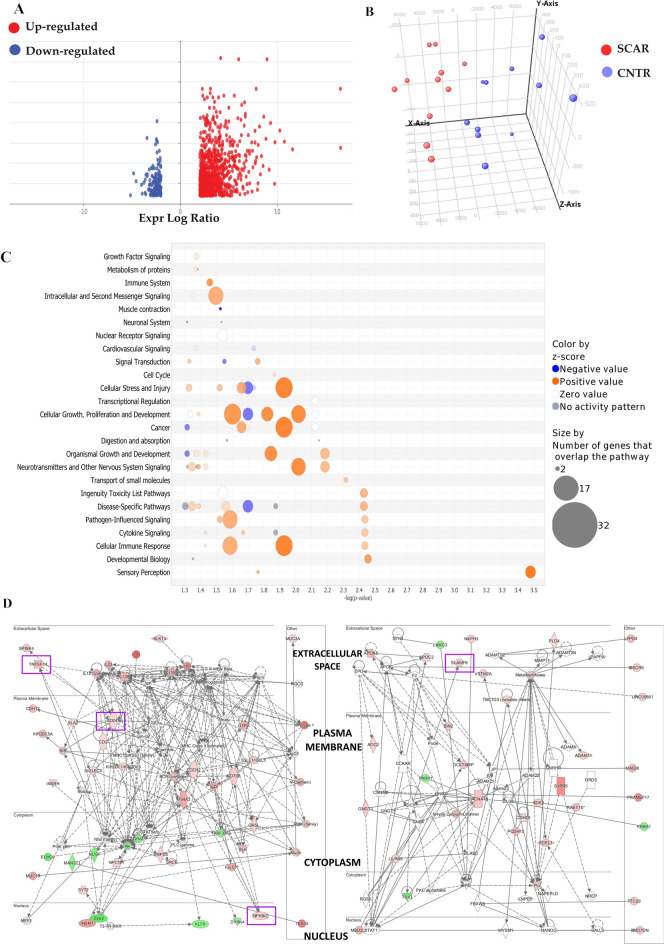 Figure 1
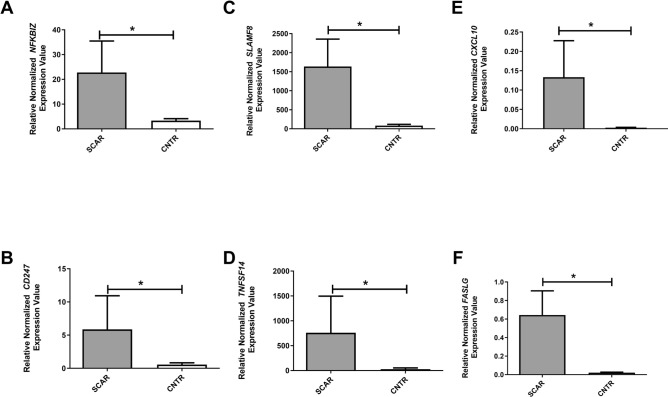 Figure 2
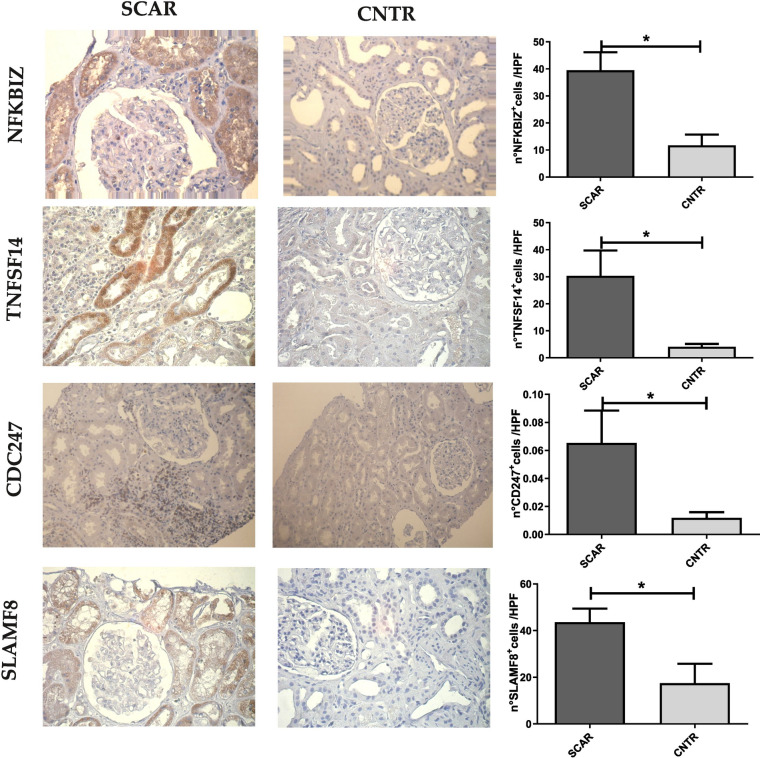 Figure 3
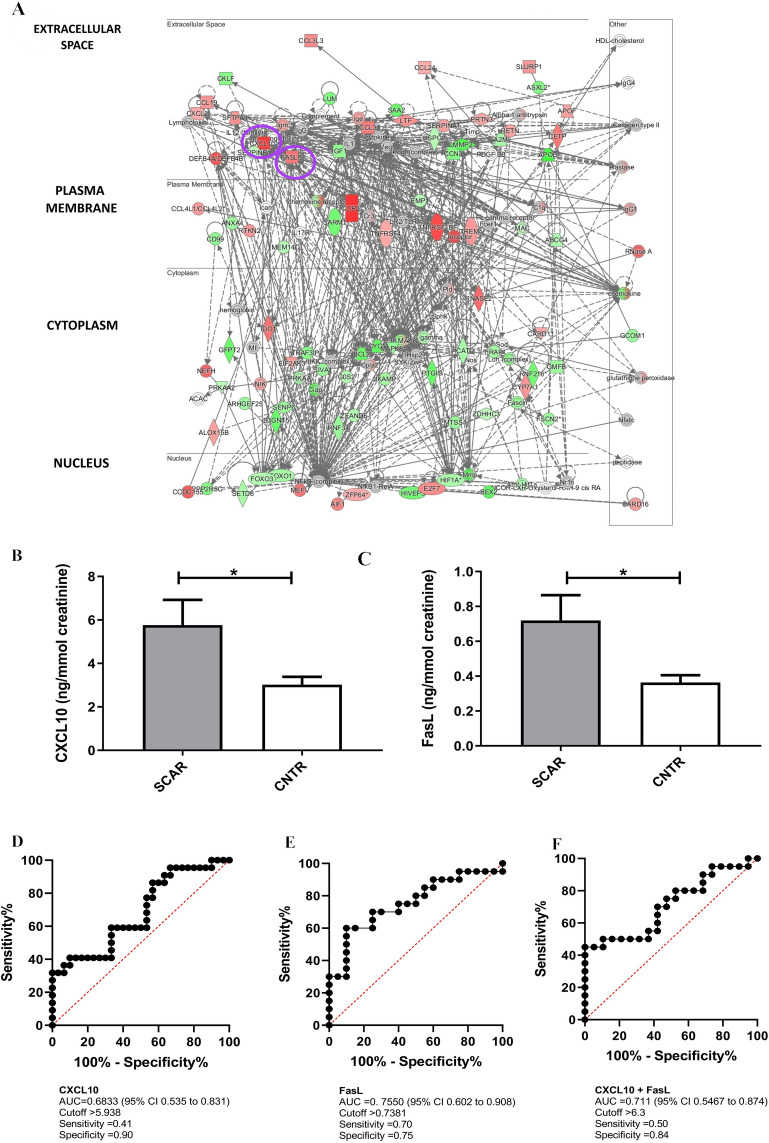 Figure 4
Peer Reviews
No public reviews on file for this paper yet. If you reviewed it on a platform where reviews are public (OpenReview, ICLR, NeurIPS, ICML), you can paste yours below so the community can read it here.
Videos
No videos yet. Explain this paper in a talk, walkthrough, or lecture? Add one.
Taxonomy
TopicsRenal Transplantation Outcomes and Treatments · Chemokine receptors and signaling · Transplantation: Methods and Outcomes