SLIT3 fragments orchestrate neurovascular expansion and thermogenesis in brown adipose tissue
Tamires Duarte Afonso Serdan, Heidi Cervantes, Benjamin Frank, Akhil Gargey Iragavarapu, Qiyu Tian, Daniel Hope, Chan Hee J. Choi, Anne Hoffmann, Adhideb Ghosh, Christian Wolfrum, Matthew B. Greenblatt, Paul Cohen, Matthias Blüher, Halil Aydin, Gary J. Schwartz, Farnaz Shamsi

TL;DR
This study reveals how brown fat expands blood vessels and nerves during cold exposure through fragments of a protein called SLIT3.
Contribution
The study identifies SLIT3 fragments as key regulators of neurovascular coordination in brown adipose tissue.
Findings
SLIT3 fragments SLIT3-N and SLIT3-C independently promote angiogenesis and sympathetic innervation.
PLXNA1 is identified as a receptor for SLIT3-C in sympathetic innervation of brown adipose tissue.
BMP1 is revealed as the first SLIT protease in vertebrates.
Abstract
Brown adipose tissue is an evolutionary innovation in placental mammals that regulates body temperature through adaptive thermogenesis. Cold exposure activates brown adipose tissue thermogenesis through coordinated induction of brown adipogenesis, angiogenesis, and sympathetic innervation; however, how these processes are coordinated remains unclear. Here, we show that fragments of Slit guidance ligand 3 (SLIT3) drive crosstalk among adipocyte progenitors, endothelial cells, and sympathetic nerves. Adipocyte progenitors secrete SLIT3, which is cleaved into functionally distinct SLIT3-N and SLIT3-C fragments that independently promote angiogenesis and sympathetic innervation. We identify PLXNA1 as a receptor for SLIT3-C and demonstrate its essential role in sympathetic innervation of brown adipose tissue. Moreover, we identify BMP1 as the first SLIT protease described in vertebrates.…
Genes, proteins, chemicals, diseases, species, mutations and cell lines named across the full text — each resolved to its canonical identifier and authoritative record.
Click any figure to enlarge with its caption.
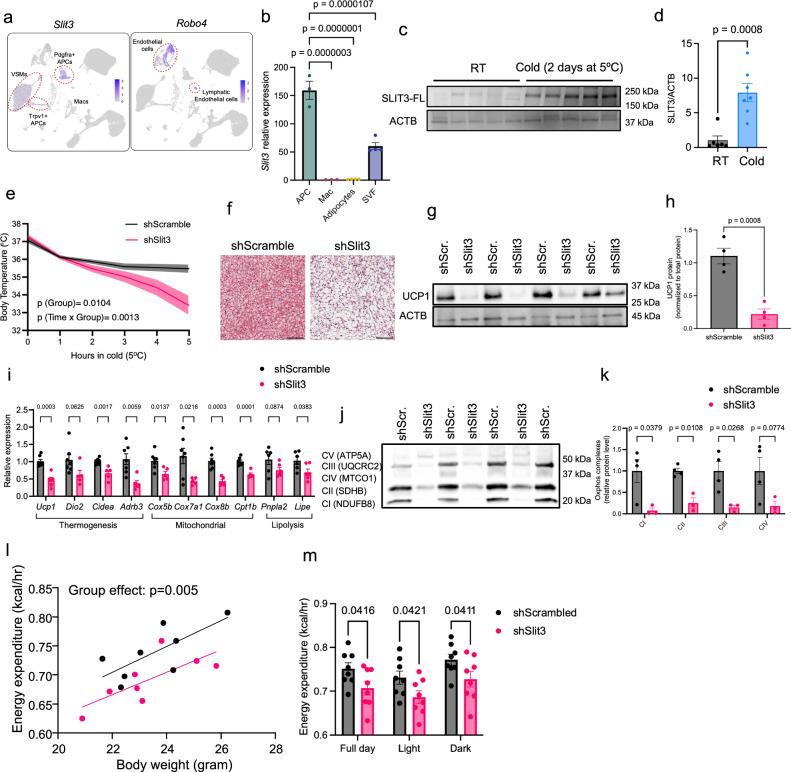 Figure 1
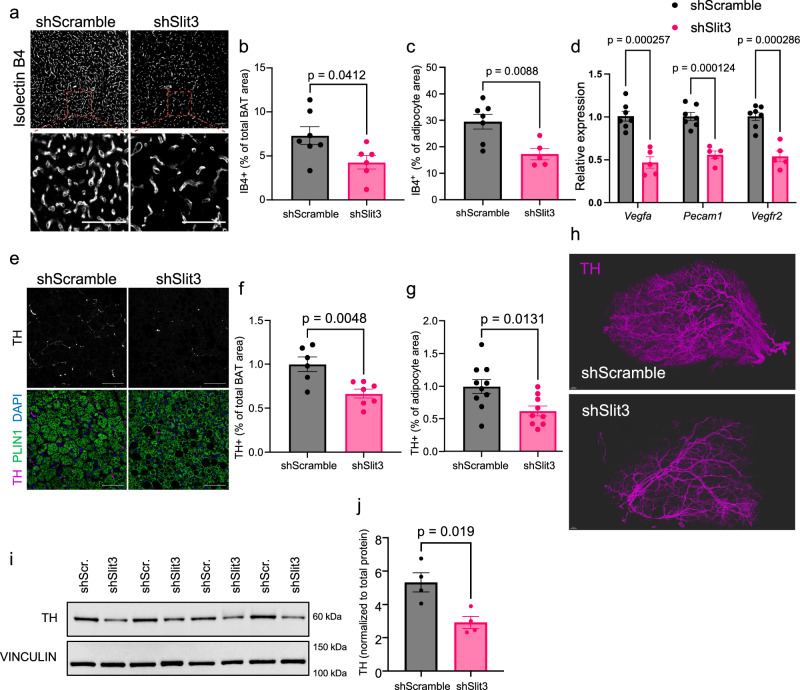 Figure 2
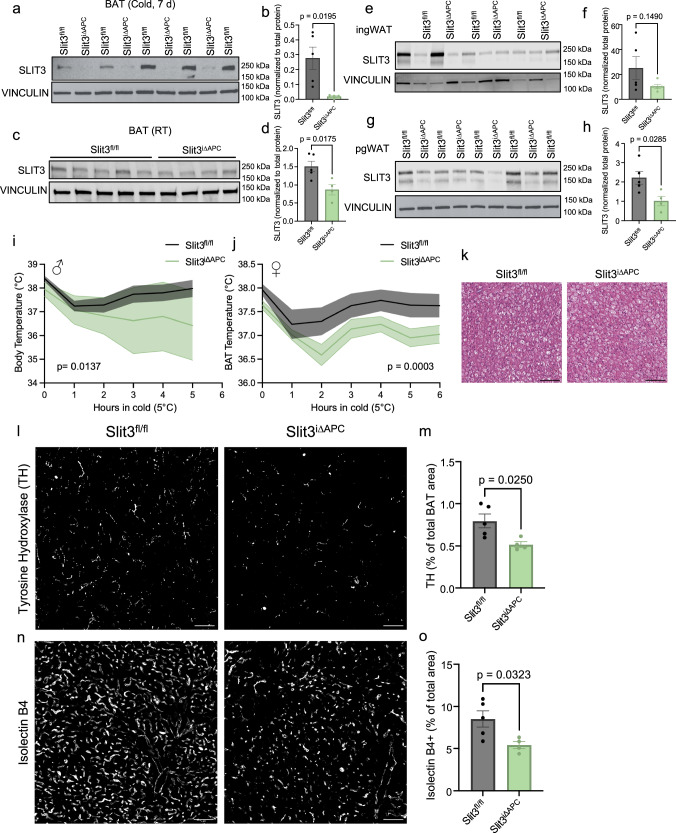 Figure 3
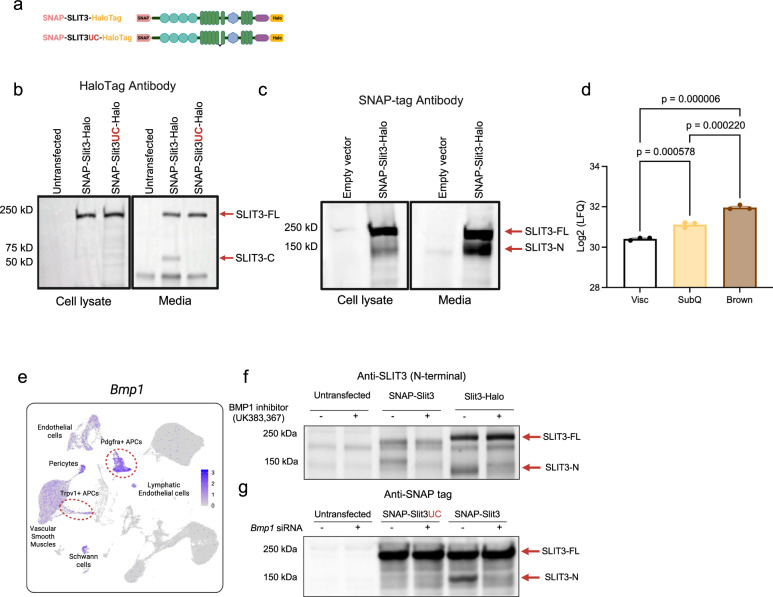 Figure 4
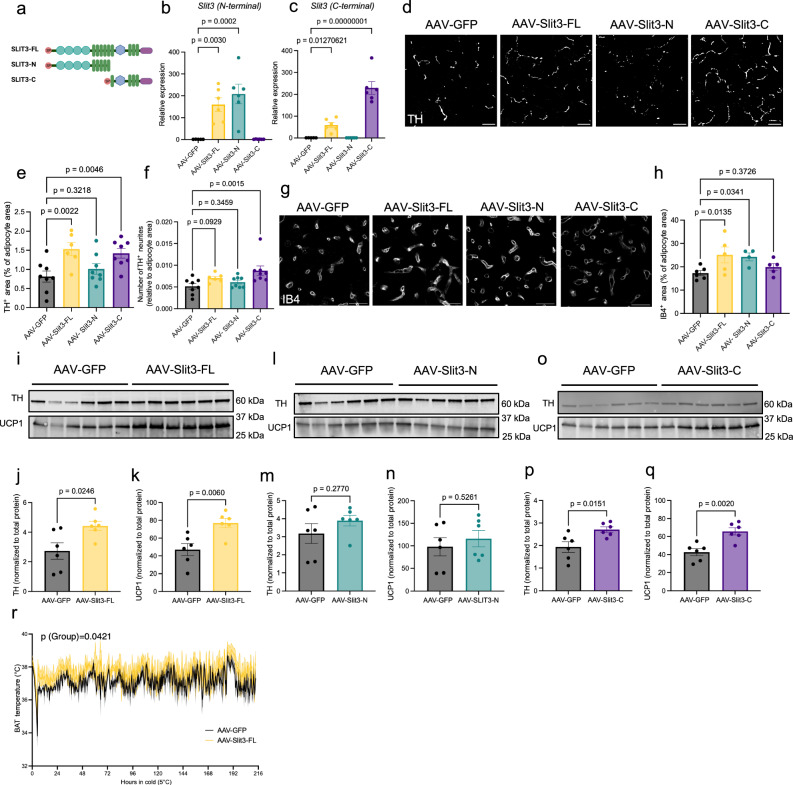 Figure 5
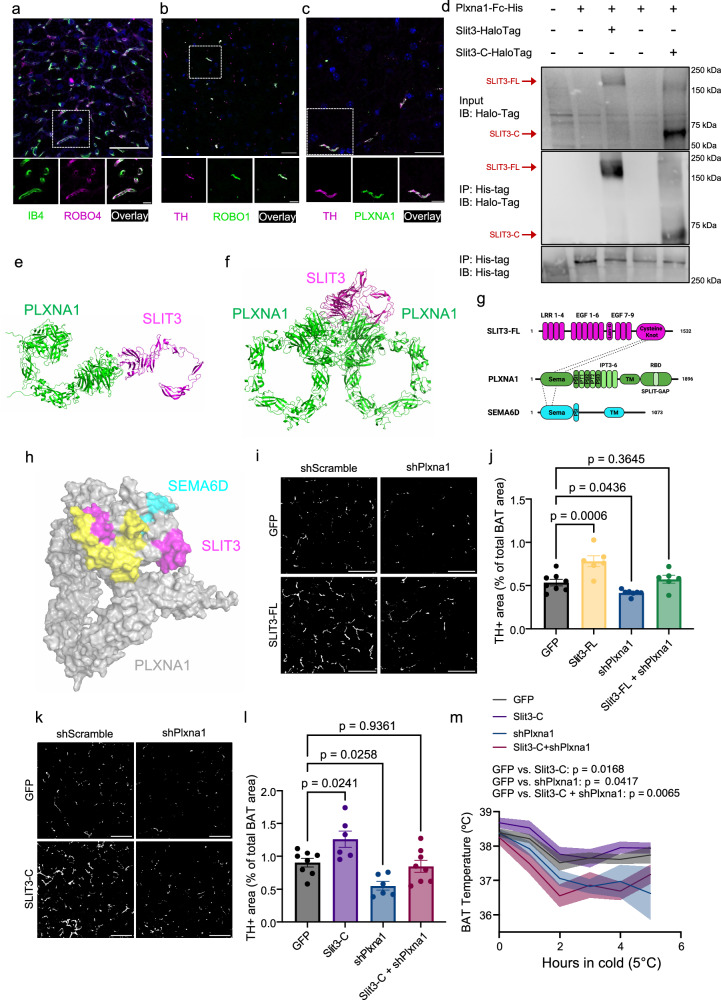 Figure 6
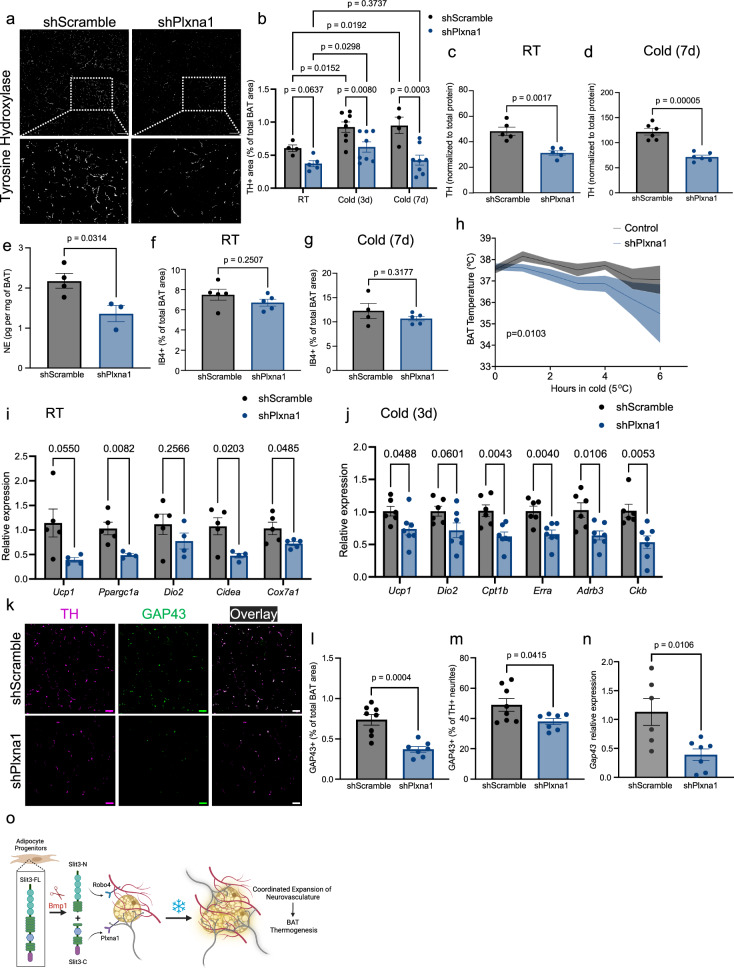 Figure 7
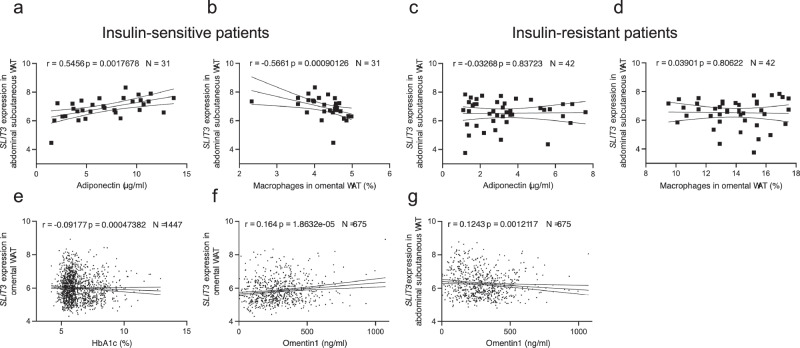 Figure 8
Peer Reviews
No public reviews on file for this paper yet. If you reviewed it on a platform where reviews are public (OpenReview, ICLR, NeurIPS, ICML), you can paste yours below so the community can read it here.
Videos
No videos yet. Explain this paper in a talk, walkthrough, or lecture? Add one.
Taxonomy
TopicsAdipose Tissue and Metabolism · Adipokines, Inflammation, and Metabolic Diseases · Cardiovascular Disease and Adiposity