An open-source deep learning-based toolbox for automated auditory brainstem response analyses (ABRA)
Abhijeeth Erra, Cayla M. Miller, Jeffrey Chen, Elena Chrysostomou, Shannon Barret, Yasmin M. Kassim, Rick A. Friedman, Amanda Lauer, Federico Ceriani, Walter Marcotti, Cody Carroll, Uri Manor

TL;DR
ABRA is an open-source deep learning tool that automates the analysis of auditory brainstem responses, improving accuracy and reducing analysis time for hearing research.
Contribution
ABRA introduces an automated, deep learning-based ABR analysis tool that standardizes and accelerates waveform interpretation.
Findings
ABRA's models perform comparably to human experts in extracting ABR metrics like amplitude and latency.
The tool significantly reduces analysis time and improves reproducibility across different datasets.
ABRA is available as a free online platform for researchers.
Abstract
Hearing loss is a pervasive global health challenge with profound impacts on communication, cognitive function, and quality of life. Recent studies have established age-related hearing loss as a significant risk factor for dementia, highlighting the importance of hearing loss research. Auditory brainstem responses (ABRs), which are electrophysiological recordings of acoustically evoked synchronized neural activity from the auditory nerve and brainstem, serve as in vivo correlates for sensory hair cell and synaptic function, hearing sensitivity, and other critical readouts of auditory pathway physiology, making them highly valuable for both basic neuroscience and clinical research. Despite the utility of the ABR, traditional ABR analyses rely heavily on subjective manual interpretation, which may introduce variability and pose challenges for reproducibility across studies. Here, we…
Genes, proteins, chemicals, diseases, species, mutations and cell lines named across the full text — each resolved to its canonical identifier and authoritative record.
Click any figure to enlarge with its caption.
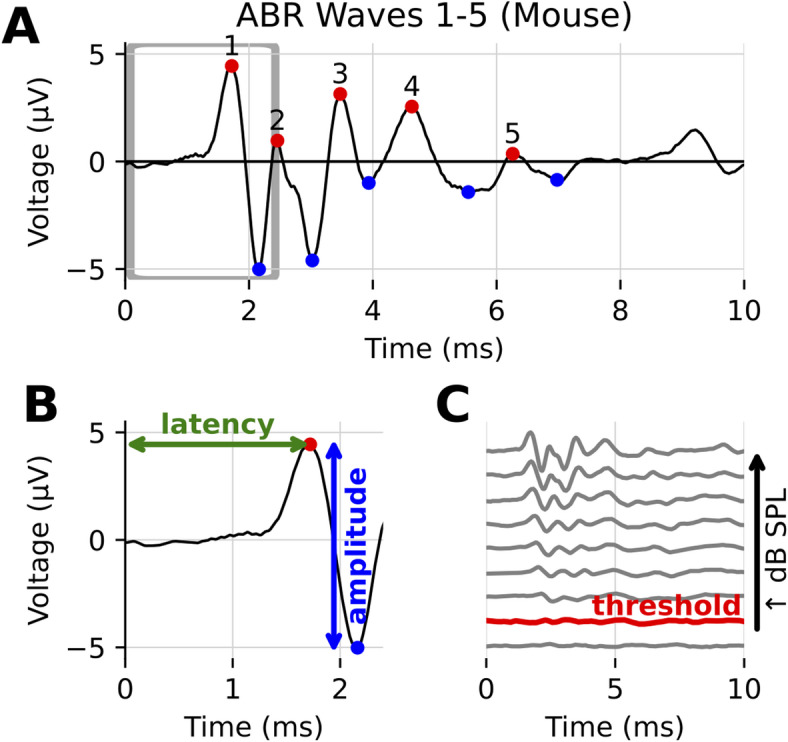 Figure 1
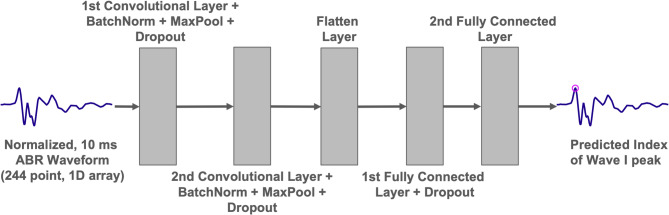 Figure 2
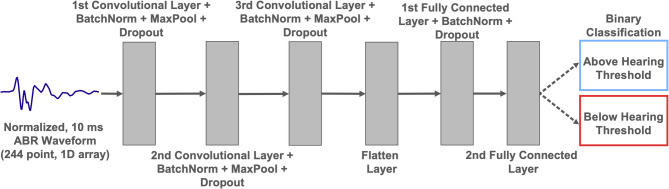 Figure 3
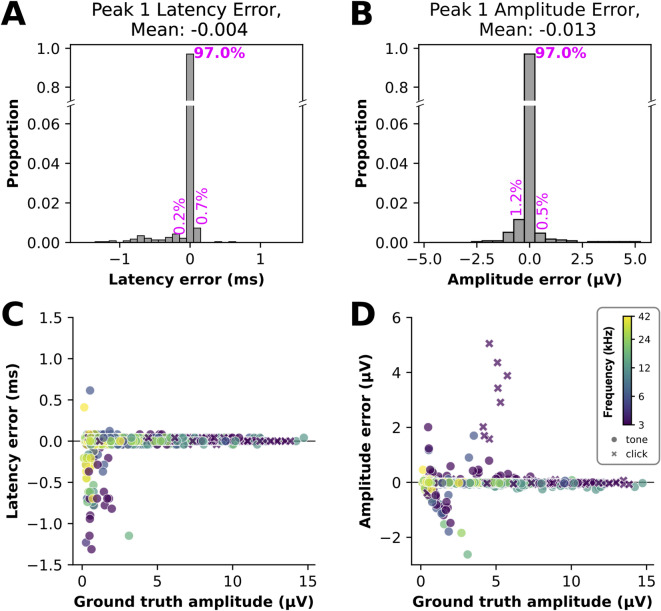 Figure 4
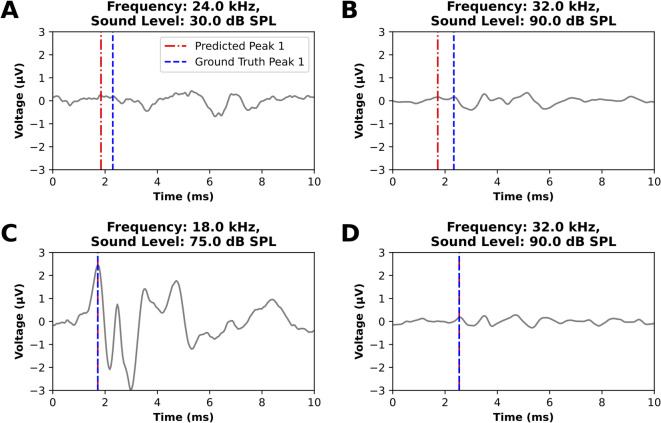 Figure 5
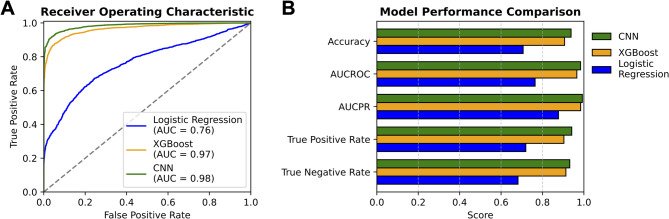 Figure 6
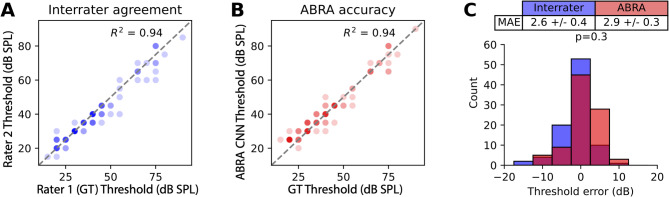 Figure 7
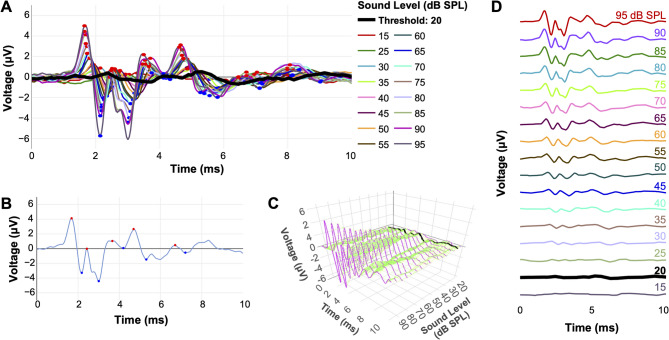 Figure 8
Peer Reviews
No public reviews on file for this paper yet. If you reviewed it on a platform where reviews are public (OpenReview, ICLR, NeurIPS, ICML), you can paste yours below so the community can read it here.
Videos
No videos yet. Explain this paper in a talk, walkthrough, or lecture? Add one.
Taxonomy
TopicsHearing, Cochlea, Tinnitus, Genetics · Hearing Loss and Rehabilitation · Neuroscience and Music Perception