Endophytic Beauveria bassiana in maize: influence of genotype, fungal source, inoculation methods, and time on colonization and fitness of Fall armyworm
Tamegnon Hospice Tossou, Elie Ayitondji Dannon, A. Sylvia S. Schleker, Cyriaque Agboton, Ouorou Kobi Douro-Kpindou, Florian M. W. Grundler, Christian Borgemeister, Manuele Tamò

TL;DR
This study explores how different fungal isolates and maize varieties affect the colonization of plants by Beauveria bassiana and the fitness of the Fall armyworm.
Contribution
The study reveals genotype-specific compatibility and isolate effects on endophytic colonization and pest suppression.
Findings
Insect-derived isolates showed higher colonization in stems and roots of landrace maize.
FAW larvae fed on colonized plants had reduced survival and lower reproductive success.
Colonization effectiveness varied with maize genotype, isolate origin, and tissue type.
Abstract
We investigated how Beauveria bassiana isolate origin and maize genotype affect endophytic colonization and suppression of the Fall armyworm (FAW). The objectives were to determine whether isolate origin (insect or soil-derived) influences colonization across maize tissues, assess the role of four genotypes (two landraces and two improved lines), and evaluate FAW fitness on colonized plants. Three indigenous isolates, two insect-derived (Bb11, Bb115) and one soil-derived (DL1.1), were applied to four maize genotypes. These included two landraces (Kokoli Daneri, Ovinonboe) and two improved varieties (Faaba QPM, TZL Composite 4W Benin). Inoculation was performed using foliar spraying and seed coating. Colonization declined over time but varied significantly with isolate, genotype, and tissue type (p < 0.0001). Insect-derived isolates achieved higher colonization, particularly in stems and…
Genes, proteins, chemicals, diseases, species, mutations and cell lines named across the full text — each resolved to its canonical identifier and authoritative record.
Click any figure to enlarge with its caption.
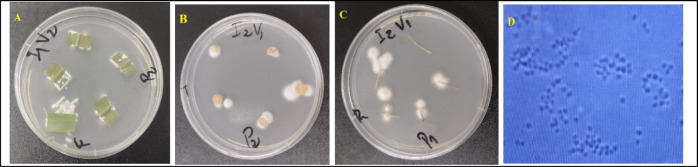 Figure 1
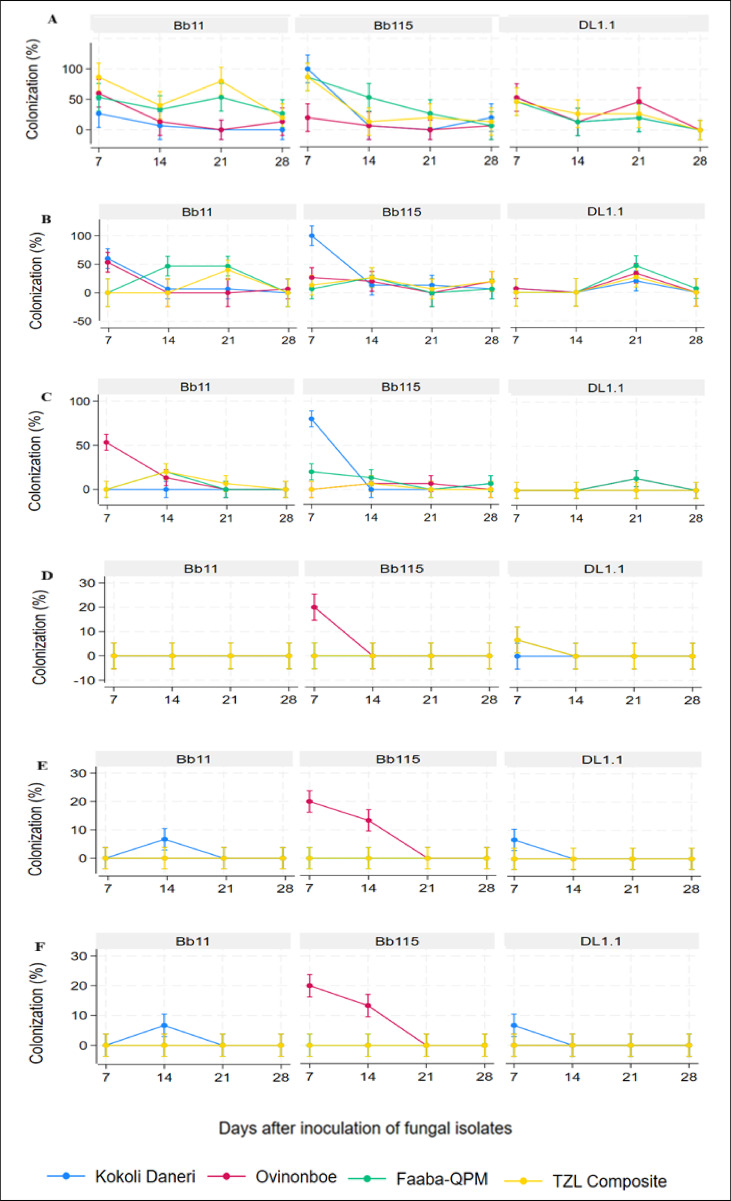 Figure 2
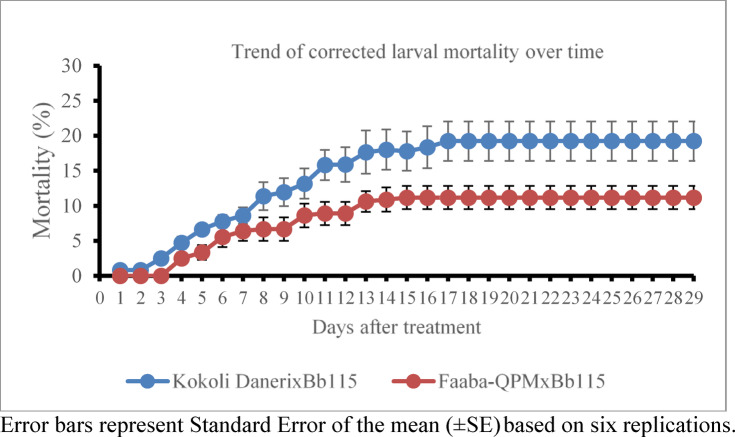 Figure 3
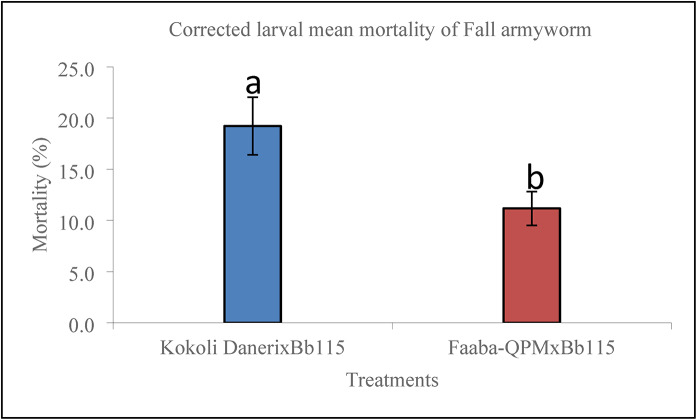 Figure 4
Peer Reviews
No public reviews on file for this paper yet. If you reviewed it on a platform where reviews are public (OpenReview, ICLR, NeurIPS, ICML), you can paste yours below so the community can read it here.
Videos
No videos yet. Explain this paper in a talk, walkthrough, or lecture? Add one.
Taxonomy
TopicsEntomopathogenic Microorganisms in Pest Control · Plant and fungal interactions · Insect symbiosis and bacterial influences