Exploring central star variability of planetary nebulae using gaia photometry
M. A. NegmEldin, A. Ali, G. M. Hamid, A. Essam

TL;DR
This study uses Gaia data to analyze variable central stars of planetary nebulae, finding new periodic systems and linking binary stars to nebula shapes.
Contribution
The study identifies 17 new periodic variable systems and confirms binarity in CSPNe using Gaia data, revealing a high fraction of short-period binaries.
Findings
17 new periodic variable systems were identified, including 13 short-period and 5 long-period systems.
The central star of PN Al 2-R shows dual periodicity with periods of 0.99 and 501.4 days.
A short-period binary fraction of ~48% was found, higher than in non-selected samples.
Abstract
This study presents an analysis of the variability of 81 central stars of planetary nebulae (CSPNe) are identified as variable in Gaia Data Release 3 (DR3). By combining Gaia time-series photometry with data from the Optical Gravitational Lensing Experiment (OGLE), the Transiting Exoplanet Survey Satellite (TESS), and the Kepler, we characterise their variability and identifed 17 new periodic systems. Among these, 13 are short-period variable: light-curve modelling reveals one eclipsing binary, two systems with combined eclipsing and ellipsoidal modulation, one with irradiation effect, two with irradiation/ellipsoidal effects and seven with uncommon variability. A further five systems exhibit long-period variability. Notably, the central star (CS) of PN Al 2-R displays dual periodicity–a short period of 0.99 days and a long period of 501.4 days–and is consequently included in both the…
Genes, proteins, chemicals, diseases, species, mutations and cell lines named across the full text — each resolved to its canonical identifier and authoritative record.
Click any figure to enlarge with its caption.
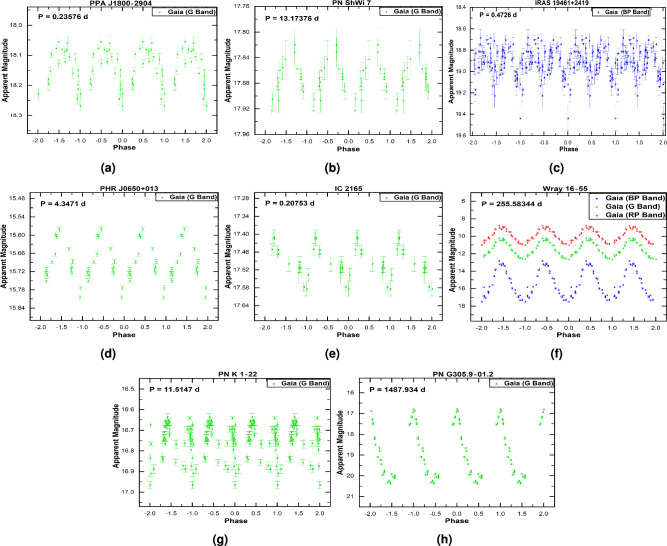 Figure 1
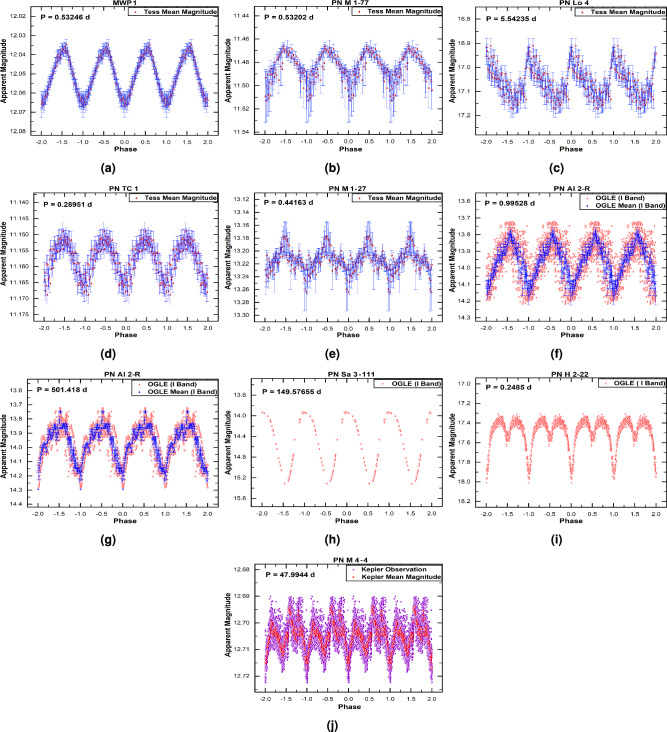 Figure 2
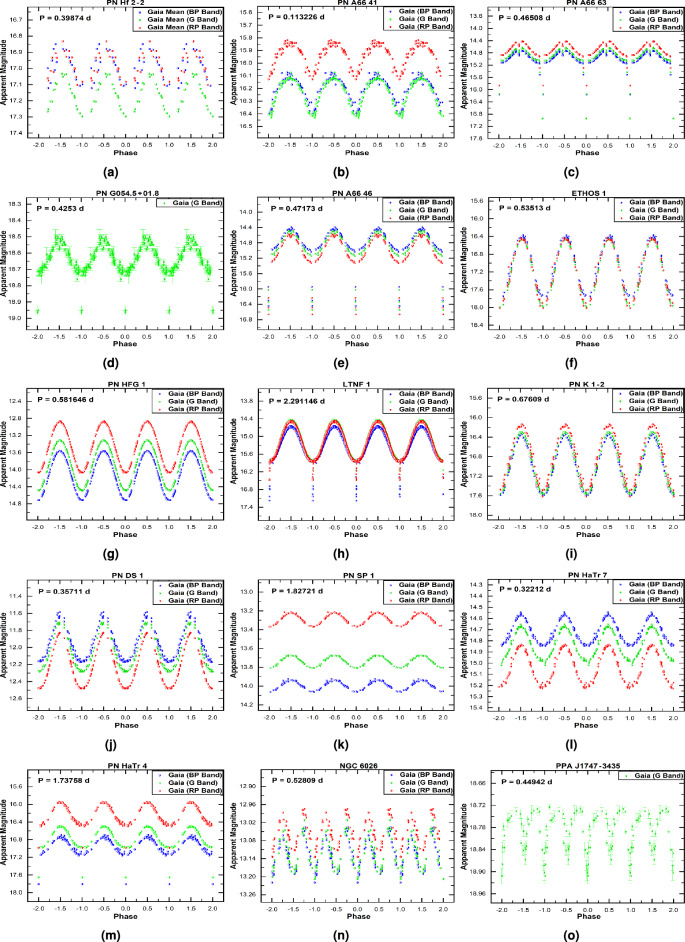 Figure 3
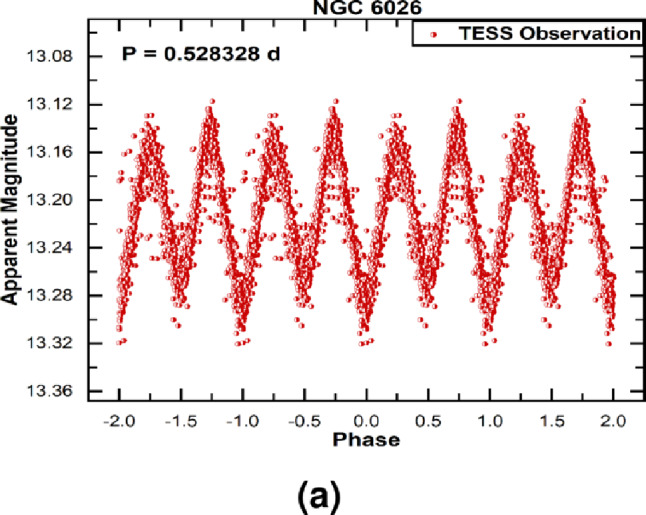 Figure 4
Peer Reviews
No public reviews on file for this paper yet. If you reviewed it on a platform where reviews are public (OpenReview, ICLR, NeurIPS, ICML), you can paste yours below so the community can read it here.
Videos
No videos yet. Explain this paper in a talk, walkthrough, or lecture? Add one.
Taxonomy
TopicsStellar, planetary, and galactic studies · Astronomy and Astrophysical Research · Educational Leadership and Practices