Intramedullary Spinal Cord Abscess With Brain Abscess Secondary to Empyema: A Report of a Rare Case
Miyu Amano, Tatsunori Kiriu, Satoshi Mukaida, Misato Saika, Yoshikazu Kotani

TL;DR
A rare case of spinal and brain abscesses in a diabetic patient was successfully treated with antibiotics alone, avoiding surgery.
Contribution
This case report highlights the successful non-surgical treatment of a rare combination of intramedullary spinal cord and brain abscesses.
Findings
Antimicrobial therapy alone resolved the abscesses without the need for surgery.
The patient showed no recurrence or neurological deficits at one-year follow-up.
Early diagnosis and appropriate treatment are critical for favorable outcomes.
Abstract
Intramedullary spinal cord abscess (ISCA) is a rare condition that requires prompt intervention. We report the case of a 60-year-old Japanese man with type 2 diabetes who was diagnosed with ISCA and a concomitant brain abscess during antibiotic treatment for empyema. Antimicrobial therapy alone led to remission and obviated the need for surgery following diagnosis. At the one-year follow-up, the patient showed no sequelae or recurrence. Early diagnosis and appropriate antimicrobial therapy are crucial for improving prognosis and minimizing permanent neurological deficits.
Genes, proteins, chemicals, diseases, species, mutations and cell lines named across the full text — each resolved to its canonical identifier and authoritative record.
Click any figure to enlarge with its caption.
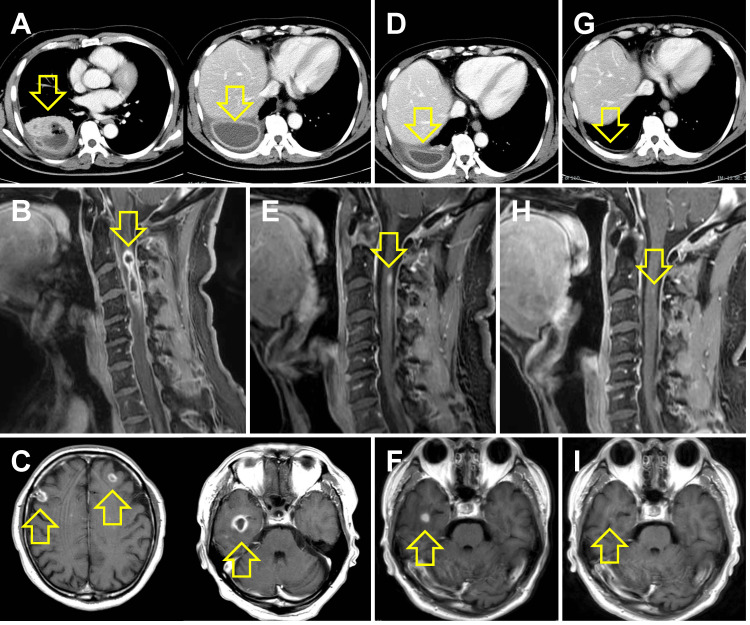 Figure 1
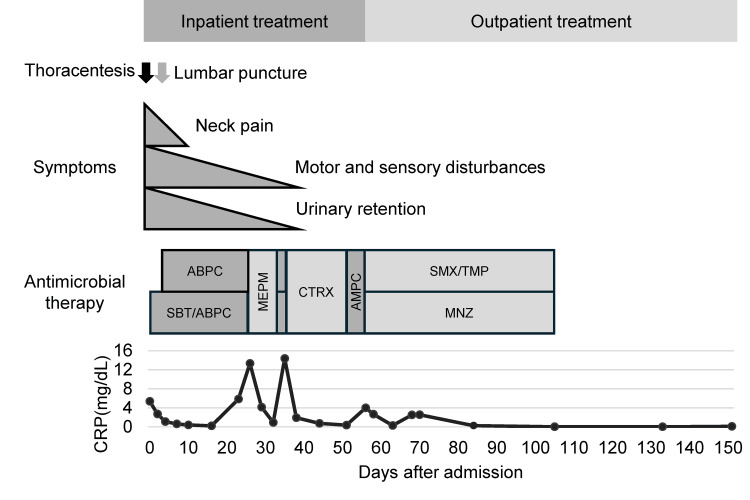 Figure 2
Peer Reviews
No public reviews on file for this paper yet. If you reviewed it on a platform where reviews are public (OpenReview, ICLR, NeurIPS, ICML), you can paste yours below so the community can read it here.
Videos
No videos yet. Explain this paper in a talk, walkthrough, or lecture? Add one.
Taxonomy
TopicsSpinal Dysraphism and Malformations · Infectious Diseases and Tuberculosis · Cerebrospinal fluid and hydrocephalus