Navigating AI feedback in translation training: how text type, proficiency, and attitude shape students’ acceptance behaviors
Shiyue Chen, Jie Lou

TL;DR
This study explores how translation students accept or reject AI feedback, finding that text type, proficiency, and attitude influence their decisions.
Contribution
The study introduces a mixed-methods analysis of LLM feedback acceptance in translation education, revealing nuanced behavioral patterns.
Findings
Students accepted 68.2% of LLM suggestions, showing selective engagement.
Technical and news texts received the highest acceptance, while literary and tourism texts had the lowest.
Higher-proficiency students and postgraduates were more critical of AI feedback.
Abstract
This study investigates how undergraduate and graduate translation students in post-secondary education engage with and evaluate Large Language Model (LLM)-generated feedback through a mixed-methods approach, analyzing acceptance rates, influencing factors, decision rationales, and perceived limitations. 78 students majoring in translation (55 undergraduates, 23 postgraduates) completed translation tasks spanning six text types and received ChatGPT-3.5-generated feedback. Participants made binary accept/reject decisions with immediate written rationales, followed by semi-structured interviews to explore evaluative criteria and perceived deficiencies. Quantitatively, participants accepted an average of 68.2% of LLM suggestions, demonstrating receptive yet selective engagement, with no student accepting or rejecting all suggestions. Acceptance was most strongly shaped by text type, with…
Genes, proteins, chemicals, diseases, species, mutations and cell lines named across the full text — each resolved to its canonical identifier and authoritative record.
Click any figure to enlarge with its caption.
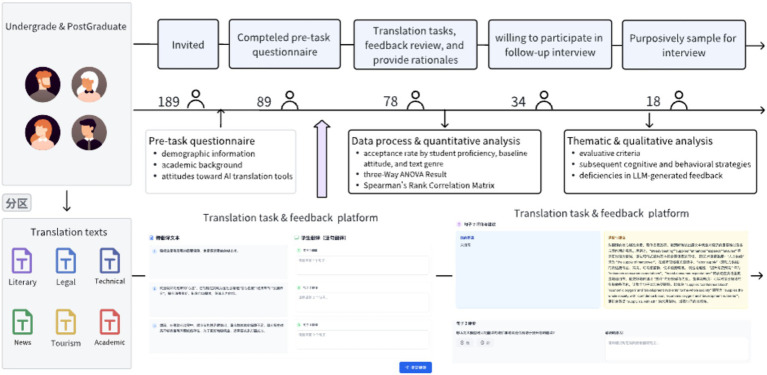 Figure 1
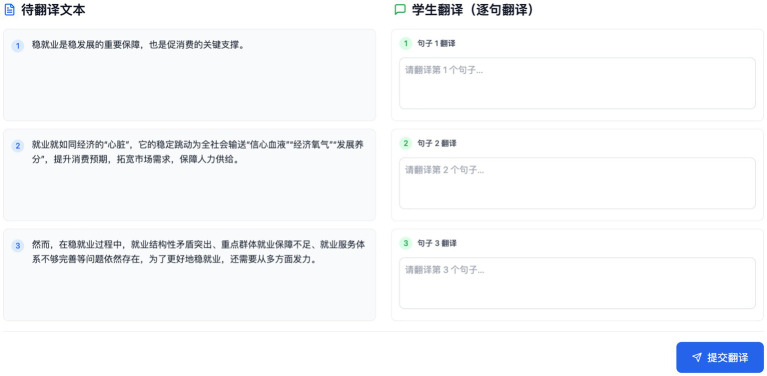 Figure 2
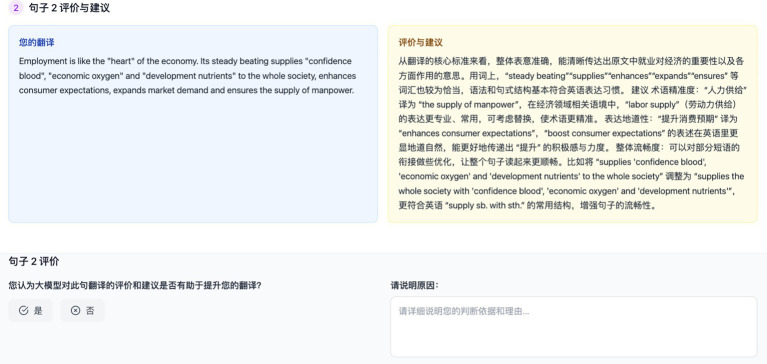 Figure 3
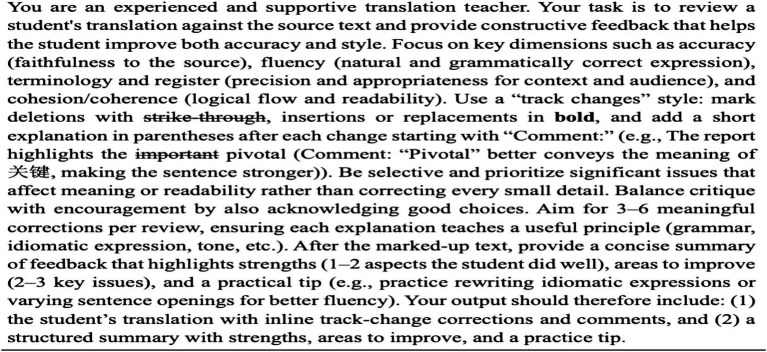 Figure 4
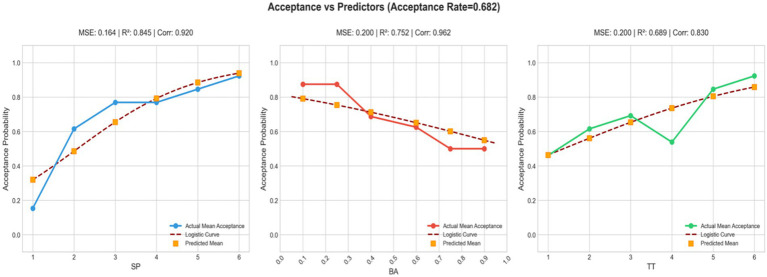 Figure 5
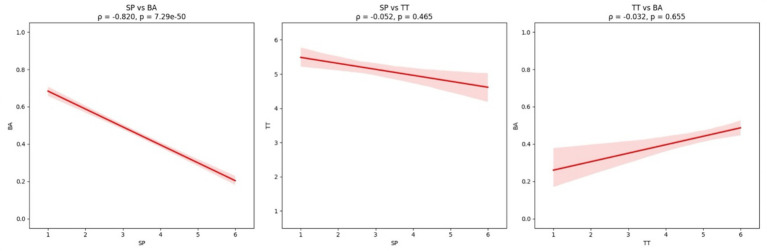 Figure 6
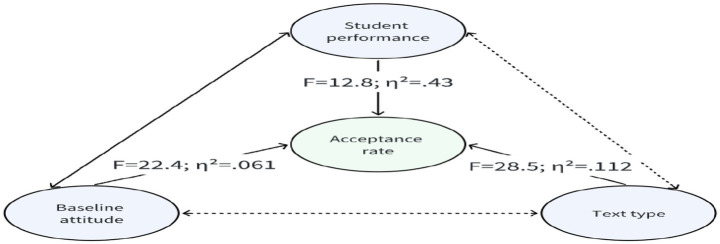 Figure 7
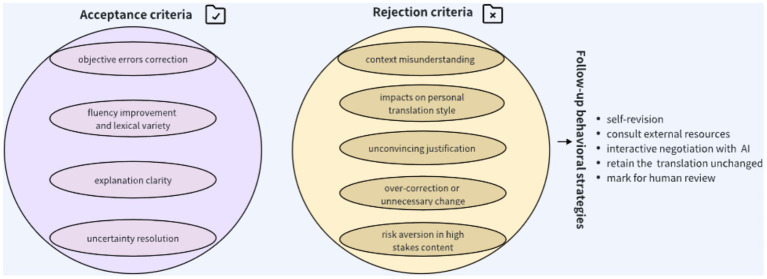 Figure 8
Peer Reviews
No public reviews on file for this paper yet. If you reviewed it on a platform where reviews are public (OpenReview, ICLR, NeurIPS, ICML), you can paste yours below so the community can read it here.
Videos
No videos yet. Explain this paper in a talk, walkthrough, or lecture? Add one.
Taxonomy
TopicsTranslation Studies and Practices · Artificial Intelligence in Healthcare and Education · Computational and Text Analysis Methods