CycleGAN models show consistent brain MRI synthesis across datasets supporting downstream tissue characterization in multiple sclerosis
Shayan Shahrokhi, Olayinka Oladosu, Rehman Tariq, Yunyan Zhang

TL;DR
This study compares CycleGAN and Pix2Pix for synthesizing brain MRI images in multiple sclerosis, finding that both methods can support downstream analysis despite differences in performance.
Contribution
The study evaluates CycleGAN and Pix2Pix for synthesizing T1- and T2-weighted MRI images in MS, showing feasibility for clinical use.
Findings
CycleGAN models performed competitively, but Pix2Pix showed better results with streamlined datasets.
CycleGAN without spectral normalization was feasible for synthesizing T1-weighted images usable in MS analysis.
Synthesized images showed high similarity to source data in utility tests, though Pix2Pix T1 images had more heterogeneous lesion textures.
Abstract
Secondary quantitative analysis of brain magnetic resonance imaging (MRI) can provide valuable information for many neurological diseases, including multiple sclerosis (MS), but it demands complete datasets that are often unavailable clinically. We investigated how image synthesis via deep learning using cycle-consistent generative adversarial networks (CycleGANs) compared with Pix2Pix as a related method, based on T1-weighted and T2-weighted brain MRI in MS, following verification on two streamlined datasets. The synthesized images were also evaluated against the source data. The streamlined datasets involved 1,113 healthy participants from the Human Connectome Project (HCP) and 318 participants from the Parkinson’s Progression Markers Initiative (PPMI). The MS cohort in this study included 105 participants scanned with different protocols. Image synthesis was bidirectional between…
Genes, proteins, chemicals, diseases, species, mutations and cell lines named across the full text — each resolved to its canonical identifier and authoritative record.
Click any figure to enlarge with its caption.
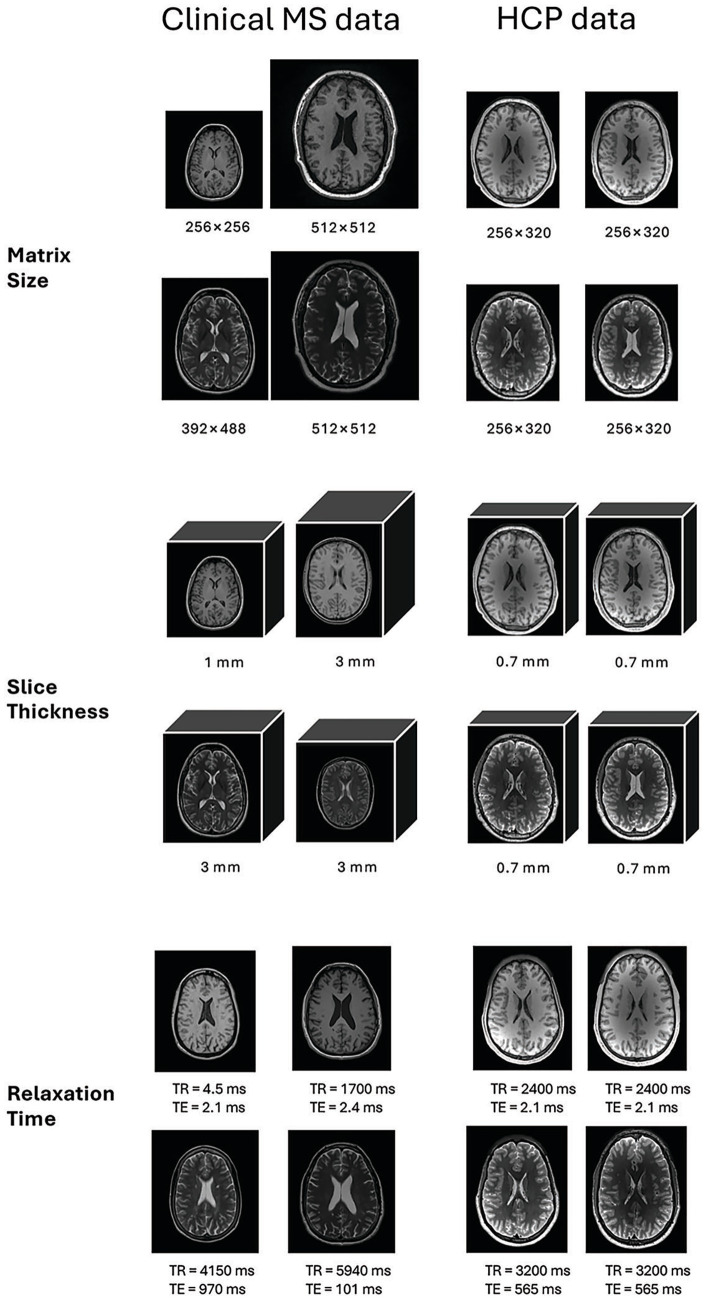 Figure 1
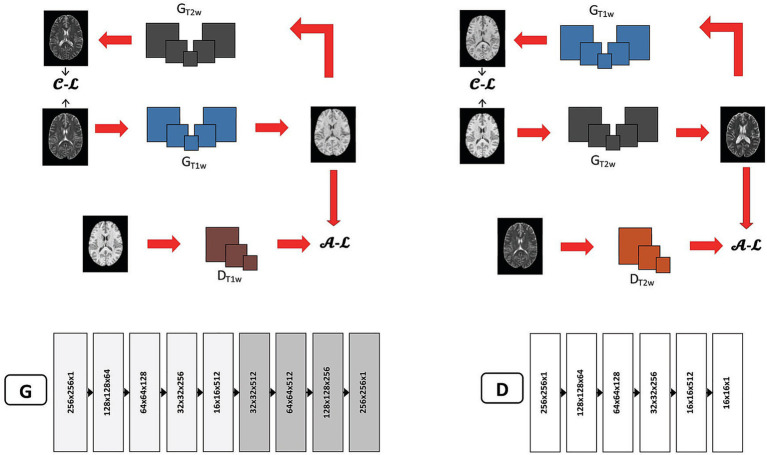 Figure 2
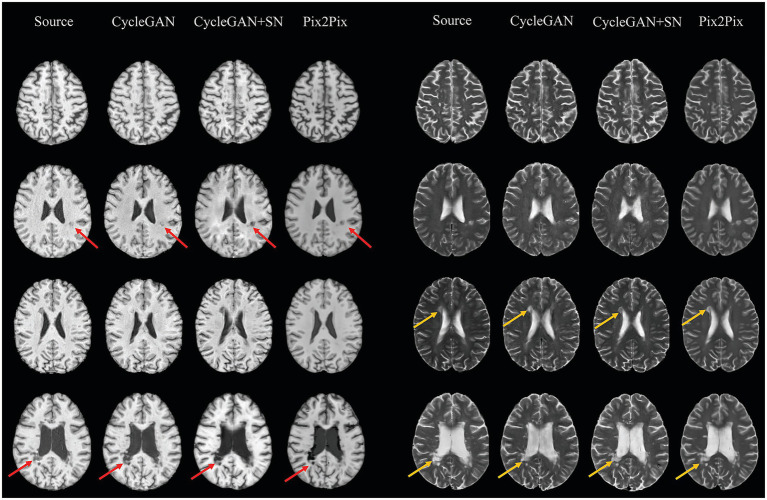 Figure 3
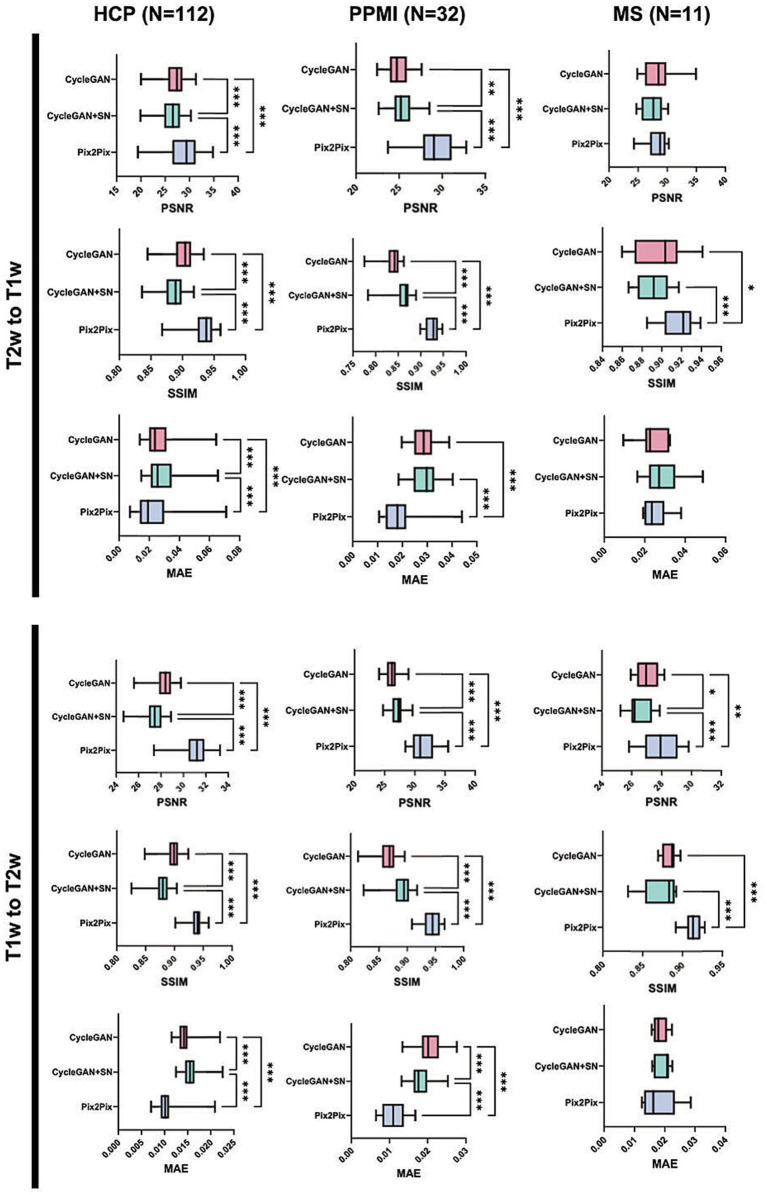 Figure 4
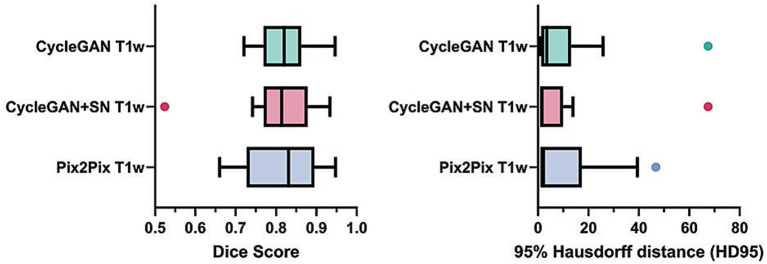 Figure 5
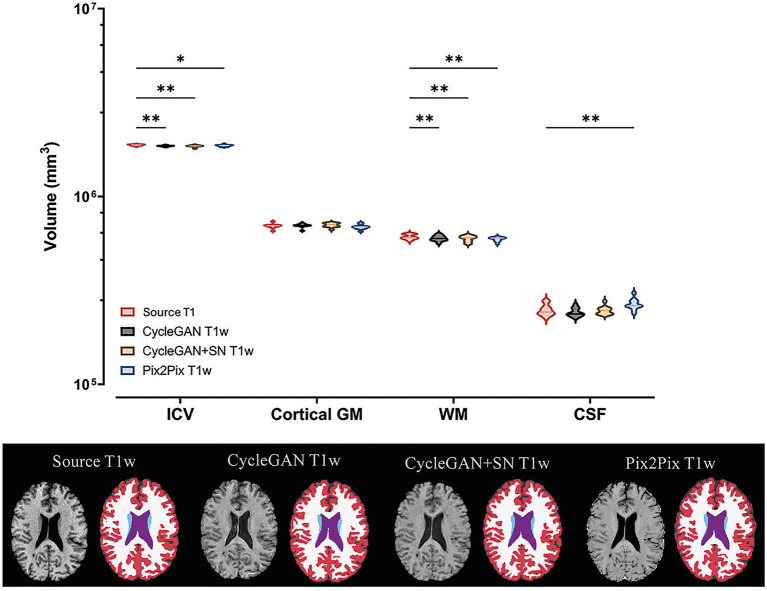 Figure 6
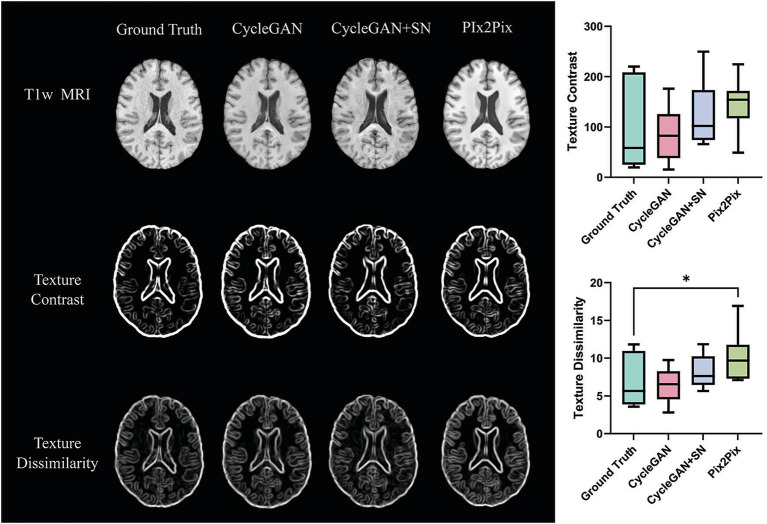 Figure 7
Peer Reviews
No public reviews on file for this paper yet. If you reviewed it on a platform where reviews are public (OpenReview, ICLR, NeurIPS, ICML), you can paste yours below so the community can read it here.
Videos
No videos yet. Explain this paper in a talk, walkthrough, or lecture? Add one.
Taxonomy
TopicsMultiple Sclerosis Research Studies · Generative Adversarial Networks and Image Synthesis · Advanced MRI Techniques and Applications