Population HLA coverage of experimentally characterized P. falciparum CD8 + T cell epitopes as potential components of a multi-epitope malaria vaccine construct: an in silico insight
Courage Siame, Rafiatu Abdul-Mumin, Georgina Agyekum, Linda Akuffo, Ernest Afari, Cecilia Adwoa Biaa Yankey, Kwadwo Asamoah Kusi

TL;DR
This study uses computer models to assess how well certain malaria parasite proteins can trigger immune responses across different populations, aiming to design a broadly effective malaria vaccine.
Contribution
The study identifies conserved malaria epitopes with high HLA coverage, offering insights for developing a universal multi-epitope vaccine.
Findings
CSPep5 (IQNSLSTEW) showed >85% global epitope coverage and 93.35% in West Africa.
CSPep4 (ILSVSSFLF) had minimal coverage (<5% in Africa), highlighting HLA diversity's impact.
TRAPep1 and CSPep10 showed >50% population coverage and high conservation across parasite strains.
Abstract
Malaria remains a significant global health challenge, with Plasmodium falciparum causing the most severe cases and deaths, particularly in sub-Saharan Africa. An effective universal or pan vaccine is needed to augment current concerted control efforts. This in silico study investigated the global population coverage of human leukocyte antigen (HLA) that recognize experimentally validated CD8+ T cell epitopes derived from three P. falciparum antigens (CSP, AMA1 and TRAP), focusing on their potential for inclusion in a globally effective multi-epitope malaria vaccine. Sixteen experimentally validated CD8+ T cell epitopes, together with the HLA typing data of study participants were curated from our previously published work. Using the Immune Epitope Database and Analysis conservancy and population coverage tool, the epitopes were analyzed for their conservancy and ability to bind HLA…
Genes, proteins, chemicals, diseases, species, mutations and cell lines named across the full text — each resolved to its canonical identifier and authoritative record.
Click any figure to enlarge with its caption.
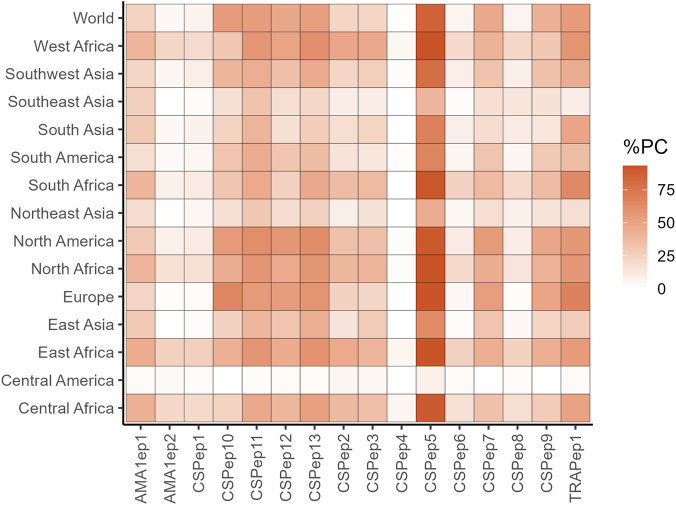 Figure 1
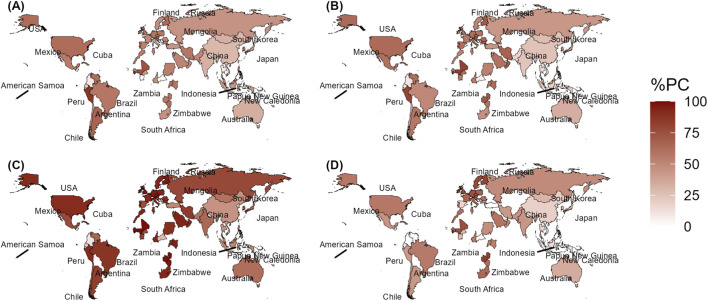 Figure 2
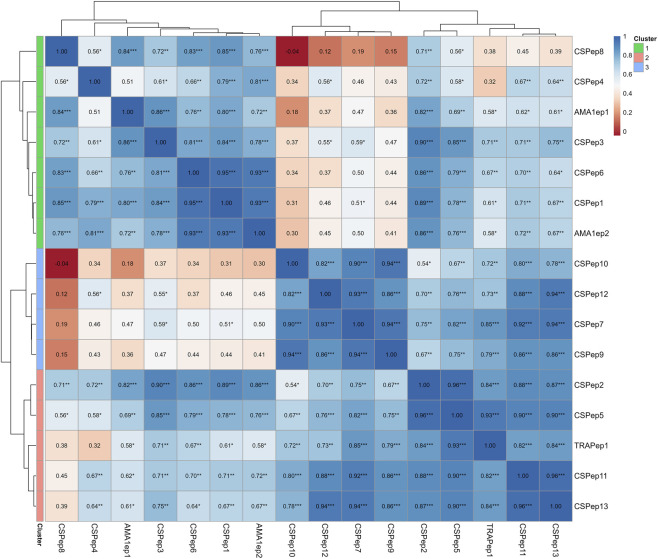 Figure 3
Peer Reviews
No public reviews on file for this paper yet. If you reviewed it on a platform where reviews are public (OpenReview, ICLR, NeurIPS, ICML), you can paste yours below so the community can read it here.
Videos
No videos yet. Explain this paper in a talk, walkthrough, or lecture? Add one.
Taxonomy
Topicsvaccines and immunoinformatics approaches · Malaria Research and Control · Immunotherapy and Immune Responses