Postural test to differentiate primary aldosteronism from low-renin hypertension: a retrospective single-center study
Irene Tizianel, Elena Pagin, Eugenio Ragazzi, Alberto Madinelli, Simona Censi, Chiara Sabbadin, Franco Mantero, Caterina Mian, Mattia Barbot, Giorgia Antonelli, Filippo Ceccato

TL;DR
A postural test helps distinguish primary aldosteronism from low-renin hypertension by analyzing renin levels and other factors.
Contribution
The study introduces the postural stimulation test as a novel method to differentiate primary aldosteronism from low-renin hypertension.
Findings
96% of primary aldosteronism cases were detected when renin levels remained suppressed during the postural test.
Renin response during the postural test and hypokalemia are key parameters for distinguishing primary aldosteronism from low-renin hypertension.
Cluster analysis identified distinct patterns of renin suppression and potassium levels between primary aldosteronism and low-renin hypertension patients.
Abstract
The diagnostic accuracy of screening and confirmatory tests to differentiate primary aldosteronism (PA) among patients with low-renin hypertension (HTN) is suboptimal. We aimed to assess the role of the postural stimulation test (PST) in differentiating PA from low-renin HTN. Clinical and endocrine data in clinostatic position (CP) and orthostatic position (OP) during PST were evaluated in 190 hypertensive patients: 80 with PA and 110 with low-renin HTN. Multivariate techniques were computed: Principal Component Analysis (PCA), Partial Least Square-Discriminant Analysis (PLS-DA) and k-means clustering. PST response differentiated our cohort: 96% of PA were detected in the 56/190 patients with always suppressed renin levels during PST, 80% of patients with low-renin HTN were identified among 56/190 subjects with de-suppression of renin from CP to OP and 78/190 with always measurable…
Genes, proteins, chemicals, diseases, species, mutations and cell lines named across the full text — each resolved to its canonical identifier and authoritative record.
Click any figure to enlarge with its caption.
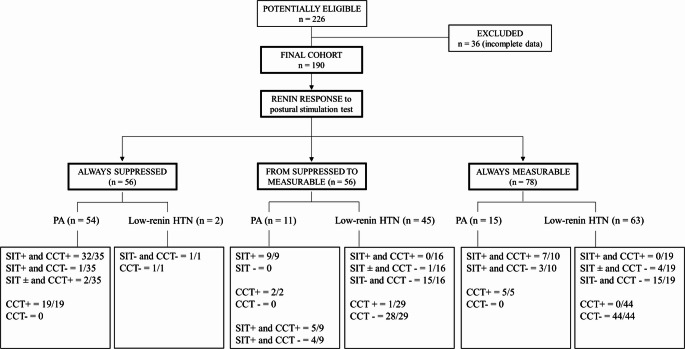 Figure 1
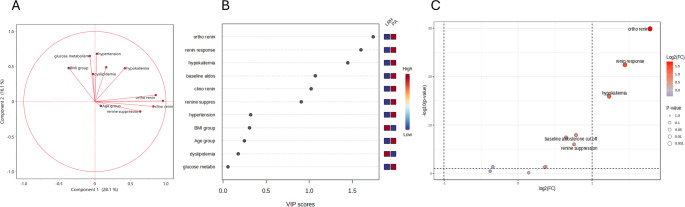 Figure 2
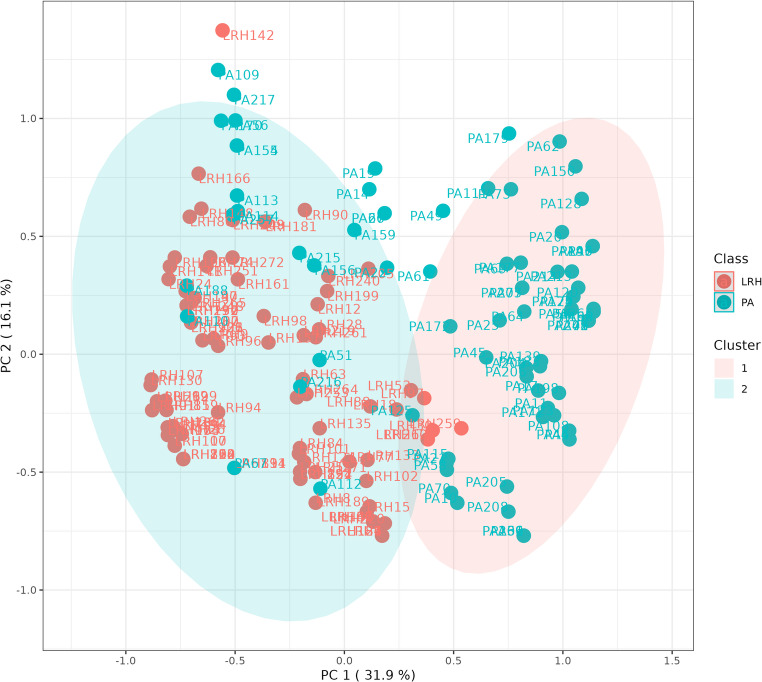 Figure 3
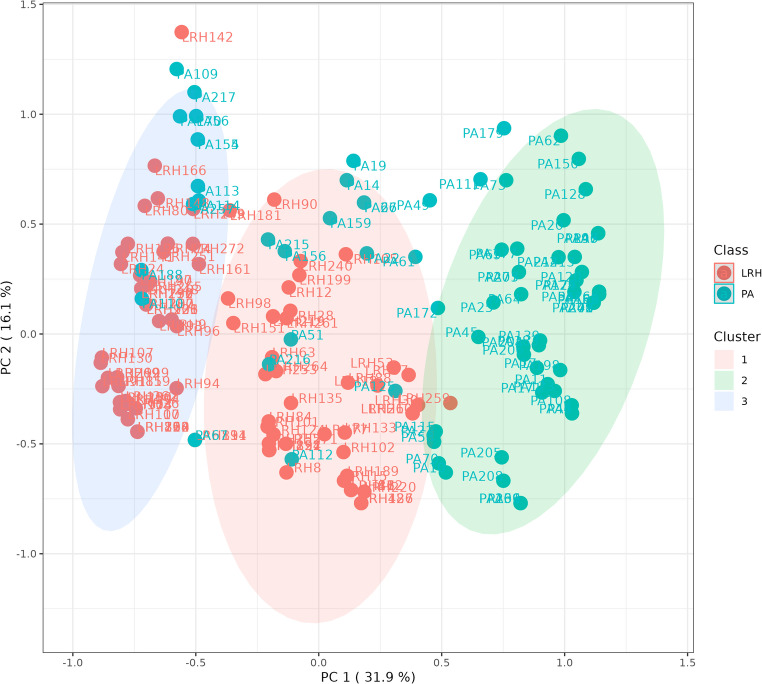 Figure 4
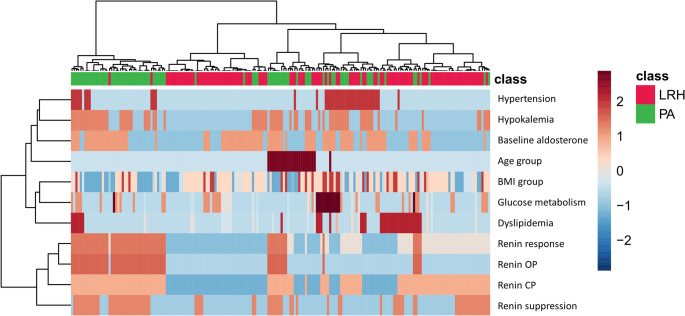 Figure 5
Peer Reviews
No public reviews on file for this paper yet. If you reviewed it on a platform where reviews are public (OpenReview, ICLR, NeurIPS, ICML), you can paste yours below so the community can read it here.
Videos
No videos yet. Explain this paper in a talk, walkthrough, or lecture? Add one.
Taxonomy
TopicsHormonal Regulation and Hypertension · Renin-Angiotensin System Studies · Blood Pressure and Hypertension Studies