Intratumoral heterogeneity and chemotherapy-induced alteration of CLDN18.2 expression in resectable gastric cancer
Shinnosuke Nagano, Yukinori Kurokawa, Takaomi Hagi, Yuichi Motoyama, Takuro Saito, Tsuyoshi Takahashi, Kota Momose, Kotaro Yamashita, Koji Tanaka, Tomoki Makino, Kiyokazu Nakajima, Eiichi Morii, Hidetoshi Eguchi, Yuichiro Doki

TL;DR
This study shows that CLDN18.2 expression in gastric cancer varies within tumors and can change after chemotherapy, which may affect treatment decisions.
Contribution
The study reveals the high prevalence of CLDN18.2 heterogeneity and its alteration after chemotherapy in gastric cancer.
Findings
CLDN18.2 positivity was observed in 31% of patients, with 87% of these showing heterogeneous expression patterns.
The biopsy–surgery concordance rate for CLDN18.2 was 86%, but dropped to 73% in patients with heterogeneous expression.
Only 4 of 11 initially CLDN18.2-positive patients remained positive after chemotherapy.
Abstract
Claudin-18 isoform-2 (CLDN18.2) is a novel biomarker and therapeutic target for gastric cancer (GC). It may exhibit the intratumoral heterogeneity and varying expressions between biopsy and surgically resected specimens as well as pre- and post-chemotherapy, which could impact patient selection for the targeted agents. CLDN18.2 expression was immunohistochemically evaluated in pretreatment biopsy and surgically resected specimens from 183 patients with pT2-T4 GC who underwent upfront gastrectomy. The intratumoral heterogeneity was evaluated by classifying the distribution of CLDN18.2 positive cells as superficial, invasive-front, or random pattern. Furthermore, a separate cohort of 38 patients who underwent neoadjuvant chemotherapy without zolbetuximab were analyzed to compare the pre- and post-treatment CLDN18.2 status. CLDN18.2 positivity was observed in 31% (56/183) of patients.…
Genes, proteins, chemicals, diseases, species, mutations and cell lines named across the full text — each resolved to its canonical identifier and authoritative record.
Click any figure to enlarge with its caption.
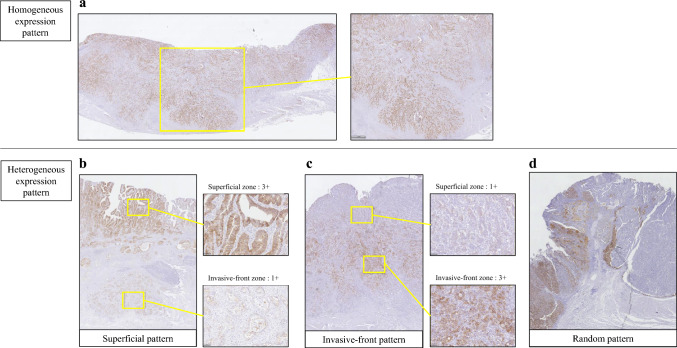 Figure 1
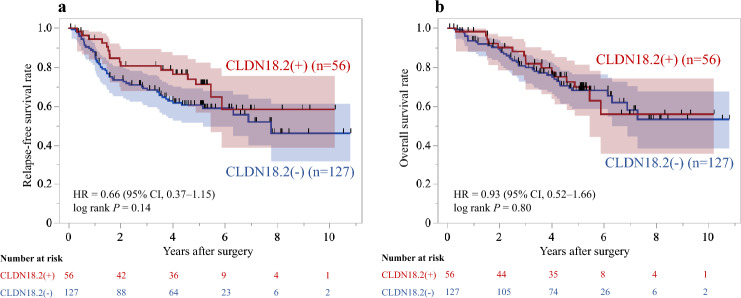 Figure 2
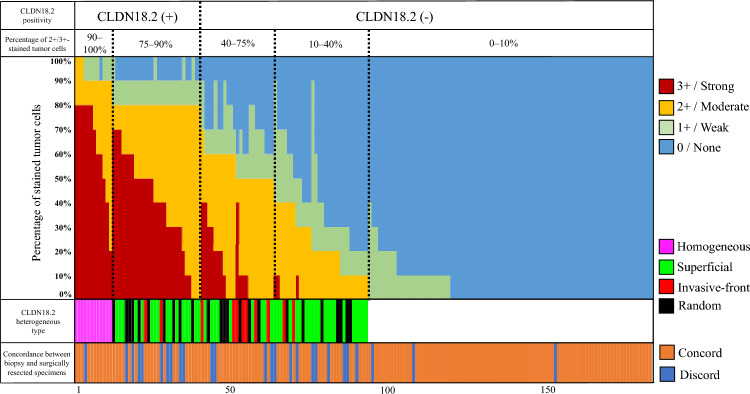 Figure 3
Peer Reviews
No public reviews on file for this paper yet. If you reviewed it on a platform where reviews are public (OpenReview, ICLR, NeurIPS, ICML), you can paste yours below so the community can read it here.
Videos
No videos yet. Explain this paper in a talk, walkthrough, or lecture? Add one.
Taxonomy
TopicsBarrier Structure and Function Studies · Caveolin-1 and cellular processes · Drug Transport and Resistance Mechanisms