Protein carbonylation as a modulator of fibrin clot properties in thyroid disorders: impact of therapy
Kamila W. Undas, Julianna Dąbrowa, Joanna Natorska, Piotr Mazur, Alicja Hubalewska-Dydejczyk, Anetta Undas

TL;DR
This study shows that protein carbonylation, a sign of oxidative stress, affects blood clot properties in thyroid disorders and is reduced after treatment.
Contribution
The study reveals the role of protein carbonylation in altering fibrin clot properties in thyroid disorders and its response to therapy.
Findings
Hyperthyroid and hypothyroid patients had elevated protein carbonylation compared to controls.
Protein carbonylation was linked to denser fibrin clots and impaired fibrinolysis in hyperthyroid patients.
Thyroid hormone normalization reduced protein carbonylation and altered clot properties mainly in hypothyroid patients.
Abstract
Protein carbonylation (PC), a marker of oxidative stress, was shown to be elevated in both hyperthyroid and hypothyroid disorders. These conditions are associated with unfavorable fibrin clot properties. We sought to investigate whether elevated PC is associated with prothrombotic markers in hyperthyroid and hypothyroid individuals before and following effective therapy. We studied 31 hyperthyroid, 29 hypothyroid patients, and 29 sex- and age-matched controls. Along with plasma total PC content, we measured fibrin clot properties (fibrin clot permeability, Ks; clot lysis time, CLT), fibrinolysis proteins, and thrombin generation before and after 3-month successful therapy. Hyperthyroid patients had a tendency to higher PC (+ 9.1%; p = 0.05), while hypothyroid individuals had 17.2% higher PC (p = 0.01) compared with controls, without any difference between the patient groups.…
Genes, proteins, chemicals, diseases, species, mutations and cell lines named across the full text — each resolved to its canonical identifier and authoritative record.
Click any figure to enlarge with its caption.
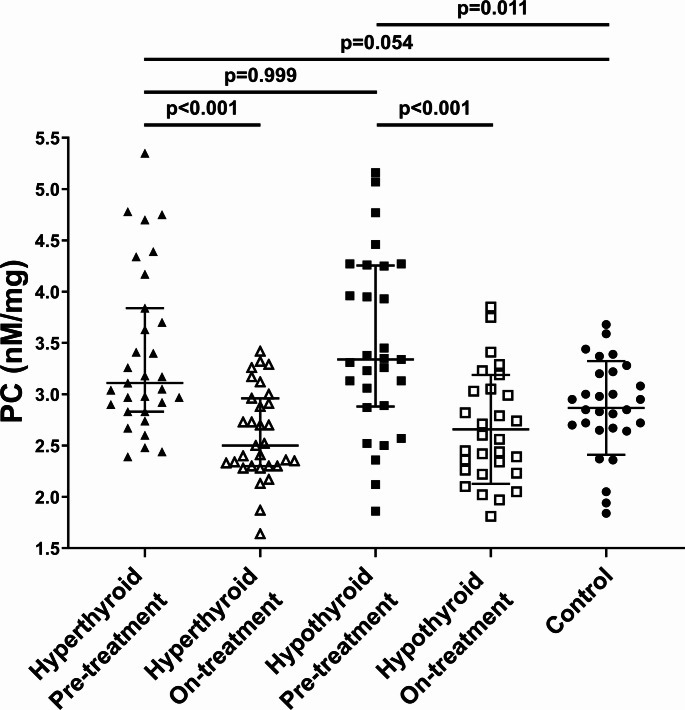 Figure 1
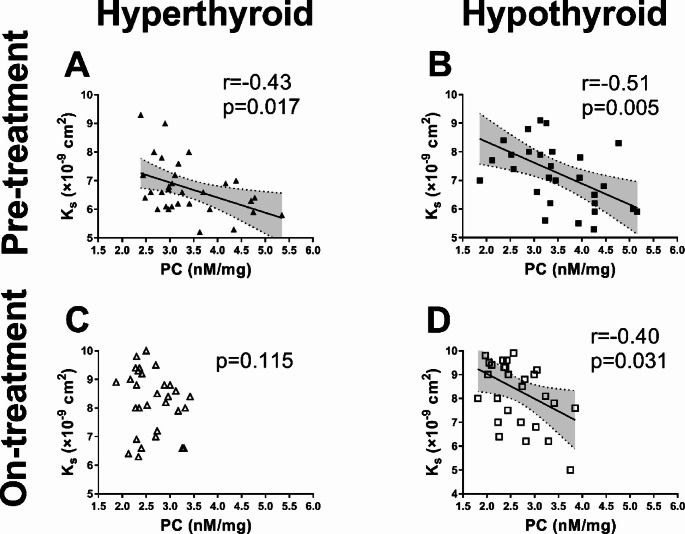 Figure 2
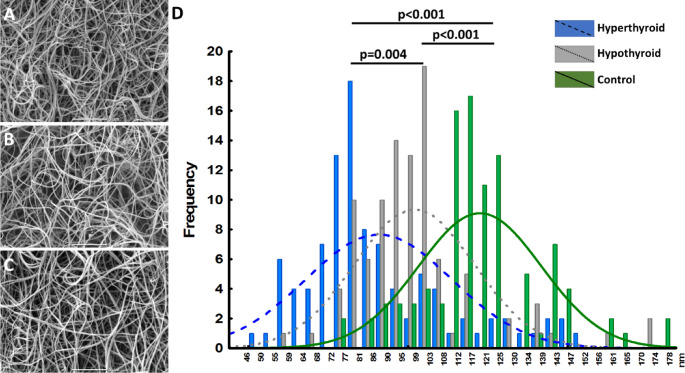 Figure 3
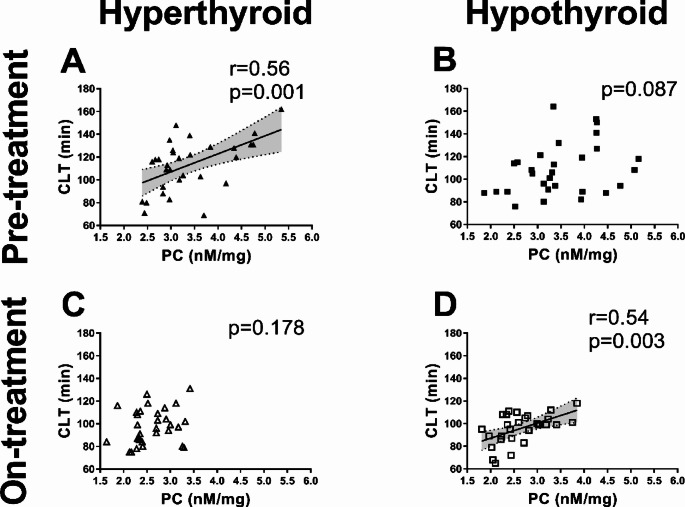 Figure 4
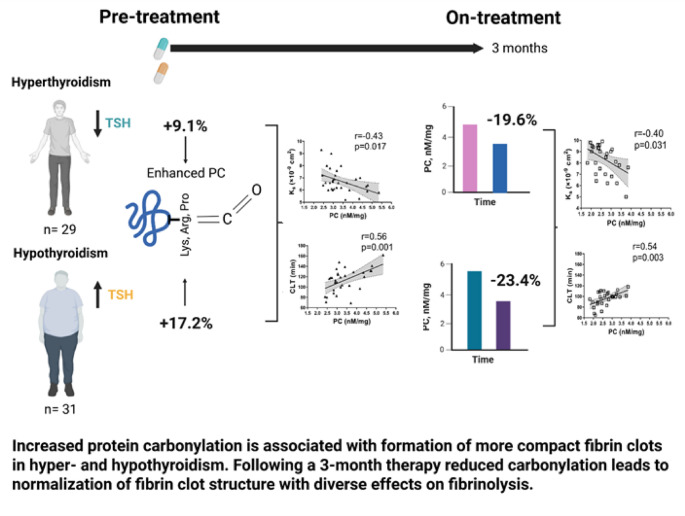 Figure 5
Peer Reviews
No public reviews on file for this paper yet. If you reviewed it on a platform where reviews are public (OpenReview, ICLR, NeurIPS, ICML), you can paste yours below so the community can read it here.
Videos
No videos yet. Explain this paper in a talk, walkthrough, or lecture? Add one.
Taxonomy
TopicsThyroid Disorders and Treatments · Iron Metabolism and Disorders · Bone health and osteoporosis research