Phenolic Profile, Antioxidant Capacity, Enzyme Inhibitory Potential and Physicochemical Properties of Almond Milk and Date Enriched Plant-Based Ice Cream
Abdulkerim Hatipoğlu, Veysi Kızmaz, Mehmet Çavuşoğlu

TL;DR
This study shows that using almond milk and dates in plant-based ice cream improves its health benefits and texture compared to traditional cow's milk and sugar-based versions.
Contribution
The novel contribution is demonstrating how almond milk and dates can enhance the functional and physicochemical properties of plant-based ice cream.
Findings
Almond milk and date formulations showed higher phenolic and flavonoid content and stronger antioxidant activity.
These formulations also exhibited greater inhibition of α-amylase and α-glucosidase enzymes.
IC3 had the best viscosity and melting resistance, while IC4 had the highest overrun.
Abstract
The aim of this study was to evaluate the effects of almond milk and date fruit on the functional and physicochemical properties of ice cream formulations. For this purpose, four ice cream formulations with a fixed fat content of 5% were produced: IC1 (control, condensed cow’s milk and refined sugar); IC2 (milk-based using dates instead of refined sugar); IC3 (plant-based containing almond milk and dates); and IC4 (plant-based containing almond milk and refined sugar). The pH, viscosity, overrun, and melting behavior of the samples were investigated, along with total phenolic and flavonoid contents and antioxidant capacities determined by DPPH, ABTS, and CUPRAC assays. In addition, inhibitory activities against α-amylase, α-glucosidase, urease, tyrosinase, elastase, collagenase, AChE, and BChE enzymes were evaluated. The results indicated that formulations containing almond milk and…
Genes, proteins, chemicals, diseases, species, mutations and cell lines named across the full text — each resolved to its canonical identifier and authoritative record.
Click any figure to enlarge with its caption.
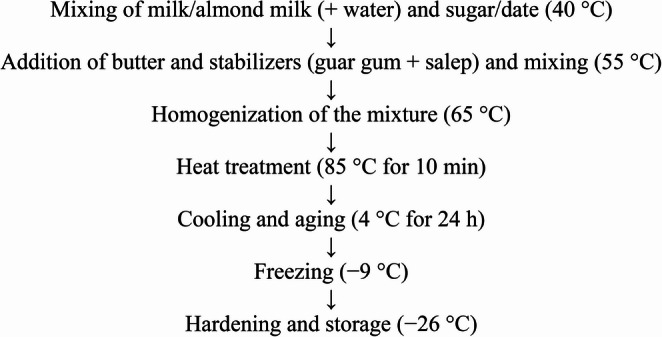 Figure 1
- —Mardin Artuklu University
Peer Reviews
No public reviews on file for this paper yet. If you reviewed it on a platform where reviews are public (OpenReview, ICLR, NeurIPS, ICML), you can paste yours below so the community can read it here.
Videos
No videos yet. Explain this paper in a talk, walkthrough, or lecture? Add one.
Taxonomy
TopicsDate Palm Research Studies · Nuts composition and effects · Bee Products Chemical Analysis
Introduction
In recent years, changes in dietary habits have markedly increased the demand for healthier, functional, and sustainable food products. This trend has particularly accelerated research focused on the development of plant-based alternatives in the dairy and dairy products sector [1]. Lactose intolerance, sensitivity to milk proteins, vegan and vegetarian dietary preferences, along with growing awareness of environmental sustainability and the environmental impacts of animal-based production, are among the primary factors driving the development of alternative formulations to conventional dairy-based products [2]. Indeed, it has been reported that predominantly plant-based dietary patterns offer significant advantages for both human health and environmental sustainability, thereby making the development of plant-based food products a strategic priority within the food industry [3].
Ice cream is a widely consumed dairy product; however, it is typically characterized by high sugar and saturated fat contents. This composition raises nutritional concerns, particularly in the context of the increasing global prevalence of diabetes and other metabolic disorders, emphasizing the need for the development of more balanced and functionally improved ice cream formulations [4]. In this regard, the incorporation of plant-derived milks and natural sweeteners into frozen dessert formulations represents an effective approach to reducing reliance on refined sugars and animal-derived fats.
Among plant-based milk alternatives, almond milk is regarded as a nutritionally advantageous option due to its lipid profile rich in unsaturated fatty acids, low saturated fat content, and absence of cholesterol [5]. Moreover, almond milk has been widely investigated in product development studies aimed at improving glycemic control and reducing cardiometabolic risk, owing to its lower energy density compared to cow’s milk and its content of plant-derived bioactive compounds [6].
Dates are fruits rich in natural sugars, dietary fiber, phenolic compounds, and flavonoids, and they have long been recognized for their nutritional and functional value. The antioxidant capacity and bioactive profile of dates have been extensively reported, with several studies indicating that their phenolic-rich composition may exert inhibitory effects on carbohydrate-digesting enzymes and contribute to the regulation of glycemic response [7]. Due to these characteristics, dates represent a promising natural sweetener for functional food formulations as an alternative to refined sugars. Their fiber content and phenolic constituents are associated with a more balanced metabolic response, supporting their use in the development of nutritionally improved food products [8].
Building on the functional potential of both almond milk and date fruit, their incorporation into frozen dessert formulations as complementary ingredients represents a promising yet underexplored research direction. The use of plant-based milks as dairy alternatives in ice cream and frozen dessert formulations has received increasing scientific attention in recent years. Bekiroglu et al. [9] demonstrated that walnut milk can be successfully incorporated into vegan ice cream formulations, yielding products with acceptable rheological properties, favorable melting behavior, and a distinctive volatile compound profile, thereby establishing the technological feasibility of nut-based milk alternatives in frozen dessert systems. Similarly, Bekiroglu et al. [10] reported that almond milk fermented with probiotic lactobacilli strains retained substantial phenolic content and exhibited enhanced antioxidant activity, highlighting the capacity of almond milk to serve as an effective functional matrix for bioactive compound delivery. However, the application of almond milk as a direct dairy substitute in ice cream—particularly in combination with phenolic-rich natural sweeteners such as date fruit—and its associated functional bioactive potential remain insufficiently characterized in the literature. Despite these developments, studies simultaneously assessing the phenolic profile, antioxidant capacity, enzyme inhibitory potential, and physicochemical properties of almond milk-based ice cream formulations incorporating natural sweeteners such as date fruit remain scarce.
The simultaneous use of almond milk and date fruit in a single ice cream formulation represents a novel approach that has not yet been comprehensively investigated. While prior studies have individually characterized the functional properties of almond milk as a dairy alternative and dates as a natural sweetener, their combined incorporation into a frozen dessert matrix introduces unique ingredient interactions that may synergistically enhance both the functional and physicochemical properties of the final product. Almond milk contributes plant-derived proteins, unsaturated fatty acids, and bioactive compounds, whereas date fruit provides natural sugars, dietary fiber, and phenolic constituents with demonstrated enzyme inhibitory and antioxidant activities [7, 8]. The co-formulation of these two ingredients is therefore expected to yield a plant-based ice cream with improved bioactive compound retention, enhanced antioxidant and enzyme inhibitory potential, and favorable physicochemical characteristics—properties that have not been collectively evaluated in the existing literature. Within this context, the aim of the present study was to comparatively investigate the functional and physicochemical properties of ice cream formulations containing almond milk and dates, and to assess the potential of these ingredients in the development of functionally enriched ice cream products.
Materials and Methods
Low-fat (2%) condensed cow’s milk used in ice cream production was obtained from Nestlé (Vevey, Switzerland). The plant-based milk base, almond milk, was purchased from Bigetaş Biotechnology Inc. (Plantero, İzmir, Turkey) and contained 2.1 g fat, 0.8 g protein, 0.8 g total carbohydrate, and 0.5 g dietary fiber per 100 mL; a commercially standardized product was preferred to ensure compositional consistency across experimental batches. Date (Phoenix dactylifera L.) was obtained from local markets in Diyarbakır, Turkey. The botanical identification of the date material was carried out by Prof. Dr. Cumali Keskin, a botanist at Mardin Artuklu University (Mardin, Turkey). Unsalted butter (82% fat), used to standardize the fat content of the formulations, and salep were procured from local markets and producers in Diyarbakır, Turkey. Guar gum, employed as a stabilizer, was supplied by Rama Gum Industries Ltd. (Gujarat, India). Ice cream production was performed using a Sage ice cream machine (BCI600 The Smart Scoop™, Sydney, Australia), and homogenization was carried out using an IKA T 25 Digital Ultra-Turrax^®^ homogenizer (IKA-Werke GmbH & Co. KG, Breisgau, Germany).
All chemicals and reagents used in the analyses, including Folin–Ciocalteu reagent (FCR), sodium carbonate (Na₂CO₃), pyrocatechol, quercetin, aluminium nitrate, and potassium acetate, were of analytical grade and purchased from Sigma-Aldrich (St. Louis, MO, USA). 2,2-diphenyl-1-picrylhydrazyl (DPPH), 2,2′-azino-bis(3-ethylbenzothiazoline-6-sulfonic acid) (ABTS), neocuproine, cupric chloride, butylated hydroxytoluene (BHT), and α-tocopherol were also obtained from Sigma-Aldrich (St. Louis, MO, USA). All enzymes (acetylcholinesterase (AChE), butyrylcholinesterase (BChE), urease, tyrosinase, elastase, collagenase, α-amylase, and α-glucosidase), substrates, and reference inhibitors (galantamine, thiourea, kojic acid, oleanolic acid, epicatechin gallate, and acarbose) were purchased from Sigma-Aldrich (St. Louis, MO, USA).
Ice Cream Production
Four different types of ice cream were produced with the fat content standardized at 5% (Table 1). Prior to use, dates were washed with tap water, pitted manually, and ground using a meat grinder to obtain a homogeneous paste.
Table 1. Ingredients used in ice cream formulations (%, w/w)SamplesCondensed cow’s milkAlmond milkGranulated sugarDateWaterButterGuar gumSalepIC177.10-20--2.400.450.05IC271.90--25-2.600.450.05IC3-15.00-2553.705.800.450.05IC4-15.0020-58.705.800.450.05IC1 control ice cream,* IC2* milk- and date-based ice cream, IC3 almond milk- and date-based ice cream, IC4 almond milk- and sugar-based ice cream
Ice cream production was carried out following the procedure illustrated in Fig. 1.
Fig. 1. Flow diagram illustrating the manufacturing process of ice cream
Extraction
To obtain a homogeneous mixture, a representative sample was taken from each ice cream formulation and homogenized using a homogenizer for approximately 5 min. Following homogenization, 1,000 mg of each sample was accurately weighed and transferred into centrifuge tubes. Subsequently, 10 mL of 80% aqueous ethanol (v/v) was added to each sample and mixed thoroughly using a vortex mixer. Extraction was performed in an ultrasonic bath for 60 min at 25 °C. The extracts were then centrifuged at 6,000 rpm for 15 min, and the resulting supernatants were collected and filtered through 0.45 μm membrane filters. The obtained extracts were stored at + 4 °C until analysis. Absorbance measurements were performed using a microplate reader (Biotek EON, BioTek Instruments, Winooski, VT, USA) at Dicle University Faculty of Pharmacy (Diyarbakır, Turkey).
Determination of Total Phenolic and Flavonoid Contents
The total phenolic contents (TPC) of the sample extracts were determined using FCR and expressed as pyrocatechol equivalents (PEs), according to the method described by Slinkard and Singleton [11]. A 1,000 ppm pyrocatechol standard solution was prepared, and aliquots of 0, 1, 2, 3, 4, 5, 6, 7, and 8 µL were taken and adjusted to a final volume of 184 µL with distilled water. The 80% aqueous ethanol (v/v) extracts of the samples were prepared at a concentration of 1,000 µg/mL. Aliquots of 4 µL were taken from each sample solution and adjusted to a final volume of 184 µL with distilled water. To both standard and sample solutions, 4 µL of FCR was added, followed by the addition of 12 µL of 2% Na₂CO₃ solution after 3 min. The mixtures were incubated at room temperature for 2 h, after which absorbance was measured at 760 nm. Total phenolic contents were calculated using the calibration curve obtained from the pyrocatechol standard.
The total flavonoid contents (TFC) of the extracts were determined using the aluminum nitrate colorimetric method and expressed as quercetin equivalents, according to Moreno et al. [12]. A 1,000 ppm quercetin standard solution was prepared, and aliquots of 0, 1, 2, 3, 4, 5, 6, 7, and 8 µL were taken and adjusted to a final volume of 192 µL with 80% ethanol. Subsequently, 4 µL of 1 M potassium acetate was added, and after 1 min, 4 µL of 10% aluminum nitrate (Al(NO₃)₃) solution was added. Following incubation for 40 min, absorbance was measured at 415 nm using a microplate reader. The absorbance values of the ethanol extracts prepared at a single concentration (1,000 ppm) were measured in the same manner. Total flavonoid contents were calculated using the calibration curve obtained from the quercetin standard.
Antioxidant Capacity Assays
The antioxidant activities of the sample extracts were determined using DPPH radical scavenging, ABTS radical cation scavenging, and cupric ion reducing antioxidant capacity (CUPRAC) assays. All analyses were performed in triplicate for each sample, and BHT and α-tocopherol were used as reference standards.
The free radical scavenging activities of the extracts were determined using the stable DPPH radical according to the method described by Blois [13]. The 80% aqueous ethanol (v/v) extracts of the samples were prepared at a concentration of 1,000 µg/mL. Aliquots of 2, 5, 10, and 20 µL were taken from these stock solutions and adjusted to a final volume of 40 µL with ethanol, followed by the addition of 160 µL of 0.1 mM DPPH solution. After incubation at room temperature in the dark for 30 min, absorbance was measured at 517 nm. The obtained absorbance values were compared with the control, and free radical scavenging activity (% inhibition) was calculated using the following equation.
\documentclass[12pt]{minimal} \usepackage{amsmath} \usepackage{wasysym} \usepackage{amsfonts} \usepackage{amssymb} \usepackage{amsbsy} \usepackage{mathrsfs} \usepackage{upgreek} \setlength{\oddsidemargin}{-69pt} \begin{document}$$\%\,\mathrm{Inhibition}\,=\,\left(\mathrm{A}_\mathrm{control}-\,\mathrm{A}_\mathrm{sample}\right)\,/\,\mathrm{A}_\mathrm{control}\times\,{100} \,; \mathrm{A}:\mathrm{Absorbance}$$\end{document}The ABTS radical cation scavenging activities of the samples were determined according to the method described by Re et al. [14]. Stock solutions were prepared by dissolving 10 mg of the ethanol extracts of the samples in 10 mL of ethanol. Aliquots of 2, 5, 10, and 20 µL were taken from the stock solutions, adjusted to a final volume of 40 µL with ethanol, and mixed with 160 µL of a 7 mM ABTS radical cation solution. After incubation in the dark for 6 min, absorbance was measured at 734 nm. The absorbance values of the samples were evaluated against the control. ABTS radical cation scavenging activity (% inhibition) was calculated using the following equation.
\documentclass[12pt]{minimal} \usepackage{amsmath} \usepackage{wasysym} \usepackage{amsfonts} \usepackage{amssymb} \usepackage{amsbsy} \usepackage{mathrsfs} \usepackage{upgreek} \setlength{\oddsidemargin}{-69pt} \begin{document}$$\%\,\mathrm{Inhibition}\,=\,\left(\mathrm{A}_\mathrm{control}-\,\mathrm{A}_\mathrm{sample}\right)\,/\,\mathrm{A}_\mathrm{control}\times\,{100}$$\end{document}In the CUPRAC method, antioxidant compounds present in the samples reduce the Cu(II)–neocuproine (Nc) complex to the colored Cu(I)–Nc chelate, the absorbance of which is measured at 450 nm. Cu(II), neocuproine, and ammonium acetate (NH₄OAc) buffer were added to the prepared samples and standards to obtain final concentrations of 10, 25, 50, and 100 µg/mL. After incubation for 1 h, absorbance was measured at 450 nm [15]. The absorbance values of the samples were evaluated against those of the standards.
Enzyme Inhibition Assays
Validated and well-established methods reported in the literature were employed for all enzyme inhibition assays. Each assay was conducted independently in triplicate.
Anticholinesterase activity was determined using the spectrophotometric method developed by Ellman et al. [16]. This method is based on the reaction of acetylthiocholine iodide (ATChI) and butyrylthiocholine iodide, the respective substrates of AChE and BChE, with thiocholine and 5,5′-dithiobis(2-nitrobenzoic acid) (DTNB). The formation of the yellow-colored 5-thio-2-nitrobenzoate anion (TNB) was monitored by measuring absorbance at 412 nm. Galantamine was used as the standard reference inhibitor [17].
The inhibitory activity of the samples against urease was evaluated using the spectrophotometric method described by Zahid et al. [17], in which the amount of ammonia produced as a result of urea hydrolysis was measured to calculate the inhibition percentage. Thiourea was used as the standard urease inhibitor.
To assess the anti-aging potential of the samples, tyrosinase, elastase, and collagenase inhibition activities were determined. Tyrosinase inhibition was evaluated according to the method developed by Hearing and Jiménez [18], which measures the conversion of L-3,4-dihydroxyphenylalanine (L-DOPA) substrate to dopachrome catalyzed by tyrosinase, with absorbance recorded at 475 nm. Kojic acid was used as the reference inhibitor for tyrosinase. Elastase inhibition activity was determined according to the method of Kraunsoe et al. [19], using N-succinyl-(Ala)₃-nitroanilide (Suc-Ala₃-pNA) as the substrate, and oleanolic acid was used as the reference inhibitor. Collagenase inhibition activity was assessed following the method of Thring et al. [20], using N-(3-[2-furyl]acryloyl)-Leu-Gly-Pro-Ala (FALGPA) as the substrate. Epicatechin gallate was employed as the standard inhibitor for collagenase.
The antidiabetic potential of the samples was evaluated by determining α-glucosidase and α-amylase inhibition activities using the methods developed by Lazarova et al. [21] and the Caraway–Somogyi iodine/potassium iodide (IKI) method, respectively. In the α-glucosidase inhibition assay, p-nitrophenyl-α-D-glucopyranoside (PNPG) was used as the substrate, whereas starch was used as the substrate in the α-amylase inhibition assay. Acarbose was used as the standard reference inhibitor in both assays.
Physicochemical Analyses
Overrun
A fixed volume was weighed before (mix) and after the freezing process. The volume increase was calculated using the following equation [22]:
% Overrun = (Weight of ice cream mix before freezing (g) − Weight of ice cream after freezing (g)) / Weight of ice cream after freezing (g) × 100
\documentclass[12pt]{minimal} \usepackage{amsmath} \usepackage{wasysym} \usepackage{amsfonts} \usepackage{amssymb} \usepackage{amsbsy} \usepackage{mathrsfs} \usepackage{upgreek} \setlength{\oddsidemargin}{-69pt} \begin{document}$$\begin{aligned}&\%\;Overrun\;=\;(Weight\;of\;ice\;cream\;mix\;before\;freezing\;(g)\;\\&-\;Weight\;of\;ice\;cream\;after\;freezing\;(g))\;\\&/\;Weight\;of\;ice\;cream\;after\;freezing\;(g)\;\times\;100\end{aligned}$$\end{document}Melting Tests
Melting tests were performed using a wire mesh grid with a wire thickness of 0.9 mm and 10 openings per 2.54 cm, placed over 250 mL beakers. Ice cream samples stored at − 26 °C were placed on the wire mesh grids positioned on the beakers and allowed to melt at room temperature (20 ± 0.5 °C) for 60 min.
The time elapsed until the first drop of melted ice cream appeared was recorded as the first dripping time (min). The melted portions of the ice cream samples were weighed at 30 and 60 min, and the melting percentage was calculated using the following equation:
\documentclass[12pt]{minimal} \usepackage{amsmath} \usepackage{wasysym} \usepackage{amsfonts} \usepackage{amssymb} \usepackage{amsbsy} \usepackage{mathrsfs} \usepackage{upgreek} \setlength{\oddsidemargin}{-69pt} \begin{document}$$\begin{aligned}&Melting\;percentage\;(\%)\;=\;(Weight\;of\;melted\;portion\;(g)\;\\&/\;Weight\;of\;initial\;ice\;cream\;(g))\;\times\;100\end{aligned}$$\end{document}The melted portions of the ice cream samples were weighed after 60 min, and the melting rate was calculated according to the following equation [22]:
\documentclass[12pt]{minimal} \usepackage{amsmath} \usepackage{wasysym} \usepackage{amsfonts} \usepackage{amssymb} \usepackage{amsbsy} \usepackage{mathrsfs} \usepackage{upgreek} \setlength{\oddsidemargin}{-69pt} \begin{document}$$Melting\;rate\;(g/min)=\;Amount\;of\;melted\;ice\;cream\;(g)\;/\;Elapsed\;time\;(min)$$\end{document}Viscosity
Ice cream samples were transferred from − 26 °C to − 18 °C and stored at this temperature for 18 h. Subsequently, the samples were moved to a refrigerator at 4 °C and held for 4 h, followed by equilibration at room temperature (18 °C). After this stepwise tempering process, the samples were subjected to viscosity analysis. Viscosity measurements were performed using a rotational viscometer (NDJ-9 S, Graigar, China) equipped with spindle No. 4 at rotational speeds of 30 and 60 rpm. The results were expressed in centipoise (cP) (Table 4).
pH
The pH values of the ice cream samples were determined using a combined glass electrode pH meter (HI2002, Hanna Instruments Inc., Cluj-Napoca, Romania) at 22 °C.
Statistical Analysis
All experimental results are expressed as mean ± standard deviation. Statistical analyses were performed using SPSS^®^ software (version 25.0; IBM Corp., Armonk, New York, USA). Differences among sample means were analyzed using one-way analysis of variance (ANOVA), followed by Tukey’s multiple comparison test, with statistical significance set at P < 0.05.
Results and Discussion
Total Phenolic and Flavonoid Content
Statistically significant differences were observed among the ice cream formulations in terms of total phenolic content (TPC) (P < 0.05). The highest TPC value was detected in the IC3 sample, whereas the lowest value was recorded in the IC4 sample (Table 2). These differences are thought to be associated with the presence of plant-based ingredients such as almond milk and date fruit used in the formulations. Plant- and fruit-derived ingredients represent important sources of polyphenolic compounds, and their incorporation into ice cream formulations may contribute to the retention of these compounds during processing. Moreover, the use of phenolic- and flavonoid-rich fruit-derived components can lead to increased total phenolic content and improved antioxidant potential of the final product.
Table 2. Total phenolic and flavonoid contents and antioxidant activities of ice cream samples^^SamplesTotal phenolic content(µg PEs/mg)^^Total flavonoid content(µg QEs/mg)^****^Antioxidant activity (µg/mL)^^DPPH(IC_50_)ABTS(IC_50_)CUPRAC(A_0.5_)IC182.61 ± 0.96^b^346.02 ± 3.16^a^≥ 1000≥ 1000155.00 ± 1.44^a^IC262.91 ± 0.00^c^161.67 ± 3.32^d^≥ 1000≥ 100025.00 ± 0.55^c^IC3230.71 ± 4.80^a^211.06 ± 4.43^b^≥ 1000≥ 100025.84 ± 0.35^bc^IC413.99 ± 0.34^d^177.32 ± 3.93^c^254.53 ± 2.24≥ 100028.00 ± 0.65^b^BHT--34.42 ± 0.7417.87 ± 0.558.57 ± 0.21α-TOC--15.26 ± 0.257.66 ± 0.1315.98 ± 0.24^^, Values (mean ± SD,n=3);^^, Results are presented as IC₅₀ values;^^, Pyrocatechol equivalent phenolic content (y = 0.0361 (µg)+0.0531 (r^2^:0.9890);^**^, Quercetin equivalent flavonoid content (y = 0.0246 (µg) + 0.0233 (r^2^:0.9927)IC1 control ice cream, IC2 milk- and date-based ice cream, IC3 almond milk- and date-based ice cream, IC4 almond milk- and sugar-based ice cream^a−d^, Values indicated by different lowercase letters in the same column show significant differences among samples with the same maturation period (P < 0.05)
Significant differences in total flavonoid content were observed among the samples, with IC3 and IC1 in particular exhibiting higher flavonoid levels. Given that flavonoids constitute an important subclass of phenolic compounds, this increase is expected to be associated with enhanced biological activity potential. Indeed, previous studies have demonstrated that phenolic-rich extracts can significantly inhibit α-glucosidase and α-amylase activities under in vitro conditions [23].
The TPC value recorded for IC3 (230.71 µg PEs/mg) was the highest among all formulations, which is consistent with the known phenolic-rich composition of both date fruit and almond milk [7, 8]. In contrast, the notably low TPC of IC4 (13.99 µg PEs/mg), despite containing almond milk, suggests that the phenolic contribution of almond milk alone is limited under the processing conditions applied, and that the presence of date fruit is the primary driver of elevated TPC in the formulations. These findings are in agreement with previous studies demonstrating that the incorporation of fruit-derived ingredients into frozen dessert matrices can significantly enhance total phenolic content [24, 25]. Regarding total flavonoid content, IC1 (346.02 µg QEs/mg) exhibited the highest value among all formulations, which may be attributed to the Maillard reaction products formed during the heat treatment of condensed cow’s milk, as these thermally generated compounds are known to contribute to the flavonoid-like chromogenic response in colorimetric assays [26]. IC3 (211.06 µg QEs/mg) ranked second, reflecting the combined flavonoid contribution of both date fruit and almond milk. The lower TFC values of IC2 (161.67 µg QEs/mg) and IC4 (177.32 µg QEs/mg) relative to IC3 suggest that neither date fruit nor almond milk alone is sufficient to achieve the flavonoid retention observed when both ingredients are used in combination, pointing to a potential synergistic effect in IC3. These findings are consistent with reports indicating that the co-incorporation of phenolic-rich fruit sources and plant-based milks can enhance total flavonoid retention in processed food matrices [23, 26].
The inhibitory potential of phenolic compounds against carbohydrate-digesting enzymes may be associated with a reduction in carbohydrate hydrolysis through interactions between phenolic molecules and enzyme active sites or through modulation of enzyme–substrate complex stability, which could contribute to attenuation of the postprandial glycemic response. In addition, phenolic and flavonoid compounds are generally considered to play an important role in the antioxidant activity of food systems [26].
The concept of functional ice cream further supports these findings. Functional formulations aim to incorporate health-promoting ingredients—such as plant extracts and phenolic-rich components—into products without adversely affecting their sensory and technological properties [27].
Antioxidant Activity
The antioxidant activities of the ice cream samples were evaluated using DPPH, ABTS, and CUPRAC assays, and significant formulation-dependent differences were observed (Table 2). The high IC₅₀ values obtained in the DPPH and ABTS assays indicate that the free radical scavenging capacities of the samples were relatively limited. This phenomenon can be attributed to the reduced extractability of phenolic compounds in complex food matrices due to their interactions with proteins and lipid phases, a trend frequently reported in the literature [26].
In contrast, the CUPRAC method provided a clearer differentiation of antioxidant capacities among the samples, with IC2 and IC3 exhibiting higher reducing capacities. Owing to its ability to respond to both hydrophilic and lipophilic antioxidant compounds, the CUPRAC assay is generally regarded as well suited for the assessment of total antioxidant potential in multi-component and heterogeneous systems such as ice cream. The CUPRAC A₀.₅ values obtained in the present study (IC2: 25.00 µg/mL; IC3: 25.84 µg/mL; IC4: 28.00 µg/mL) are notably lower than that of IC1 (155.00 µg/mL), indicating substantially greater reducing capacity in the date- and/or almond milk-containing formulations. When compared with reference standards, BHT and α-tocopherol exhibited A₀.₅ values of 8.57 and 15.98 µg/mL, respectively. The A₀.₅ values of IC2 and IC3 were in a comparable range to α-tocopherol, suggesting that the combined incorporation of date fruit and almond milk can confer a meaningful level of reducing antioxidant capacity to the ice cream matrix. In contrast, DPPH and ABTS IC₅₀ values for most formulations were ≥ 1,000 µg/mL, substantially higher than values typically reported for phenolic-rich plant food extracts (e.g., 50–500 µg/mL) [24, 26]. This discrepancy is consistent with the well-documented phenomenon of matrix-bound phenolics exhibiting attenuated radical scavenging performance in complex food systems compared to isolated extracts, and underscores the superior suitability of the CUPRAC assay for antioxidant evaluation in heterogeneous dairy and plant-based matrices. Indeed, only IC4 showed detectable DPPH activity (IC₅₀: 254.53 µg/mL), a finding that may reflect the greater extractability of specific phenolic species present in almond milk under the assay conditions employed.
Functional ice creams typically contain numerous bioactive compounds with diverse chemical structures, whose antioxidant behaviors cannot be fully characterized by a single analytical method. Therefore, the combined use of multiple assays is recommended for a more comprehensive and reliable evaluation of antioxidant capacity [27].
The observed differences in antioxidant activity may be attributed to interactions between plant-derived bioactive compounds and the ice cream matrix. Binding of phenolic compounds to proteins or their incorporation into the lipid phase can markedly influence their extractability and responses in different antioxidant assays [26].
Studies on functional frozen desserts have shown that the combined use of plant-based milks and phenolic-rich fruit sources allows enhancement of antioxidant capacity while preserving sensory and physical quality attributes. This is particularly important for achieving the quality–functionality balance that represents a key objective in functional food development [24].
Overall, the incorporation of plant-based ingredients such as date fruit and almond milk into ice cream formulations resulted in significant increases in total phenolic and flavonoid contents, which were also reflected in the antioxidant profiles of the samples. Among the formulations, IC3—containing a combination of plant-based components—emerged as the most promising in terms of antioxidant capacity and functional potential. These findings are in agreement with previous studies indicating that enrichment with plant- and fruit-derived ingredients can enhance bioactive compound content without causing pronounced deterioration in sensory properties [25]. Consequently, functional ice cream appears to be a suitable and promising food matrix for delivering health-promoting compounds while maintaining consumer-acceptable taste and texture attributes [27].
Enzyme Inhibition
The results presented in Table 3 demonstrate that ice cream formulations exhibited distinct differences in their inhibitory activities against various enzymes. With respect to urease inhibition, the IC3 sample showed the highest inhibition percentage (99.45%), whereas IC4 exhibited the lowest activity. These findings are consistent with previous reports indicating that phenolic compounds and other phytochemicals derived from plant sources can modulate urease activity. In particular, phenolic compounds with hydroxylated aromatic structures have been shown to exert inhibitory effects by binding to the active site of the urease enzyme [28]. This suggests that phenolic compounds can access enzyme targets and retain their biological activity even within a complex food matrix such as ice cream. Moreover, the molecular structural characteristics of phenolic compounds are considered critical determinants of inhibitory efficacy, as certain polyphenols may bind to enzyme active sites with high affinity, thereby enhancing inhibition [29].
Tyrosinase inhibition was observed exclusively in the IC4 sample, while no significant inhibitory activity was detected in the other formulations. This finding indicates that tyrosinase inhibition is highly sensitive to both the type and concentration of phenolic compounds present. Previous studies have reported that the capacity of plant-derived phenolic profiles to modulate tyrosinase activity is particularly associated with high-molecular-weight flavonoids and specific phenolic acids, and that this effect can vary substantially depending on the composition of the plant extract used [30].
Table 3. Enzyme inhibition (%) activities of ice cream samples^^SamplesEnzyme inhibition % at 100 µg/mLAChEBChEUreaseTyrosinaseElastaseCollagenaseα-amylaseα-glucosidaseIC1na^^na77.69 ± 1.84^c^5.93 ± 0.05na33.73 ± 0.48^c^96.58 ± 1.87^a^naIC2nana97.52 ± 3.51^b^na69.39 ± 1.8042.05 ± 0.78^b^35.86 ± 0.55^b^naIC3nana99.45 ± 3.68^a^na95.48 ± 1.2514.11 ± 0.10^d^21.77 ± 1.04^c^91.43 ± 2.32IC4nana39.67 ± 0.51^d^27.33 ± 0.66na55.29 ± 0.97^a^12.87 ± 0.57^d^naGalantamine^^86.69 ± 1.2482.49 ± 0.22------Thiourea^^--97.85 ± 1.49-----Kojic acid^^---89.63 ± 1.10----Oleanolic acid^^----63.31 ± 1.92---Epicatechingallate^^-----68.52 ± 1.06--Acarbose------32.71 ± 0.7739.50 ± 0.48^^, Values (mean ± SD, n = 3). Values were calculated according to negative control; ^^, Standard compound; ^^, Not activeIC1 control ice cream, IC2 milk- and date-based ice cream, IC3 almond milk- and date-based ice cream, IC4 almond milk- and sugar-based ice cream^a−d^, Values indicated by different lowercase letters in the same column show significant differences among samples with the same maturation period (P < 0.05)
With respect to elastase and collagenase inhibition, the IC3 (95.48%) and IC2 (69.39%) samples exhibited notable inhibitory effects against elastase, whereas IC4 (55.29%) demonstrated the highest collagenase inhibition. The inhibitory effects of phenolic compounds on proteolytic enzymes such as elastase and collagenase have been widely reported in recent studies. In particular, phenolic-rich plant sources—including date fruit and Citrus unshiu—have been shown to possess inhibitory potential against multiple enzymes, including elastase, tyrosinase, and collagenase [30, 31]. Given that elastase and collagenase activities are closely associated with aging and tissue degradation processes, their inhibition represents an important indicator for evaluating the biological relevance of phenolic compounds in functional food research.
Inhibition of α-amylase and α-glucosidase—key enzymes involved in carbohydrate metabolism—was particularly pronounced in the IC1 and IC3 samples. The IC1 formulation exhibited an α-amylase inhibition of 96.58%, while IC3 showed a notably high α-glucosidase inhibition of 91.43%. These results are consistent with existing literature demonstrating that phenolic compounds can inhibit carbohydrate-digesting enzymes, thereby slowing glucose release and contributing to the regulation of postprandial glycemic response. Phenolic-rich plant extracts have previously been reported to exert strong inhibitory effects on α-amylase and α-glucosidase with low IC₅₀ values [32]. It should be noted that the originally reported inhibition values for certain enzyme–formulation combinations exceeded 100% due to a calculation error identified during the revision process. The affected values have been corrected accordingly: IC1 α-amylase inhibition is 96.58 ± 1.87%, IC3 urease inhibition is 99.45 ± 3.68%, IC3 elastase inhibition is 95.48 ± 1.25%, and IC3 α-glucosidase inhibition is 91.43 ± 2.32%. These corrected values remain among the highest observed across all formulations and are consistent with the strong inhibitory potential associated with the phenolic-rich composition of the almond milk- and date-containing formulations [28, 29].
Physicochemical Properties
The physicochemical data presented in Table 4 indicate that the ice cream formulations exhibited statistically significant differences in key parameters, including viscosity, overrun, melting behavior, and pH, depending on formulation composition (P < 0.05). Viscosity analysis revealed a marked increase in viscosity, particularly in the IC3 sample, concomitant with the higher inclusion of plant-based milk and natural ingredients. This outcome is consistent with the expected increase in rheological resistance resulting from elevated total solids content, enhanced water-holding capacity, and increased levels of plant-derived proteins and dietary fibers [33].
Table 4. Physicochemical properties of ice cream samples^^Viscosity (30 rpm)Viscosity (60 rpm)OverrunFirst dripping timeMelting rateMelting percentage (30 min)Melting percentage (60 min)pHIC1397.25 ± 5.74^d^285.50 ± 3.70^d^26.29 ± 2.11^ab^10.10 ± 0.81^d^1.32 ± 0.10^bc^14.79 ± 1.18^b^71.82 ± 5.77^b^6.44 ± 0.00^c^IC2687.50 ± 5.33^c^518.50 ± 9.29^c^23.90 ± 1.85^b^22.45 ± 1.74^b^1.73 ± 0.13^a^32.45 ± 2.52^a^95.73 ± 7.42^a^6.55 ± 0.00^b^IC32665.50 ± 10.76^a^1559.75 ± 8.54^a^26.90 ± 2.03^ab^26.21 ± 1.98^a^1.45 ± 0.11^b^17.94 ± 1.36^b^77.74 ± 5.88^b^5.83 ± 0.00^d^IC41994.25 ± 15.24^b^1161.75 ± 7.68^b^29.22 ± 2.22^a^16.49 ± 1.25^c^1.17 ± 0.09^c^14.65 ± 1.11^b^80.00 ± 5.40^b^7.02 ± 0.00^a^^^, Values (mean ± SD, n = 4)* IC1* control ice cream, IC2 milk- and date-based ice cream, IC3 almond milk- and date-based ice cream, IC4 almond milk- and sugar-based ice cream^a−d^, Values indicated by different lowercase letters in the same column show significant differences among samples with the same maturation period (P < 0.05)
With respect to overrun values, the IC4 sample exhibited the highest air incorporation capacity. Overrun profiles in plant-based ice creams are known to vary depending on viscosity and ingredient composition. Conversely, the relationship between viscosity and overrun is generally described as inverse, suggesting that samples with higher viscosity tend to retain air bubbles less efficiently, thereby limiting overrun values. This behavior was also observed in the IC3 sample. Similarly, studies conducted on different ice cream formulations have reported that overrun values are closely associated with microstructural stability and rheological properties, with overrun decreasing as mix viscosity increases [34].
Melting behavior analyses revealed that the IC3 sample exhibited the longest first dripping time, whereas the IC2 sample showed a tendency to melt more rapidly. These differences are considered to be closely related to the microstructural organization between protein and fat phases within the ice cream system. It is well established that plant-derived proteins and dietary fibers can form a more compact and continuous network within the matrix, restricting free water mobility and thereby enhancing the thermal stability of the aqueous phase. In this context, studies on plant-based ice cream formulations incorporating different protein sources have reported that protein type plays a decisive role in melting characteristics and rheological behavior [35]. The present findings are also in agreement with previous reports indicating that the inclusion of plant-based milk components in ice cream formulations leads to significant changes in overrun values and melting kinetics. Indeed, plant-based ice cream systems enriched with functional ingredients such as açaí and jabuticaba peel have been shown to develop distinct physicotechnological profiles, which are reflected in their melting behavior [36].
pH analysis demonstrated statistically significant differences among the formulations. These differences can be attributed to the inherent acidity profiles of plant-based milks and auxiliary ingredients, which influence the chemical equilibrium of the product system. Variations in pH are known to affect protein charge distribution and interaction potential, thereby exerting an indirect yet important effect on emulsion stability. In particular, the positioning of pH relative to the isoelectric points of proteins governs protein adsorption at the oil–water interface and modulates interfacial interactions, ultimately contributing to the microstructural integrity of the system. In plant-based and dairy-free ice cream matrices, pH may therefore be regarded as a key structural parameter controlling protein–fat–water interactions and formulation-specific emulsion behavior [37].
The specific contribution of date fruit to the physicochemical properties of the ice cream formulations warrants particular attention. A direct comparison of IC1 (condensed milk + sugar) and IC2 (condensed milk + date) reveals that substitution of refined sugar with date paste substantially increased viscosity (from 397.25 to 687.50 cP at 30 rpm) and prolonged first dripping time (from 10.10 to 22.45 min), while also elevating melting rate and melting percentage. These changes can be attributed to the compositional complexity of date paste relative to refined sugar: date fruit contributes not only fermentable sugars (primarily fructose and glucose) but also dietary fiber, pectin-like polysaccharides, and protein fractions that interact with the aqueous phase of the mix [7, 8]. The dietary fiber and polysaccharide components of dates are known to increase mix viscosity by promoting water binding and network formation, thereby restricting free water mobility and enhancing resistance to initial melting [7]. However, the relatively high monosaccharide content of dates, combined with the absence of the structuring effect of sucrose crystallization, may contribute to a less stable ice crystal network during hardening, which could partly explain the higher melting rate observed in IC2 compared to IC3. In the IC3 formulation, the combined presence of date-derived fiber and almond milk proteins appears to produce a synergistic structuring effect, resulting in the highest viscosity (2665.50 cP at 30 rpm) and the longest first dripping time (26.21 min) among all formulations. This suggests that the functional polysaccharides from dates and the plant proteins from almond milk collectively reinforce the continuous phase of the ice cream matrix, forming a more cohesive and thermally resistant network.
Overall, the results presented in Table 4 demonstrate that the incorporation of plant-based milk and natural sweetening components into ice cream formulations significantly affects key physicochemical parameters such as viscosity, overrun, melting behavior, and pH. The structural effects of these components play a critical role in determining air incorporation, melting profile, and microstructural stability, which are essential factors to be considered in optimizing both the functional and sensory properties of ice cream formulations. It should be noted, however, that the present study did not include basic compositional analyses—such as dry matter, fat, and protein content—of the final ice cream samples. These parameters are directly relevant to the interpretation of viscosity and melting behavior, as fat globule size, protein content, and total solids are well-established determinants of ice cream microstructure and thermal stability. The absence of such data represents a limitation of the current work, and future studies should incorporate proximate compositional analysis to allow a more complete mechanistic interpretation of the observed physicochemical differences. Nevertheless, the formulation-level differences in ingredient composition (Table 1) provide a basis for the physicochemical trends discussed above, and the findings remain informative in the context of ingredient-driven functional food development.
Although sensory evaluation was not conducted in the present study, the expected sensory impact of the ingredient substitutions can be discussed in relation to the physicochemical findings. The substitution of refined sugar with date paste in IC2 and IC3 would be anticipated to impart a characteristic sweetness and caramel-like flavor note, attributable to the natural sugars and Maillard reaction products present in dates, along with a slightly darker color and denser texture owing to the fiber content of date paste. These expectations are consistent with the higher viscosity and melting resistance observed in IC3, which may also translate to a creamier mouthfeel perception. The use of almond milk in IC3 and IC4 in place of condensed cow’s milk would be expected to yield a milder, nuttier flavor profile and a lighter body, reflecting the lower protein and fat content of almond milk relative to condensed milk. Future studies should incorporate sensory evaluation—encompassing attributes such as taste, texture, color, and overall acceptability—to provide a more complete assessment of the consumer potential of these functional formulations.
Conclusions
In this study, the functional and physicochemical properties of ice creams formulated with plant-derived ingredients such as date fruit and almond milk were evaluated. The incorporation of plant-based components resulted in significant increases in total phenolic and flavonoid contents, along with enhanced antioxidant capacity and enzyme inhibition potential, with the formulation containing both date fruit and almond milk emerging as the most functionally prominent sample. Physicochemical analyses demonstrated that plant-based ingredients played a decisive role in modulating viscosity, overrun, and melting behavior; however, these modifications did not compromise the technological stability of the ice cream formulations. Overall, the findings indicate that plant-derived ingredients such as date fruit and almond milk can be successfully incorporated into ice cream formulations to achieve enhanced functional properties while maintaining appropriate physicochemical performance. These results underscore the strong potential of plant- and fruit-based components for the development of functional and value-added ice cream products. Nonetheless, certain limitations of the present study should be acknowledged. The absence of proximate compositional analyses (dry matter, fat, and protein content) of the final formulations limits the mechanistic interpretation of some physicochemical findings, and future studies should include these measurements. Furthermore, sensory evaluation was not conducted in the present work; the expected sensory implications of the formulations are discussed in the context of the physicochemical findings above, and formal sensory characterization remains an important direction for future research.
The reference list from the paper itself. Each links out to its DOI / PubMed record.
- 1World Health Organization (2024) Diabetes fact sheet. https://www.who.int/news-room/fact-sheets/detail/diabetes. Accessed 26 December 2025
- 2Teixeira NS, Hidalgo Chávez DW, Chaves ACD et al (2025) Characterization of the rheological and technological properties of the plant-based ice cream of the açaí and jabuticaba peel flour with faba bean protein. Food Sci Technol Int 10820132251326695. 10.1177/1082013225132669510.1177/1082013225132669540094706 · doi ↗ · pubmed ↗