Response to Lehrer
Damir Varešlija, Daniela Ottaviani, Leonie Young

Abstract
Genes, proteins, chemicals, diseases, species, mutations and cell lines named across the full text — each resolved to its canonical identifier and authoritative record.
Click any figure to enlarge with its caption.
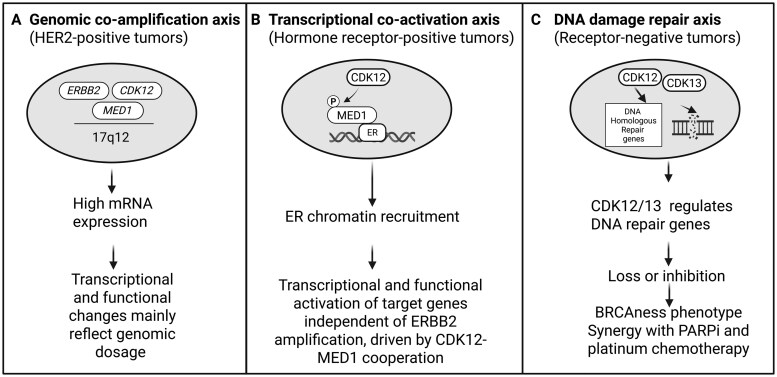 Figure 1
- —Enterprise Ireland10.13039/501100001588
- —Breast Cancer Ireland10.13039/501100022610
- —Science Foundation Ireland10.13039/501100001602
- —Irish Research Council SFI-IRC Pathway
- —Breast Cancer Now10.13039/100009794
- —EU Intereg BOTs
Peer Reviews
No public reviews on file for this paper yet. If you reviewed it on a platform where reviews are public (OpenReview, ICLR, NeurIPS, ICML), you can paste yours below so the community can read it here.
Videos
No videos yet. Explain this paper in a talk, walkthrough, or lecture? Add one.
Taxonomy
TopicsEducational Philosophies and Pedagogies · Educational and Psychological Assessments · Education Methods and Technologies
To the Editor:
We thank Dr Lehrer for his thoughtful correspondence and The Cancer Genome Atlas (TCGA) based analysis of CDK12, MED1, and ERBB2 expression.1 Dr Lehrer’s findings reinforce the close association between CDK12 and MED1 across breast cancer subtypes and extend discussion on the context-dependent CDK12 dysregulation in HER2-positive and ER-positive/HER2-negative disease.
As noted, CDK12 and MED1 show strong co-expression even independent of ERBB2 copy number. This supports our mechanistic evidence that CDK12 functionally cooperates with MED1 and ER to sustain transcription in advanced ER-positive tumors. Although transcriptomic correlations highlight potential co-regulation, our study demonstrated that CDK12 directly influences ER chromatin recruitment and transcriptional output, and this is critical to understanding the functional hierarchy between CDK12, MED1, and ER signaling.
We agree that the proposed dual model of genomic co-amplification in HER2-positive cancers and transcriptional co-activation in ER-positive/HER2-negative cancers offers a useful framework. Clinical series of HER2-positive breast cancers have similarly shown recurrent ERBB2/CDK12 co-amplification and linked it to therapeutic outcome,2^,^3 which supports the genomic dosage context described by Dr Lehrer. Moreover, targeting CDK12 in HER2-amplified models reduces PI3K/AKT signaling and restores anti-HER2 sensitivity,4^,^5 also confirming functional cooperation between CDK12 and HER2 pathways.
Beyond receptor-positive disease, pharmacological studies in triple-negative breast cancer have demonstrated that dual CDK12/CDK13 inhibition provokes intronic polyadenylation, suppresses DNA-damage-repair gene expression, and induces a “BRCAness” phenotype that sensitizes tumors to PARP inhibitors and platinum agents.6^,^7
These observations indicate that CDK12 can regulate distinct transcriptional programs depending on molecular context, including genomic co-amplification in HER2-positive disease, CDK12/MED1-driven co-activation in luminal tumors, and potential DNA-repair gene control in basal-like disease (Figure 1). In practice, distinguishing between these contexts will be essential when designing therapeutic strategies that target the CDK12 complex, because these mechanisms may not be mutually exclusive.
The reference list from the paper itself. Each links out to its DOI / PubMed record.
- 1Lehrer S. Re: Targeting CDK 12 disrupts estrogen-receptor chromatin recruitment and ER-MED 1 transcription in advanced ER+ breast cancer. J Natl Cancer Inst. 2026;118:550-552. 10.1093/jnci/djaf 33941507084 · doi ↗ · pubmed ↗
- 2Huang R , Hu A, Rong Q, et al Impacts of genomic alterations on the efficacy of HER 2-targeted antibody-drug conjugates in patients with metastatic breast cancer. J Transl Med. 2025;23:63.39806366 10.1186/s 12967-025-06082-5PMC 11730523 · doi ↗ · pubmed ↗
- 3Forster-Sack M , Zoche M, Pestalozzi B, et al ERBB 2-amplified lobular breast carcinoma exhibits concomitant CDK 12 co-amplification associated with poor prognostic features. J Pathol Clin Res. 2024;10:e 12362.38335502 10.1002/2056-4538.12362 PMC 10800294 · doi ↗ · pubmed ↗
- 4Choi H-J , Jin S, Cho H, et al CDK 12 drives breast tumor initiation and trastuzumab resistance via WNT and IRS 1-Erb B-PI 3K signaling. EMBO Rep. 2019;20:e 48058.31468695 10.15252/embr.201948058 PMC 6776914 · doi ↗ · pubmed ↗
- 5Li H , Wang J, Yi Z, et al CDK 12 inhibition enhances sensitivity of HER 2+ breast cancers to HER 2-tyrosine kinase inhibitor via suppressing PI 3K/AKT. Eur J Cancer. 2021;145:92-108.33429148 10.1016/j.ejca.2020.11.045 · doi ↗ · pubmed ↗
- 6Quereda V , Bayle S, Vena F, et al Therapeutic targeting of CDK 12/CDK 13 in triple-negative breast cancer. Cancer Cell. 2019;36:545-558 e 7.31668947 10.1016/j.ccell.2019.09.004 · doi ↗ · pubmed ↗
- 7Dubbury SJ , Boutz PL, Sharp PA. CDK 12 regulates DNA repair genes by suppressing intronic polyadenylation. Nature. 2018;564:141-145.30487607 10.1038/s 41586-018-0758-y PMC 6328294 · doi ↗ · pubmed ↗