Public attitudes towards consent for the donation of surplus frozen eggs to research
J Langford, J Demaree-Cotton, M Johnston

TL;DR
The public prefers a broad consent model for donating surplus frozen eggs to research, as it supports informed decisions and moral treatment of donors.
Contribution
The study introduces new insights into public preferences for consent models in surplus frozen egg donation to research.
Findings
Both specific and broad consent models are seen as sufficient for informed consent, with broad consent better supporting autonomy.
Fulfilling disposition preferences is critical for public perception of autonomous and moral consent processes.
Abstract
In the context of donating surplus frozen eggs (SFE) to research, what level of information disclosure, and associated consent model, do the public believe most effectively allows donors to make an informed decision, exercise autonomy, and be treated morally? The public supports the information disclosure requirements of both a specific and broad consent model in this context, with the latter considered to better enhance autonomy and facilitate the moral treatment of SFE donors. Despite research indicating that many individuals’ first preference is to donate their SFEs to research, donation rates remain low. One possible reason for this is the way consent processes for the donation of SFEs to research are currently regulated, specifically that their high information requirements limit opportunities to donate. There is a notable lack of research on how consent processes should operate,…
Genes, proteins, chemicals, diseases, species, mutations and cell lines named across the full text — each resolved to its canonical identifier and authoritative record.
Click any figure to enlarge with its caption.
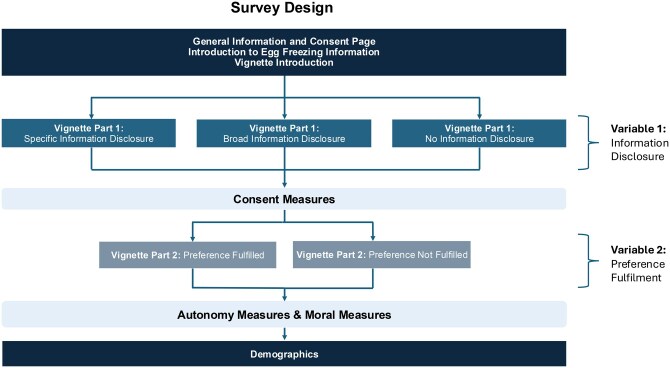 Figure 1
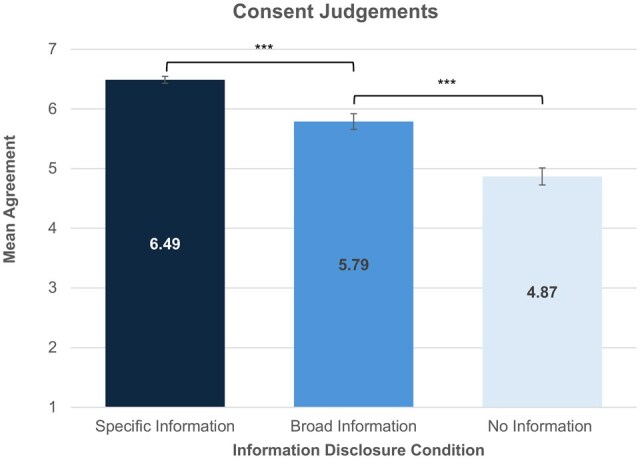 Figure 2
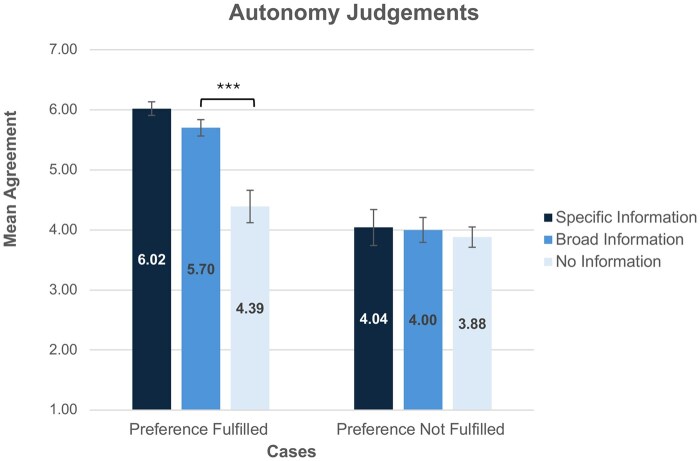 Figure 3
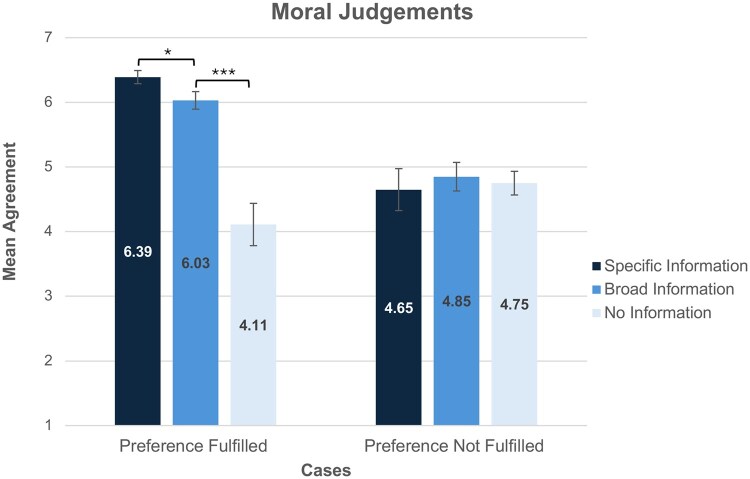 Figure 4
| Information disclosure condition | Vignette manipulation |
|---|---|
| No information |
|
| Specific information |
|
| Broad information |
|
| Measure category |
|
|---|---|
| Consent measures |
a) ‘Jane gave valid consent to the donation of her eggs to research’ b) ‘Please tell us why you answered as you did to the above question’ ‘Jane’s decision to donate her frozen eggs to research was sufficiently informed’ ‘Jane made a free choice to donate her frozen eggs to research’ |
| Preference fulfilment condition | Vignette manipulation |
|---|---|
| Preference Fulfilled | After making the decision to donate her eggs to research, Jane receives confirmation that her frozen eggs have been donated to research. |
| Preference Not Fulfilled | However, after making the decision to donate her eggs to research, Jane is informed that due to technicalities in current donation regulations, she is unable to donate her frozen eggs to research after all. With no other options, Jane discards her frozen eggs. |
| Measure category | Statements |
|---|---|
| Autonomy measures |
‘Jane’s autonomy was respected’. ‘Jane’s control over her frozen eggs was undermined’. ‘Jane was unable to make a decision in line with her preferences and values’. |
| Moral measures |
‘Jane was treated fairly’. ‘Jane was treated wrongly’. |
| Characteristic | Breakdown | Frequency (%) |
|---|---|---|
| Age | 18–24 | 23 (10.2%) |
| 25–34 | 41 (18.2%) | |
| 35–44 | 38 (16.9%) | |
| 45–54 | 38 (16.9%) | |
|
|
| |
| 65–74 | 27 (12%) | |
| 75+ | 5 (2.2%) | |
| Sex |
|
|
| Male | 105 (46.7%) | |
| Prefer not to say | 3 (1.3%) | |
| Education | GCSE’s, O-Levels or equivalent | 38 (16.9%) |
| A Levels, IB or equivalent | 53 (23.6%) | |
|
|
| |
| Post-graduate degree (e.g. MA, MSc, PhD) | 31 (13.8%) | |
| Other | 5 (2.2%) | |
| Prefer not to say | 1 (0.4%) | |
| Nationality |
|
|
| Other | 14 (6.2%) | |
| Prefer not to say | 5 (2.2%) | |
| Marital status | Single | 61 (27.1%) |
| Partnered | 51 (22.7%) | |
|
|
| |
| Other | 2 (0.9%) | |
| Prefer not to say | 4 (1.8%) | |
| Biological children |
|
|
| Has not had biological children and | 40 (17.8%) | |
| Has not had biological children and | 23 (10.2%) | |
| Has not had biological children and | 21 (9.3%) | |
| Prefer not to say | 4 (1.8%) | |
| Use of assisted reproductive technologies (ART) | Egg freezing | 2 (0.9%) |
| Other ART | 9 (4.0%) | |
|
|
| |
| Prefer not to say | 4 (1.8%) | |
|
Self-rated socio-economic status (SES) level (on a scale of 1–10) | 1 | 8 (3.6%) |
| 2 | 8 (3.6%) | |
| 3 | 21 (9.3%) | |
| 4 | 25 (11.1%) | |
| 5 | 50 (22.2%) | |
|
|
| |
| 7 | 47 (20.9%) | |
| 8 | 7 (3.1%) | |
| 9 | 0 (0.0%) | |
| 10 | 0 (0.0%) | |
| Prefer not to say | 3 (1.3%) | |
| Religion |
|
|
| Christian | 66 (29.3%) | |
| Muslim | 10 (4.4%) | |
| Jewish | 1 (0.4%) | |
| Buddhist | 2 (0.9%) | |
| Other | 2 (0.9%) | |
| Prefer not to say | 10 (4.4%) |
- —British Academy10.13039/501100000286
- —Uehiro Oxford Institute
Peer Reviews
No public reviews on file for this paper yet. If you reviewed it on a platform where reviews are public (OpenReview, ICLR, NeurIPS, ICML), you can paste yours below so the community can read it here.
Videos
No videos yet. Explain this paper in a talk, walkthrough, or lecture? Add one.
Taxonomy
TopicsEthics in Clinical Research · Organ Donation and Transplantation · Animal testing and alternatives
Introduction
Egg freezing is becoming increasingly popular (Johnston et al., 2021; Human Fertilisation & Embryology Authority, 2023a). However, most individuals who freeze their eggs will never return to use them (Gürtin et al., 2019; Bahadur, 2021; Blakemore et al., 2021; Walker et al., 2022; Johnston et al., 2024). Eggs may be frozen for fertility preservation, or as part of infertility treatment (e.g. if no sperm was available on the day of egg collection, or in preparation for procedures such as microTESE). Regardless of the reason for egg freezing, all individuals with surplus frozen eggs (SFEs) will face decisions regarding their disposition. In many jurisdictions, individuals with SFEs must decide between three disposition options: disposal of SFEs, donation of SFEs to others for reproductive purposes, or donation of SFEs to approved biomedical research (Caughey et al., 2023; Human Fertilisation & Embryology Authority, 2023b). Despite research indicating that many individuals’ first preference is to donate their SFEs to research (Caughey et al., 2021), the number of SFEs donated to research remains low, or even non-existent (Johnston et al., 2024). Scholars suggest that this is a missed opportunity (Friedrich, 2020; Johnston et al., 2024), as frozen eggs are an important research resource (Delange, 2022; Human Fertilisation & Embryology Authority, n.d.), and the demand for their use in medical research is high (Fuscaldo et al., 2023). Moreover, SFE storage is becoming an increasingly prevalent public issue globally (Rinehart, 2021), given the number of eggs rapidly accumulating in storage facilities (Johnston et al., 2024). It is possible that the storage crisis could be alleviated if individuals were able to fulfil their donation preference more readily.
One potential barrier to the donation of SFEs to research is the way that informed consent processes are currently regulated (Johnston et al., 2024). In the UK, alongside other jurisdictions like Australia, current guidelines require all relevant information to be disclosed about the specific project to which an individual is consenting to donate their eggs (Mayor, 2007; National Health and Medical Research Council, 2017). This reflects the requirements of a specific consent model (Caulfield and Kaye, 2009). One implication of this model is that it creates a tension between maintaining high level information disclosure and facilitating the fulfilment of preferences to donate, as the very requirement for specificity restricts opportunities for donation. Under this model, individuals cannot consent to the donation of their SFEs to future, undefined research projects, as the information disclosure requirements of a specific consent model cannot be met. Therefore, a person’s ability to donate to research is contingent on whether a project is actively recruiting at the time eggs are relinquished from storage. As these situations are limited, eggs that could have been directed to research may instead be discarded (Johnston et al., 2025).
Given the research demands for four eggs, and people’s desires to donate, scholars have recently suggested easing the current rigorous consent requirements to open more opportunities to donate (Johnston et al., 2025). One such proposal is moving towards a broad consent model (Mills et al., 2024; Fuscaldo et al., 2025). Broad consent models are increasingly employed in genomic research, as it is rarely possible at the time of sample collection to foresee all potential future uses of genomic samples. Broad consent models impose lower information requirements; prospective donors are provided information about the general area of research that their sample may be used in, but specific study details are not disclosed (Wiertz and Boldt, 2022). This lack of specificity opens up more opportunities to donate, as it is possible to donate to future, unspecified research (Hansson et al., 2006; Sheehan, 2011; Steinsbekk et al., 2013; Grady et al., 2015). Existing empirical research suggests that the public largely accepts the use of a broad consent model in the context of biomaterial donation to research (Hansson et al., 2006; Simon et al., 2011; Grady et al., 2015; Garrison et al., 2016; Warner et al., 2018). However, attitudes towards a broad consent model in the context of donating SFEs to research have not yet been explored.
There is a notable lack of research on how consent processes should operate, and more specifically, how much information a person should be given before providing consent, in the context of donating SFE to research. Our study aims to address this gap by examining public attitudes towards informed consent in the context of donating SFE to research, specifically in a UK context. Members of the UK public were surveyed to capture baseline attitudes on consent models in this context, given the acknowledged importance of public trust and engagement in supporting legitimate and ethical regulatory frameworks (Gille et al., 2024).
We focus specifically on one central element of informed consent: information disclosure, as this is widely recognized as a key criterion of valid consent (Beauchamp, 2009). First, we assess public views on the ability of different levels of information disclosure to allow for informed consent. We then examine the tension between information disclosure and preference fulfilment to understand which the public believes should be prioritized when they come into conflict. To do so, we assess the impact of both information disclosure and preference fulfilment on moral evaluations of the donation process and on the perceived autonomy of donors. In the context of this study, preference fulfilment refers to people donating their eggs to research. However, we acknowledge in practice, patients may have other disposition preferences.
This study provides the first account of attitudes towards information disclosure and preference fulfilment, offering important evidence to inform future discussions and policy reviews on informed consent for the donation of SFEs to research.
Materials and methods
This study consisted of an online survey (Supplementary Data File S1) hosted on Qualtrics, which followed a vignette-based experimental design. Before distributing the final survey, a pilot study was conducted on a cohort of 33 individuals, and adjustments were made to the survey where necessary.
Study design
In our study, Participants were randomly assigned to read one of six vignettes, in a 3 (Information Disclosure*;* Specific Information, Broad Information, No Information) by 2 (Preference Fulfilment; Preference Fulfilled, Preference Not Fulfilled) between-subjects design (Fig. 1). The survey design was informed by similar studies on lay reasoning about consent (e.g. Demaree-Cotton and Sommers, 2022).
Survey design summary chart. Summary Chart representing the flow of survey design and order of survey items.
Study population
A power analysis was conducted in G*Power 3.1, which indicated that at least 64 participants would be required in each Information Disclosure group, to achieve 80% power to detect statistically significant differences at P<0.05 between conditions, assuming a medium effect size (d = 0.5). To ensure our sample reflected public views across different demographics, a sample of 300 participants representative of the UK population in terms of gender, age, and ethnicity based on data from the UK Office of National Statistics (Prolific, 2024) was recruited using Prolific, an online recruitment platform. A UK sample was recruited due to the relevance of this ethical issue in the UK. Participants were reimbursed at a rate of £13.71/h (for a median 6.34-min duration) upon completion of the survey.
Procedure and materials
The survey started with a participant information sheet, after which participants were asked to give their consent to participate in the survey. All participants were then given information about egg freezing, before being presented with a vignette (differing according to the Information Disclosure and Preference Fulfilment conditions to which they had been assigned).
The introduction section of the vignette was identical for all participants and described a hypothetical situation involving Jane, a woman with SFEs, whose disposition preference was to donate them to research. Following this, Part 1 of the vignette described how much information Jane received about the research to which she would be donating her SFEs. Participants received different versions depending on their assigned Information Disclosure condition (Table 1). All participants were then told ‘Jane decides to proceed and consent to donating her frozen eggs to research.’ Next, participants were asked whether Jane was able to make a (i) valid, (ii) sufficiently informed, and (iii) free choice to donate her eggs to research (referred to as Consent Measures from here on) (Table 2). After the first Consent Measure, participants were asked ‘Please tell us why you answered as you did to the above question’ via free-text.
On the next page of the survey, participants were presented with Part 2 of the vignette, which described whether Jane’s preference to donate her SFEs to research was fulfilled or not. Participants received a different version depending on their assigned Preference Fulfilment condition (Table 3). Subsequently, further agreement statements were presented to participants, assessing views towards Jane’s autonomy (Autonomy Measures) and her moral treatment during the consent process (Moral Measures) (Table 4). All agreement statements were collected on a labelled 7-point Likert scale (1 = Strongly Disagree; 2 = Disagree, 3 = Somewhat Disagree, 4 = Neither Agree nor Disagree, 5 = Somewhat Agree, 6 = Agree, 7 = Strongly Agree). Statements would therefore be considered to indicate participant agreement if their rating given was ≥5.
Finally, participants answered demographic questions. To ensure that participants understood the content of the vignettes, were paying attention, and responding correctly to instructions survey, two comprehension checks and one attention check (see Supplementary Data File S1) were included.
Statistical analysis
Statistical analysis was performed on the quantitative data using IBM SPSS Statistics (version 29.0.2.0, UK). The data were directly exported from Qualtrics into IBM SPSS Statistics, to minimize personal error associated with manual data entry. Descriptive statistics measuring ranges, frequencies, central tendencies (means), and SDs were applied to the quantitative survey items. For negatively phrased statements, reverse coding was applied. For the agreement statements, Cronbach’s alpha scores were used to assess the scale reliability of Consent, Autonomy, and Moral Measures, respectively. The measures were averaged to give one overall Judgement score if Cronbach’s alpha was 0.7 or above for the respective Measure categories. Two-way between-subject ANOVAs were conducted to assess the impact of Information Disclosure and Preference Fulfilment on a participant’s Consent Judgements Autonomy Judgements and Moral Judgements, followed by independent samples *t-*tests for pairwise comparisons. A P-value of <0.05 was considered significant. For the qualitative free-text question, inductive content analysis through manual coding was performed to identify important response categories (Vears and Gillam, 2022).
Ethics and open science
This study was granted ethics approval from the University of Oxford Social Sciences and Humanities Interdivisional Research Ethics Committee (Reference Number: R806912/RE016) and was ratified by the Monash University Human Research Ethics Committee (Project Number: 42701). Methods, sampling procedures, and analysis plans were pre-registered at: osf.io/k7qjz.
Results
Demographics
Three hundred Prolific users took the survey. Participants who failed one or more checks were excluded from further analysis (N = 75), leaving a final sample of 225 participants (Table 5).
**Table 5.: Participant demographics.
Consent judgements
The three Consent Measures (see Supplementary Fig. S1) showed high scale reliability (α = 0.75), thus, a mean Consent Judgement score was utilized for further analysis. Information Disclosure significantly affected participants’ Consent Judgements (F(2, 219)=47.49, P≤0.001, =0.30). Consent Judgements were significantly higher in the Specific Information condition (*M *= 6.49, SD = 0.50) than the Broad Information condition (*M *= 5.79, SD = 1.14) (t(103.87)=4.83, P<0.001, *d *= 0.78). Consent Judgements were also significantly higher in the Broad Information condition (*M *= 5.79, SD = 1.14) than the No Information condition (*M *= 4.87, SD = 1.25) (t(150)=4.74, P<0.001, *d *= 0.77) (Fig. 2).
Consent judgements. Error bars represent standard errors, *** indicates a significant difference between groups at P<0.001. Responses were gathered on a 7-point Likert scale where 1 = Strongly Disagree and 7 = Strongly Agree. Participants in both the Specific and Broad Information Disclosure groups agreed that consent was valid.
Participants elaborated on whether they considered Jane’s consent to be valid using free text. Seven key content categories were identified: Information Disclosure, The Act of Giving Consent; Autonomy Considerations, Sensitivity of Reproductive Material Donation; Type of Consent; Preferences; Benefit of Research (Supplementary Table S1). In what follows, we outline the main reasons provided per information condition.
All 73 participants in the Specific Information condition agreed (i.e. scored 5 or above) that Jane offered valid consent. Many justified their answers by referring to Information Disclosure, specifically noting that Jane ‘knew what they [her eggs] would be used for’. Others cited The Act of Giving Consent, for example stating, ‘Jane consented, which is valid consent by definition’. Autonomy Considerations were also referenced, with one participant stating that ‘Jane made the decision on her own’, touching on Jane’s freedom from influence, and another emphasizing personal autonomy, stating that ‘[egg donation is a] personal choice’. Some participants also referenced Preferences and Benefit of Research, noting Jane’s wish to donate her SFEs to research and the potential for ‘scientific breakthroughs’.
Of the 76 participants in the Broad Information condition, 67 (88.2%) agreed that Jane gave valid consent. Many referred to Information Disclosure as the reason for their agreement, stating that Jane was ‘informed’, or that Jane was aware of the information disclosure limits and still chose to consent. Autonomy Considerations were also cited, with one participant explaining they believed Jane’s consent was valid, as the SFEs ‘were hers to decide what to do with’. Among the seven participants who disagreed (i.e. scored 3 or below), concerns focused on Information Disclosure, particularly that Jane was ‘insufficiently informed’ and ‘should’ve been given more detail’ about the research.
In the No Information condition, 55 of 76 (72.4%) participants agreed that Jane gave valid consent. Justifications again commonly referenced Information Disclosure, often pointing to Jane’s awareness of the limitations in the information provided. Some participants cited the Type of Consent, with one suggesting that Jane’s consent was valid as she gave her ‘consent in writing’. Benefit of Research was also mentioned, with participants describing eggs as a ‘valuable’ resource that ‘may help … others’. Of the 19 participants who disagreed that Jane gave valid consent, Information Disclosure was most frequently cited, with concerns that Jane was not ‘given the basic information’ needed for valid consent.
Autonomy judgements
The three Autonomy Measures (see Supplementary Fig. S2) showed high scale reliability (α = 0.80), thus, a mean Autonomy Judgement score was utilized for further analysis. Autonomy Judgements were significantly higher in the Preference Fulfilled condition (*M *= 5.46, SD = 1.25), than in the Preference Not Fulfilled condition (*M *= 3.96, SD = 1.30) (F(1, 219)=75.40, P≤0.001, =0.26).
Information Disclosure also significantly affected Autonomy Judgements (F(2, 219)=11.61, P≤0.001, =0.10). But this main effect was qualified by a significant interaction between Information Disclosure and Preference Fulfilment (F(2, 219)=7.93, P≤0.001, =0.07). Within the Preference Fulfilled condition, participants in the Broad Information condition had higher Autonomy Judgements than participants in the No Information condition (*M *= 5.70, SD = 0.80; *M *= 4.39, SD = 1.53), respectively; (t(46.14)=4.36, P<0.001, *d *= 1.01). However, there was no significant difference in Autonomy Judgements between the Specific Information condition (*M *= 6.02, SD = 0.77) and the Broad Information condition (*M *= 5.70, SD = 0.80) (*P *= 0.076). By contrast, in the Preference Not Fulfilled condition, there was no significant difference between the Specific Information condition (*M *= 4.04, SD = 1.56) and the Broad Information condition (*M *= 4.00, SD = 1.33) (*P *= 0.917), or the Broad Information condition (*M *= 4.00, SD = 1.33) and the No Information condition (*M *= 3.88, SD = 1.12) (*P *= 0.650) (Fig. 3).
Autonomy judgements. Error bars represent standard error, *** indicates a significant difference between groups at P<0.001. Responses were gathered on a 7-point Likert scale where 1 = Strongly Disagree and 7 = Strongly Agree. Across both the Specific and Broad Information groups, participants’ Autonomy Judgments were higher in the Preference Fulfilled group, and represented agreement that Jane was able to act autonomously.
Moral judgements
The three Moral Measures (see Supplementary Fig. S3) showed high scale reliability (α = 0.90), thus a mean Moral Judgement score was utilized for further analysis. Moral Judgements in the Preference Fulfilled condition (*M *= 5.63, SD = 1.51) were significantly higher than in the Preference Not Fulfilled condition (*M *= 4.76, SD = 1.40) (F(1, 219)=18.673, P≤0.001, =0.079).
Information Disclosure also significantly affected Moral Judgements (F(2, 219)=16.10, P≤0.001, =0.13). However, this main effect was qualified by a significant interaction between Information Disclosure and Preference Fulfilment, (F(2, 219)=16.71, P≤0.001, =0.13). In the Preference Fulfilled condition, Moral Judgements were significantly higher in the Specific Information condition (*M *= 6.39, SD = 0.69) than the Broad Information condition (*M *= 6.03, SD = 0.80) (t(79)=2.18 *P *< 0.032, *d *= 0.49). Moral Judgements were also significantly higher in the Broad Information condition (*M *= 6.03, SD = 0.80) than the No Information condition (*M *= 4.11, SD = 1.85) (t(41.47)=5.41, P<0.001, *d *= 1.37). By contrast, in the Preference Not Fulfilled condition, there was no significant difference in Moral Judgements between the Specific Information condition (*M *= 4.65, SD = 1.69) and the Broad Information condition (*M *= 4.85, SD = 1.42) (*P *= 0.589) or the Broad Information condition (*M *= 4.85, SD = 1.42) and the No Information condition (*M *= 4.75, SD = 1.21) (*P *= 0.71) (Fig. 4).
Moral judgements. Error bars represent standard error, * indicates a significant difference between groups at P<0.05, *** indicates a significant difference between groups at P<0.001. Responses were gathered on a 7-point Likert scale where 1 = Strongly Disagree and 7 = Strongly Agree Across both the Specific and Broad Information groups, participants’ Moral Judgments were higher in the Preference Fulfilled group, and represented agreement that Jane was treated morally.
Discussion
To our knowledge, this study is the first to report on public attitudes towards information disclosure and preference fulfilment within consent processes for the donation of SFEs to research. We report two key findings. First, both broad and specific information disclosure were regarded by the public as sufficient for informed consent. Second, fulfilling disposition preferences was critical to whether the public considered consent processes as able to support donor autonomy and moral treatment, irrespective of information disclosure levels. Given the increased opportunity for preference fulfilment under a model of broad consent, we argue that our findings offer preliminary grounds for moving away from current models of specific consent to a model of broad consent.
Information disclosure
Our findings suggest that the public agree that both broad and specific information disclosure levels can facilitate valid consent in the donation of SFEs to research (mean Consent Judgements *M *= 5.79 and *M *= 6.49, respectively). Across both the Specific and Broad Information Disclosure groups, participants commented that enough information was provided for meaningful, informed consent. Specifically, participants in the Broad Information condition reasoned that Jane’s consent was valid as she ‘had the necessary information that she needed for her decision’. Furthermore, some suggested that because Jane was aware of the amount of information given to her, and that she consented knowing that this information was broad, her consent was valid. For example, one participant stated that Jane ‘…could have refused to donate [her eggs] if she felt she needed more information before consenting’.
By contrast, participants in the no information group tended not to agree, or have a strong view, on whether Jane was able to provide valid consent (*M *= 4.87). One participant explained: ‘I don’t feel that one can call this informed consent…[Jane] is totally in the dark about any associated risks’. This concept was echoed by another participant, who stated that Jane was unable to offer valid consent, as she had ‘not been given the basic information [required]’. These findings align with the ethical literature, which acknowledge that at least some degree of information disclosure is necessary for consent to be meaningful (Sheehan, 2011; Grady et al., 2015). This ensures that consent is not merely procedural, but still reflects an individual’s capacity to make an autonomous and informed decision.
Notably, while participants in the No Information group were less likely to agree that Jane was able to make an informed consent decision, the mean response fell only slightly below the pre-determined agreement threshold of 5. These judgements are higher than expected, considering the normative significance of information disclosure for valid consent (Beauchamp, 2009). It is possible that these findings indicate that members of the public may place less weight on information than is typically assumed. Indeed, participants appear to have drawn on various considerations, often conflating the mere act or form of consent with its ethical validity. Some justified their agreement that Jane gave valid consent, by appealing to the fact that ‘she did give consent’ or that ‘she gave her consent in writing’. Yet, simply agreeing or signing a form does not in itself meet ethical standards of consent (Wynn and Israel, 2018).
A different possibility is not that participants completely lack a concept of consent that is sensitive to information provision, but rather that participants have more than one concept of consent. It is possible that people have two distinct concepts of consent: a superficial form, focused more on the act of saying ‘yes’, and a deeper form, reflecting normatively meaningful consent. This distinction may explain why participants rated Jane’s ability to consent higher than expected: their responses may have reflected their agreement that Jane consented in one, more superficial sense, even if they also believed that, in a deeper sense, Jane did not truly consent in a morally transformative way.
Preference fulfilment
When participants were told that Jane was able to fulfil her preference to donate her SFEs to research, there was a high level of agreement that she acted autonomously, and was treated morally, provided she received either Specific or Broad Information about the research. Notably, these participants’ judgments of Jane’s autonomy and moral treatment did not differ greatly between the Specific and Broad information groups. In line with our earlier findings, when Jane was offered no information participants were less likely to agree that Jane acted autonomously or was treated morally.
While the public is largely supportive of both specific and broad information disclosure, this support is contingent on individuals having the opportunity to fulfil their donation preferences. Participants agreed that a potential donor was able to make an autonomous decision if their preference to donate their SFEs to research was fulfilled (mean Autonomy Judgement *M *= 5.46, mean Moral Judgement *M *= 5.63), but not when this preference was not satisfied (mean Autonomy Judgement *M *= 3.96, mean Moral Judgement *M *= 4.76). Notably, when the preference to donate was not fulfilled, participants’ Autonomy and Moral Judgements did not differ regardless of whether specific, broad, or no details about the research were provided. This suggests that in cases where an individual is unable to fulfil their preference to donate SFEs to research, the public sees no all-things-considered ethical benefit to increased information disclosure.
The high value placed on the ability for a consent model to accommodate preference fulfilment was expressed through the free-text responses. Participants raised that ‘Jane made her preference clear’ and that she ‘did not want her valuable eggs to be wasted’ as key considerations in whether her consent to SFE donation to research was valid. Notably, the qualitative responses in the survey were collected before the Preference Fulfillment condition had been introduced in the vignette, meaning participants raised the importance of preference fulfilment without prompting. This suggests the public independently prioritizes preference fulfilment in their assessment of the acceptability of a consent process.
Preference fulfilment is considered to be a key justification for informed consent processes, particularly in relation to promoting individual autonomy (Faden and Beauchamp, 1986; O’Neill, 2003; Taylor, 2009; Sheehan, 2011). Providing participants with information about research is said to respect autonomy by enabling them to make a decision about their participation that is consistent with their values, preferences, and desires (Faden and Beauchamp, 1986; Taylor, 2009; Sheehan, 2011; Koplin et al., 2022). Some ethicists, however, have suggested that consent processes should not just respect autonomy, but actively promote it, such as through the fulfilment of preferences (Sullivan, 2016; Koplin et al., 2022). It is important to note that not all individual preferences are relevant to autonomy, and should be fulfilled. Rather, preferences that are central to an individual’s core values or plans, especially those that relate to their own bodies, should be the ones which are promoted. Given that eggs may be viewed as a sensitive tissue type (Parker, 2011), and that people have genuine concern about their disposition outcome (Johnston et al., 2025), we argue that, in the context of SFE donation to research, individual autonomy should be promoted, where possible. Accordingly, a broad consent model may be the most appropriate in this context, as individuals have more opportunity to act on their preference to donate their eggs to research.
A common criticism of a broad consent model is the loss of specific details about the research being consented to (Hansson et al., 2006; Hofmann, 2009). However, while donors may not receive all information in broad consent situations, it does not mean they can’t make properly informed, and ethical, decisions—particularly if they consent with awareness of the kind of information that is lacking (Sheehan, 2011; Helgesson, 2012). As Sheehan (2011) states; by deciding to engage with a broad consent model, an individual has chosen to accept a lower level of information disclosure, and instead consent to defer future use decisions to others, which is still an ethical, autonomous, and informed choice. Our findings lend weight to this argument; participants agreed that individuals were able to provide valid consent, act autonomously, and be treated morally when provided with broad information about the research. Crucially, prioritizing preference fulfilment over exhaustive information disclosure does not undermine informed consent or respect for autonomy. By providing sufficient information while enabling individuals to act on their preferences, a broad consent model upholds autonomy and strengthens the ethical justification for its use in SFE donation.
Future considerations
It is important to note that the practical implementation of a broad consent model in the context of SFE donation raises important questions that merit further exploration. These include concerns around whether the sensitive and non-regenerative nature of eggs should warrant more stringent consent requirements (Parker, 2011). Concerns may also arise about whether a broad consent model can accommodate diverse donor preferences and beliefs, particularly in relation to research applications that some may find objectionable (e.g. research involving stem cells or cloning). While we did not seek to address the practical question of implementing a broad consent model for SFE donation, we suggest several strategies that could respond to such concerns. These include establishing an oversight body to review and approve eligible research projects, allowing donors to opt-out of categories of research they find objectionable. Another consideration is the possibility of integrating a dynamic consent platform with a broad model of consent. As argued by Mills et al. (2024) and Fuscaldo et al. (2025), this would enable ongoing communication and the accommodation of evolving donor expectations. Future research could explore the ethical and practical viability of such suggestions.
Strengths and limitations
A key strength of this study is that, to our knowledge, it is the first to assess public views on the matter of consent to SFE donation to research. As SFE storage is becoming a prevalent public issue globally (Rinehart, 2021), our findings offer timely insights. The data offer evidence-based preliminary recommendations that serve as a solid foundation for guiding future policy and ethical discussions.
While the use of an online experimental survey facilitates the collection of a sufficiently large number of responses to identify statistically significant response patterns, this method introduces potential limitations. These include a lack of control over the environment in which participants took the survey, and response biases. Of note, participants may have had different or limited understandings of certain terms used in the survey, such as ‘autonomy’ or ‘valid consent’, and this may have influenced their responses. Furthermore, a specific limitation of using the online platform Prolific to distribute the survey, is that it employs a nonprobability sampling method. Although quotas were set to match key demographic characteristics, participants self-select. While the advertisement of the survey did not reveal that it would concern consent or issues of preference fulfilment, it was listed as ‘Views on Human Frozen Egg Donation to Research’. This could introduce bias, as individuals who choose to participate may have strong feelings about the topic under investigation, which may limit the generalizability of the survey results.
Future research should explore the acceptability of a broad consent model among important stakeholder populations, such as fertility specialists or counsellors and those with SFEs in storage, to ensure that consent practices are ethically acceptable to the populations they are serving. This study’s findings could also be complemented by other qualitative research methods, such as interviews or focus groups, to allow for direct comparison and deeper discussion of different consent approaches in this context.
Additionally, our paper assessed public views on consent models in which participants were directly informed about the information they would or would not receive regarding the research to which their eggs would be donated (Table 2). Future research and policy discussions should consider what information potential donors should be explicitly told, including disclosing what they will not receive, to ensure that consent approaches are clearly defined, ethical, and publicly acceptable.
Finally, this study has focused on one key consideration in informed consent procedures: information disclosure. We acknowledge that other aspects of consent are also important to consider, for example, participant comprehension of the information given. Other considerations, like the competence of individuals donating their eggs, as well as how the information is provided to individuals with SFEs, are also crucial to the ethical assessment of consent processes and should be examined in future research.
Conclusion
As the number of eggs being frozen increases (Johnston et al., 2021), so too does the number languishing in storage (Bahadur, 2021; Rinehart, 2021; Johnston et al., 2024). Yet, regulatory frameworks governing consent for the donation of SFEs to research have not evolved to adequately support donor autonomy and disposition preferences. This study provides the first empirical evidence of public views on consent processes in this context, specifically examining the ethical tension between information disclosure requirements and promotion of donor disposition preferences. Our findings indicate that while both broad and specific information disclosure are considered acceptable, preference fulfilment is critical for consent to be seen as autonomous and morally acceptable. These results provide preliminary support for reforming consent processes, specifically, through consideration of a broad consent model. Further research should explore key stakeholder perspectives and the feasibility of implementation. As the number of eggs being frozen continues to outpace those being used in reproductive treatment, it is incumbent that policy-makers consider the conditions under which egg disposition, specifically the option to donate, is managed. Continued efforts are required to ensure that individuals with SFEs are supported to make disposition decisions that align with their preferences and values.
Supplementary Material
deag007_Supplementary_Data_File_S1
deag007_Supplementary_Figure_S1
deag007_Supplementary_Figure_S2
deag007_Supplementary_Figure_S3
deag007_Supplementary_Table_S1
The reference list from the paper itself. Each links out to its DOI / PubMed record.
- 1Bahadur G. Clinics retrieving ‘far too many’ eggs from IVF patients Eur Soc Hum Reprod Embryol 2021; [Internet]. https://www.eurekalert.org/news-releases/835538 (21 May 2025, date last accessed).
- 2Beauchamp TL. 3 Autonomy and consent. In: Miller F, Wertheimer A (eds). The Ethics of Consent, 1st ed. New York: Oxford University Press, 2009, 55–78.https://academic.oup.com/book/32837/chapter/275317844 (4 April 2024, date last accessed).
- 3Blakemore JK , Grifo JA, De Vore SM, Hodes-Wertz B, Berkeley AS. Planned oocyte cryopreservation-10-15-year follow-up: return rates and cycle outcomes. Fertil Steril 2021;115:1511–1520.33712289 10.1016/j.fertnstert.2021.01.011 · doi ↗ · pubmed ↗
- 4Caughey LE , Lensen S, White KM, Peate M. Disposition intentions of elective egg freezers toward their surplus frozen oocytes: a systematic review and meta-analysis. Fertil Steril 2021;116:1601–1619.34452749 10.1016/j.fertnstert.2021.07.1195 · doi ↗ · pubmed ↗
- 5Caughey LE , White KM, Lensen S, Peate M. Elective egg freezers’ disposition decisions: a qualitative study. Fertil Steril 2023;120:145–160.37032273 10.1016/j.fertnstert.2023.02.022 · doi ↗ · pubmed ↗
- 6Caulfield T , Kaye J. Broad consent in biobanking: reflections on seemingly insurmountable dilemmas. Med Law Int 2009;10:85–100.
- 7Delange J. Meeting the demand for eggs for research: a new approach to consent? London: PET, 2022. https://www.progress.org.uk/meeting-the-demand-for-eggs-for-research-a-new-approach-to-consent/ (25 March 2024, date last accessed).
- 8Demaree-Cotton J , Sommers R. Autonomy and the folk concept of valid consent. Cognition 2022;224:105065.35240434 10.1016/j.cognition.2022.105065 · doi ↗ · pubmed ↗