Hypofucosylation promotes pertussis toxin binding to cell surface glycococonjugates and pertussis toxin-induced intracellular ERK signaling
Rohit Sai Reddy Konada, Nicole Nischan, Aurora Silva, Jennifer J Kohler

TL;DR
This study shows that reduced fucose on cell surfaces increases pertussis toxin binding and signaling, worsening immune impacts of whooping cough.
Contribution
The study reveals that fucosylation protects cells from pertussis toxin by reducing its binding and downstream ERK signaling.
Findings
Fucosylation inhibits pertussis toxin binding to cell surface glycans.
Reduced fucose leads to increased ERK signaling in T cells via pertussis toxin.
FUT3/FUT5/FUT6 and FUT8 knockout cells show enhanced pertussis toxin binding.
Abstract
Pertussis (whooping cough) is caused by the bacterium Bordetella pertussis. Among the virulence factors produced by B. pertussis, pertussis toxin (PT) is responsible for key disease symptoms, including impacts on the immune system. PT is an AB5 toxin, consisting of a single catalytic A subunit and five B subunits. The B pentamer recognizes cell surface glycans and facilitates intracellular delivery of the catalytic A subunit. PT also impacts host cell signaling via mechanisms that do not depend on the catalytic activity of the A subunit. In particular, PT promotes signaling through the T-cell receptor (TCR), leading to activation of extracellular signal-regulated kinase (ERK) cascades. PT prefers to bind sialylated and N-linked glycans, but other aspects of PT’s glycan binding specificity remain underexplored. Here we report that the absence of fucose on mammalian cell surfaces leads to…
Genes, proteins, chemicals, diseases, species, mutations and cell lines named across the full text — each resolved to its canonical identifier and authoritative record.
Click any figure to enlarge with its caption.
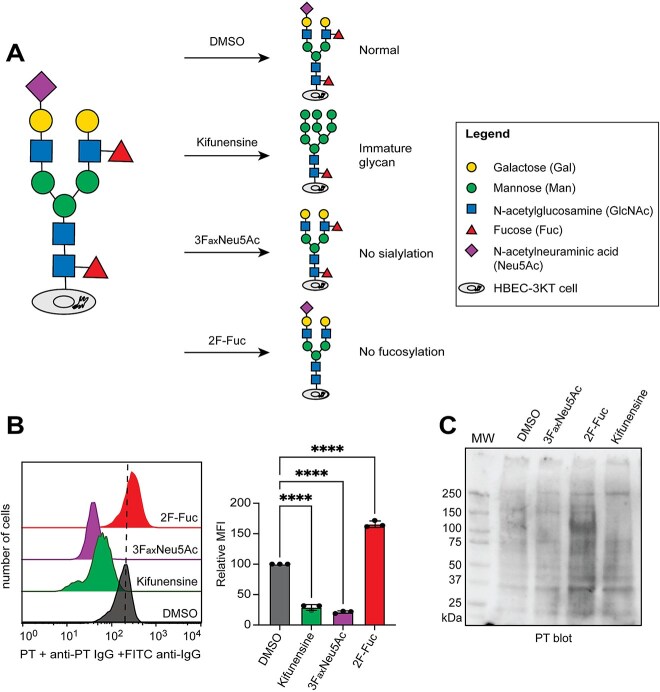 Figure 1
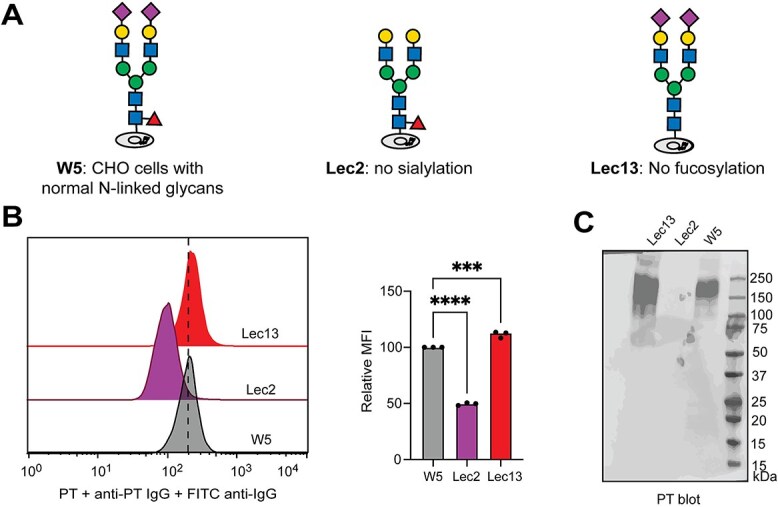 Figure 2
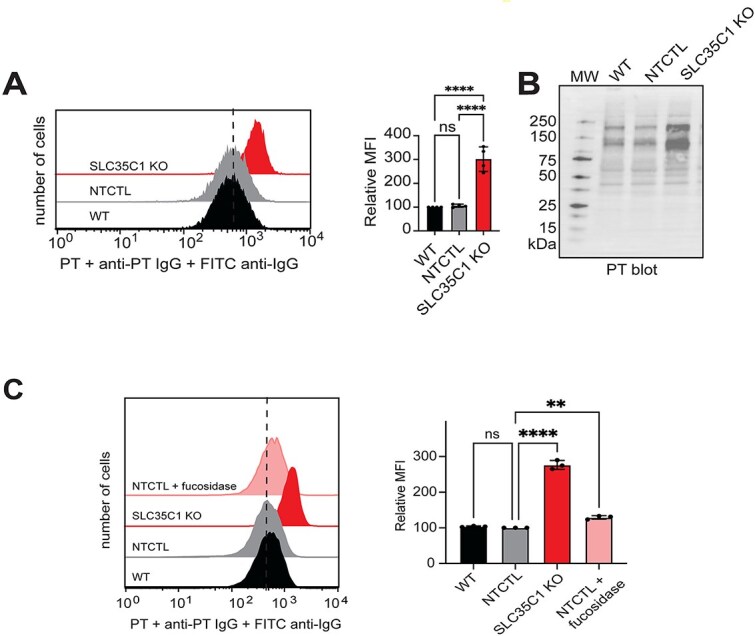 Figure 3
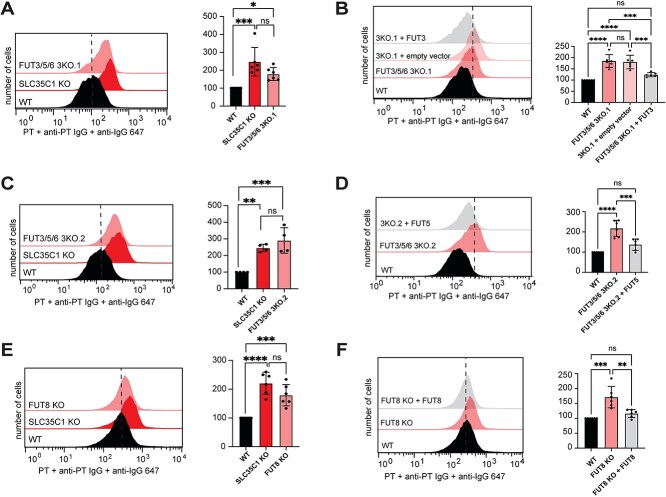 Figure 4
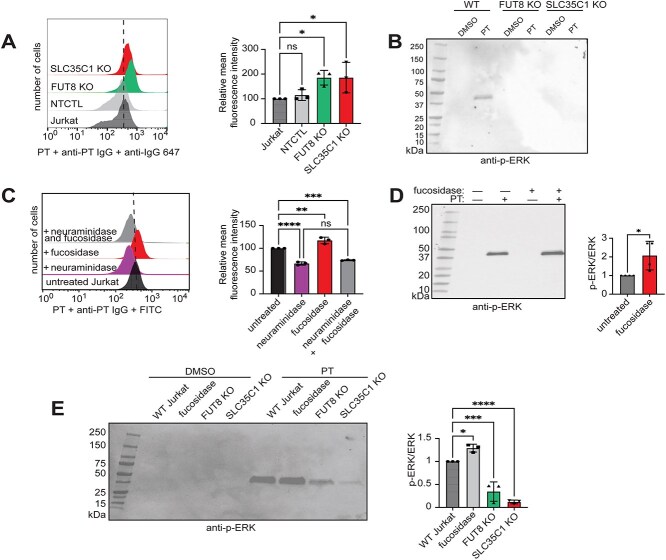 Figure 5
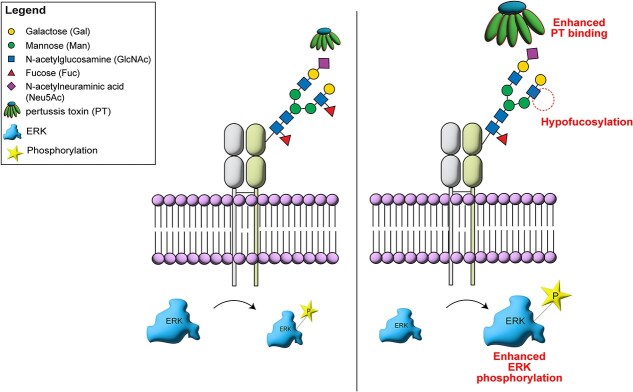 Figure 6
|
|
|
|---|---|
| FUT3 sgRNA | CACCGGCCAGGTAGAACTTGTACC |
| FUT5 sgRNA | CACCGGAGATTGAAGTATCCGTCC |
| FUT8 sgRNA | CACCGTCGTACAAGTCGATCTGCG |
|
|
|
|---|---|
| FUT3_F | AGGCAGACATGGTCATCGTG |
| FUT3_R | CGTGTGAGGTCCCAGGTAAG |
| FUT5_F | CCTAATCCCATCGTACCCTTCC |
| FUT5_R | GGTGATGTAGTCGGGGTGC |
| FUT6_F | CATGGCCTGGAGCTTTGGTAA |
| FUT6_R | TGGCAGGAACCTCTCGTAGTT |
| FUT8_F | GCTGGCTGTGTCTACTGTCAT |
| FUT8_R | CCTCTGTCCTTTGGTGGGACT |
|
|
|
|---|---|
| SLC35C1 sgRNA | CACCGACCACGAAGGTGCTCCCGG |
|
|
|
|---|---|
| SLC35C1_F | ACTTACAGGCTCTCACAGCAC |
| SLC35C1_R | TCTTCTCGCTGTCTTTGGGG |
- —Welch Foundation10.13039/100000928
- —NIH10.13039/100000002
- —German Academic Exchange Service10.13039/100021828
- —The Department of Biochemistry
- —UTSW Graduate School of Biomedical Sciences
Peer Reviews
No public reviews on file for this paper yet. If you reviewed it on a platform where reviews are public (OpenReview, ICLR, NeurIPS, ICML), you can paste yours below so the community can read it here.
Videos
No videos yet. Explain this paper in a talk, walkthrough, or lecture? Add one.
Taxonomy
TopicsBacterial Infections and Vaccines · Pneumonia and Respiratory Infections · Glycosylation and Glycoproteins Research
Introduction
Pertussis (whooping cough) is a severe respiratory disease caused by a human-specific pathogenic bacterium Bordetella pertussis. Pertussis typically affects infants more severely compared to other age groups. (Decker and Edwards 2021) Symptoms in infected infants include paroxysmal cough with whooping sound, vomiting, pulmonary complications, and rib fractures. (Donoso et al. 2005; Paddock et al. 2008) B. pertussis, being a strict human pathogen without known reservoirs, transmits through respiratory droplets. (Mattoo and Cherry 2005) Genetic analysis of the pathogen combined with historical accounts reveals that pertussis disease has existed for centuries. (Diavatopoulos et al. 2005) With consistent outbreaks, pertussis remains a major endemic disease in both developed and developing countries. (Kilgore et al. 2016) Introduction of a vaccine in the 1940s drastically reduced the number of cases compared to the pre-vaccine era, but sporadic outbreaks remain common across the globe. (Esposito et al. 2019) According to the Centers for Disease Control and Prevention, cases are on the rise in the United States due to multiple factors including waning immunity. (Centers for Disease Control and Prevention 2024).
Pertussis results from a combined interplay of several virulence factors produced by B. pertussis, one of which is pertussis toxin (PT). (Scanlon et al. 2019) PT-deficient strains are extremely rare. (Bouchez et al. 2009; Williams et al. 2016) Conversely, increases in pertussis cases have been linked to emergence of strains with increased PT production. (Mooi et al. 2009) Antibodies against PT are protective against severe disease and PT is a key component of acellular pertussis vaccines. Indeed, a mono-component acellular vaccine containing only detoxified PT has effectively controlled pertussis in Denmark. (Thierry-Carstensen et al. 2013) The mechanisms by which PT contributes to disease are incompletely understood. Experiments in mice demonstrate that PT plays a role in establishing respiratory infection. (Carbonetti et al. 2003) PT inhibits early chemokine production, causing impaired neutrophil recruitment. (Kirimanjeswara et al. 2005; Andreasen and Carbonetti 2008) The target cell type remains unclear: PT can inhibit chemokine production by macrophages but direct effects on epithelial cells have also been suggested. (Andreasen and Carbonetti 2008; Kroes et al. 2022) PT is also implicated in leukocytosis, (Heininger et al. 1997; Pierce et al. 2000) a hallmark of severe disease that is proposed to occur through PT intoxication of lymphocytes, leading to reduced lymphocyte extravasation. (Carbonetti 2016) Finally, experiments performed in rat and baboon animal models point to a possible role for PT in the paroxysmal cough. (Parton et al. 1994; Warfel et al. 2012) Taken together, existing data indicate that PT has multiple physiological effects stemming from action on distinct cell types, which may include lymphocytes, macrophages, respiratory epithelial cells, and nociceptor neurons.
PT is an AB_5_ toxin comprising a single catalytic A subunit (S1) and five B subunits (one S2, one S3, two S4, and one S5) that mediate binding to the surface of target cells. The holotoxin enters cells through endosomal uptake and is retrograde transported through the Golgi to the ER. (elBaya et al. 1997; Plaut and Carbonetti 2008) The S1 subunit enters the cytoplasm and ADP-ribosylates the α-subunit of heterotrimeric G proteins, resulting in dysregulation of intracellular signal transduction pathways. (Hsia et al. 1985) However, some effects of PT, such as T cell mitogenicity, are independent of ADP-ribosylation activity. (Witvliet et al. 1992; Lobet et al. 1993) PT binding to host cells depends on the S2 and S3 subunits, which have ~70% sequence identity. (Locht and Keith 1986; Nicosia et al. 1986) PT was co-crystallized with a sialylated N-linked glycopeptide from transferrin, revealing shallow binding pockets on the S2 and S3 subunits that can recognize terminal N-acetylneuraminic acid (Neu5Ac; form of sialic acid) residues. (Stein et al. 1994) Additionally, recent cryo-EM analysis of PT complexed with neutralizing antibodies yielded evidence for additional glycan binding sites on S2 and S3. (Goldsmith et al. 2025) Sialic acid is commonly described to be the receptor for PT, but glycan array analysis and quantitative carbohydrate binding assays indicate that PT can also recognize non-sialylated glycans. (Heerze et al. 1992; Saukkonen et al. 1992; Vantwout et al. 1992;Gomez et al. 2006 ; Millen et al. 2010) Additional insight into the glycan features important for PT affinity has been gleaned from in vitro binding assays. (Gomez et al. 2006; Millen et al. 2010) However, binding affinity is not the only characteristic that defines physiologically relevant receptors: additional factors including glycoconjugate abundance and glycoconjugate clustering impact which cell surface ligands are most important for recognition by glycan-binding proteins. (Saltor Nunez et al. 2025).
Here we examine glycosylation features that regulate PT binding to different cell types including two – respiratory epithelial cells and lymphocytes – that are possible physiological targets of PT. We confirm that PT preferentially binds sialylated and N-linked glycoconjugates. Additionally, we report that specific forms of fucosylation lead to reductions in PT binding. Further, we find that non-core fucosylation protects T-cell lymphocytes against PT-induced extracellular signal-regulated kinase (ERK) signaling. Together, these results provide insight into possible mechanisms by which variations in host glycosylation could modulate the severity of PT-induced impacts on the immune system.
Results
Inhibition of fucosylation in HBEC-3KT cells results in increased PT binding
To model human airway epithelium, we used HBEC-3KT cells, an hTERT-immortalized bronchial epithelial cell line. (Ramirez et al. 2004) We modulated glycan biosynthesis in HBEC-3KT cells using pharmacological inhibitors of glycosyltransferases and glycosidases (Fig. 1A). We established appropriate inhibitor concentrations and incubation times by measuring the impact on cell surface binding of lectins and antibodies that recognize specific glycan structure as well as cytotoxicity (Supplementary Fig. 1). After pharmacological treatments, binding of PT to HBEC-3KT cell surfaces was analyzed by flow cytometry (Fig. 1B) and PT lectin blot (Fig. 1C). Culturing cells with kifunensine, an inhibitor of N-glycan maturation, resulted in significantly reduced PT binding in both assays (Fig. 1B and C), consistent with prior studies demonstrating that PT can bind N-linked glycans. (Heerze and Armstrong 1990, Millen et al. 2010b) HBEC-3KT cells were cultured with peracetylated 3-fluoro-β-d-N-acetylneuraminic acid (3F_ax_Neu5Ac), which inhibits sialylation of all glycoproteins and glycolipids (Rillahan et al. 2012). Inhibition of sialylation also resulted in greatly reduced the PT binding in both assays (Fig. 1B and C), consistent with the well-documented preference of PT to bind sialylated glycoconjugates. (Armstrong et al. 1988; Millen et al. 2010) Next, we assessed the role of fucosylation in PT binding. HBEC-3KT cells were cultured with peracetylated 2-deoxy-2-fluoro-l-fucose (2F-Fuc), which inhibits fucosylation of all glycoproteins and glycolipids. (Rillahan et al. 2012; Okeley et al. 2013) Inhibition of fucosylation resulted in increased PT binding as assessed by both flow cytometry (66% increase in mean fluorescence intensity) and PT lectin blot. These results demonstrate that PT preferentially binds sialylated N-glycans in HBEC-3KT cells and suggest that PT prefers to bind non-fucosylated glycans.
Inhibition of fucosylation in HBEC-3KT cells results in increased PT binding. A) Schematic of N-linked glycan synthesis inhibition in HBEC-3KT cells using small molecule inhibitors of glycosylation. 3FaxNeu5Ac and 2F-Fuc also impact other classes of glycoconjugates. HBEC-3KT cells were cultured in the presence of the inhibitors for 72 h. B) Flow cytometry analysis of PT binding to cell surfaces of the HBEC-3KT cells cultured with DMSO, 300 nM kifunensine, 50 μM 3FaxNeu5Ac, or 200 μM 2F-Fuc. Bar graph shows the quantification of geometric mean fluorescence from 3 independent trials, normalized to the geometric mean fluorescence of DMSO-treated cells. Statistical analyses were performed by one-way ANOVA (error bar indicates mean ± SD, **** indicates p value <0.0001). C) PT lectin blot of lysates of DMSO-, kifunensine-, 3FaxNeu5Ac-, or 2F-Fuc-treated HBEC-3KT cells. The blot shown is representative of 3 biological replicates.
CHO cells devoid of fucose exhibit more PT binding than wild-type CHO cells
Chinese hamster ovary (CHO) cells exhibit a characteristic clustered growth pattern in response to incubation with PT. (Hewlett et al. 1983) This response is commonly used for the quantification of residual PT activity in acellular pertussis vaccines. (Gray et al. 2021) As CHO cells represent an important tool for evaluating PT activity, we therefore assessed which glycoconjugate features are required for PT binding to CHO cells. We obtained the CHO mutant cell line Lec2, which lacks sialylated glycoconjugates, (Stanley 1983; Eckhardt et al. 1998; North et al. 2010) and Lec13 mutant, which lacks fucosylated glycoconjugates, (Ripka and Stanley 1986; Ohyama et al. 1998; North et al. 2010) as well as the W5 parental CHO cell line (Fig. 2A). As expected, PT exhibited less binding to non-sialylated Lec2 CHO cell surfaces as compared to W5 cell surfaces (Fig. 2B). Similarly, while PT bound to glycoconjugates found in lysates from W5 cells, no binding was observed to Lec2 cell lysates (Fig. 2C). In contrast, PT exhibited more binding to non-fucosylated Lec13 CHO cell surfaces as compared to W5 cells (Fig. 2B). Additionally, lectin blot analysis showed more PT binding to Lec13 lysates as compared to W5 cell lysates (Fig. 2C). These results extend the observations made with HBEC-3KT cells, indicating that PT preferentially binds to glycoconjugates from cells that lack fucosylation.
CHO mutant cells lacking fucose on their cell surfaces exhibit increased PT binding. A). Schematic of mutant CHO cells used in analyzing PT binding. W5: Parental CHO cell line; Lec2: Mutant CHO cells lacking sialoglycoconjugates; Lec13: Mutant CHO cells lacking fucosylated glycoconjugates. B) Flow cytometry analysis of PT binding to cell surfaces of the CHO cells. Bar graph shows the quantification of geometric mean fluorescence from 3 independent trials, normalized to the geometric mean of W5 cells. Statistical analyses were performed by one-way ANOVA (error bar indicates mean ± SD, *** indicates P < 0.001 and **** P < 0.0001). C) PT lectin blot for the lysates of W5, Lec2 and Lec13 CHO cells. The lectin blot shown is representative of 3 biological replicates.
Lack of fucose results in increased PT binding to Colo205 cells
We recently demonstrated roles for fucosylation in cholera toxin (CT) binding to and intoxication of Colo205 colonic epithelial cells. (Ghorashi et al. 2025) We took advantage of fucose-deficient Colo205 cells that we used to study CT. CRISPR-Cas9-dependent knockout (KO) of the gene encoding the GDP-fucose transporter (SLC35C1) results in global reduction of fucosylation of cell surface glycoconjugates. (Skurska et al. 2022, Ghorashi et al., 2025) We compared binding of PT to wild-type (WT) and SLC35C1 KO Colo205 cells, as well as non-targeting control (NTCTL) Colo205 cells which express the Cas9 protein and a non-targeting scramble control guide RNA (sgRNA). (Ghorashi et al. 2025) Flow cytometry revealed greater PT binding to SLC35C1 KO Colo205 cell surfaces compared to WT or NTCTL cells (Fig. 3A). Similarly, lectin blot analysis showed greater PT binding to glycoconjugates from SLC35C1 KO Colo205 cells compared to WT or NTCTL cells (Fig. 3B).
*Reduction of fucosylation Colo205 cells results in increased PT binding. A) Flow cytometry analysis of PT binding to cell surfaces of the SLC35C1 KO Colo205 cells. Bar graph shows quantification of geometric mean fluorescence from 3 independent trials, normalized to the geometric mean of wildtype Colo205 cells. B) PT lectin blot for the lysates of wildtype (WT), non-targeted control (NTCTL) and SLC35C1 KO Colo205 cells. The lectin blot shown is representative of 3 biological replicates. C) Flow cytometry analysis of PT binding to cell surfaces of fucosidase-treated Colo205 cells. Bar graph shows the quantification of geometric mean fluorescence from 3 independent trials, normalized to the geometric mean of wildtype Colo205 cells without enzyme treatment. Statistical analyses were performed by one-way ANOVA (error bar indicates mean ± SD, ** indicates P < 0.01; ***P < 0.0001; ns P > 0.05).
One possible explanation for these results is that cells that lack fucosylation produce higher levels of sialylation, a phenomenon observed in HepG2 cells. (Zhou et al. 2017) To assess this possibility, we analyzed the amount of sialic acids on WT, NTCTL, and SLC35C1 KO Colo205 cells using periodate oxidation and aniline-catalyzed oxime ligation (PAL) labeling. (Zeng et al. 2009) This method employs mild periodate oxidation to selectively introduce aldehyde groups on sialic acid residues. The aldehyde groups can be chemoselectively reacted with aminoxy-biotin in the presence of aniline catalyst to biotinylate sialylated glycoconjugates. Streptavidin binding to PAL-labeled WT, NTCTL, and SLC35C1 KO Colo205 cells was analyzed by flow cytometry (Supplementary Fig. 2A). Similarly, the PAL-labeled lysates were analyzed by streptavidin blot (Supplementary Fig. 2B). Neuraminidase treatment showed that biotin labeling was dependent on sialic acid. No measurable difference in biotin labeling was observed between SLC35C1 KO cells and either the WT or NTCTL control cells, suggesting that the higher level of PT binding to SLC35C1 KO cells was not due to a higher level of sialylation.
We also considered the possibility that the pharmacological and genetic interventions to block fucosylation had unanticipated impacts on glycoconjugate biosynthesis or cell surface display of glycoconjugates. To exclude such effects, we used extracellular fucosidase treatment to remove fucose from Colo205 cell surfaces. FucosExo is a mixture of α-fucosidases that removes α1-2, α1-3 and α1-4-linked fucose but not α1-6-linked core fucose. Treatment of Colo205 cell surfaces with FucosExo decreased but did not eliminate cell surface Lewis X (Supplementary Fig. 3A). Colo205 cells treated with FucosExo showed more PT binding than untreated cells, however the magnitude of the increase was smaller than that observed for the SLC35C1 KO (Fig. 3C). This result indicates that at least some of the observed increase in PT binding is due to higher affinity for non-fucosylated glycans as compared to fucosylated glycans. The difference in PT binding observed for SLC35C1 KO cells compared to FucosExo-treated WT cells could mean that the SLC35C1 KO has ancillary effects on glycan structure. Alternately, the difference could be due to incomplete removal of fucose by FucosExo, which does not act on core α1-6-linked fucose and does not completely remove other forms of fucose, including Lewis X.
Loss of sialyl Lewis X or core fucose is associated with increased PT binding to Colo205 cells
The human genome encodes thirteen fucosyltransferase (FUTs) responsible for adding fucose in specific linkages. (Becker and Lowe 2003) To identify the specific forms of fucose that modulate PT binding, we used CRISPR/Cas9 and guide RNAs targeting specific FUT genes to prepare Colo205 knockout cell lines. Using a guide RNA targeting FUT3, we isolated a monoclonal cell line that displays near-complete loss of sialyl Lewis X expression (FUT3/5/6 3KO.1; Supplementary Fig. 4). Sequence analysis of genomic DNA from these cells revealed frameshift mutations in all copies of FUT3. Additionally, all copies of FUT5 and FUT6 contained either frameshift mutations or deletions of two amino acids in the putative donor binding region (Supplementary Fig. 5). Similarly, using a guide RNA targeting FUT5, we isolated an additional monoclonal cell line with near-complete loss of sialyl Lewis X expression (FUT3/5/6 3KO.2; Supplementary Fig. 6). Sequence analysis of genomic DNA from these cells also revealed frameshift mutations in all FUT3, FUT5, and FUT6 genes (Supplementary Fig. 7). We observed increased PT binding to these two FUT3/FUT5/FUT6 triple KO (3KO) cell lines as compared to WT Colo205 cells (Fig. 4A and C). Overexpressing FUT3 or FUT5 in a FUT3/FUT5/FUT6 3KO cell line partially reversed this effect (Fig. 4B and D). Additionally, using a guide RNA targeting FUT8, we isolated a monoclonal cell line that lacks expression of α1-6-linked core fucose (Supplementary Fig. 8) and harbors frameshift mutations in all FUT8 genes (Supplementary Fig. 9). The FUT8 KO cell line also displayed an increase in PT binding (Fig. 4E), which was reversed by overexpression of FUT8 (Fig. 4F).
*Sialyl Lewis X and core α1-6-linked fucose are each associated with reduced PT binding. A) Flow cytometry analysis of PT binding to cell surfaces of the FUT3/5/6 triple knock out Colo205 cells generated using a guide RNA targeting FUT3. Bar graph shows the quantification of geometric mean fluorescence from 6 independent trials, normalized to the geometric mean of WT Colo205 cells. B) Flow cytometry analysis of PT binding to cell surfaces of the FUT3/5/6 triple knock out Colo 205 cells overexpressing FUT3. Bar graph shows the quantification of geometric mean fluorescence from 6 independent trials, normalized to the geometric mean of WT Colo205 cells. C) Flow cytometry analysis of PT binding to cell surfaces of the FUT3/5/6 triple knockout Colo205 cells generated using a guide RNA targeting FUT5. Bar graph shows the quantification of geometric mean fluorescence from 4 independent trials, normalized to the geometric mean of WT Colo205 cells. D) Flow cytometry analysis of PT binding to cell surfaces of the FUT3/5/6 triple knockout Colo205 cells overexpressing FUT5. Bar graph shows the quantification of geometric mean fluorescence from 6 independent trials, normalized to the geometric mean of WT Colo205 cells. E) Flow cytometry analysis of PT binding to cell surfaces of the FUT8 knockout Colo205 cells. Bar graph shows the quantification of geometric mean fluorescence from 6 independent trials, normalized to the geometric mean of WT Colo205 cells. F) Flow cytometry analysis of PT binding to cell surfaces of the FUT8 knock out Colo 205 cells overexpressing FUT8. Bar graph shows the quantification of geometric mean fluorescence from 6 independent trials, normalized to the geometric mean of WT Colo 205 cells. Statistical analyses were performed by one-way ANOVA (error bar indicates mean ± SD, * indicates P < 0.05; **P < 0.01; ***P < 0.001; ***P < 0.0001; ns P > 0.05).
Reduction of fucose on Jurkat cell surfaces results in increased PT binding and increased ERK phosphorylation
PT is a T cell mitogen. (Strnad and Carchman 1987) In Jurkat cells, PT promotes signaling through the T-cell receptor (TCR), leading to activation of intracellular signaling cascades including phosphorylation of ERK1 (also known as MAPK3) and ERK2 (also known as MAPK1). (Schneider et al. 2007) To elucidate the impact of fucose on PT function, we used CRISPR/Cas9 to construct Jurkat cells with genetic KO of SLC35C1 or FUT8 (Supplementary Fig. 10). Similar to the results from Colo205 cells, both Jurkat KO cell lines displayed increased PT binding as compared to WT or NTCTL cells (Fig. 5A). We then measured PT-induced ERK1/ERK2 phosphorylation. When treated with PT for 1 h, ERK1/2 phosphorylation was induced in WT cells but not in the SLC35C1 and FUT8 KO cell lines (Fig. 5B). This difference was not due to a loss of ERK pathway components because TPA (12-O-tetradecanoylphorbol-13-acetate) treatment induced robust ERK1/ERK2 phosphorylation in all cell lines (Supplementary Fig. 11A). Rather, this result appears to be consistent with reports that core α1-6-fucosylation is required for signaling through the T-cell receptor. (Fujii et al. 2016; Liang et al. 2018; Liang et al. 2019).
*Removal of fucose from Jurkat cell surface glycoconjugates results in increased PT binding and ERK phosphorylation. A) Flow cytometry analysis of PT binding to Jurkat cell surfaces. Bar graph shows the quantification of geometric mean fluorescence from 3 independent trials, normalized to the geometric mean of WT Jurkat cells. B) Phospho-ERK immunoblot of lysates from PT-treated (60 min) Jurkat cells. The blot shown is representative of 3 biological replicates. C) Flow cytometry analysis of PT binding to fucosidase- and neuraminidase-treated Jurkat cell surfaces. Bar graph shows the quantification of geometric mean fluorescence from 3 independent trials, normalized to the geometric mean of WT Jurkat cells. D) Phospho-ERK immunoblot of lysates from PT-treated (60 min) Jurkat cells. The immunoblot shown is representative of 3 biological replicates. E) Phospho-ERK immunoblot of lysates from PT-treated (10 min) Jurkat cells. The immunoblot shown is representative of 3 biological replicates. Statistical analyses were performed by one-way ANOVA (error bar indicates mean ± SD, * indicates P < 0.05; **P < 0.01; ***P < 0.001; ***P < 0.0001; ns P > 0.05).
To interrogate the role of non-core fucose, we treated wild-type Jurkat cells with FucosExo to remove cell surface α1-2, α1-3, and α1-4-linked fucose but not α1-6-linked core fucose. As a control, we also used Arthrobacter ureafaciens neuraminidase to remove α2-3, α2-6, and α2-8-linked sialic acid from Jurkat cell surfaces. As expected, neuraminidase treatment resulted in reduced PT binding, as measured by flow cytometry. In contrast, fucosidase-treated cells exhibited increased PT binding (Fig. 5C), consistent with our observations in other cell types. PT treatment of Jurkat cells for 1 h led to induced ERK1/ERK2 phosphorylation, as detected by immunoblot (Fig. 5D). This effect was reduced in cells that were pre-treated with neuraminidase (Supplementary Fig. 11B). However, PT-dependent ERK1/ERK2 phosphorylation was enhanced in cells that were pre-treated with fucosidase (Fig. 5D) with no change in total ERK1/ERK2 levels (Supplementary Fig. 11C). Notably, fucosidase treatment alone had no impact on ERK phosphorylation.
Time-course analysis revealed maximal PT-dependent ERK1/ERK2 phosphorylation ten min after PT treatment (Supplementary Fig. 11D). Based on this observation, we repeated evaluation of PT-induced ERK1/ERK2 phosphorylation in fucosidase-treated Jurkat cells, as well as FUT8 KO and SLC35C1 KO Jurkat cells, but this time treated with PT for only 10 min. Similar to the experiment performed with 1 h PT treatment, fucosidase treatment resulted increased sensitivity to PT, resulting in greater ERK1/ERK2 phosphorylation but no change in total ERK1/ERK2 (Fig. 5E). FUT8 KO and SLC35C1 KO cells were again less sensitive to PT than WT cells but a small amount of ERK1/ERK2 phosphorylation could be observed, suggesting that some residual T-cell receptor signaling can occur in the absence of core fucose.
Discussion
Here we report that PT exhibits enhanced binding to cells that lack cell surface fucose. Use of genetic, enzymatic, or small molecule inhibitor approaches to reduce fucosylation led to increased PT binding to cell surfaces, as measured by flow cytometry, and to glycoproteins, as assessed by PT blot. The flow cytometry and PT blot analyses both revealed that decreased fucosylation was associated with increased PT binding, however these assays measure slightly different things. Flow cytometry analysis measures PT binding to all cell surface glycoconjugates, which could also include glycolipids, although the kifunensine inhibition data suggest that the majority of PT binding is to N-linked glycoproteins. The PT blots are representative of binding to all glycoproteins, which may include glycoproteins that reside in the secretory pathway as well as the cell surface. Indeed, the Lec2 (sialic acid deficient) cells showed only a modest reduction in PT binding in the flow cytometry assay but a complete elimination of binding in the PT blot suggesting the assays may be measuring binding to somewhat different sets of glycoconjugates. Despite these differences, the association between hypofucosylation and enhanced PT binding was observed both assays and across HBEC-3KT, CHO, Colo205, and Jurkat cell lines.
We further identified fucosyltransferases capable of modulating PT binding through genetic KO experiments. Genetic KO of FUT8 in either Colo205 or Jurkat cells led to increased PT binding, suggesting that core α1–6-fucosylation of N-linked glycans is inhibitory toward PT binding. This result is consistent with data from an oligosaccharide capture ELISA assay that compared PT binding to glycans that differed only in the presence or absence of core α1-6-fucose. (Gomez et al. 2006) PT also exhibited enhanced binding to Colo205 cells that lacked the ability to produce sialyl Lewis X due to genetic KO of FUT3, FUT5, and FUT6. Similarly, enzymatic removal of α1-2, α1-3, and α1-4-linked fucose in Colo205 and Jurkat cells resulted in increased PT binding. This result is consistent with glycan array data that showed that PT binds more strongly to a VIM-2 antigen that contains terminal Neu5Ac-LacNAc, as compared to a sialyl Lewis X glycan. (Millen et al. 2010) Taken together, our data show that at least two distinct forms of fucosylation are inhibitory to PT binding to cell surface glycoconjugates (Fig. 6). With recent evidence pointing to the existence of multiple glycan binding pockets on S2 and S3, (Goldsmith et al. 2025) it will be of interest to determine the structural details of how fucosylation modulates glycan binding affinity. Importantly, the results presented here establish the modulatory effect of fucosylation on PT binding to intact cells (Fig. 6).
Hypofucosylated glycans enhance PT binding and ERK phosphorylation. PT binds sialylated cell surface glycoconjugates, resulting in intracellular ERK phosphorylation (left). In the hypofucosylated condition (right), binding of PT is increased and results in enhanced phosphorylation of ERK.
We assessed the functional significance of increased PT binding to hypofucosylated glycans by measuring the impact on T cell mitogenicity. Binding of PT activates TCR signaling in Jurkat cells leading to ERK phosphorylation. (Schneider et al. 2007) Despite exhibiting increased PT binding, SLC35C1 and FUT8 KO Jurkat cells showed reduced PT-induced phosphorylation, likely due to the requirement of α1-6 core fucosylation for TCR activity. (Fujii et al. 2016; Liang et al. 2018; Liang et al. 2019) In contrast, Jurkat cells treated with fucosidase to remove α1-2, α1-3, and α1-4-linked fucose exhibited both increased PT binding and increased PT-induced ERK phosphorylation (Fig. 6). Thus, while hypofucosylation generally leads to increased PT binding, the resulting impact on PT activity is dependent on fucose linkage.
One limitation of our study is that all of the tools we used—genetic, enzymatic, or small molecule inhibitor approaches – cause global changes in fucosylation, which can impact not only PT binding but also other cellular processes. Unfortunately, it is not currently feasible to control fucosylation of individual cell surface glycoproteins nor do we know the specific glycoproteins that serve as receptors for PT. Additional work is required to characterize PT receptors from target cell types and this is one of our long term goals. Additionally, we only examined the impact of hypofucosylation on PT mitogenicity. PT exhibits other cellular activities, including the ability to intoxicate cells through internalization and ADP-ribosylation of Gαi proteins. Future efforts will focus on examining the impact of fucosylation on other PT functions.
Our study demonstrates the role of fucose in the modulation of PT binding and function. This result implies that physiological states that exhibit altered fucosylation of PT target cells could lead to changes in disease severity. For example, recent studies have demonstrated increases in fucosylation of airway epithelial cells in inflammatory states induced by allergens or mechanical injury. (Allahverdian et al. 2006; Saku et al. 2019; Alvarez et al. 2023) Such changes in glycosylation could serve to protect the host against PT. Currently, the primary treatments for pertussis are antibiotics, which are only effective in the early stage of infection. Treatments that target PT are of potential interest to treat later stages of disease. (Ernst 2022) Understanding the molecular mechanisms of PT action could facilitate development of therapies that target PT binding to host cells, such as competitive inhibitors of PT binding or treatments that modulate host cell glycosylation.
Materials and methods
Chemicals
Glycan synthesis inhibitors peracetylated 3-fluoro-β-d-N-acetylne-uraminic acid (3F_ax_Neu5Ac) (cat. # 566224), peracetylated 2-deoxy-2-fluoro-l-fucose (2F-Fuc) (cat. # 344827), and kifunensine (cat. # 422500) were purchased from Sigma. Stock concentrations were made in dimethyl sulfoxide (DMSO; cat. # D8418, Sigma). Bovine serum albumin (BSA) and skim milk powder (cat. # NC9121673) were purchased from Fisher Scientific. Carbohydrate-free blocking solution was purchased from Vector Laboratories (Burlingame, CA) (cat. # SP-5040). COmplete ULTRA protease inhibitor tablets were purchased from Roche.
Pertussis toxin
Pertussis toxin (PT) was purchased from List Labs (cat. # 180). The lyophilized toxin was dissolved in 200 μL Dulbecco’s Phosphate Buffered Saline (DPBS) (cat. # D8537, Sigma) to achieve a stock concentration of 200 μg/mL. The resuspended toxin was stored at 4 °C until use.
Cell culture
All cell lines used in the current study were cultured at 37 °C, 5% CO_2_ in a water-saturated environment. HBEC-3KT cells were obtained from John Minna (UT Southwestern Medical Center). (Ramirez et al. 2004) Colo205 and Jurkat cells were obtained from the ATCC. W5, Lec2, and Lec13 CHO cells were obtained from Pamela Stanley (Albert Einstein College of Medicine). HBEC-3KT cells were grown in 1% porcine gelatin cell culture dishes containing Keratinocyte-SFM (ThermoFisher Scientific cat. # 17005-042) growth medium reconstituted with human recombinant epidermal growth factor (EGF 1-53) and bovine pituitary extract (BPE). CHO cells were cultured in alpha MEM medium (GIBCO 11900-073) supplemented with 10% fetal bovine serum (FBS). Lec2 and Lec13 cells were cultured in media containing dialyzed FBS (cat # A3382001, GIBCO) to minimize availability of free sialic acid and fucose. Colo205 and Jurkat cells were cultured in RPMI 1640 medium (cat #11875093, GIBCO) supplemented with 10% FBS, and 1% penicillin/streptomycin (cat #15140122, GIBCO). Cells were cultured with small molecule inhibitors of glycosylation for 72 h. Cell viability was measured using the Cell Counting Kit-8 (Dojindo Molecular Technologies, Inc.) according the the manufacturer’s instructions. Inhibitor concentrations were 200 μM for 2F-Fuc, 50 μM for 3F_ax_Neu5Ac, and 300 nM for kifunensine.
Flow cytometry
For flow cytometry experiments, 5 × 10^5^ cells were resuspended in 100 μL DPBS containing 1% (w/v) BSA (flow buffer) and were added per well to a V-bottom plate (Costar cat. # 3897). For analyzing PT binding, resuspended cells were incubated for 40 min on ice with 100 μL of 1 μg/mL of PT. Cells were washed twice with 200 μL of cold flow buffer and incubated with 100 μL of 1:1000 dilution of anti-beta subunit PT (Abcam, cat. # ab188414). For detection of fucosylated glycoconjugates and Lewis X, cells were incubated for 30 min on ice with 50 μL of either 1:500 dilution of biotinylated Aleuria aurantia lectin (AAL, Vector labs cat # B-1395-1) or 1:500 dilution of mouse anti-human CD15 clone HI98 (BD Biosciences, cat. # 555400BD). For the detection of sialylated glycans, 50 μL of 2.5 μg/mL biotinylated Pan-Siafind (Lectenz, cat # SK0501) was used. Cells were washed twice with flow buffer and incubated with 50 μL of 1:500 dilution of respective secondary reagents for 30 min on ice. For PT, the secondary reagent was goat anti-rabbit IgG Alexa Fluor® 647 (Abcam, cat # ab150079) or goat anti-rabbit FITC (Abcam, cat # ab ab6717); for Le^x^, the secondary antibody was goat anti-mouse IgM Alexa Fluor® 647 (Abcam, ab150123); for AAL and Pan-Siafind, the secondary reagent was streptavidin-APC (Invitrogen, cat # SA1005). Cells were washed three times with 200 μL of flow buffer and then resuspended in 500 μL flow buffer containing 1 μg/mL propidium iodide. Samples were analyzed on a FACS Calibur flow cytometer (BD Biosciences, UTSW core facility). Cells were gated based on forward versus side scatter, and dead cells were excluded based on PI staining on FL3 channel. For each sample, 10,000 live cell events were measured, and the fluorescence intensity was determined on either FL1 or FL4 channel. Flow cytometry data were analyzed using the FlowJo software.
Construction of Colo205 KO cell lines
Predesigned CRISPR sgRNAs were ordered from Millipore Sigma and ligated into a neomycin-resistant encoding lentiviral vector, LentiGuide-Neo (Addgene, plasmid no. 139449) as previously described. (Shalem et al. 2014) Ligated plasmids were purified using ZymoPURE™ II Plasmid Midiprep Kit according to manufacturer’s instructions and validated by DNA sequencing.
**: **
To generate lentivirus, 5x10^5^ low-passage HEK293T\17 cells (ATCC) were plated in individual wells of a 6-well plate in 5 mL DMEM media containing 10% FBS and penicillin/streptomycin. After 24 h,1000 ng of the sgRNA- or Cas9-encoding plasmid, 900 ng of psPax2 packaging plasmid, and 100 ng of pMD2.G packaging plasmid were added to OPTI-MEM media (GIBCO, cat# 31985-062), adjusting the final volume to 1 mL. Room temperature X-tremeGENE 9 DNA Transfection Reagent (6 μL; Sigma Aldrich, LOT33813300) was added to the OPTI-MEM and plasmid mixture. After 15 min, the transfection mixture was added to HEK283T\17 cells in a drop-wise fashion. Cells were incubated at 37 °C in 5% CO_2_ for 24 h, then serum was added to a final concentration of 30%. After 48 h, viral supernatants from cells were collected and filtered through a 0.45 micron filter.
To transduce Colo205 cells, 1 × 10^5^ cells were plated per well in a 12-well plate containing 2 mL RPMI complete media. Varying volumes of FUT lentivirus and Cas9 lentivirus (50 μL, 100 μL, 200 μL, and 500 μL) were added in equal amounts to RPMI complete media containing 8 μg/mL polybrene for a total final volume of 2 mL. Viral dilutions were added in a dropwise fashion to each well and spinfected at 1000 g for 2 h at 33 °C. After spinfection, cells were incubated for 48 h. Cells were selected with 900 μg/mL G418 and 10 μg/mL blasticidin. To create monoclonal cell lines, polyclonal cells underwent single cell sorting using a BD FACSAria cell sorter at UT Southwestern Flow Cytometry Core facility.
To sequence monoclonal populations, genomic DNA (gDNA) was isolated from each cell line using QuickDNA™ Miniprep Plus Kit (ZymoResearch, cat # D4068) according to the manufacturer’s instructions. sgRNA sequences were amplified by PCR using EmeraldAmp MAX HS PCR Master Mix (Takara Bio, catalog no. RR330B) according to manufacturer’s instructions. The forward and reverse primers for each gene are listed below. PCR products were submitted to Eurofins Genomics for nanopore sequencing and sequence results was analyzed using CRISPResso2 software. (Clement et al. 2019).
**: **
Construction of Jurkat KO cell lines
Jurkat KOs were generated similarly to the Colo205 cell lines with the following modifications. Predesigned CRISPR sgRNAs were ligated into the lentiCRISPR-v2 vector (Addgene, plasmid no. 52961). Transduced Jurkat cells were selected using 5 μg/mL puromycin. While FUT8 KOs utilized the same sgRNA sequence as the Colo205 cell line, SLC35C1 was targeted using the sgRNA sequence below.
**: **
Genomic DNA was isolated from monoclonal cell lines and analyzed by nanopore sequencing, as described above. FUT8 was validated using the same primers listed for the Colo205 cell line, while SLC35C1 was validated with the primers listed below.
**: **
Knockout of SLC35C1 was confirmed by loss of Aleuria aurantia lectin (Vector Labs) binding, measured by flow cytometry. Knockout of FUT8 was confirmed by loss of Lens culinaris agglutinin (Vector Labs) binding, measured by flow cytometry.
Construction of Colo205 rescue cell lines
Plasmids encoding the human FUT open reading frames were obtained from Invitrogen Ultimate ORF clone library (FUT3), Genscript (FUT5; cat # OHu29705), Origene (FUT8; cat # RC223075). Silent mutations to the protospacer-adjacent motif (PAM) site were introduced by mutagenic primers using the QuikChange II XL Site-Directed Mutagenesis Kit (Agilent, cat # 200521). Open reading frames of FUT3, FUT5 and FUT8 containing mutated PAM sites were amplified by Q5 High Fidelity 2X Master Mix (NEB, cat # M0492L). PCR products were purified by NucleoSpin® Gel and PCR Clean-Up (Takara Bio, cat # 740609.5) according to manufacturer’s instructions. Purified ORFs containing mutated PAM sites were ligated into a pLVX-IRES-puromycin vector (Takara Bio, cat # 632183) linearized by EcoRI-HF and BamHI-HF (NEB, cat # R3101S and R3136S) using HiFi DNA assembly master mix (NEB cat # E5520S). The FUT3 expression plasmid also encodes a C-terminal FLAG tag; the FUT5 and FUT8 expression plasmids each encode a C-terminal FLAG tag followed by a single proline that was introduced in the cloning process. Lentivirus was generated as above and cell lines were spinfected as above. Rescue cell lines were selected with 5 μg/mL puromycin.
Lectin and immunoblots
Harvested cells (1 x 10^6^), after washing with DPBS buffer, were resuspended and incubated for 30 min on ice in 200 μL RIPA buffer (20 mM Tris-HCl pH 8; 150 mM NaCl; 1% (v/v) Triton X-100; 0.1% (v/v) sodium deoxycholate; 1% (v/v); 1X protease inhibitor). Cell lysates were centrifuged at 14,000 g for 10 min at 4 °C and the supernatant was transferred to a new microcentrifuge tube.
Total protein concentration was quantified using BCA protein assay kit (cat # 23225, Thermo Fisher Scientific). For PT lectin blot analysis, samples were denatured with Laemmli sample buffer containing 50 mM DTT and were resolved on 4–20% stain-free gradient SDS-PAGE (cat # 4568094, Bio-Rad Laboratories). Resolved proteins were transferred to PVDF membrane at 100 V for 2 h. Membranes were blocked with 1X Carbo-Free buffer (cat # SP-5040-125, Vector Laboratories) for 1 h at room temperature and then incubated with 2 μg/mL pertussis toxin at 4 °C overnight. The membrane was washed three times using Tris-Buffered Saline with Tween-20 (TBST) and further incubated with 1:1000 rabbit anti-pertussis toxin antibody (cat # Ab188414, Abcam) for 1 h at room temperature. The washing step was repeated with TBST and the membrane was further incubated with 1:2000 goat anti-rabbit IgG-HRP conjugate (Invitrogen cat # 65-6120) for 1 h at room temperature. Washing steps were repeated and the membrane was developed using SuperSignal™ West Pico PLUS Chemiluminescent Substrate (cat #. 34,580, Thermo Scientific™) and imaged on a ChemiDocTM MP Imaging System (Bio-Rad). For phosphorylated ERK immunoblots, membranes were blocked in 5% (w/v) non-fat milk (NFM) in PBST for 1 h at room temperature and then incubated with 1:2000 anti- phospho-p44/42 MAPK (Erk1/2) antibody (cat # 9106, Cell Signaling Technology) overnight at 4 °C in PBST containing 5% (w/v) NFM. Membranes were washed and then incubated with a goat anti-mouse antibody conjugated to HRP (1:2000, Invitrogen cat # 31430) in PBST containing 5% (w/v) non-fat milk. For analyzing total ERK immunoblots, membranes were blocked in 5% (w/v) NFM (non-fat milk) PBST for 1 h at room temperature and then incubated with 1:1000 anti-p44/42 MAPK (Erk1/2) antibody (cat # 4695, Cell Signaling Technology) overnight at 4 °C in PBST containing 5% (w/v) NFM. Membranes were washed and then incubated with 1:2000 goat anti-rabbit IgG-HRP conjugate in PBST containing 5% (w/v) NFM. After washing, membranes were developed using SuperSignal™ West Pico PLUS Chemiluminescent Substrate, imaged on a ChemiDocTM MP Imaging System (Bio-Rad).
PAL (periodate oxidation and aniline-catalyzed oxime ligation) labelling
Colo205 cells (1 × 10^6^) were washed in DPBS and resuspend in 1 mM sodium periodate (Sigma) on ice for 30 min. The oxidation reaction was quenched by adding an equal volume of 1 mM glycerol before washing with PBS. Washed cells were incubated in PBS, containing 5% (w/v) BSA, 250 μM aminooxy-biotin (Biotium), and 10 mM aniline at 4 °C with constant rotation to perform the oxime ligation. Biotin-labeled cells were analyzed using either flow cytometry or immunoblot.
Glycosidase treatment
Colo205 or Jurkat cells (1 × 10^6^) were washed in DPBS and resuspended in flow buffer. To the resuspended cells, 0.02 U of neuraminidase from Arthobacter ureafaciens (cat. # 10269611001, Roche) was added and incubated for 1 h with continuous rotation at 37 °C. Enzyme-treated cells were washed with flow buffer and analyzed using flow cytometer or immunoblots.
Cells (1 × 10^6^) were washed in DPBS and resuspend in flow buffer. To the resuspended cells, 80 units of FucosEXO™ (cat. # G1-FM1-020, Genovis) was added and incubated for 1 h with continuous rotation at 37 °C. Enzyme-treated cells were washed with flow buffer and analyzed by flow cytometry or immunoblot.
ERK phosphorylation analysis
1 × 10^6^ Jurkat cells were stimulated for 1 h with 2 μg/mL PT or 200 μM TPA (12-O-Tetradecanoylphorbol-13-acetate). After incubation, cells were washed with PBS and lysed with RIPA buffer. Cell lysates were analyzed for phosphorylated ERK 1 and 2 (phospho-ERK) and total ERK by immunoblot, as described above.
Supplementary Material
Konada_SupplementaryData_260302
The reference list from the paper itself. Each links out to its DOI / PubMed record.
- 1Allahverdian S, Wojcik KR, Dorscheid DR. Airway epithelial wound repair: role of carbohydrate sialyl Lewisx. Am J Physiol Lung Cell Mol Physiol. 2006:291(4):L 828–L 836. 10.1152/ajplung.00120.2006.16751224 · doi ↗ · pubmed ↗
- 2Alvarez CA, Qian E, Glendenning LM, Reynero KM, Kukan EN, Cobb BA. Acute and chronic lung inflammation drives changes in epithelial glycans. Front Immunol. 2023:14:1167908. 10.3389/fimmu.2023.1167908.37283757 PMC 10239862 · doi ↗ · pubmed ↗
- 3Andreasen C, Carbonetti NH. Pertussis toxin inhibits early chemokine production to delay neutrophil recruitment in response to Bordetella pertussis respiratory tract infection in mice. Infect Immun. 2008:76(11):5139–5148. 10.1128/IAI.00895-08.18765723 PMC 2573337 · doi ↗ · pubmed ↗
- 4Armstrong GD, Howard LA, Peppler MS. Use of glycosyltransferases to restore pertussis toxin receptor activity to asialoagalactofetuin. J Biol Chem. 1988:263(18):8677–8684. 10.1016/S 0021-9258(18)68358-9.2454226 · doi ↗ · pubmed ↗
- 5Becker DJ, Lowe JB. Fucose: biosynthesis and biological function in mammals. Glycobiology. 2003:13(7):41R–53R. 10.1093/glycob/cwg 054. · doi ↗
- 6Bouchez V, Brun D, Cantinelli T, Dore G, Njamkepo E, Guiso N. First report and detailed characterization of B. Pertussis isolates not expressing pertussis toxin or Pertactin. Vaccine. 2009:27(43):6034–6041. 10.1016/j.vaccine.2009.07.074.19666155 · doi ↗ · pubmed ↗
- 7Carbonetti NH . Pertussis leukocytosis: mechanisms, clinical relevance and treatment. Pathog Dis. 2016:74(7):ftw 087.
- 8Carbonetti NH, Artamonova GV, Mays RM, Worthington ZE. Pertussis toxin plays an early role in respiratory tract colonization by Bordetella pertussis. Infect Immun. 2003:71(11):6358–6366. 10.1128/IAI.71.11.6358-6366.2003.14573656 PMC 219603 · doi ↗ · pubmed ↗