Analysis of Demographic Determinants in the Selection of Implant-Supported Prostheses: A Retrospective Study of 984 Patients Treated at a Spanish University Clinic
Diego Gómez-Costa, Rocío Cascos-Sánchez, José Luis Antonaya-Martín, Noelia Rivas-Martín, Pablo Lastra-Prados

TL;DR
This study found that patient age strongly influences the type of dental implant prosthesis chosen, with older patients more likely to receive complex restorations.
Contribution
The study identifies age as the primary demographic factor affecting prosthesis selection in a university dental clinic setting.
Findings
Single implant-supported crowns were the most common treatment (52.4%).
Older patients were more likely to receive complex prostheses like overdentures.
Age was the strongest predictor of prosthesis type, with male sex associated with bar-retained overdentures.
Abstract
Implant-supported prosthetic rehabilitation is currently considered a predictable and effective treatment for partial and complete edentulism. Nevertheless, treatment selection is not exclusively determined by clinical variables, and patient-related demographic factors may also influence therapeutic decisions, particularly in university clinical settings. Objective: To analyse the annual evolution and distribution of implant-supported prosthetic treatments performed at a Spanish university dental clinic and to evaluate the association between patient age and sex and the type of prosthesis selected. A retrospective cross-sectional study was conducted including 984 adult patients rehabilitated with implant-supported prostheses between 2018 and 2022. Prostheses were classified according to Misch's classification into fixed and removable categories. Demographic variables included age and…
Genes, proteins, chemicals, diseases, species, mutations and cell lines named across the full text — each resolved to its canonical identifier and authoritative record.
Click any figure to enlarge with its caption.
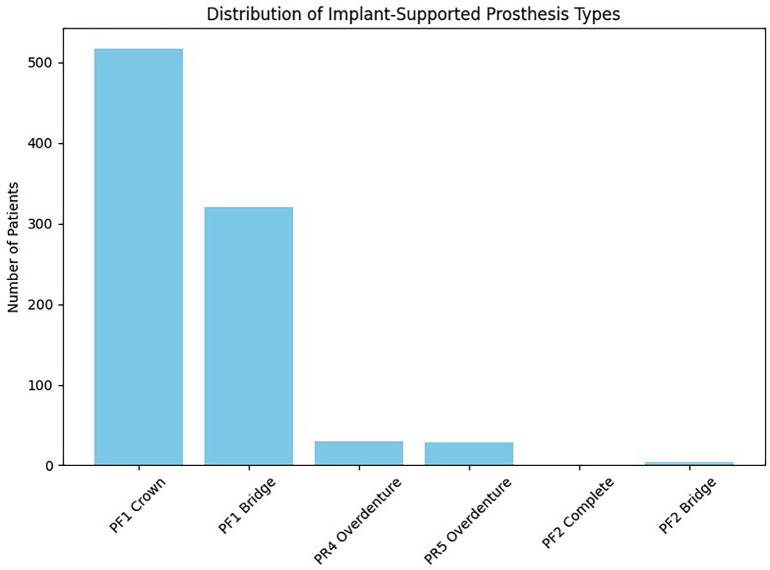 Figure 1
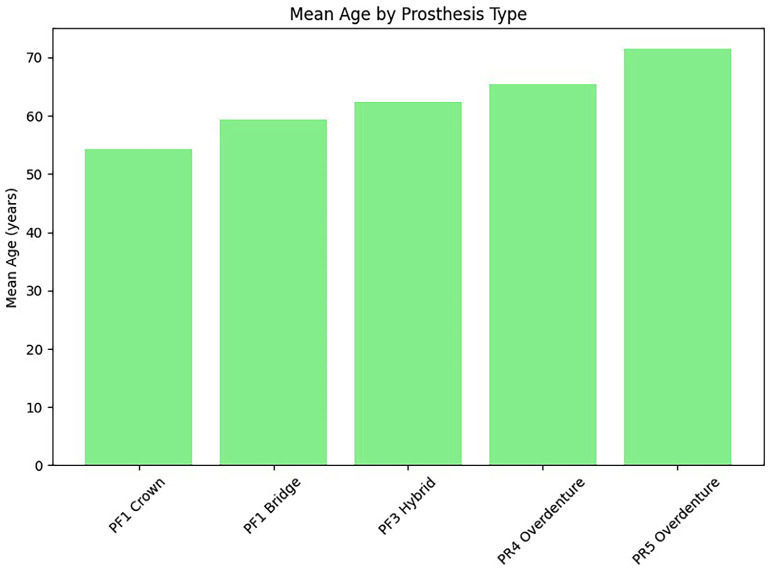 Figure 2
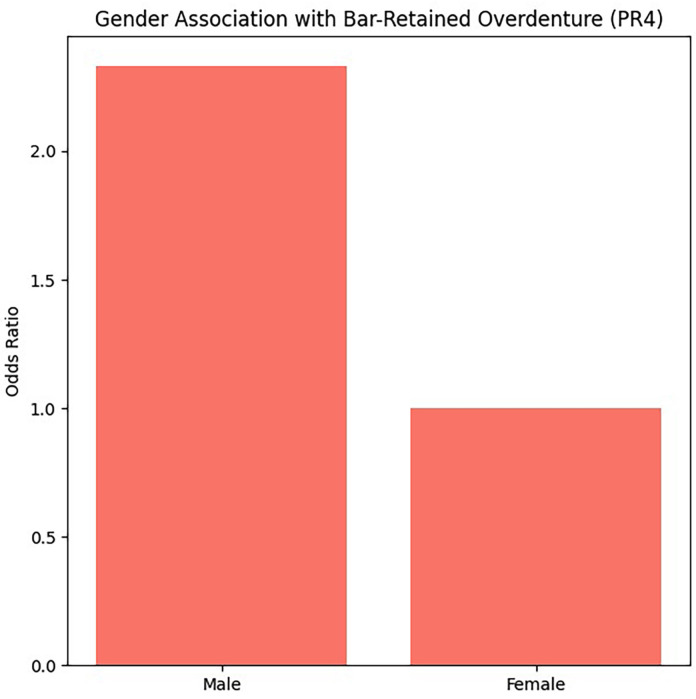 Figure 3
Peer Reviews
No public reviews on file for this paper yet. If you reviewed it on a platform where reviews are public (OpenReview, ICLR, NeurIPS, ICML), you can paste yours below so the community can read it here.
Videos
No videos yet. Explain this paper in a talk, walkthrough, or lecture? Add one.
Taxonomy
TopicsOrthopaedic implants and arthroplasty · Dental Implant Techniques and Outcomes · Total Knee Arthroplasty Outcomes
Introduction
Tooth loss remains a major public health problem worldwide and is associated with functional impairment, aesthetic concerns, reduced quality of life, and psychosocial limitations (1 - 3). Implant-supported prosthetic rehabilitation has become the gold standard for the replacement of missing teeth, demonstrating high long-term survival rates and favourable patient-reported outcomes (4 - 6). The choice of implant-supported prosthetic design-ranging from single crowns to fixed partial dentures, hybrid prostheses, or removable overdentures-is traditionally guided by clinical and anatomical factors such as the extent of edentulism, bone volume, occlusal demands, and systemic health conditions (7 , 8). However, growing evidence suggests that demographic characteristics, particularly age and sex, may influence both the extent of tooth loss and the type of rehabilitation ultimately provided (9 - 11). Age has consistently been associated with cumulative tooth loss and an increased prevalence of partial and complete edentulism, which in turn may necessitate more extensive prosthetic solutions (12 - 14). Sex-related differences in oral health status, behavioural risk factors, and healthcare-seeking patterns have also been described, although their impact on implant prosthetic selection remains controversial (15 , 16). Despite the increasing number of implant treatments performed in university clinics, epidemiological data describing prosthetic treatment patterns in this setting are scarce. University clinics represent a unique environment where clinical decision-making may be influenced by educational objectives, patient socioeconomic profile, and access to care (17 , 18). Hypothesis: Patient age and sex are associated with the type of implant-supported prosthesis selected. Objective: To evaluate the annual evolution and distribution of implant-supported prosthesis types in a Spanish university dental clinic and to analyse the association between patient age and sex and prosthesis selection.
Material and Methods
- Study Design and Population A retrospective observational cross-sectional study was conducted at the Rey Juan Carlos University Dental Clinic. All adult patients (18 years) rehabilitated with implant-supported prostheses between January 2018 and January 2022 were eligible. Patients treated exclusively with conventional (non-implant-supported) prostheses, warranty repetitions, or treatments initiated outside the centre were excluded. The final sample comprised 984 patients. 2. Data Collection and Variables Anonymised data were extracted from the electronic clinical records (Cliniwin® software). Dependent variable: Type of implant-supported prosthesis, classified according to Misch (19): Fixed prostheses (FP) FP1: Single crown or fixed partial denture FP2: Fixed complete prosthesis FP3: Hybrid fixed prosthesis Removable prostheses (RP) RP4: Implant-supported bar-retained overdenture RP5: Implant- and mucosa-supported overdenture Independent variables: Age (continuous and categorised into decades) Sex (male/female) Year of treatment (2018-2022) 3. Statistical Analysis Statistical analysis was performed using Stata® 16.1. Descriptive statistics were calculated for all variables. The Kruskal-Wallis test was used to assess age differences between prosthesis groups, and the Chi-square test was applied for sex associations. A multinomial logistic regression model was constructed using FP1 single crowns as the reference category. Statistical significance was set at p 0.05.
Results
- Annual Evolution of Implant-Supported Treatments A steady increase in the number of implant-supported prosthetic treatments was observed over the study period, rising from 150 patients in 2018 to 245 patients in 2022. 2. Distribution of Prosthesis Types Single implant-supported crowns (FP1) were the most frequent rehabilitation (n = 516; 52.4%), followed by implant-supported fixed partial dentures (n = 320; 32.5%). Removable prostheses (RP4 and RP5) accounted for a smaller proportion of treatments. FP2 and FP3 prostheses were infrequent, (Fig. 1).
Figure 1. Distribution of Implant-Supported Prosthesis Types.
- Age and Prosthesis Type Mean patient age increased progressively with prosthetic complexity. Patients rehabilitated with single crowns had the lowest mean age, whereas those treated with overdentures showed the highest values. These differences were statistically significant (p < 0.001), (Fig. 2).
Figure 2. Mean Age by Prosthesis Type.
- Sex and Prosthesis Type No statistically significant global association was observed between sex and prosthesis type in bivariate analysis. However, multivariate regression revealed that male patients had a significantly higher probability of being rehabilitated with bar-retained overdentures compared with single crowns, (Fig. 3).
Figure 3. Gender Association with Bar-Retained Overdenture (PR4).
Discussion
This study provides an epidemiological analysis of implant-supported prosthetic rehabilitations performed in a Spanish university dental clinic over a five-year period. The large sample size allows for a robust evaluation of demographic patterns in prosthesis selection. The most consistent finding was the strong association between increasing age and the selection of more extensive prosthetic rehabilitations. Older patients were significantly more likely to receive fixed partial dentures or removable implant-supported prostheses, in line with previous epidemiological studies reporting higher rates of partial and complete edentulism with advancing age (12 - 14 , 20). The progressive annual increase in implant-supported treatments is consistent with global trends describing an expansion of implant dentistry and improved access to care, particularly within academic institutions (21 , 22). University clinics often provide implant rehabilitation to older populations seeking cost-effective treatment options. Sex-related differences were less pronounced, although male sex emerged as an independent predictor for bar-retained overdentures. Similar trends have been reported in studies suggesting higher rates of advanced tooth loss and risk behaviours among men, potentially influencing the selection of removable treatment modalities (15 , 16 , 23). The absence of detailed clinical and socioeconomic variables represents a limitation of this study. Nevertheless, the findings highlight the multifactorial nature of prosthesis selection and the relevance of demographic profiling in academic clinical settings.
Conclusions
Implant-supported prosthetic treatments increased steadily between 2018 and 2022 in a Spanish university dental clinic. Single crowns and fixed partial dentures were the most frequently performed rehabilitations. Patient age was the strongest demographic predictor of prosthesis type, with older patients receiving more extensive fixed and removable rehabilitations. Male sex was independently associated with bar-retained overdentures.
The reference list from the paper itself. Each links out to its DOI / PubMed record.
- 1Peres MA Macpherson LMD Weyant RJ Daly B Venturelli R Mathur MR Oral diseases: a global public health challenge J Dent Res 2019984373–379.3132736910.1016/S 0140-6736(19)31146-8 · doi ↗ · pubmed ↗
- 2Kassebaum NJ Smith AGC BernabéE Fleming TD Reynolds AE Vos T Global, regional, and national prevalence, incidence, and disability-adjusted life years for oral conditions, 1990–2015 J Dent Res 2017964380–387.2879227410.1177/0022034517693566 PMC 5912207 · doi ↗ · pubmed ↗
- 3Gerritsen AE Allen PF Witter DJ Bronkhorst EM Creugers NHJ Tooth loss and oral health-related quality of life: a systematic review and meta-analysis Community Dent Oral Epidemiol 2018464325–336.10.1186/1477-7525-8-126PMC 299250321050499 · doi ↗ · pubmed ↗
- 4Papaspyridakos P Chen CJ Singh M Weber HP Gallucci GO Success criteria in implant dentistry: a systematic review J Dent Res 2012913242–248.2215709710.1177/0022034511431252 · doi ↗ · pubmed ↗
- 5Moraschini V Poubel LA Ferreira VF Barboza EDS Evaluation of survival and success rates of dental implants with ≥10 years of follow-up Int J Oral Maxillofac Surg 2015443377–388.2546773910.1016/j.ijom.2014.10.023 · doi ↗ · pubmed ↗
- 6Pjetursson BE Heimisdottir K Dental implants – are they better than natural teeth?Eur J Oral Sci 2018126(Suppl 1)81–87.3017855210.1111/eos.12543 · doi ↗ · pubmed ↗
- 7Elani HW Starr JR Da Silva JD Gallucci GO Trends in dental implant use in the U.S., 1999–2016, and projections to 2026 J Dent Res 201897131424–1430.3007509010.1177/0022034518792567 PMC 6854267 · doi ↗ · pubmed ↗
- 8Schimmel MMüller F Suter V Buser D Implants for elderly patients Periodontol 20002017731228–240.2800026810.1111/prd.12166 · doi ↗ · pubmed ↗