Optimal Specimens and Lesions for Mpox Diagnosis Using Real-Time PCR, South Korea
Dong-Min Kim, Munawir Muhammad, Jin Won Kim, Choon-Mee Kim, Jun-Won Seo, Da Young Kim, Na Ra Yun, Beomgi Lee, Minji Lee, Jeong Hyun Lee, Myung-Min Choi, Yoon-Seok Chung

TL;DR
This study identifies the best samples for diagnosing mpox using PCR in South Korea, focusing on lesion types and body sites.
Contribution
The study provides evidence-based guidance on optimal specimen types for detecting mpox clade IIb.
Findings
Crusted and anogenital skin lesions showed the highest positivity rates for mpox detection.
Rectal swab specimens also demonstrated high positivity rates for the virus.
Viral loads varied depending on lesion type, location, and time since symptom onset.
Abstract
We analyzed 612 specimens from 135 patients with monkeypox virus clade IIb in South Korea by using real-time PCR. Crusted and anogenital skin lesions and rectal swab specimens demonstrated the highest positivity rates. Viral loads varied by lesion type, anatomic site, and time since symptom onset, supporting our specimen selection for clade IIb detection.
Genes, proteins, chemicals, diseases, species, mutations and cell lines named across the full text — each resolved to its canonical identifier and authoritative record.
Click any figure to enlarge with its caption.
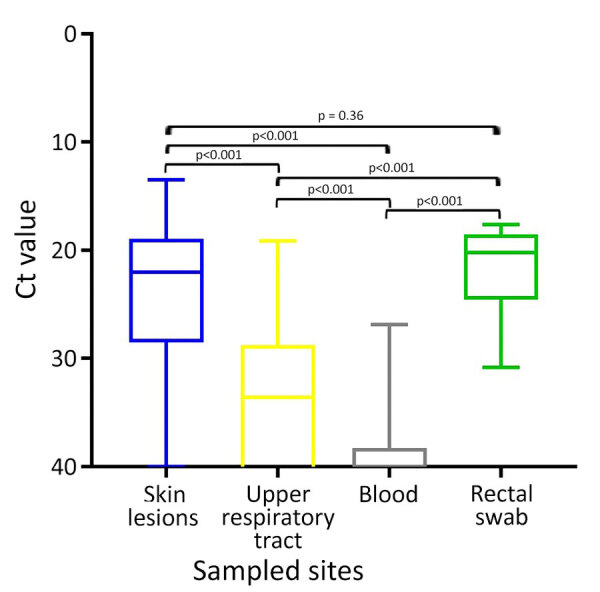 Figure 1
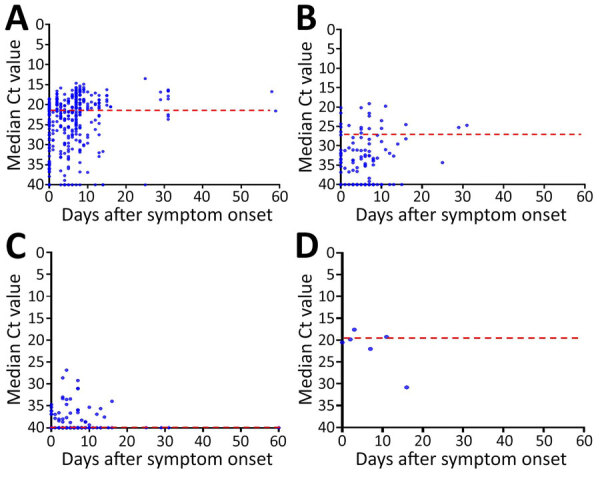 Figure 2
Peer Reviews
No public reviews on file for this paper yet. If you reviewed it on a platform where reviews are public (OpenReview, ICLR, NeurIPS, ICML), you can paste yours below so the community can read it here.
Videos
No videos yet. Explain this paper in a talk, walkthrough, or lecture? Add one.
Taxonomy
TopicsPoxvirus research and outbreaks · Virology and Viral Diseases · Bacillus and Francisella bacterial research