Home-Based Monitoring of Treatment-Related Adverse Events during Drug-Resistant Tuberculosis Treatment, India, 2020–2024
Minal Ahson, Daksha Shah, Sampada Bhide, Rajesh Deshmukh, Jonathan P. Smith, Smita Waghmare, Satish Kaipilyawar, Varsha Puri, Dilip K. Khetade, Vijay Yeldandi, Anand Date, Patrick K. Moonan, Christine S. Ho

TL;DR
Home-based monitoring of adverse events improved treatment adherence for drug-resistant tuberculosis in India.
Contribution
The study demonstrates the effectiveness of home-based monitoring in improving drug-resistant tuberculosis treatment outcomes.
Findings
53% of 974 patients reported adverse events during treatment.
83% of patients completed therapy with home-based monitoring.
26% of patients required treatment regimen changes due to adverse events.
Abstract
We investigated home-based outreach and point-of-care diagnostic tools for monitoring adverse events among persons treated for drug-resistant tuberculosis in Dharavi, India. Of 974 persons treated, 518 (53%) reported 1,410 adverse events, 126/477 (26%) required regimen change, and 83% of patients completed therapy. Home-based adverse event monitoring can help improve tuberculosis treatment adherence.
Genes, proteins, chemicals, diseases, species, mutations and cell lines named across the full text — each resolved to its canonical identifier and authoritative record.
Click any figure to enlarge with its caption.
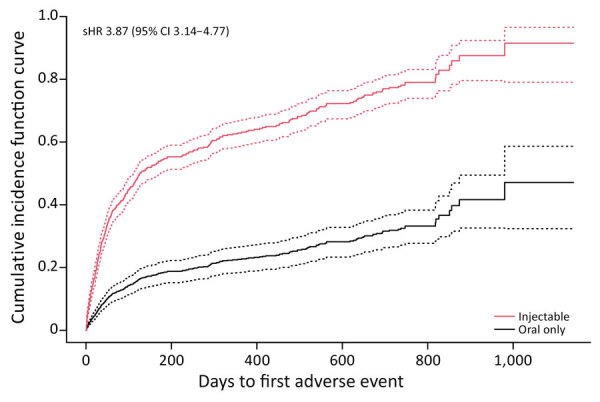 Figure 1
Peer Reviews
No public reviews on file for this paper yet. If you reviewed it on a platform where reviews are public (OpenReview, ICLR, NeurIPS, ICML), you can paste yours below so the community can read it here.
Videos
No videos yet. Explain this paper in a talk, walkthrough, or lecture? Add one.
Taxonomy
TopicsTuberculosis Research and Epidemiology · Pharmacovigilance and Adverse Drug Reactions · Infectious Diseases and Tuberculosis