Strongyloides Genetic Diversity among Humans, Dogs, and Nonhuman Primates, Central African Republic, 2016–2022
Eva Nosková, Vladislav Ilík, Frédéric Stéphane Singa Niatou, Laurent Dumas, Terence Fuh, Jean-Francais Dicky, Terézia Kurucová, Vojtech Baláž, Klára Judita Petrželková, Barbora Pafčo

TL;DR
This study examines the genetic diversity of Strongyloides nematodes in humans, dogs, and nonhuman primates in the Central African Republic, revealing zoonotic transmission and the role of animals as infection reservoirs.
Contribution
The study identifies shared Strongyloides species and haplotypes across species, emphasizing zoonotic transmission and the role of nonhuman hosts as reservoirs.
Findings
Strongyloides prevalence was high in humans, dogs, and gorillas.
S. stercoralis haplotype A was dominant in humans but also found in dogs and apes.
S. fuelleborni was present in all host species, indicating cross-species transmission.
Abstract
Strongyloides stercoralis nematode infection occurs in ≈600 million persons worldwide and is listed by the World Health Organization as a neglected tropical disease. Understanding zoonotic potential is critical, especially in areas where humans, domestic animals, and wildlife interact. We explored cross-species sharing of Strongyloides nematodes by analyzing fecal samples from humans, dogs, and nonhuman primates in the Dzanga-Sangha Protected Areas, Central African Republic. We detected positive samples by quantitative PCR and assessed genetic diversity through amplification of the 18S rRNA HVR-IV region and cox1, followed by high-throughput sequencing. Strongyloides prevalence was high in humans, dogs, and gorillas. S. stercoralis haplotype A nematode dominated in humans but appeared in dogs and apes, whereas S. fuelleborni nematode was present in all hosts. Shared species and…
Genes, proteins, chemicals, diseases, species, mutations and cell lines named across the full text — each resolved to its canonical identifier and authoritative record.
Click any figure to enlarge with its caption.
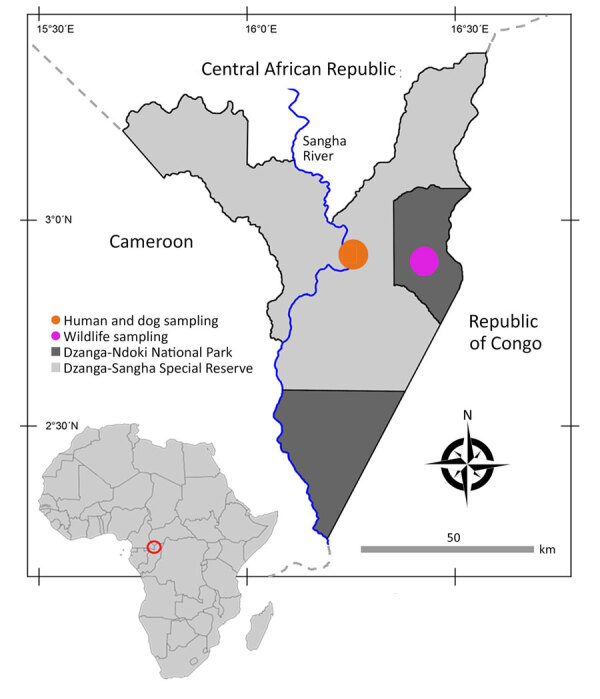 Figure 1
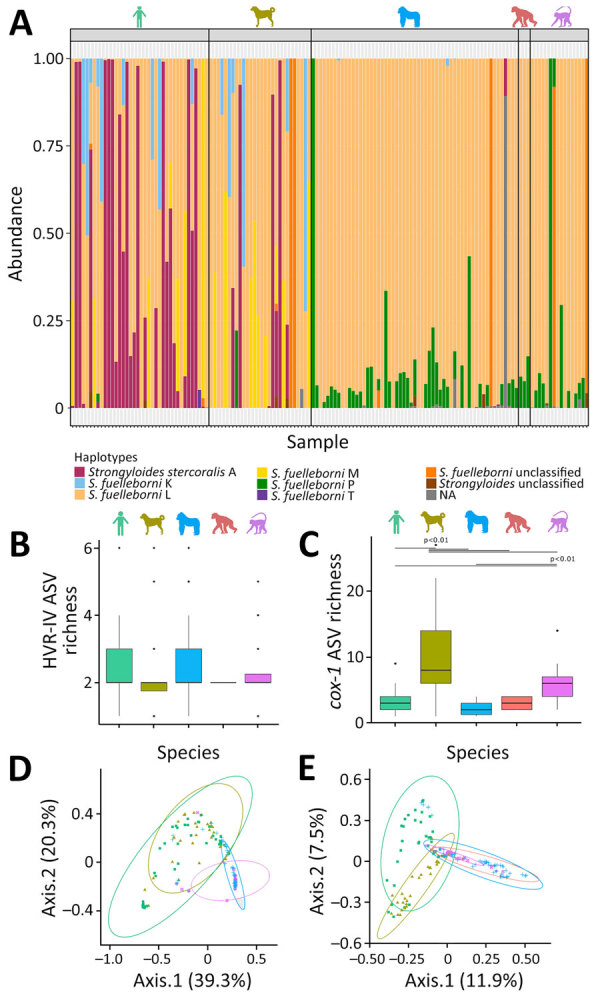 Figure 2
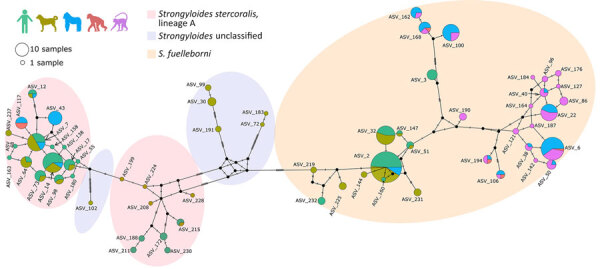 Figure 3
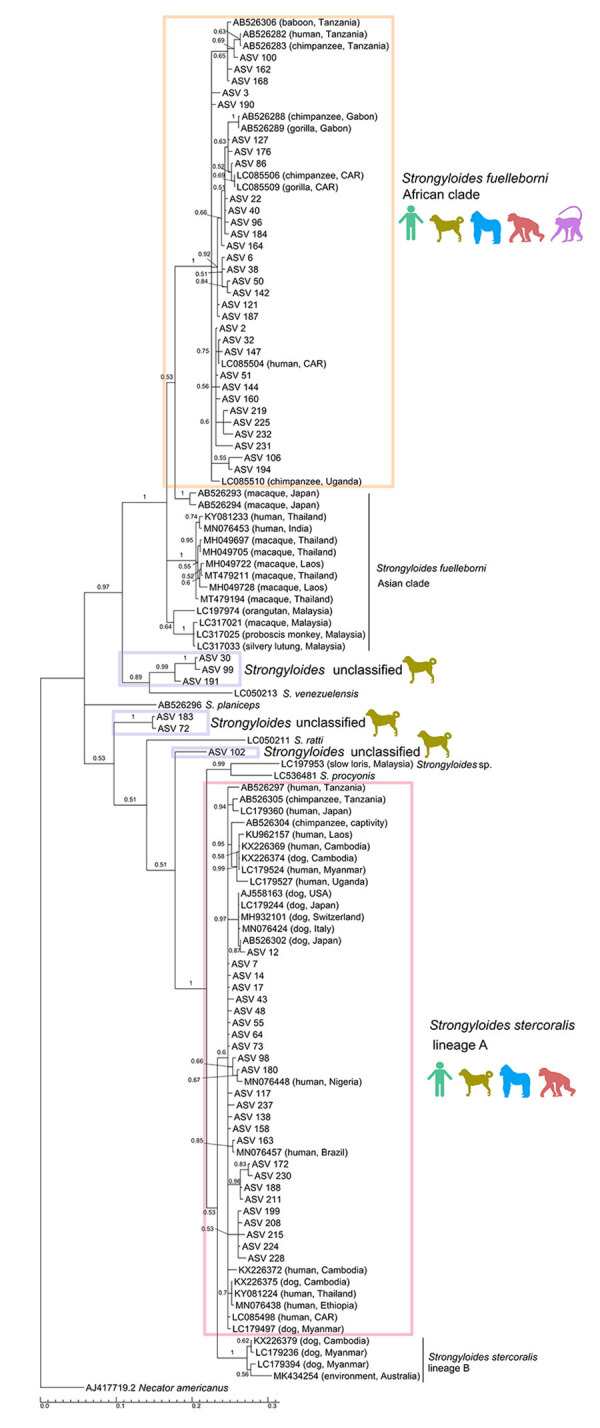 Figure 4
Peer Reviews
No public reviews on file for this paper yet. If you reviewed it on a platform where reviews are public (OpenReview, ICLR, NeurIPS, ICML), you can paste yours below so the community can read it here.
Videos
No videos yet. Explain this paper in a talk, walkthrough, or lecture? Add one.
Taxonomy
TopicsParasites and Host Interactions · Syphilis Diagnosis and Treatment · Trypanosoma species research and implications