A spatially invariant noise model for minimum noise fraction (MNF) denoising of hyperspectral datasets: applications to large-scale infrared spectroscopic pathology
Dougal Ferguson, Peter Gardner

TL;DR
A new noise reduction method for infrared imaging data allows better analysis of large or fragmented datasets by removing spatial dependencies.
Contribution
The iMNF method introduces a spatially invariant noise model for hyperspectral data denoising, enabling robust analysis of unstructured datasets.
Findings
iMNF performs comparably to Fast MNF on structured data but better on unstructured datasets.
iMNF maintains biochemical fidelity in patch-wise or unordered data analysis.
The method removes a critical bottleneck in analyzing large IR pathology images.
Abstract
Use of Minimum Noise Fraction (MNF) denoising, previously developed for remote sensing applications, is an increasingly popular denoising technique for Infrared (IR) imaging data. The original MNF method proposed by Green et al. along with the faster ‘Fast MNF’ and resolution independent ‘MNF2’ all use a noise correlation matrix calculated based on neighbouring pixels, creating a heavy order-dependence. This approach fails when the spatial relationship between pixels is disrupted, for example, when large images cannot be loaded into memory on a standard workstation and are thus processed in patches or tissue data extracted using masking. We propose a spatially invariant MNF denoising method (iMNF) that uses a non-uniform, physically motivated noise estimation profile that removes this order-dependence, resulting in a robust, spatially invariant MNF based denoising algorithm. This allows…
Genes, proteins, chemicals, diseases, species, mutations and cell lines named across the full text — each resolved to its canonical identifier and authoritative record.
Click any figure to enlarge with its caption.
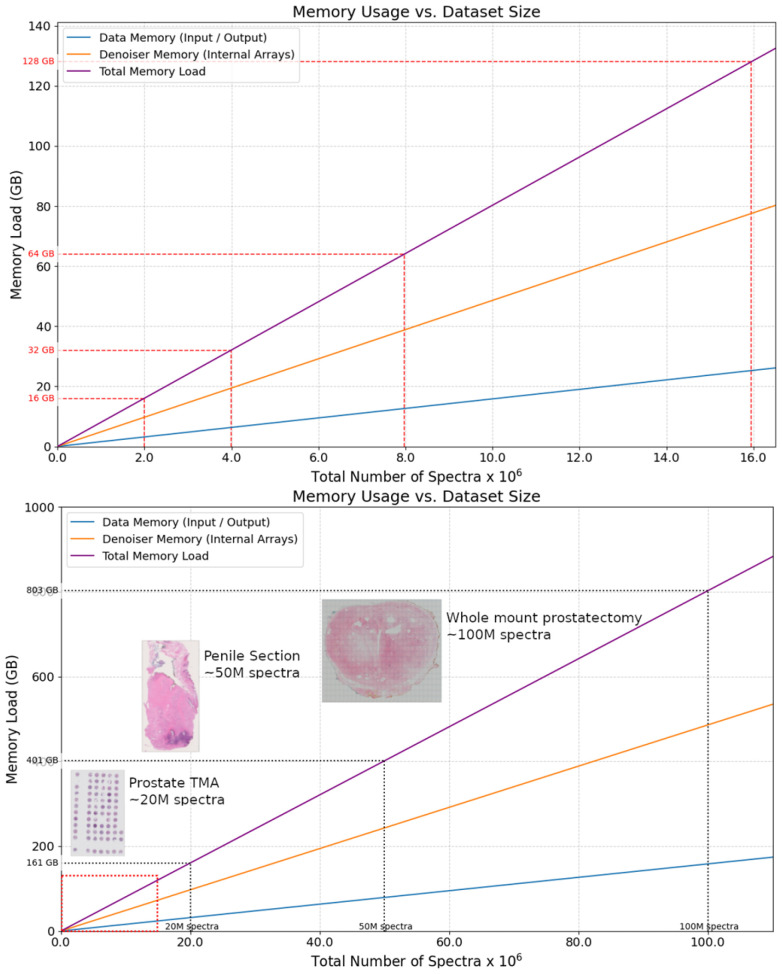 Figure 1
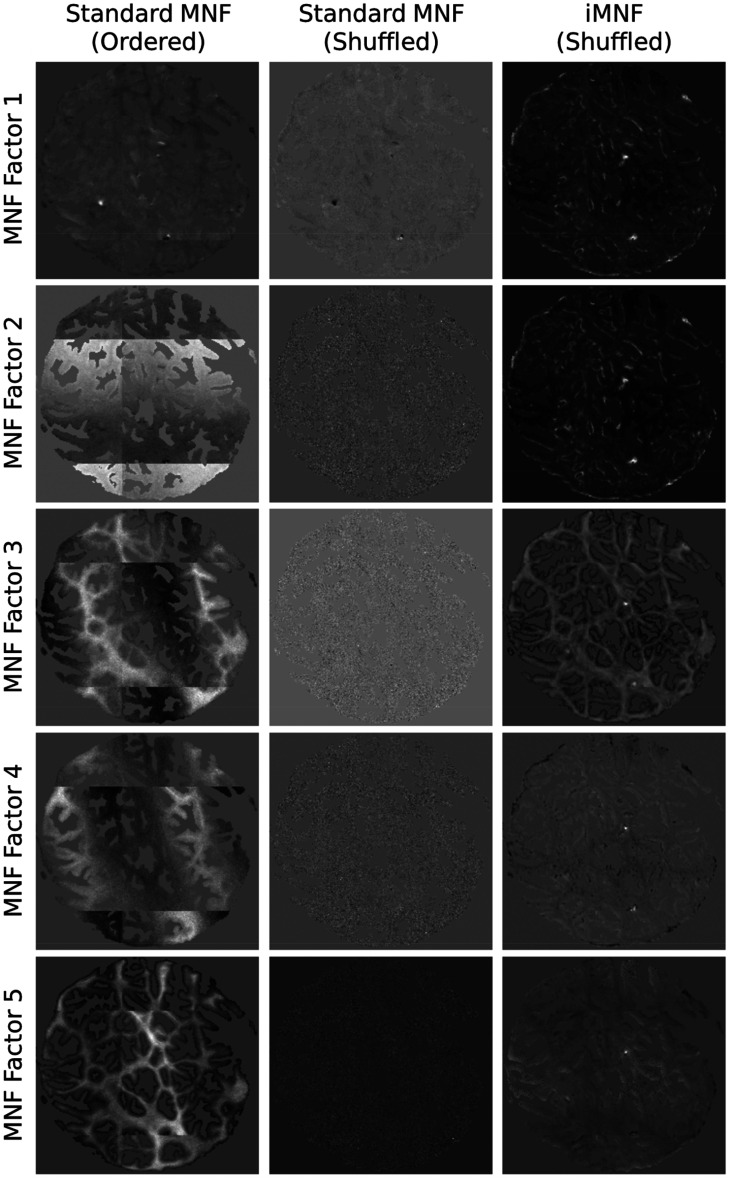 Figure 2
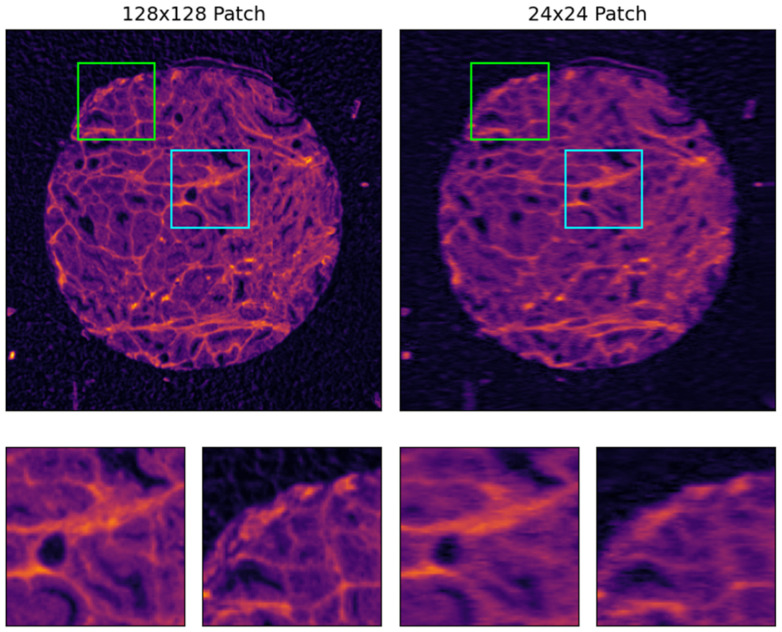 Figure 3
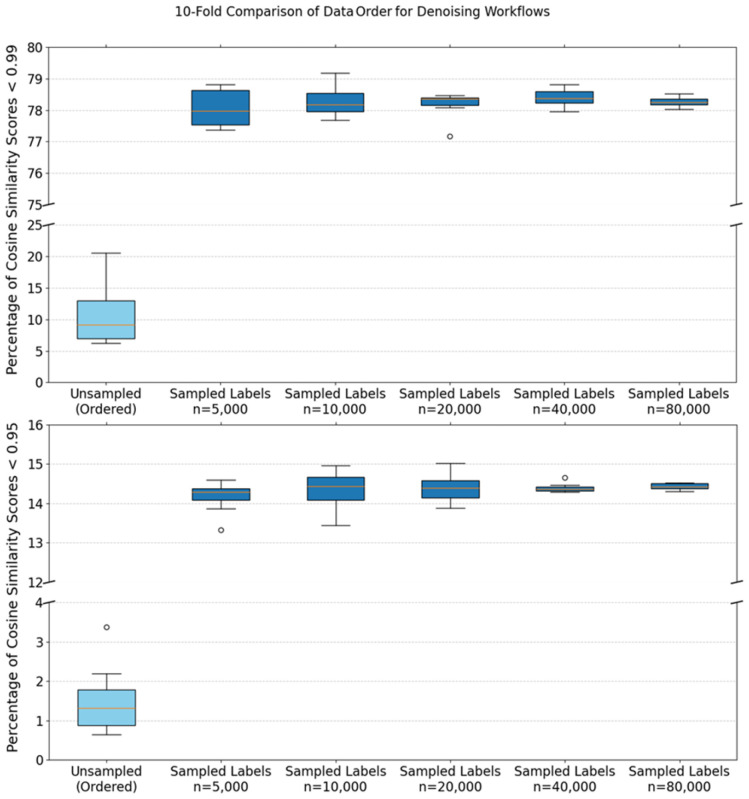 Figure 4
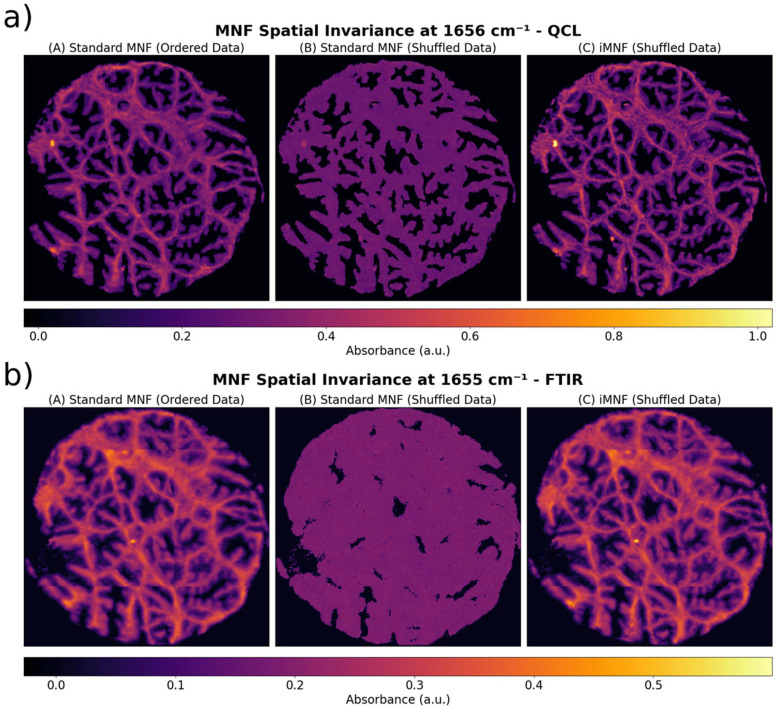 Figure 5
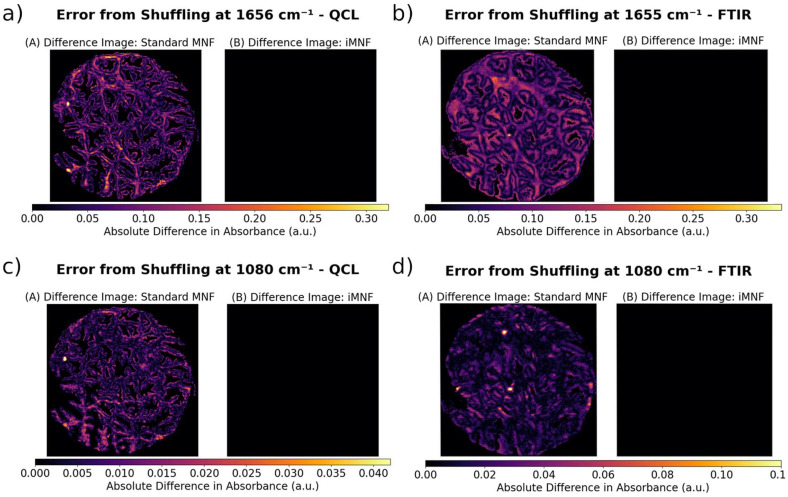 Figure 6
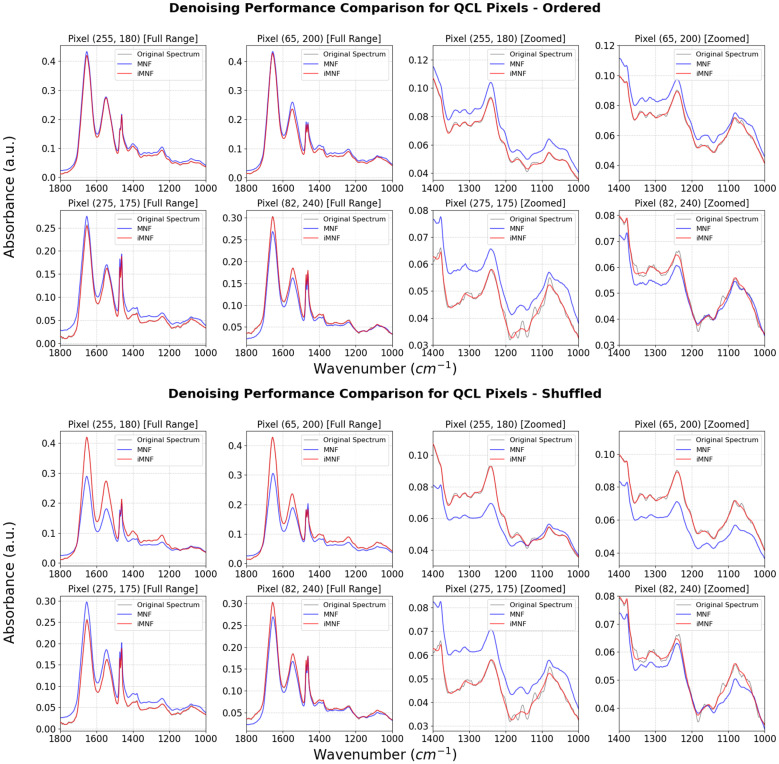 Figure 7
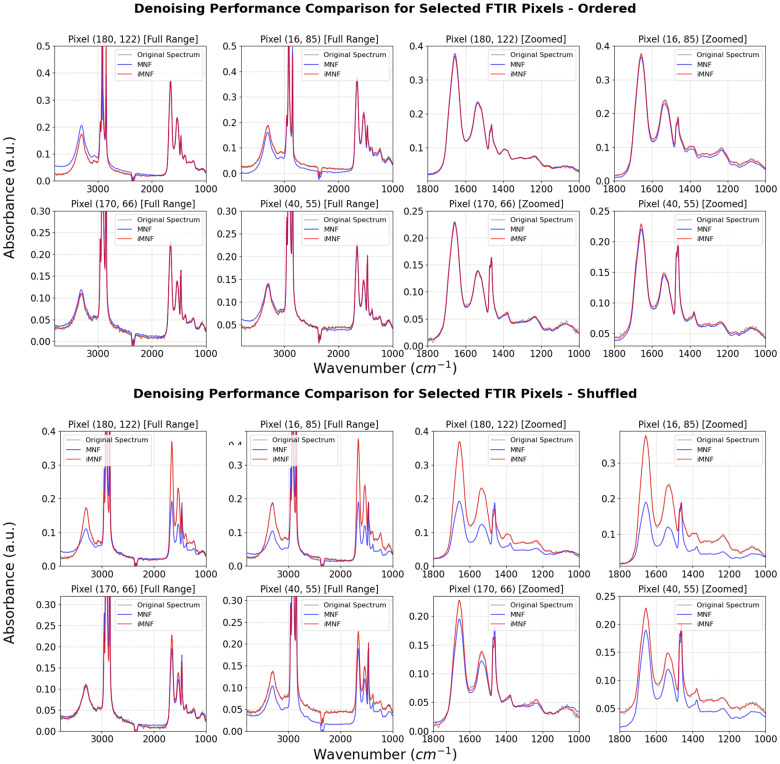 Figure 8
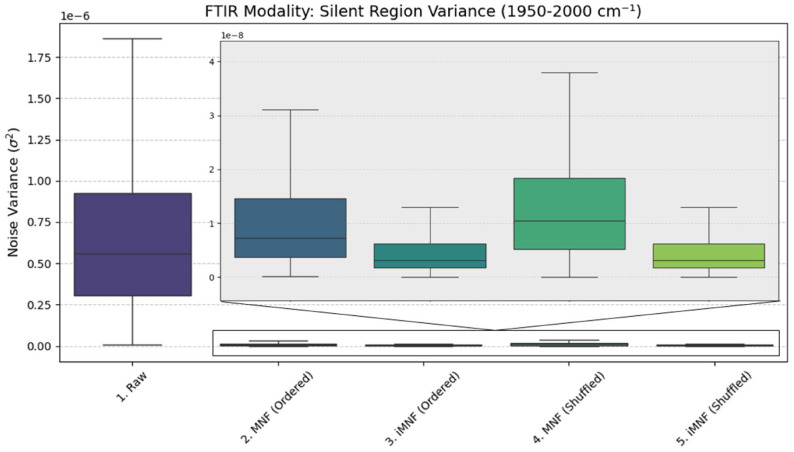 Figure 9
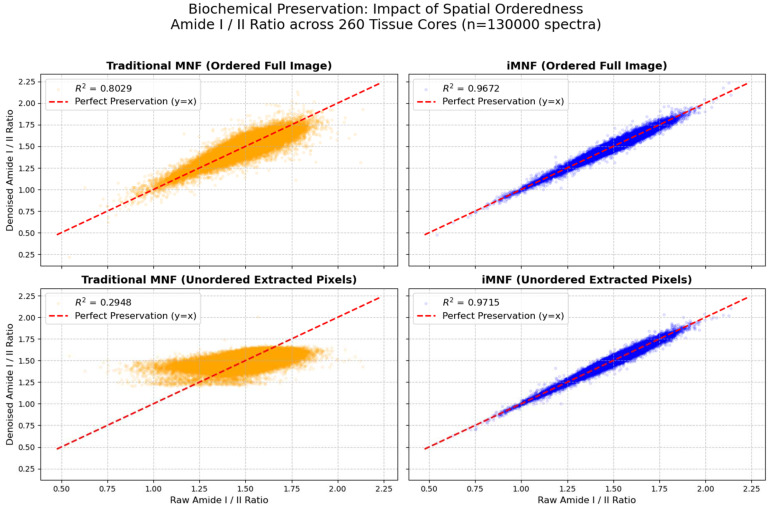 Figure 10
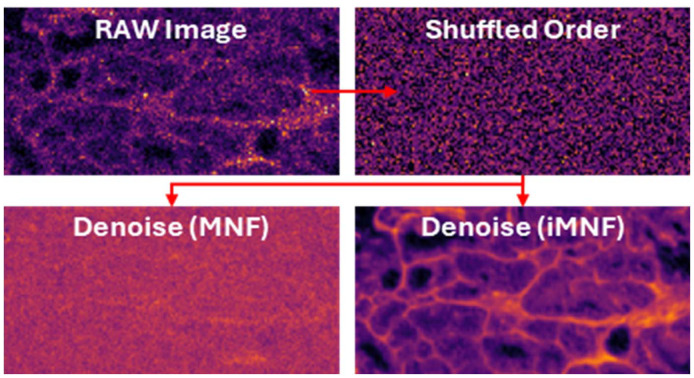 Figure 11
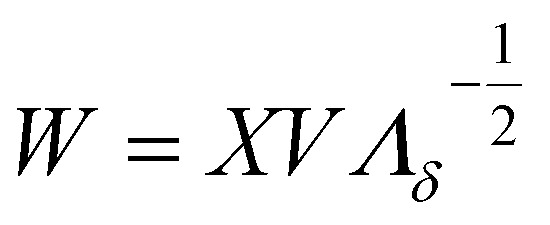 Figure 12
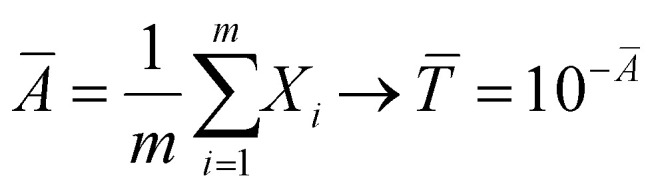 Figure 13
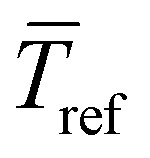 Figure 14
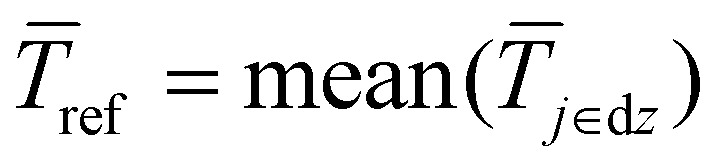 Figure 15
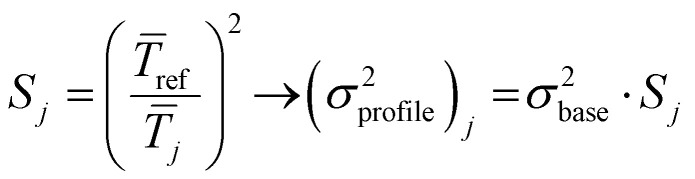 Figure 16
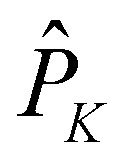 Figure 17
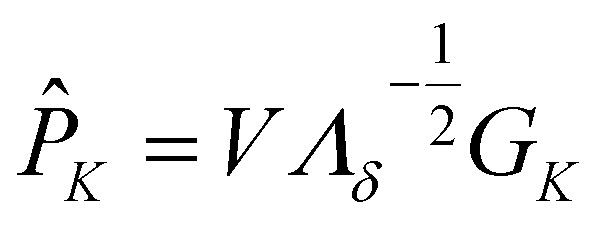 Figure 18
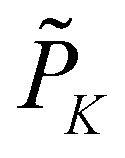 Figure 19
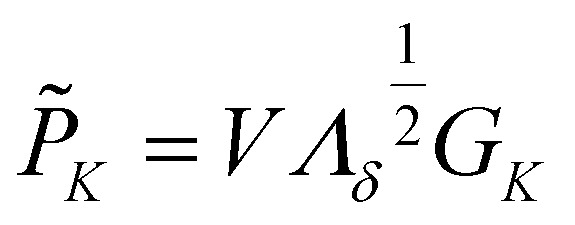 Figure 20
 Figure 21
 Figure 22
 Figure 23
 Figure 24
Peer Reviews
No public reviews on file for this paper yet. If you reviewed it on a platform where reviews are public (OpenReview, ICLR, NeurIPS, ICML), you can paste yours below so the community can read it here.
Videos
No videos yet. Explain this paper in a talk, walkthrough, or lecture? Add one.
Taxonomy
TopicsImage and Signal Denoising Methods · Spectroscopy Techniques in Biomedical and Chemical Research · AI in cancer detection