MUTE drives asymmetric divisions to form stomatal subsidiary cells in Crassulaceae succulents
Xin Cheng, Heike Lindner, Lidia Hoffmann, Antonio Aristides Pereira Gomes Filho, Paola Ruiz Duarte, Susanna F. Boxall, Yiğit Berkay Gündoğmuş, Jessica H. Pritchard, Sam Haldenby, Matthew Gemmell, Alistair Darby, Miro Läderach, James Hartwell, Michael T. Raissig

TL;DR
This study reveals how the MUTE gene helps form specialized cells around stomata in Crassulaceae succulents, using a new model species.
Contribution
The paper identifies MUTE's novel role in driving asymmetric divisions to create stomatal subsidiary cells in Crassulaceae.
Findings
MUTE facilitates asymmetric divisions to form three anisocytic subsidiary cells in Crassulaceae stomata.
Kalanchoë laxiflora is established as a model for studying succulent stomatal development.
MUTE's function in Crassulaceae contrasts with its role in Arabidopsis but aligns with its function in grasses.
Abstract
Among the evolutionary innovations of many succulents is a photosynthetic lifestyle, where stomatal gas exchange is decoupled from light-dependent carbon fixation. Many Crassulaceae leaf succulents form a stomatal morphotype consisting of kidney-shaped guard cells surrounded by three anisocytic subsidiary cells (SCs), whose function and development remained unknown. Here, we established Kalanchoë laxiflora as a developmental model. Potassium staining suggested SCs to shuttle osmolytes and support turgor-driven stomatal movements. Gene editing, reporter lines, protein overexpression, and RNA sequencing implicated the stomatal transcription factor MUTE in facilitating the additional rounds of asymmetric divisions required to form SCs in succulents. This is opposite to the role of MUTE in Arabidopsis thaliana, where it stops rather than induces asymmetric divisions but reminiscent of…
Genes, proteins, chemicals, diseases, species, mutations and cell lines named across the full text — each resolved to its canonical identifier and authoritative record.
Click any figure to enlarge with its caption.
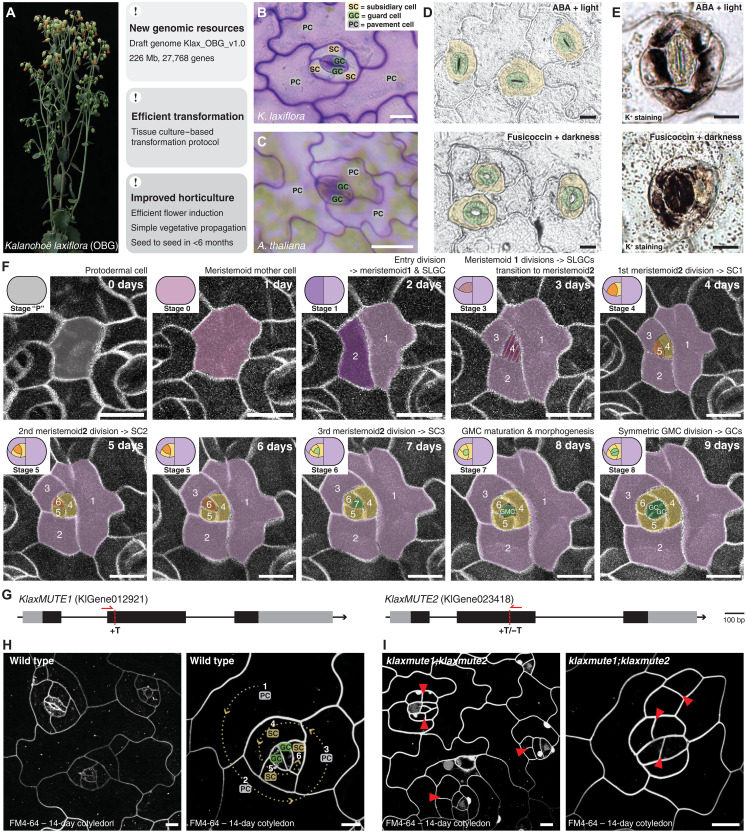 Figure 1
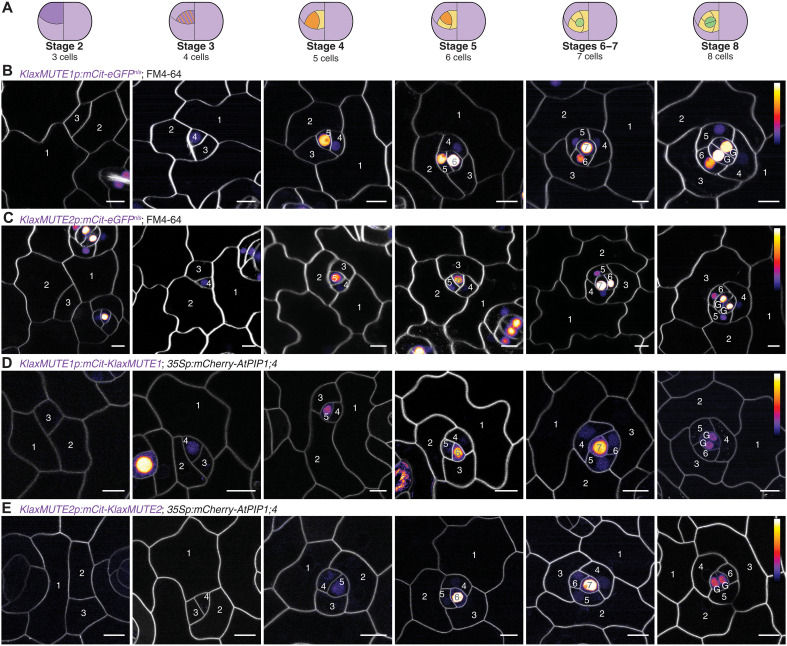 Figure 2
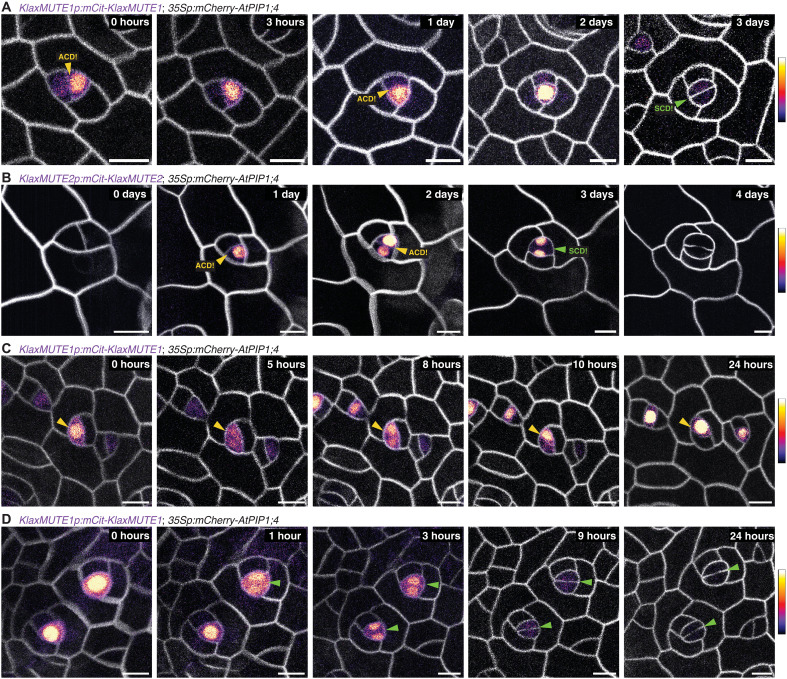 Figure 3
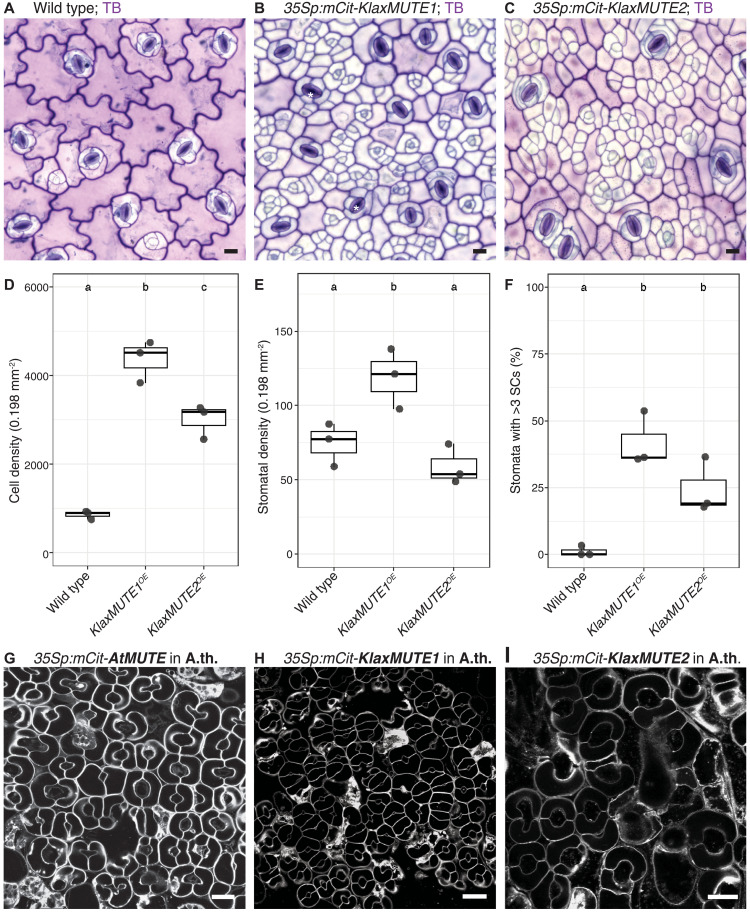 Figure 4
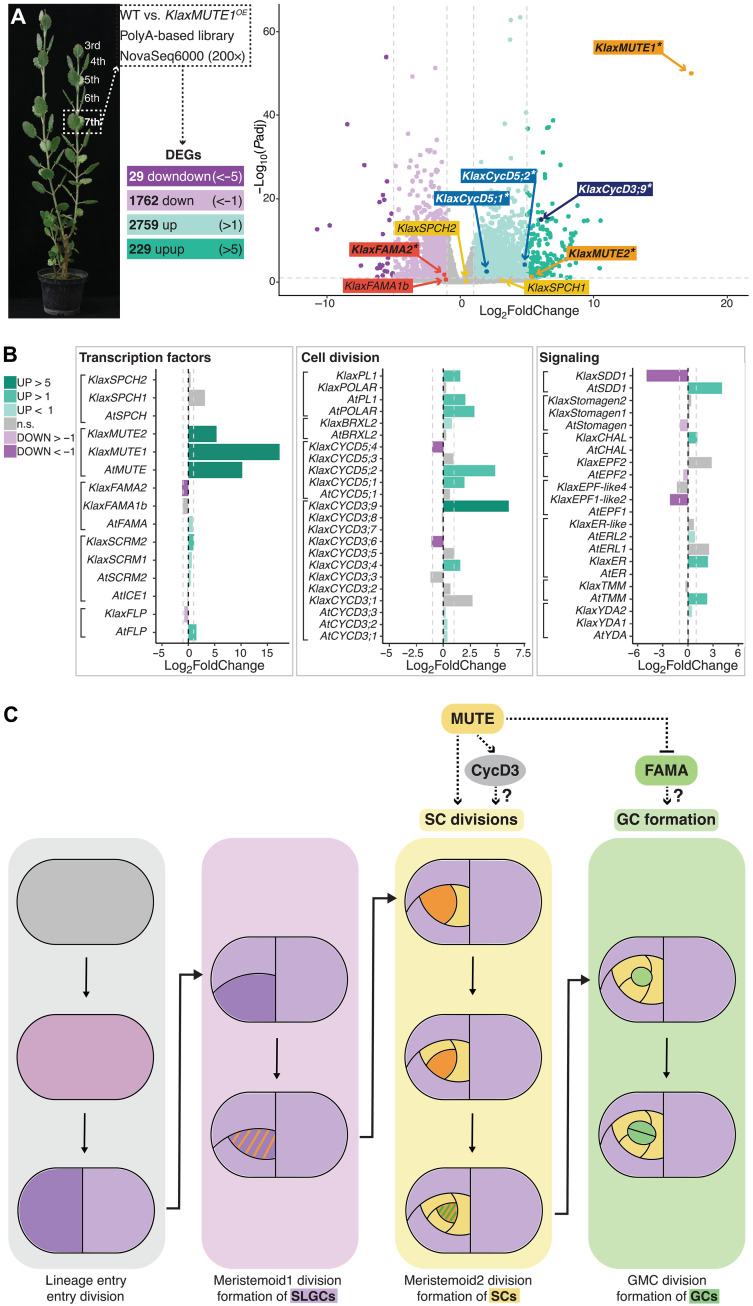 Figure 5
Peer Reviews
No public reviews on file for this paper yet. If you reviewed it on a platform where reviews are public (OpenReview, ICLR, NeurIPS, ICML), you can paste yours below so the community can read it here.
Videos
No videos yet. Explain this paper in a talk, walkthrough, or lecture? Add one.
Taxonomy
TopicsPlant Molecular Biology Research · Plant Gene Expression Analysis · Polysaccharides and Plant Cell Walls