Comparative proteomic profiling of receptor kinase signaling reveals key trafficking components enforcing plant stomatal development
Pengfei Bai, Minh Huy Vu, Chiaki Komatsu, Ophelia Papoulas, Kazuo Ebine, Akira Nozawa, Tatsuya Sawasaki, Takashi Ueda, Edward M. Marcotte, Keiko U. Torii

TL;DR
This study maps the proteins involved in receptor kinase signaling during plant stomatal development, highlighting the role of endocytosis in regulating this process.
Contribution
The study identifies specific endocytosis components that regulate ERECTA receptor kinase internalization during stomatal development.
Findings
ERECTA interacts with TOO MANY MOUTHS and endosomal trafficking machinery via clathrin-mediated endocytosis.
PICALM subfamily proteins synergistically regulate ERECTA internalization and stomatal patterning.
Disruption of PICALMs impairs ERECTA endocytosis and leads to stomatal clustering.
Abstract
Receptor kinases are pivotal for growth, development, and environmental response of plants. Yet, their regulatory mechanisms and spatial dynamics remain underexplored. The ERECTA-family receptor kinases coordinate diverse developmental processes, including stomatal development. To understand the proteomic landscape of the ERECTA-mediated signaling pathways, we report comparative analyses of the ERECTA interactome and proximitome by epitope-tagged affinity-purification (ET-AP) and TurboID-based proximity labeling (TbID-PL) mass spectrometry, respectively. While ET-AP recovered receptor complex components (e.g., TOO MANY MOUTHS), TbID-PL effectively captured transient associations with the components of endosomal trafficking, i.e., clathrin-mediated endocytosis machinery. We further identify that specific subfamily members of phosphatidylinositol-binding clathrin assembly proteins…
Genes, proteins, chemicals, diseases, species, mutations and cell lines named across the full text — each resolved to its canonical identifier and authoritative record.
Click any figure to enlarge with its caption.
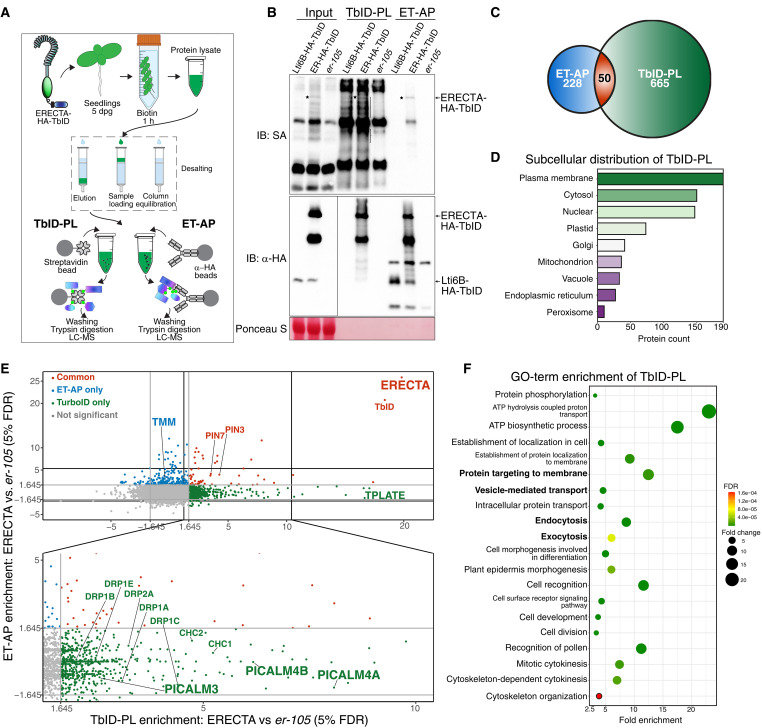 Figure 1
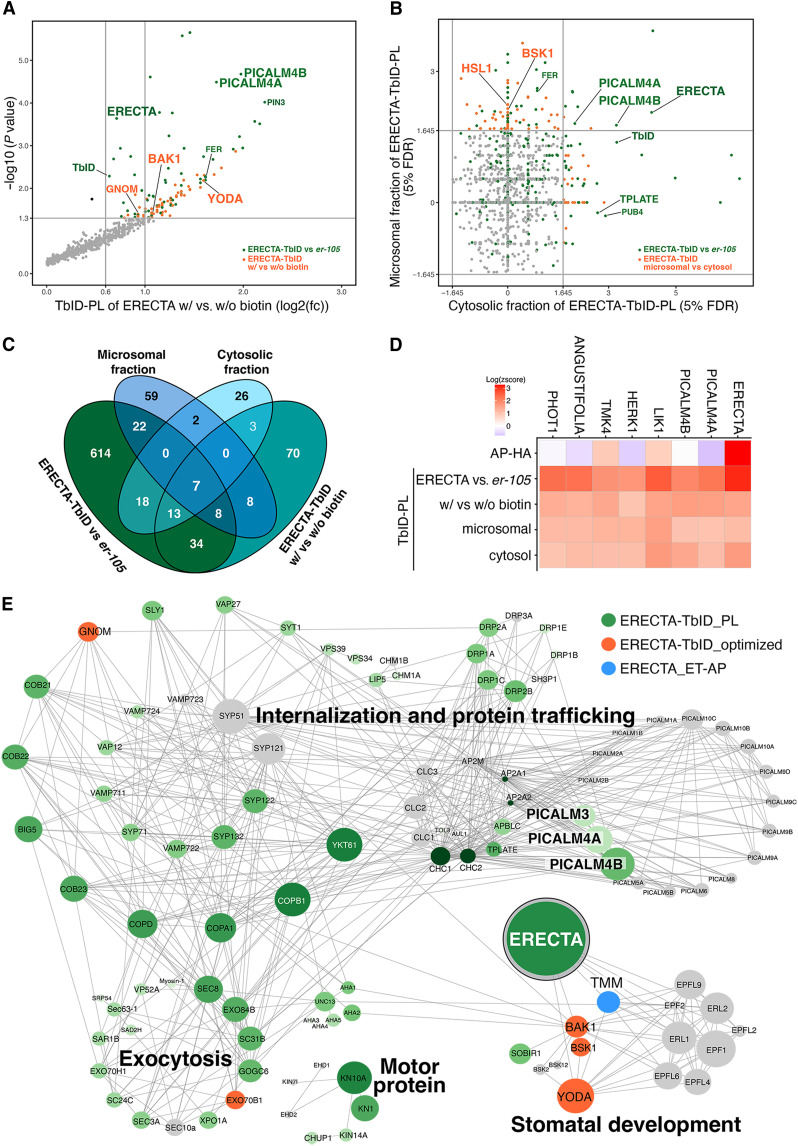 Figure 2
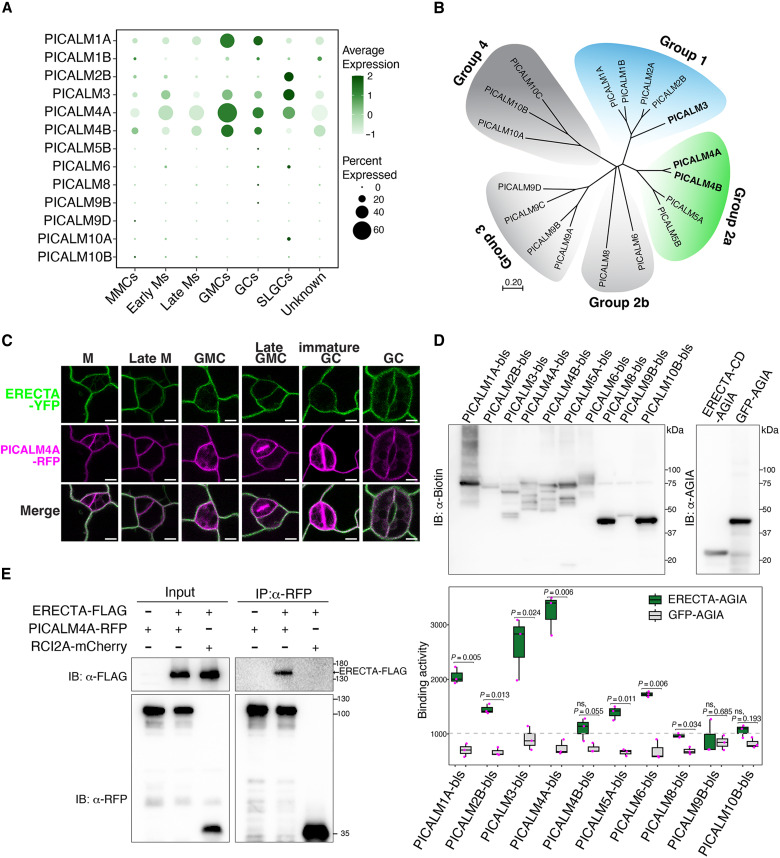 Figure 3
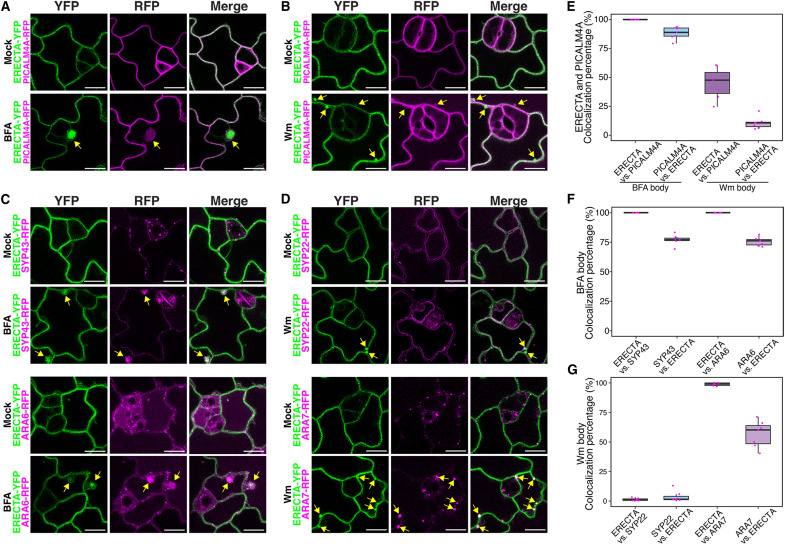 Figure 4
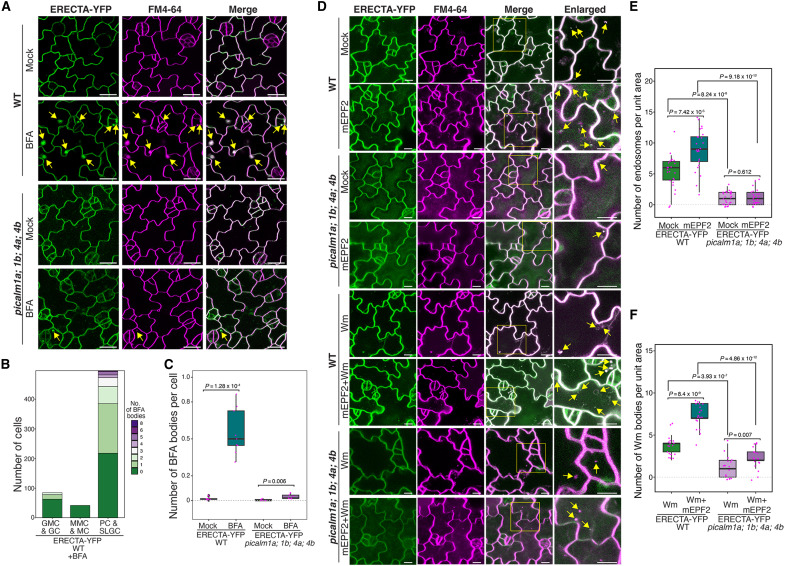 Figure 5
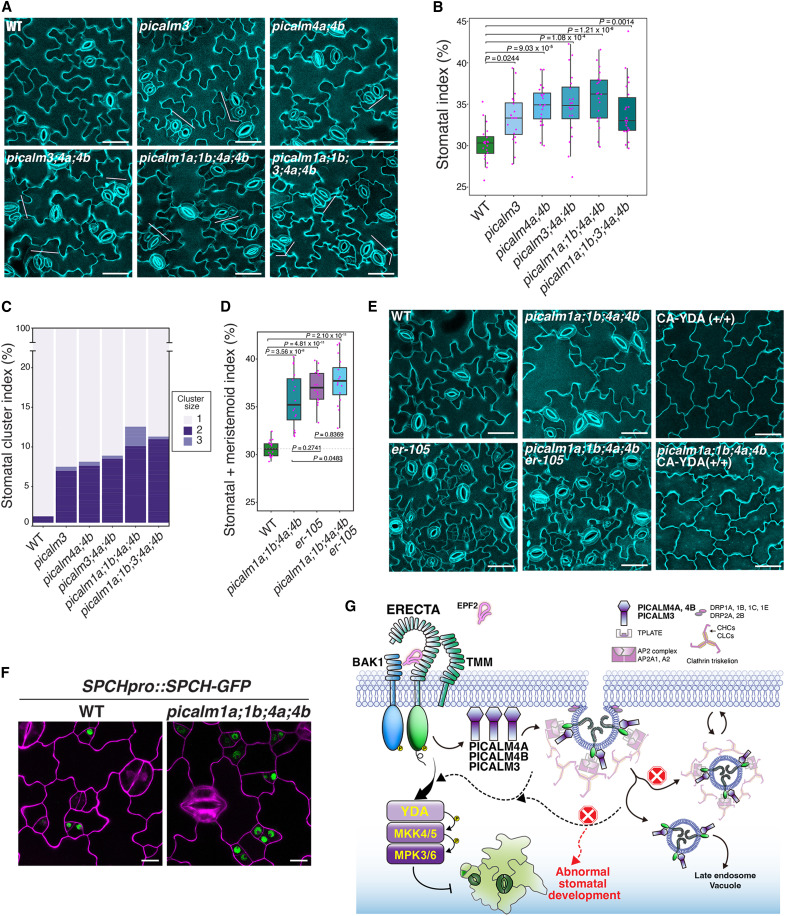 Figure 6
Peer Reviews
No public reviews on file for this paper yet. If you reviewed it on a platform where reviews are public (OpenReview, ICLR, NeurIPS, ICML), you can paste yours below so the community can read it here.
Videos
No videos yet. Explain this paper in a talk, walkthrough, or lecture? Add one.
Taxonomy
TopicsCellular transport and secretion · Biotin and Related Studies · Lipid Membrane Structure and Behavior