PRISM: A unified platform for phage isolation and characterization from single-droplet microenvironments
Han Zhang, Justin Boeckman, Rohit Gupte, Ashlee Prejean, Jonathan Miller, Alexandra Rodier, Paul de Figueiredo, Mei Liu, Jason Gill, Arum Han

TL;DR
PRISM is a new droplet-based platform that improves the discovery and study of bacteriophages, including those that traditional methods miss.
Contribution
PRISM introduces a plating-independent, high-throughput method for isolating and characterizing bacteriophages at single-phage resolution.
Findings
PRISM recovers both plaquing and nonplaquing Salmonella phages from environmental samples.
The platform accurately titered poor-plaquing phages like Rhodococcus phage ReqiDocB7.
PRISM determined phage resistance and lysogeny frequency without plating, matching conventional estimates.
Abstract
The exploration of bacteriophage diversity remains constrained by reliance on conventional plaque assays, which bias discovery toward phages that form visible plaques. We present PRISM (Phage Recovery and Investigation in Single-droplet Microenvironments), a droplet microfluidics–based, plating-independent platform for high-throughput isolation, quantification, and characterization of bacteriophages. By encapsulating phage-host interactions in water-in-oil microdroplets at single-phage resolution and coupling them with fluorescence-based detection and sorting, we demonstrate PRISM’s capabilities across several key applications: (i) recovery of both “plaquing” and “nonplaquing” Salmonella phages from environmental samples, where nonplaquing phages were missed by conventional approaches; (ii) accurate titering of poor-plaquing phages, such as Rhodococcus phage ReqiDocB7; and (iii)…
Genes, proteins, chemicals, diseases, species, mutations and cell lines named across the full text — each resolved to its canonical identifier and authoritative record.
Click any figure to enlarge with its caption.
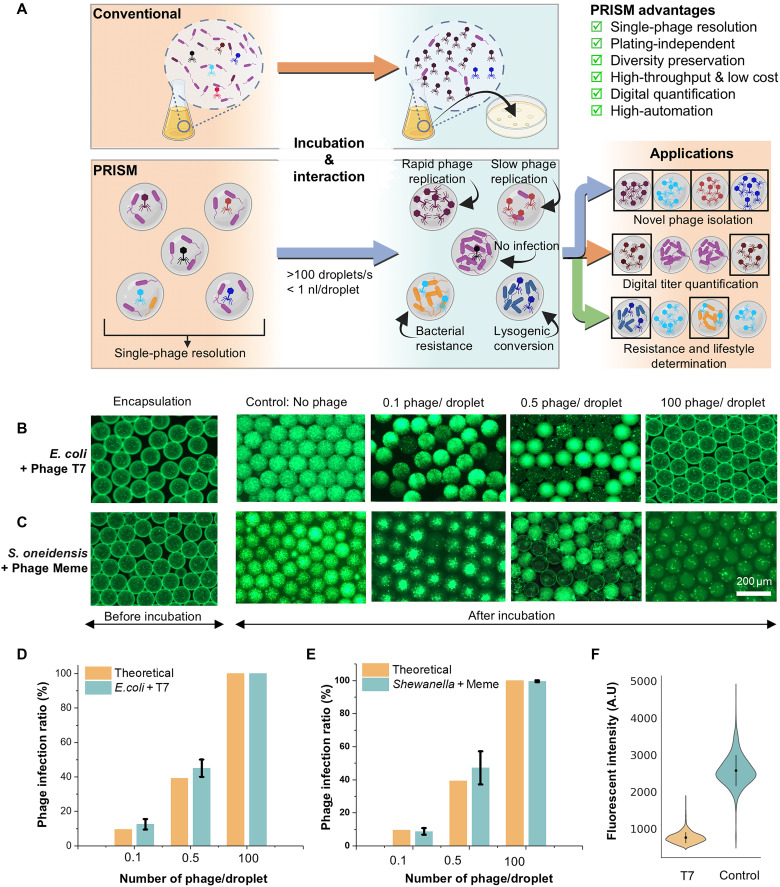 Figure 1
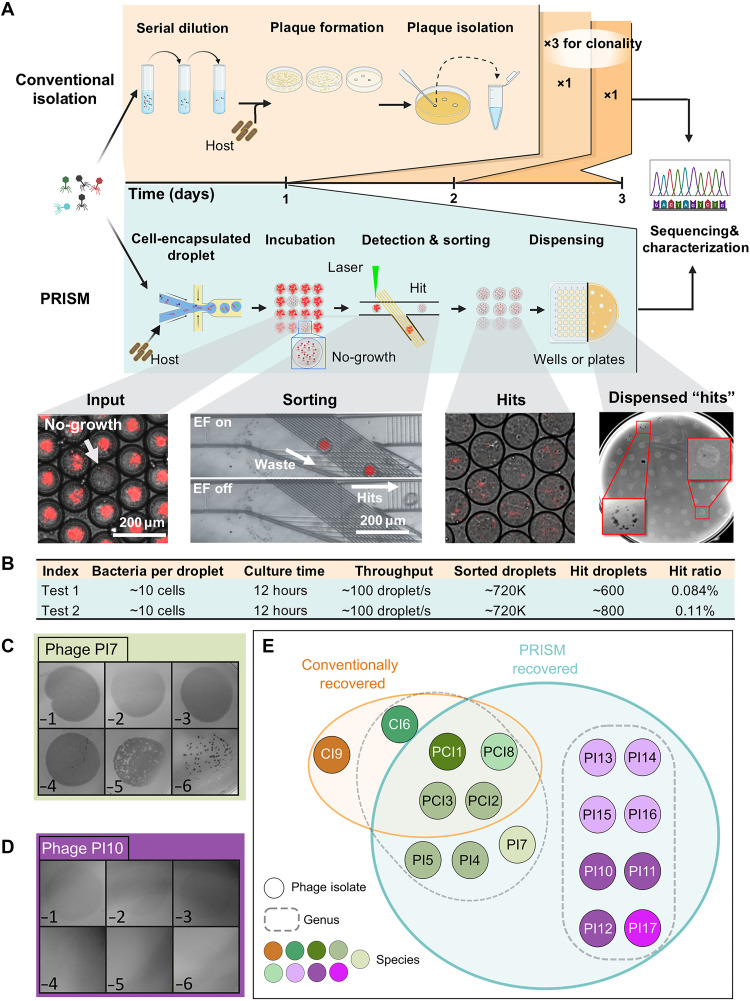 Figure 2
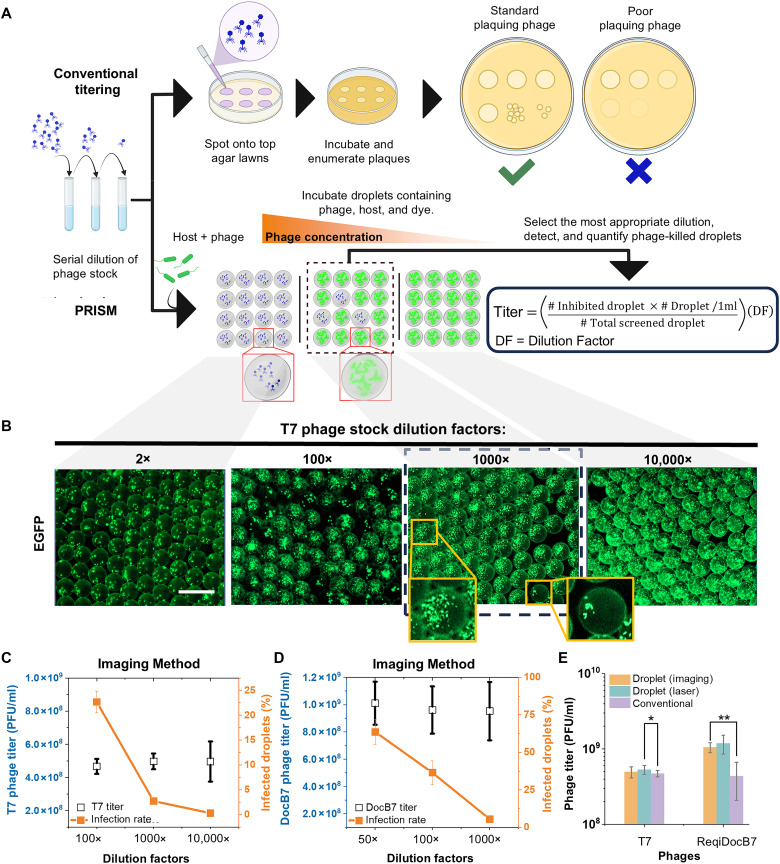 Figure 3
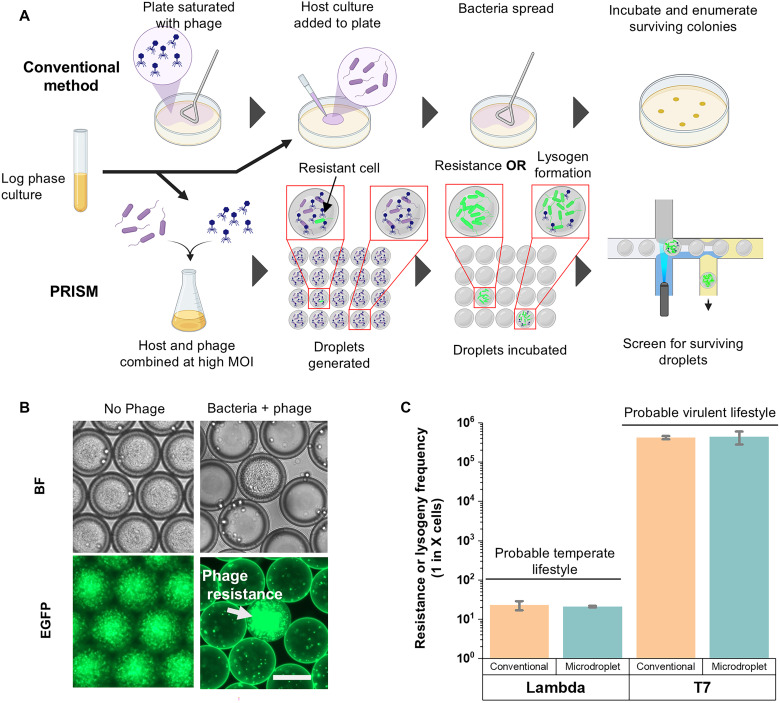 Figure 4
Peer Reviews
No public reviews on file for this paper yet. If you reviewed it on a platform where reviews are public (OpenReview, ICLR, NeurIPS, ICML), you can paste yours below so the community can read it here.
Videos
No videos yet. Explain this paper in a talk, walkthrough, or lecture? Add one.
Taxonomy
TopicsInnovative Microfluidic and Catalytic Techniques Innovation · Bacteriophages and microbial interactions · Biosensors and Analytical Detection