Biodegradable film: a sustainable alternative to polyethylene film for Loess Plateau maize production
Xiaoyu Sun, Zhihui Hu, Huihui Ding, Pengpeng Chen, Minhua Yin, Hongxiang Hu, Xiaobo Gu, Yuannong Li, Heng Fang

TL;DR
This study compares biodegradable and polyethylene films for growing maize on the Loess Plateau, finding that biodegradable film improves soil moisture and reduces emissions without harming yield.
Contribution
The study demonstrates biodegradable film as a sustainable alternative to polyethylene film in maize production on the Loess Plateau.
Findings
Biodegradable film increased soil moisture and nitrogen concentration while reducing evapotranspiration and emissions.
Biodegradable film improved maize yield and water use efficiency compared to traditional planting methods.
Both biodegradable and polyethylene films increased nitrogen use efficiency but reduced soil organic matter over time.
Abstract
The use of biodegradable film as an alternative to polyethylene film is still controversial. Thus, a split-plot field trial was performed with planting patterns [traditional planting (FNM), and ridge-furrow planting with polyethylene and biodegradable films mulching (RPM, RBM)] coupled with nitrogen application levels [0 kg ha−1 (N0), 180 kg ha−1 (N180)] to explore the substitution of RBM for RPM in maize production. Compared with FNM, RBM and RPM increased the soil moisture storage by 11.6% and 11.5%, respectively, and soil mineral N concentration by 23.0% and 16.0% (under N180), but they reduced evapotranspiration by 3.9–11.7% and 7.9–36.4%, NH3 volatilization by 38.3% and 35.3%, and N2O emissions by 69.4% and 82.3% (2019 season). Moreover, compared with FNM, RBM and RPM increased the leaf area index by 16.8% and 19.4%, and aboveground dry matter by 10.8% and 16.5%, respectively.…
Genes, proteins, chemicals, diseases, species, mutations and cell lines named across the full text — each resolved to its canonical identifier and authoritative record.
Click any figure to enlarge with its caption.
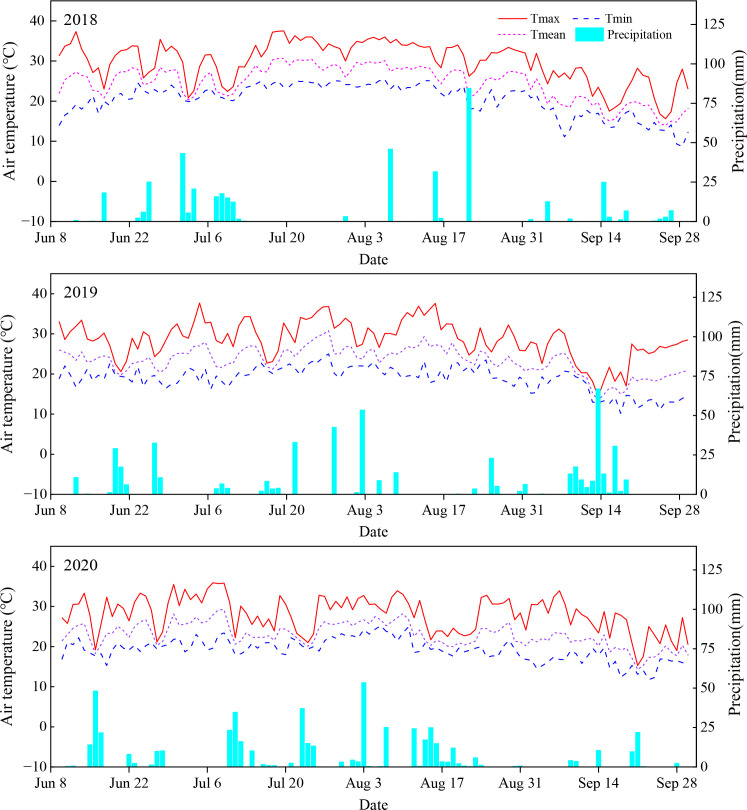 Figure 1
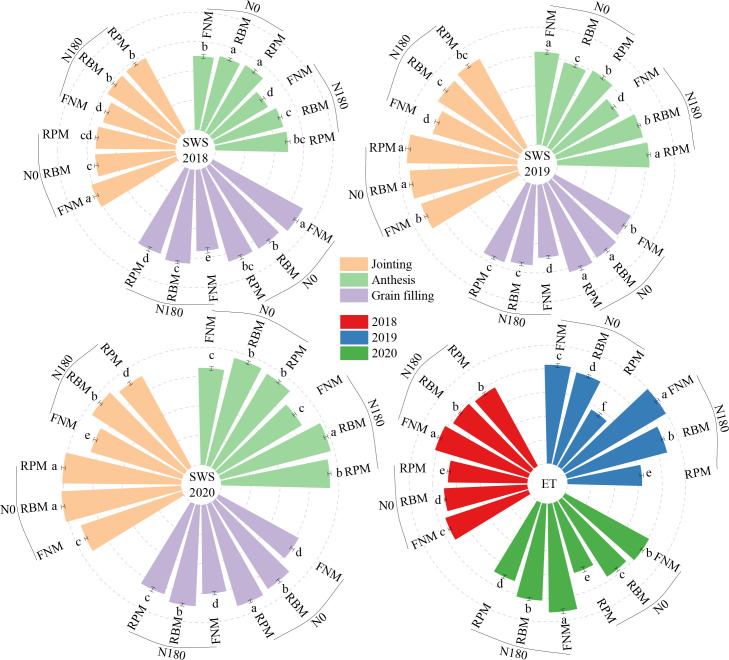 Figure 2
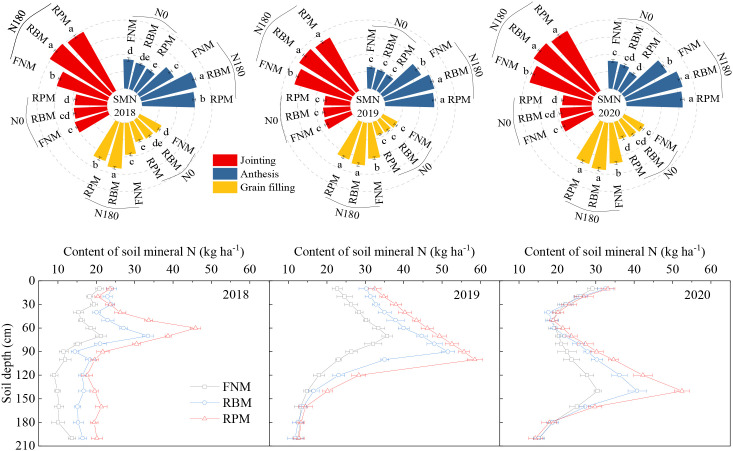 Figure 3
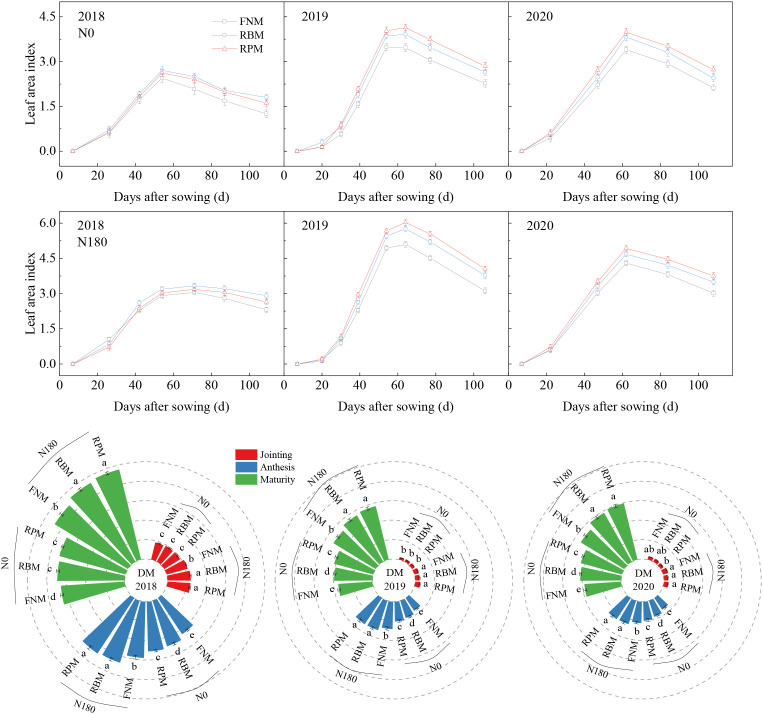 Figure 4
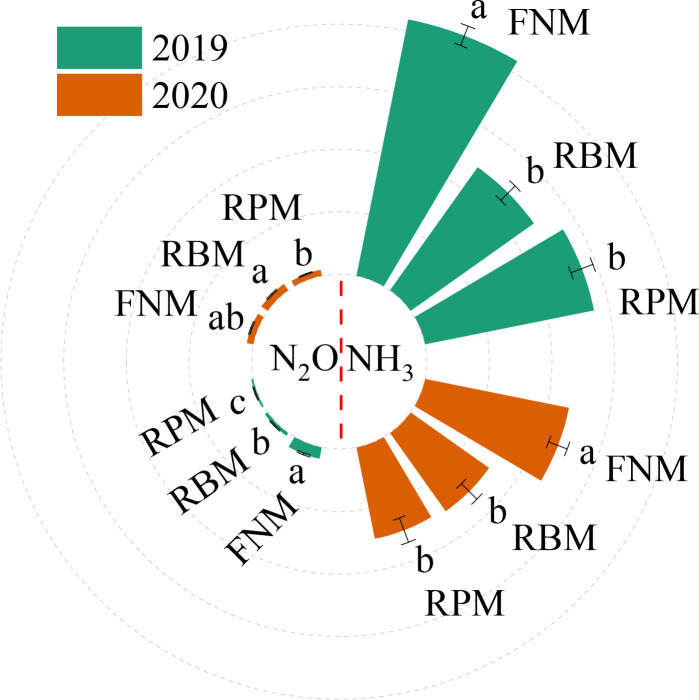 Figure 5
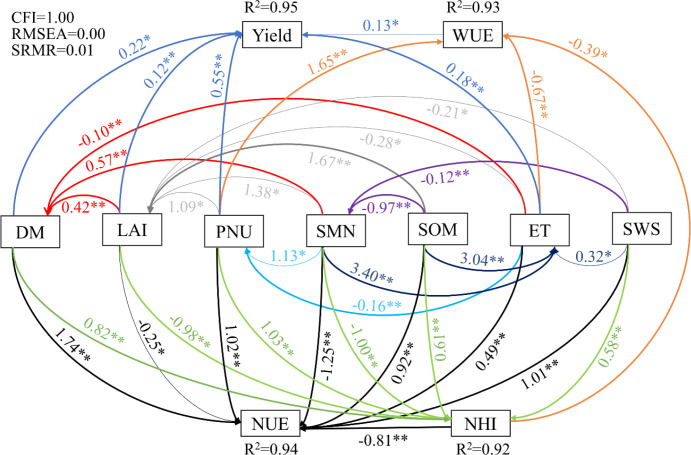 Figure 6
Peer Reviews
No public reviews on file for this paper yet. If you reviewed it on a platform where reviews are public (OpenReview, ICLR, NeurIPS, ICML), you can paste yours below so the community can read it here.
Videos
No videos yet. Explain this paper in a talk, walkthrough, or lecture? Add one.
Taxonomy
TopicsPolymer-Based Agricultural Enhancements · Irrigation Practices and Water Management · Composting and Vermicomposting Techniques