Resting‐state connectivity and tobacco smoking in clinical high‐risk for psychosis (NAPLS‐3)
Merel Koster, Marieke van der Pluijm, Romy Veelers, Elsmarieke van de Giessen, Lieuwe de Haan, Guido van Wingen, Tim Ziermans, Jentien Vermeulen

TL;DR
This study found no link between smoking and brain network changes in people at high risk for psychosis, suggesting that such effects may emerge later or with heavier smoking.
Contribution
The study is the first to examine longitudinal resting-state connectivity in clinical high-risk individuals and its relation to smoking.
Findings
Smoking was not associated with altered functional connectivity in key brain networks at baseline.
No significant longitudinal changes in connectivity were observed over 8 months in smokers versus non-smokers.
The absence of differences may be due to early illness stage and limited nicotine exposure.
Abstract
Smoking is highly prevalent among people at clinical high‐risk for psychosis (CHR‐P) and is associated with poorer clinical outcomes. Large‐scale brain networks have been linked to both psychosis and tobacco smoking. However, their relationship in CHR‐P individuals remains unexplored, which may provide valuable insights into the potential neurobiological background of the co‐occurrence. The current study aimed to examine whether smoking is associated with altered resting‐state network connectivity over time in CHR‐P individuals. Resting‐state functional magnetic resonance imaging scans from the North American Prodrome Longitudinal Study 3 were used. At baseline, 486 CHR‐P non‐smokers and 101 CHR‐P smokers were included, with 1128 scans across 2‐, 4‐, 6‐ and 8‐month follow‐up. Independent component analysis was used to extract functional connectivity for the default mode network (DMN),…
Genes, proteins, chemicals, diseases, species, mutations and cell lines named across the full text — each resolved to its canonical identifier and authoritative record.
Click any figure to enlarge with its caption.
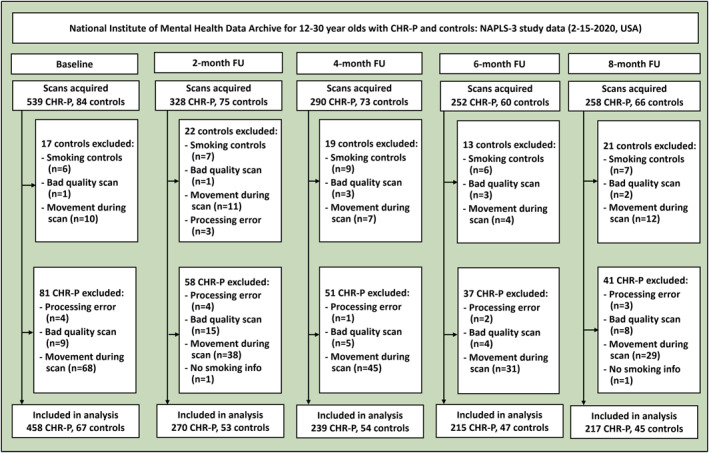 Figure 1
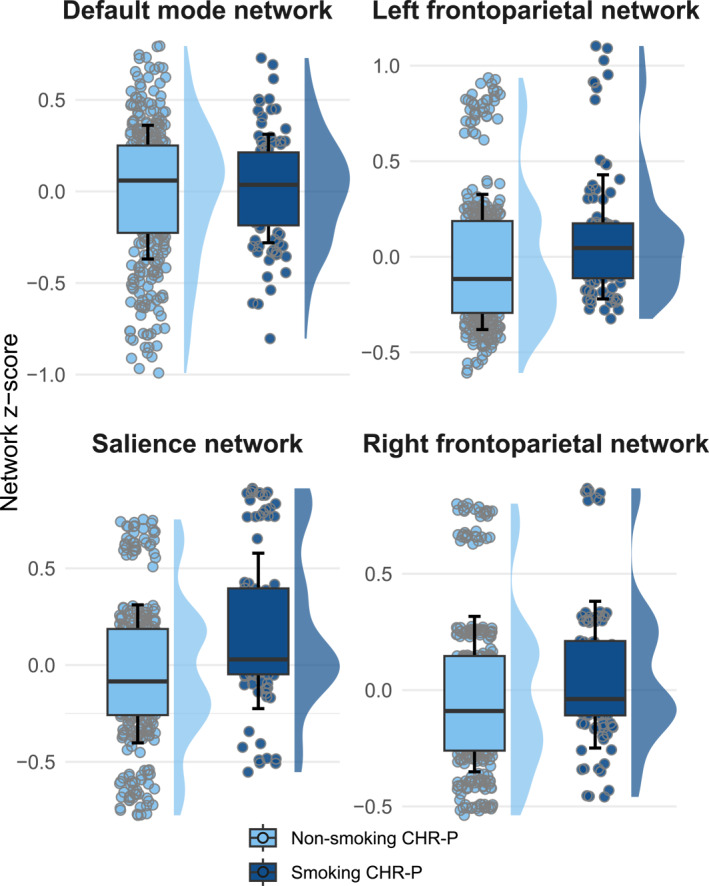 Figure 2
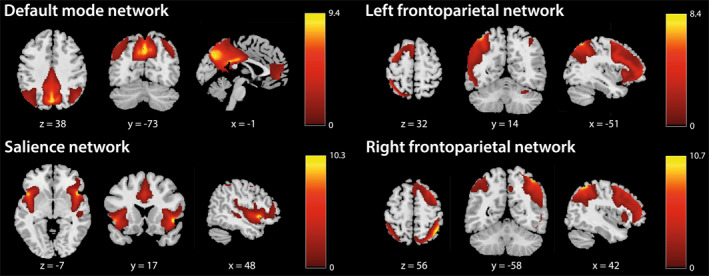 Figure 3
Peer Reviews
No public reviews on file for this paper yet. If you reviewed it on a platform where reviews are public (OpenReview, ICLR, NeurIPS, ICML), you can paste yours below so the community can read it here.
Videos
No videos yet. Explain this paper in a talk, walkthrough, or lecture? Add one.
Taxonomy
TopicsFunctional Brain Connectivity Studies · Mental Health Research Topics · Schizophrenia research and treatment