Structural, Mechanical, and Environmental Assessment of a Poly(butylene adipate-co-terephthalate) (PBAT)-Inulin Composite Material
Francesco Brenda, Silvia Barbi, Monia Montorsi, Duccio Gallichi-Nottiani, Maria Grimaldi, Olimpia Pitirollo, Corrado Sciancalepore, Daniel Milanese, Daniele Cespi

TL;DR
This paper studies a biodegradable composite material made of PBAT and inulin, evaluating its mechanical and environmental properties to find optimal formulations and reduce environmental impact.
Contribution
The study introduces a PBAT-inulin composite and uses a DoE approach to optimize mechanical properties and assess environmental impacts through LCA.
Findings
Inulin content significantly affects strain at break, with an optimal range of 4.4−4.5%.
PBAT production contributes most to environmental impacts, while inulin affects marine eutrophication and land occupation.
Using biobased PBAT and renewable electricity could reduce environmental burdens.
Abstract
The growing interest in mitigating the effects associated with the extensive production and consumption of fossil-based plastics has led to increasing efforts in the development of biobased and biodegradable materials. In this setting, poly(butylene adipate-co-terephthalate) (PBAT) has emerged as a viable biodegradable alternative to traditional polyesters. In this study, the manufacture of a PBAT-inulin composite film is investigated to assess its structural, mechanical, and environmental properties. A design of experiments (DoE) approach was applied to limit the number of experiments and find potential multivariate correlations (p-value <0.005) between composite formulation, e.g., inulin content, and mechanical properties. Results show that the inulin percentage has the highest influence on the strain at break, which is found to decrease as the percentage of inulin increases; as…
Genes, proteins, chemicals, diseases, species, mutations and cell lines named across the full text — each resolved to its canonical identifier and authoritative record.
Click any figure to enlarge with its caption.
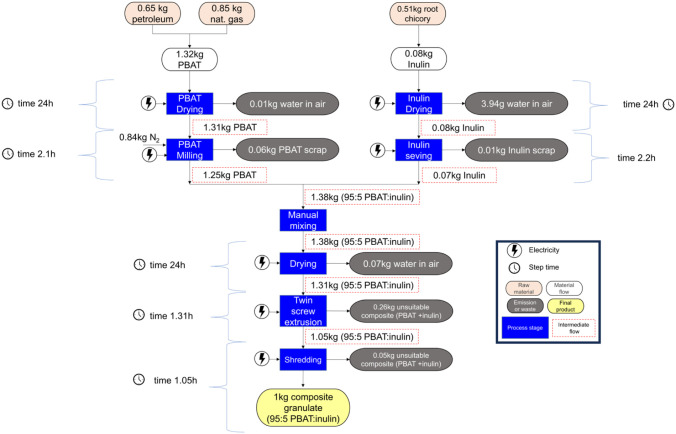 Figure 1
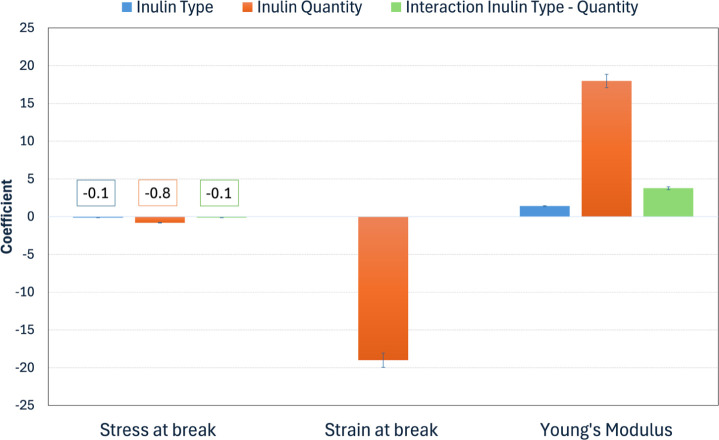 Figure 2
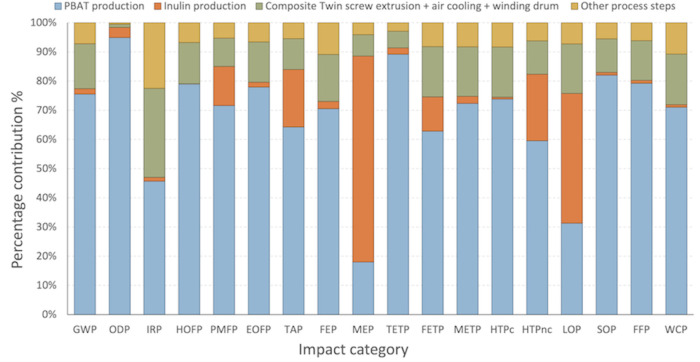 Figure 3
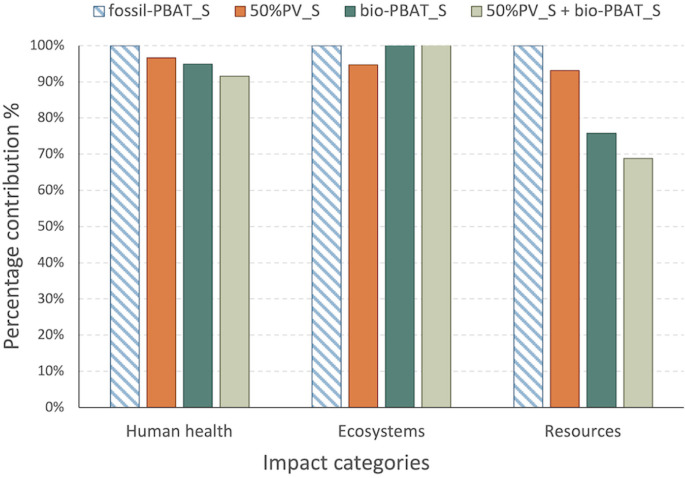 Figure 4
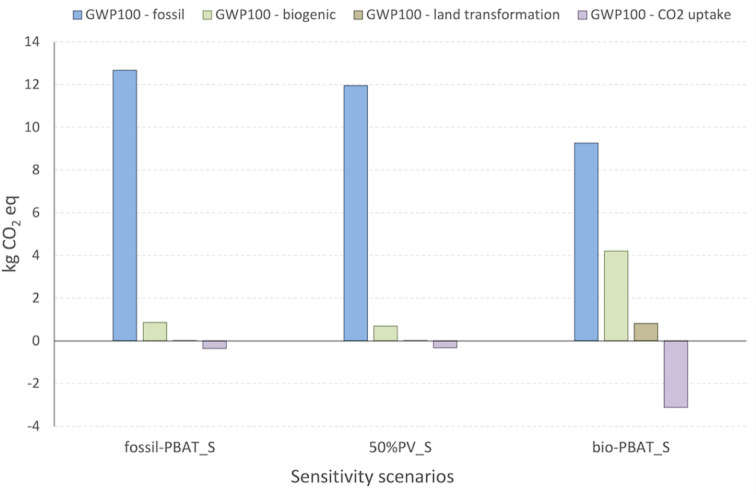 Figure 5
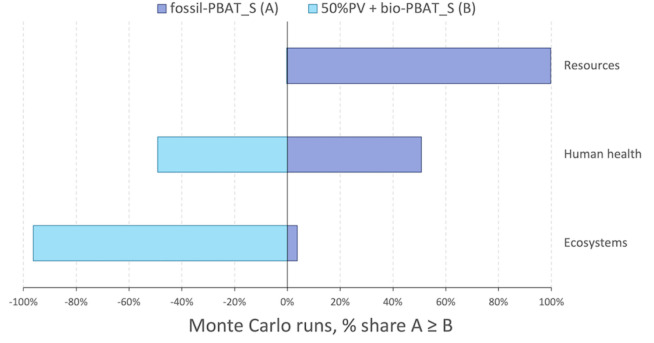 Figure 6
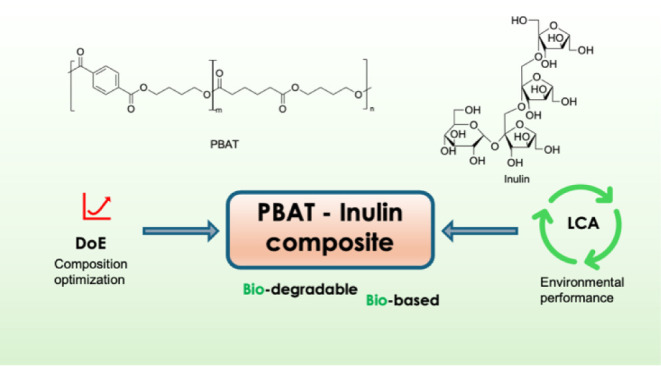 Figure 7
 Figure 8
Peer Reviews
No public reviews on file for this paper yet. If you reviewed it on a platform where reviews are public (OpenReview, ICLR, NeurIPS, ICML), you can paste yours below so the community can read it here.
Videos
No videos yet. Explain this paper in a talk, walkthrough, or lecture? Add one.
Taxonomy
Topicsbiodegradable polymer synthesis and properties · Nanocomposite Films for Food Packaging · Natural Fiber Reinforced Composites