A systematic evaluation of grayscale conversion methods for mitigating color variation in deep learning-based histopathological image analysis
Napat Srisermphoak, Panomwat Amornphimoltham, Risa Chaisuparat, Paniti Achararit, Todsaporn Fuangrod

TL;DR
This paper evaluates grayscale conversion methods to reduce the impact of color variation in histopathological image analysis using deep learning.
Contribution
The study introduces a novel attention-based grayscale conversion method (ACSRM) and demonstrates its effectiveness in improving model generalization.
Findings
Grayscale methods achieved performance comparable to RGB in homogeneous settings.
ACSRM outperformed RGB in cross-scanner tests by 0.31 in a specific class.
Luster improved F1-scores from 0.50 to 0.78 in cross-center evaluations.
Abstract
The clinical adoption of deep learning (DL) for histopathological image analysis is hindered by performance degradation caused by color variations arising from disparate staining protocols and scanning technologies. As morphological features may effectively provide the diagnostic information in hematoxylin and eosin slides, this study investigated grayscale conversion as an approach to standardize input for DL. We evaluated six grayscale algorithms against RGB across: (1) a single-center baseline, (2) a mixed multicenter training, (3) a cross-scanner generalization test, and (4) a cross-center generalization test. Furthermore, a novel attention-based grayscale conversion method (ACSRM) was investigated. It utilizes the transformer's attention mechanism to preserve critical color information through long-range pixel dependencies. In homogeneous settings, the best-performing grayscale…
Genes, proteins, chemicals, diseases, species, mutations and cell lines named across the full text — each resolved to its canonical identifier and authoritative record.
Click any figure to enlarge with its caption.
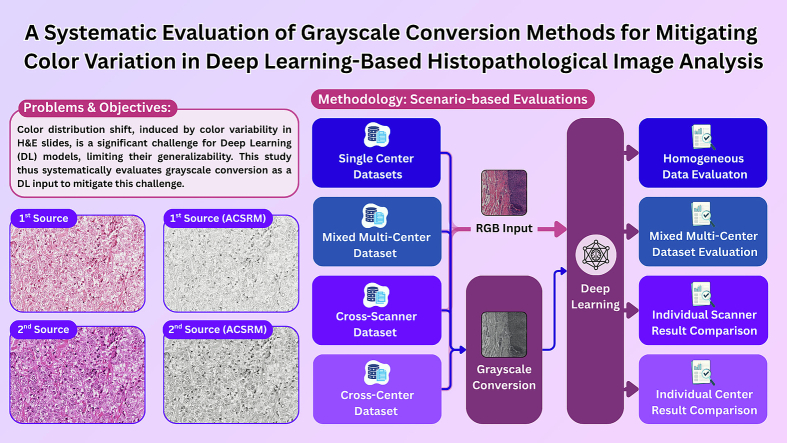 Figure 1
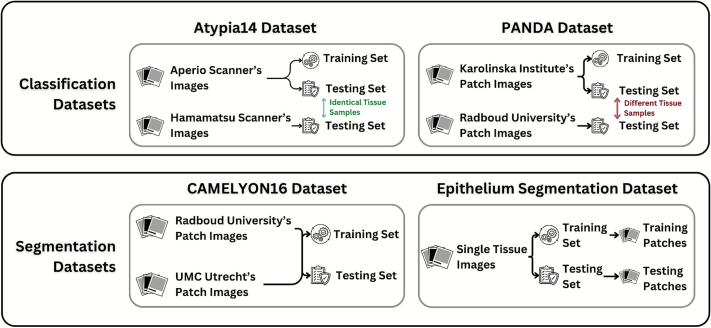 Figure 2
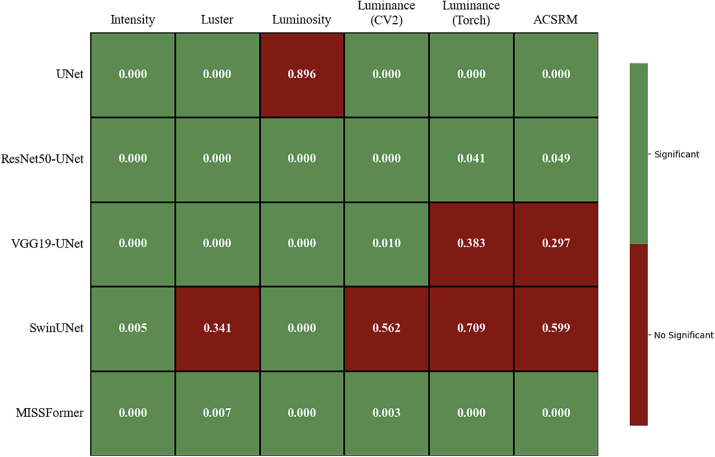 Figure 3
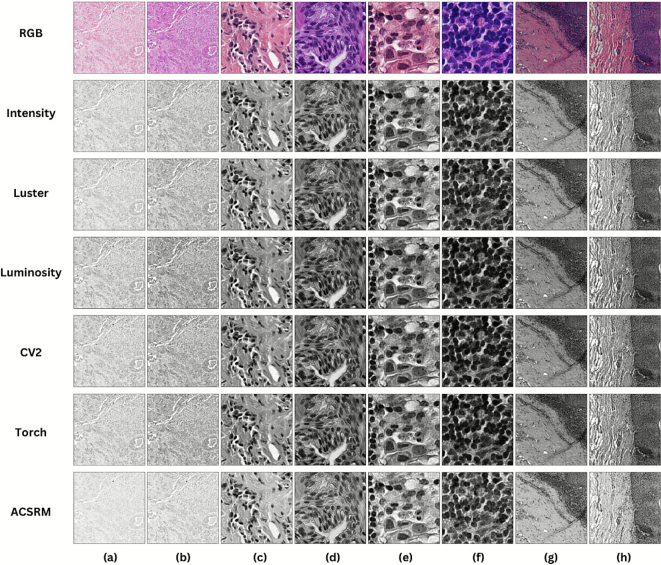 Figure 4
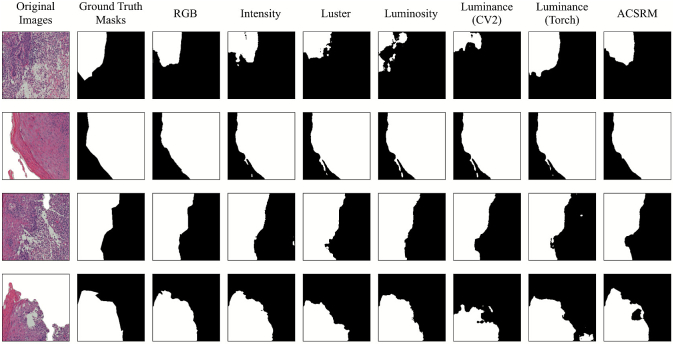 Figure 5
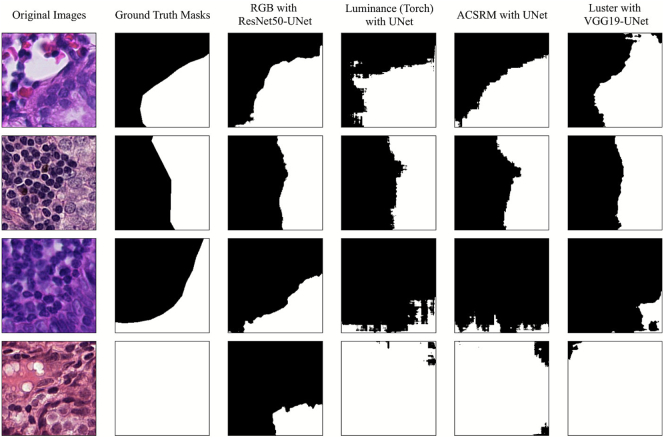 Figure 6
Peer Reviews
No public reviews on file for this paper yet. If you reviewed it on a platform where reviews are public (OpenReview, ICLR, NeurIPS, ICML), you can paste yours below so the community can read it here.
Videos
No videos yet. Explain this paper in a talk, walkthrough, or lecture? Add one.
Taxonomy
TopicsAI in cancer detection · Digital Imaging for Blood Diseases · Cell Image Analysis Techniques