Sweat components as a promising monitoring tool for systemic diseases
Changqi Shi, Ziyi Chen, LuLu Zhang, Xiaomeng Zhang, Xiaoyu Liang, Lan Yan, Xiaopeng Hao, Guoju Dong, Cheng Lu, Luqi Huang

TL;DR
Sweat can reveal important health information and may be used to monitor systemic diseases non-invasively.
Contribution
The paper reviews how sweat components reflect systemic physiological changes and their potential for non-invasive disease monitoring.
Findings
Sweat composition changes with systemic diseases, reflecting metabolic, endocrine, immune, and neural dysregulation.
Key sweat components like electrolytes, glucose, lactate, amino acids, and proteins are linked to disease states.
Mechanisms like transdermal diffusion and transporter-mediated secretion explain how sweat mirrors systemic health.
Abstract
Sweat is a complex biological fluid primarily responsible for thermoregulation, containing diverse organic and inorganic components derived from plasma and interstitial fluids. Its secretion is tightly regulated by hypothalamic–sympathetic pathways and reflects systemic physiological status. Recent studies reveal that sweat composition dynamically changes with various systemic diseases, providing diagnostic, mechanistic, and prognostic insights. Abnormalities in sweat components, such as electrolytes, glucose, lactate, amino acids, and proteins, mirror underlying metabolic, endocrine, immune, and neural dysregulation. This review synthesizes current evidence on how these alterations arise from specific physiological mechanisms—including transdermal diffusion, transporter-mediated secretion (e.g., GLUT2, CFTR), ductal reabsorption, and autonomic control—linking sweat gland biology to…
Genes, proteins, chemicals, diseases, species, mutations and cell lines named across the full text — each resolved to its canonical identifier and authoritative record.
Click any figure to enlarge with its caption.
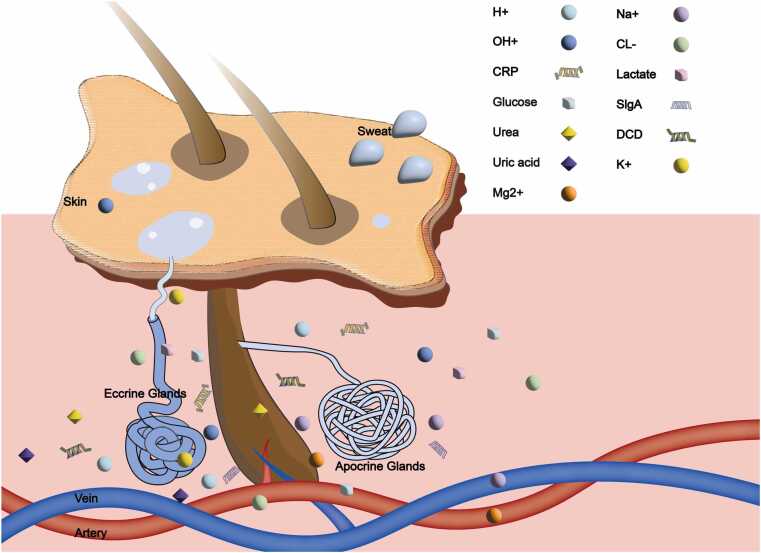 Figure 1
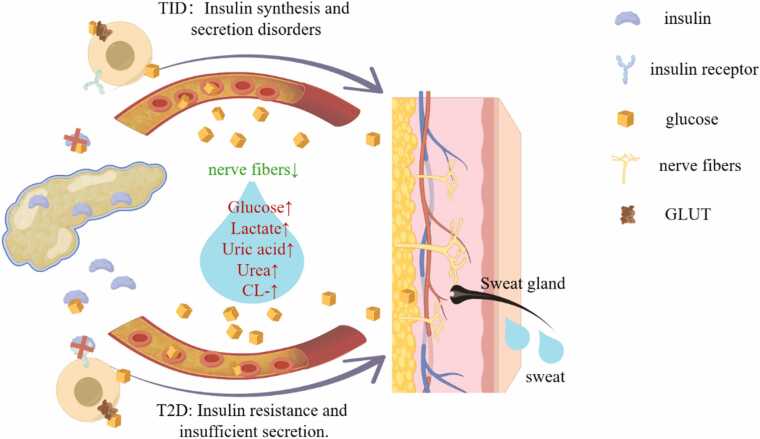 Figure 2
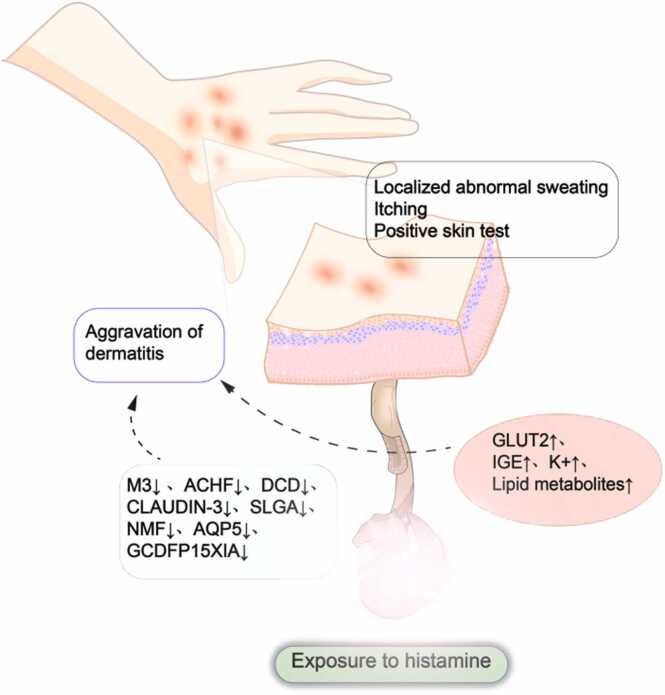 Figure 3
Peer Reviews
No public reviews on file for this paper yet. If you reviewed it on a platform where reviews are public (OpenReview, ICLR, NeurIPS, ICML), you can paste yours below so the community can read it here.
Videos
No videos yet. Explain this paper in a talk, walkthrough, or lecture? Add one.
Taxonomy
TopicsSympathectomy and Hyperhidrosis Treatments · Thermoregulation and physiological responses · Erythrocyte Function and Pathophysiology