Uncertainty-Aware Explainable AI for Pancreatic Cysts: Identifying Deep Learning Vulnerabilities and Ensuring Safe Clinical Triage in IPMN Management
Halil Ertugrul Aktas, Gorkem Durak, Andrea Mia Bejar, Ziliang Hong, Rutger Hendrix, Hongyi Pan, Elif Keles, Fergan Bol, Yavuz B Taktak, Cagdas Topel, Yalcin Tur, Zheyuan Zhang, Neil R Chatterjee, Yuri Velichko, Concetto Spampinato, Ivo G Schoots, Marco J Bruno, Chenchan Huang

TL;DR
This study introduces an uncertainty-aware AI system for pancreatic cysts, showing how deep learning models can be unreliable for high-risk cases and how uncertainty quantification can help clinicians make safer decisions.
Contribution
The first multi-center study integrating explainable AI and uncertainty quantification for IPMN malignancy risk stratification.
Findings
Model uncertainty was significantly lower for correct predictions compared to incorrect ones.
Low-risk lesion accuracy was significantly higher than high-risk lesion accuracy.
Body and whole-pancreas cysts were stratified more accurately than tail cysts.
Abstract
Despite growing interest in AI for pancreatic cyst management, no prior study has systematically investigated how lesion characteristics influence model behavior or provided a comprehensive explainability analysis in IPMN malignancy risk stratification. We present the first multi-center study integrating explainable AI with uncertainty quantification to evaluate how cyst type, size, and location affect deep learning performance in IPMN malignancy prediction. Our retrospective study analyzed 170 IPMNs from seven centers using a radiomics-deep learning fusion model. Cases were stratified by dysplasia grade, IPMN type, size, and location; with model interpretability assessed using SHAP, LIME, Grad-CAM, and uncertainty quantification. Overall accuracy was 67.1%, with model uncertainty lower for correct versus incorrect predictions (0.72 vs 0.78, p < 0.001). On subgroup analysis: Low-Risk…
Genes, proteins, chemicals, diseases, species, mutations and cell lines named across the full text — each resolved to its canonical identifier and authoritative record.
Click any figure to enlarge with its caption.
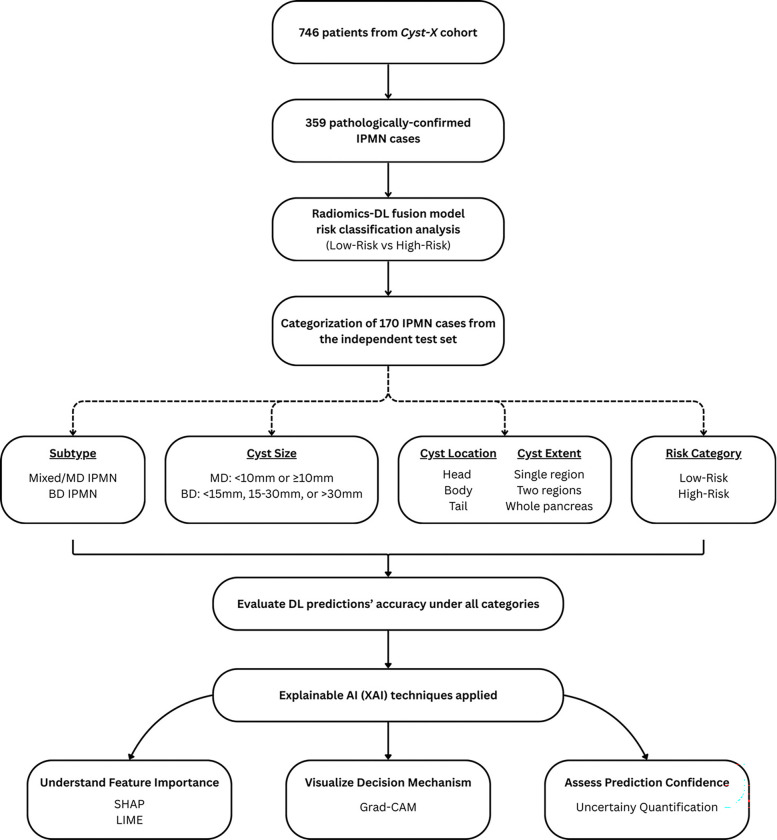 Figure 1
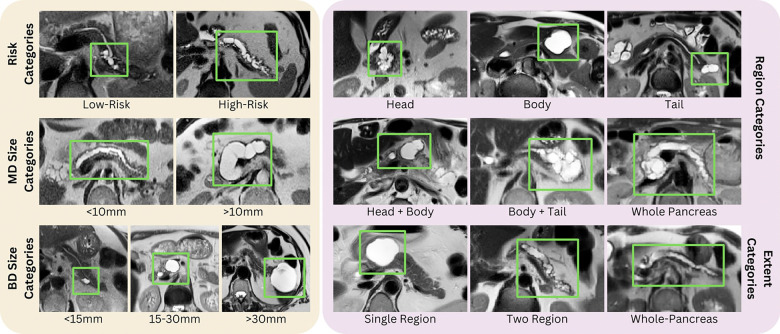 Figure 2
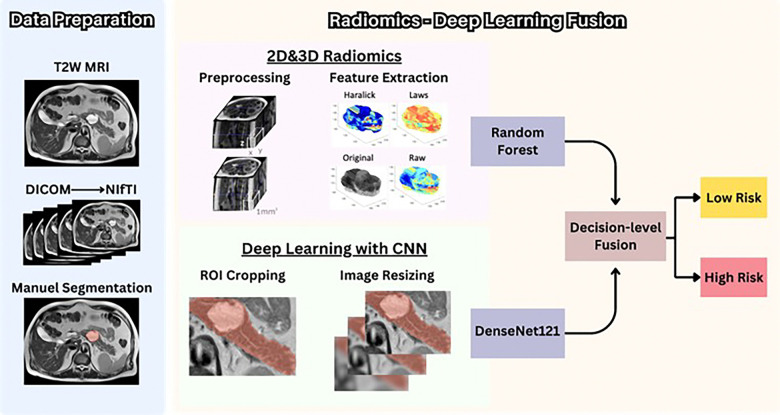 Figure 3
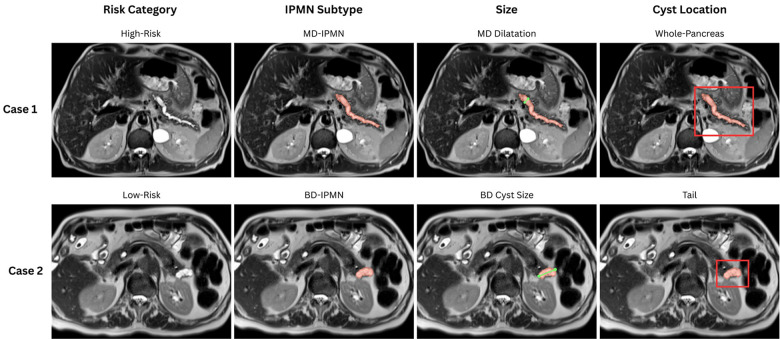 Figure 4
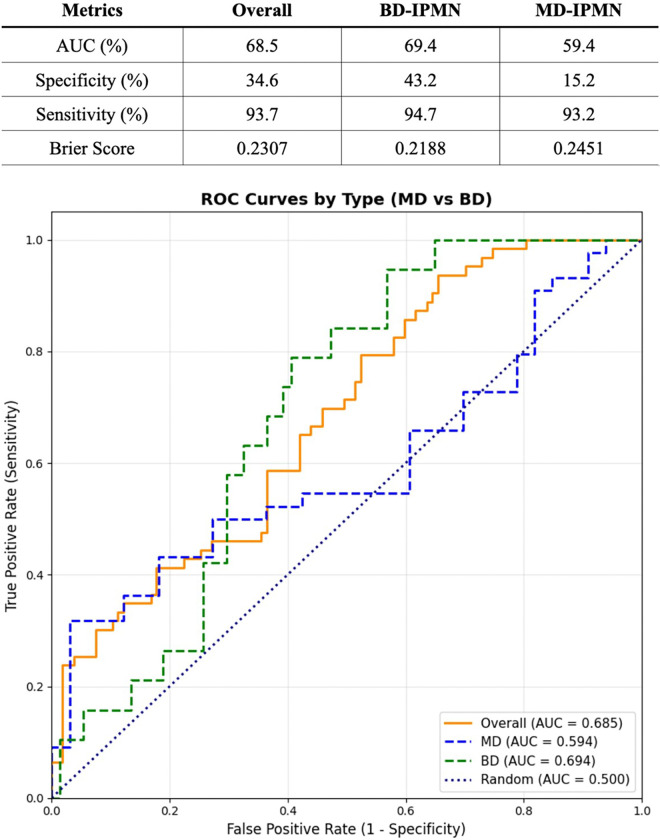 Figure 5
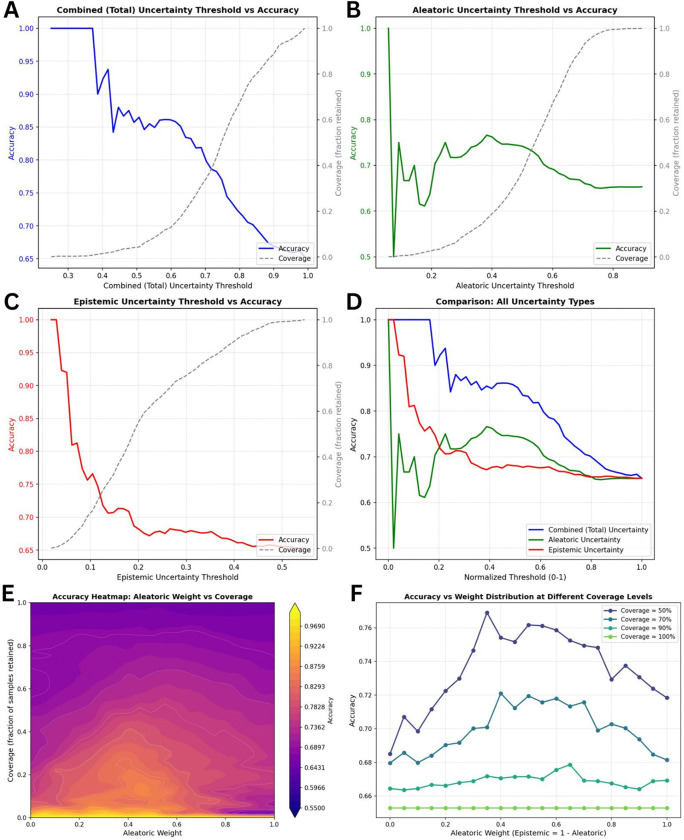 Figure 6
Peer Reviews
No public reviews on file for this paper yet. If you reviewed it on a platform where reviews are public (OpenReview, ICLR, NeurIPS, ICML), you can paste yours below so the community can read it here.
Videos
No videos yet. Explain this paper in a talk, walkthrough, or lecture? Add one.
Taxonomy
TopicsPancreatic and Hepatic Oncology Research · Radiomics and Machine Learning in Medical Imaging · Artificial Intelligence in Healthcare and Education