Innate Immune Evasion of Lyme Disease Pathogen Drives Alzheimer-Like Pathology
Karita Haapasalo, Lilith Heiland, Deepak Kumar Vijaya Kumar, Pavel Uvarov, Alexander Moir, Anna Maaser-Hecker, Xun Wang, Eeva Juselius, Shahan Syed, Antti Tuhkala, Tommi Kajander, Maija Lappalainen, Jukka Hytönen, Markku Varjosalo, Doo Yeon Kim, Roger Kamm, Taru Meri

TL;DR
This study shows how the Lyme disease bacteria evade the immune system in ways that resemble Alzheimer's disease pathology, offering new insights into both conditions.
Contribution
The paper reveals a novel mechanism by which Borrelia spp. evade innate immune defenses using Aβ interference, linking it to Alzheimer-like pathology.
Findings
Lyme disease bacteria induce Alzheimer-like molecular changes in the CNS, including altered Aβ levels and complement activation.
Aβ functions as a pre-opsonin against Borrelia, but the bacteria evade this by blocking Aβ binding and complement attack.
Borrelia spp. recruit factor H to inhibit immune responses, promoting BBB adhesion and neuroinflammation.
Abstract
The amyloid β (Aβ) peptide is the main component of amyloid plaques in Alzheimer’s disease (AD). Growing evidence has pointed to a role for Aβ as an antimicrobial peptide (AMP). However, the interactions of Aβ with neurotropic pathogens and host evasion strategies have remained largely unexplored. Using quantitative proteomic analysis of patient cerebrospinal fluid (CSF), advanced biochemical methods, and four different 3D brain models, ranging from blood-brain barrier (BBB) microfluidic systems to 3D neurovascular networks, we show that Lyme neuroborreliosis (LNB) Borrelia spp. induce molecular and immunological alterations in the central nervous system (CNS) that resemble key pathological features of AD. These include upregulation of the complement cascade and a decrease in CSF Aβ levels. By assessing the antimicrobial action of Aβ against Borrelia spp., we demonstrate that Aβ acts as…
Genes, proteins, chemicals, diseases, species, mutations and cell lines named across the full text — each resolved to its canonical identifier and authoritative record.
Click any figure to enlarge with its caption.
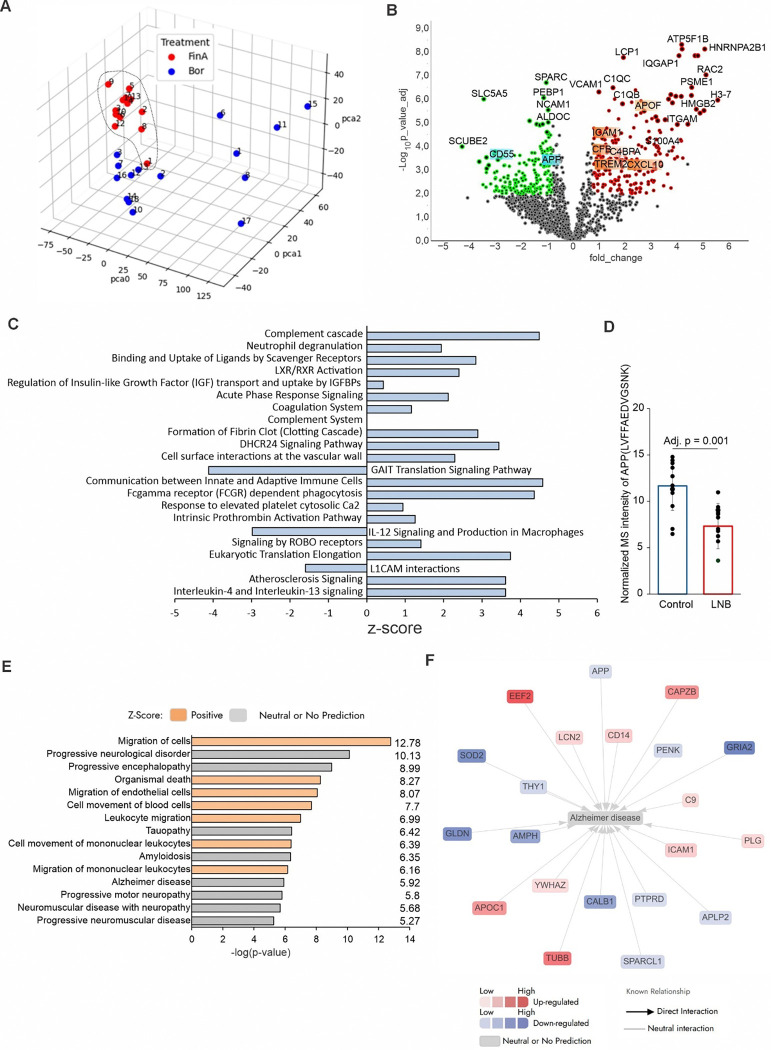 Figure 1
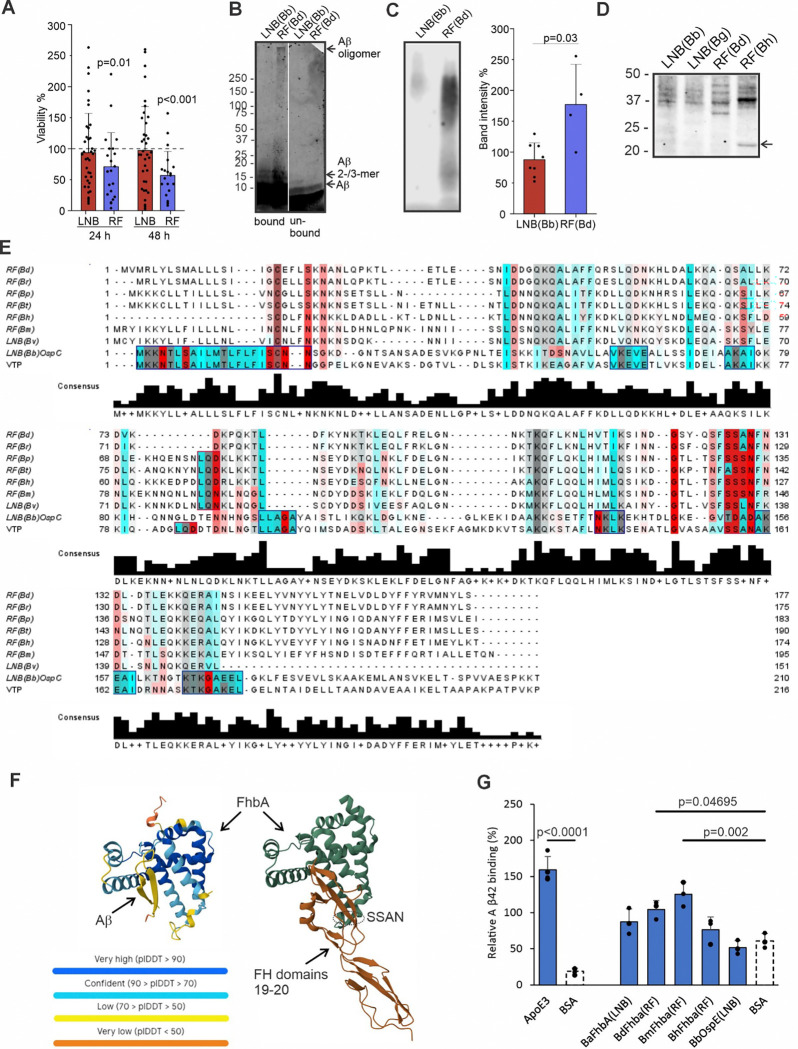 Figure 2
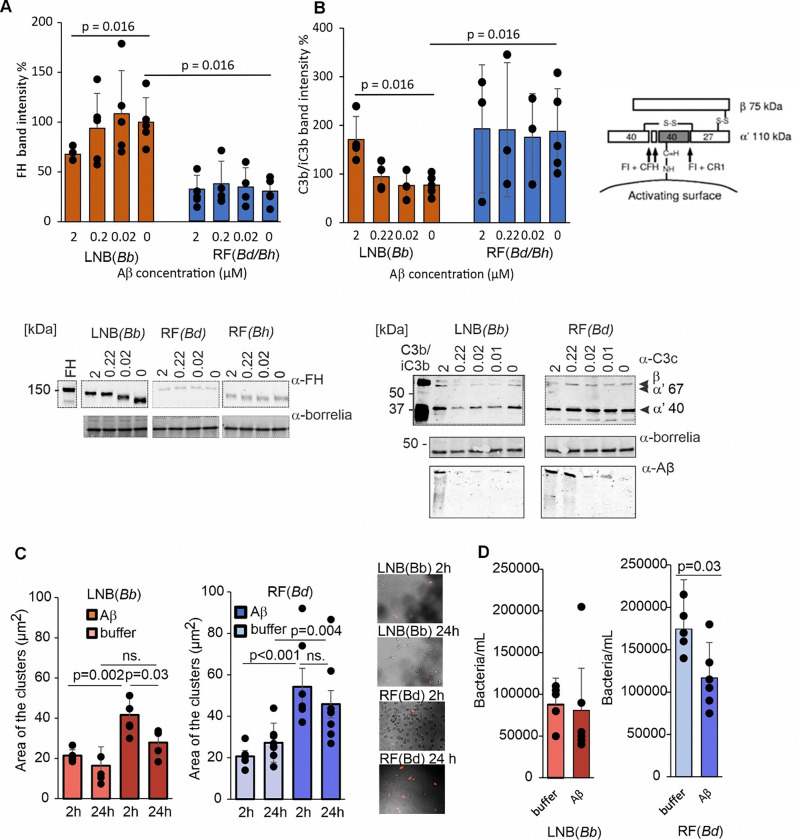 Figure 3
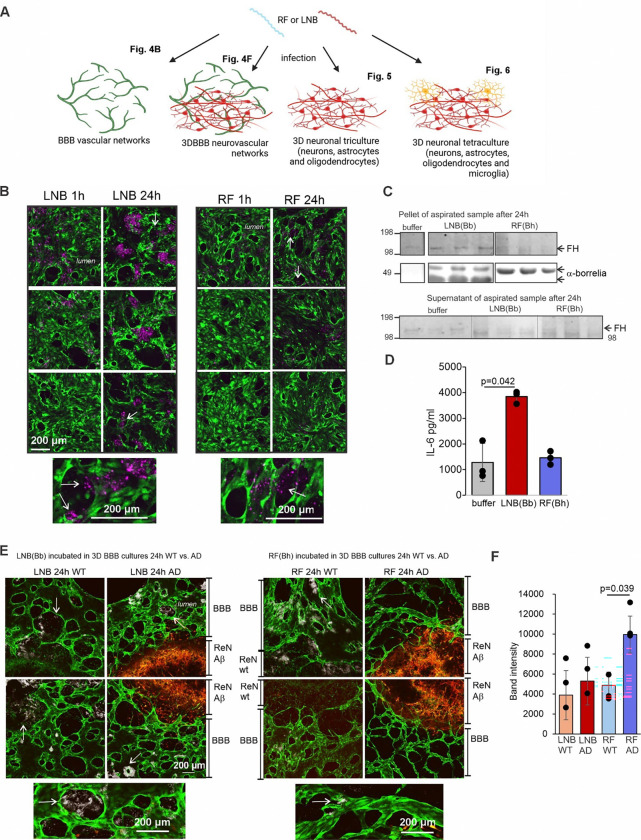 Figure 4
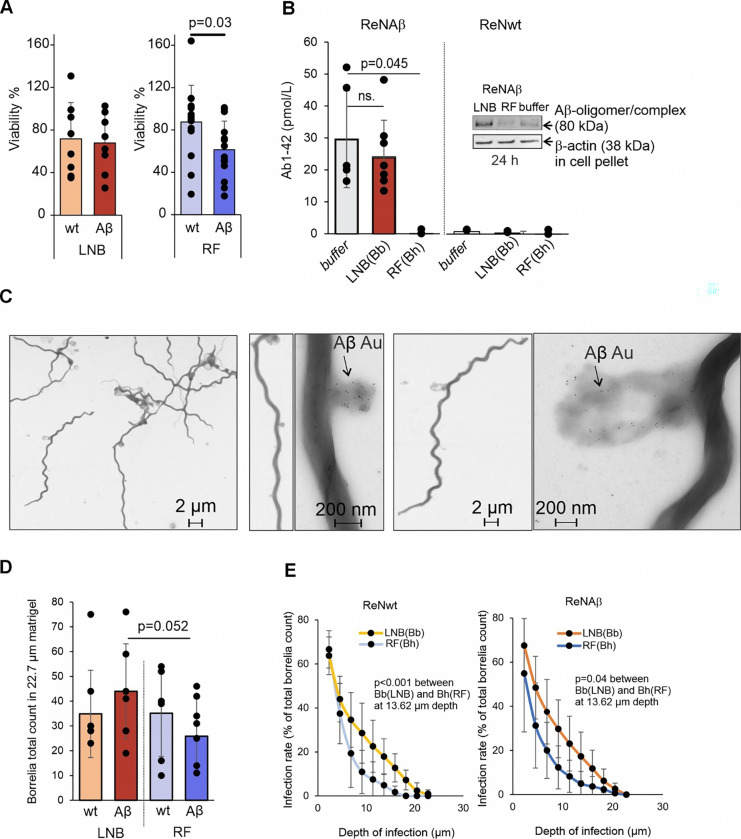 Figure 5
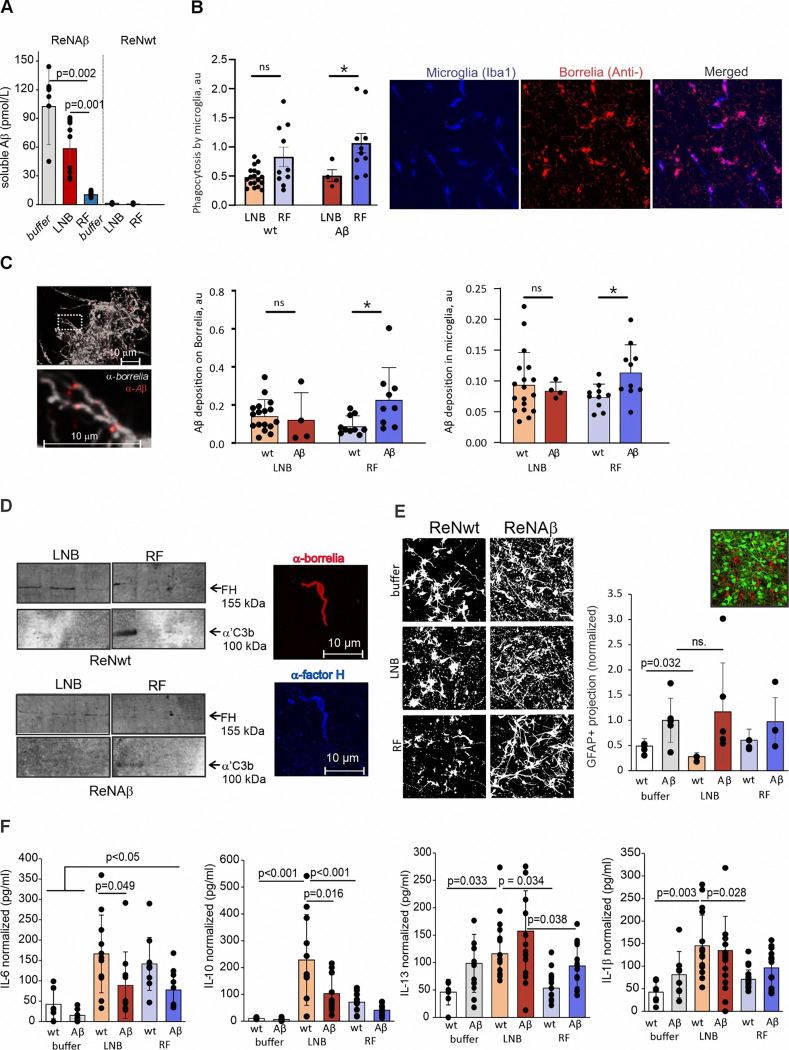 Figure 6
Peer Reviews
No public reviews on file for this paper yet. If you reviewed it on a platform where reviews are public (OpenReview, ICLR, NeurIPS, ICML), you can paste yours below so the community can read it here.
Videos
No videos yet. Explain this paper in a talk, walkthrough, or lecture? Add one.
Taxonomy
Topicsvaccines and immunoinformatics approaches · Vector-borne infectious diseases · Alzheimer's disease research and treatments