Moderate Effects of the Arginine to Histidine R47H Variant of the Triggering Receptor Expressed on Myeloid Cells 2 (TREM2) on Bone Structure in Male and Female Mice: Insights from the Four Core Genotypes mice
Gabriel Ramirez, Dayanara Hernandez, Alix Teal, Lakshmi Chellaganapathy, Roquelina Pianeta, Dyann M Segvich, Joseph M. Wallace, Lilian I. Plotkin

TL;DR
This study explores how a genetic variant linked to Alzheimer's disease affects bone structure differently in male and female mice, depending on their sex chromosomes.
Contribution
The study reveals sex chromosome-specific effects of the TREM2-R47H variant on bone structure in mice, highlighting interactions between genetic and gonadal sex.
Findings
TREM2-R47H genotype effects on bone structure depend on the presence of the Y chromosome in gonadal males.
Chromosome sex influences bone mineral density and mechanical properties in a sex-specific manner.
TREM2-R47H mice show altered trabecular bone parameters in lumbar vertebrae, with trends toward structural differences.
Abstract
The Triggering Receptor Expressed on Myeloid Cells 2 (TREM2) gene is expressed in cells of the hematopoietic lineage, like microglia and osteoclasts. A TREM2 gene variant known as TREM2-R47H is associated with an increased risk of developing Alzheimer’s disease (AD). Previous studies have shown sex-dimorphic bone and muscle consequences that are associated with the TREM2 variant. Sex chromosomes have also been shown to play a key contributor to skeletal mass and bone strength. Due to the sex-dimorphic bone and skeletal muscle phenotype exhibited by mice expressing the TREM2 gene variant, we investigated the role of chromosomal (XX vs XY) or gonadal (ovaries vs testes) sex. Four Core Genotypes (FCG) C57Bl/6J mice expressing the TREM2-R47H variant were mated to obtain TREM2 wildtype (TREM2+/+, WT) and TREM2R47H/+ FCG mice. Four to 5.5-month-old gonadal male (XXT and XYT) and female (XXO…
Genes, proteins, chemicals, diseases, species, mutations and cell lines named across the full text — each resolved to its canonical identifier and authoritative record.
Click any figure to enlarge with its caption.
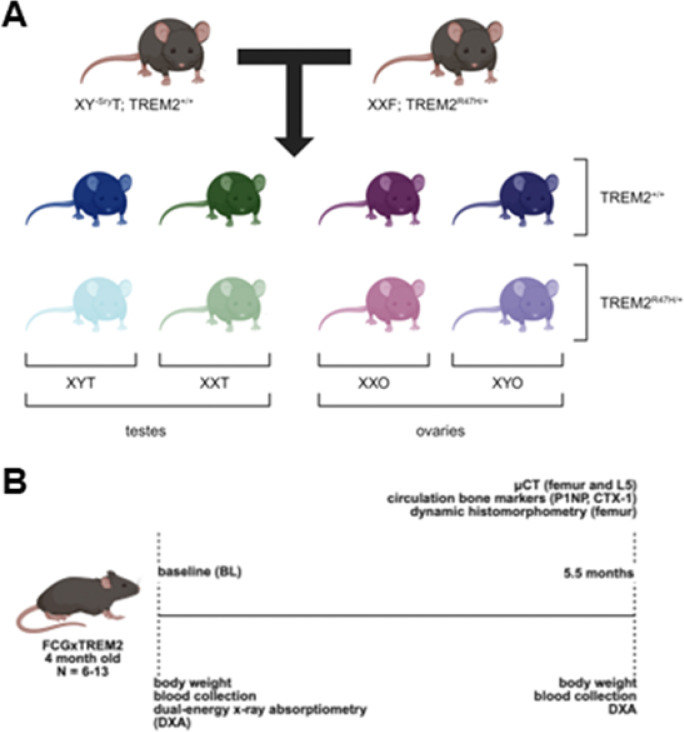 Figure 1
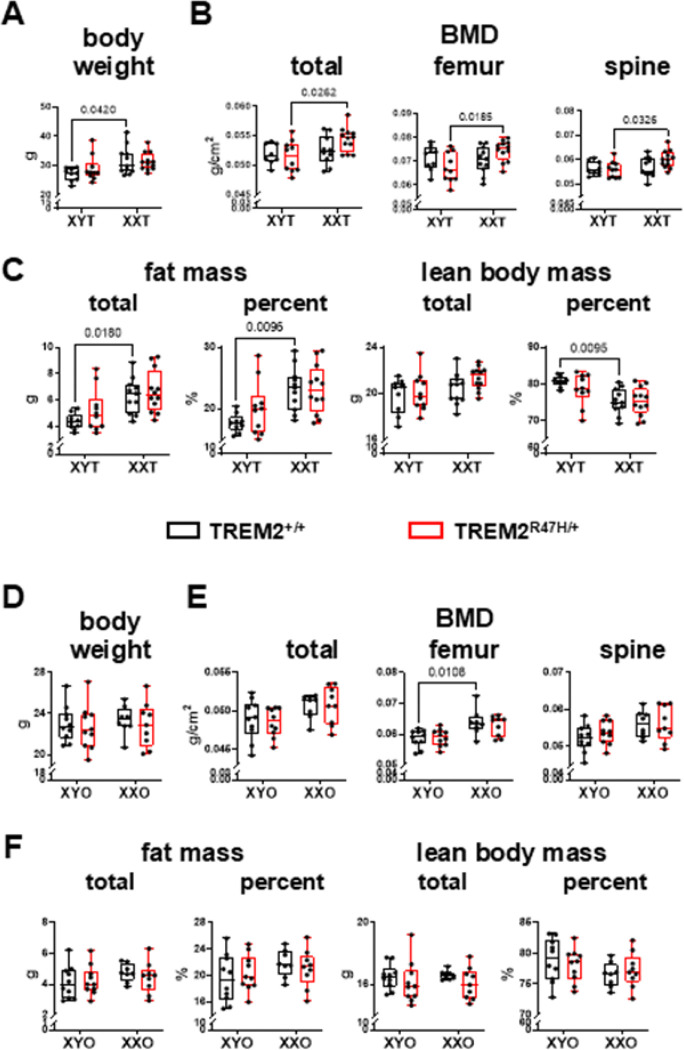 Figure 2
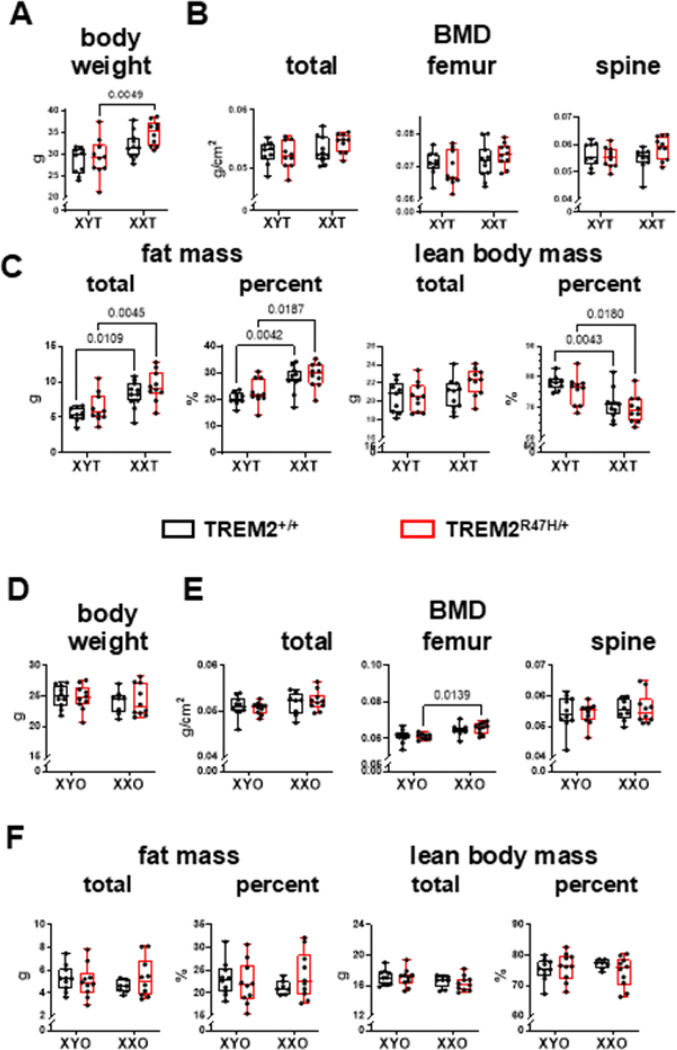 Figure 3
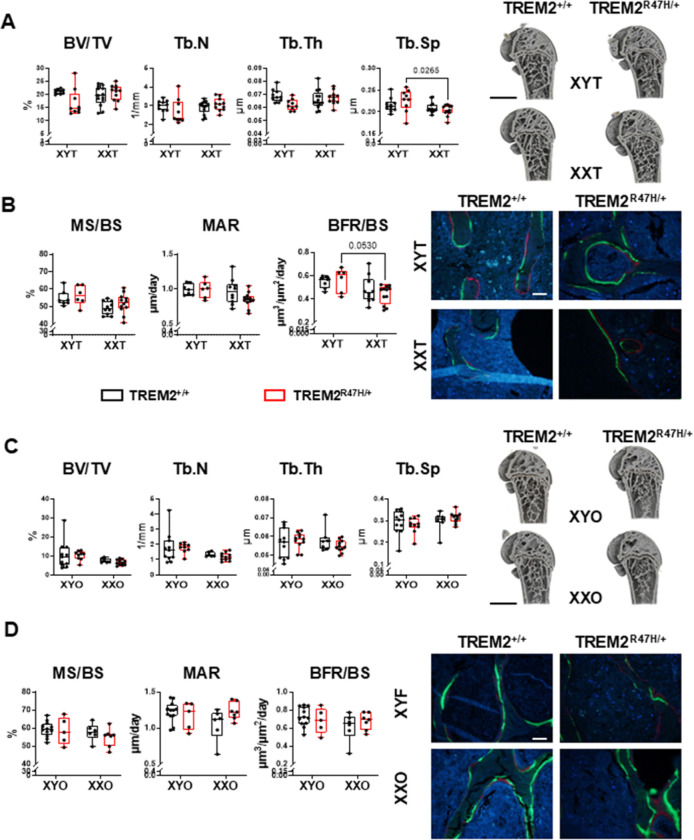 Figure 4
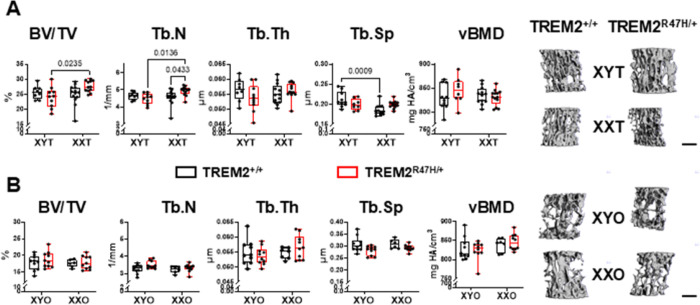 Figure 5
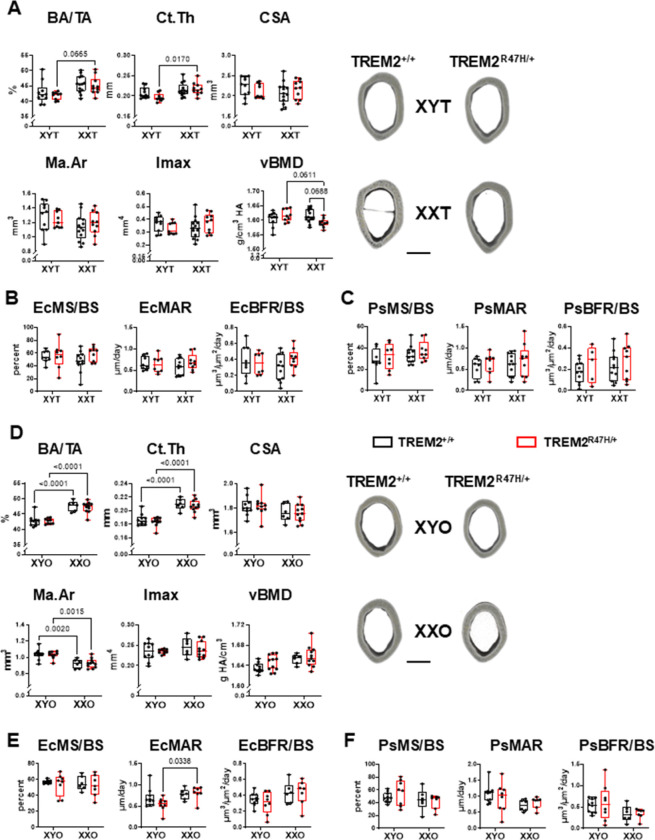 Figure 6
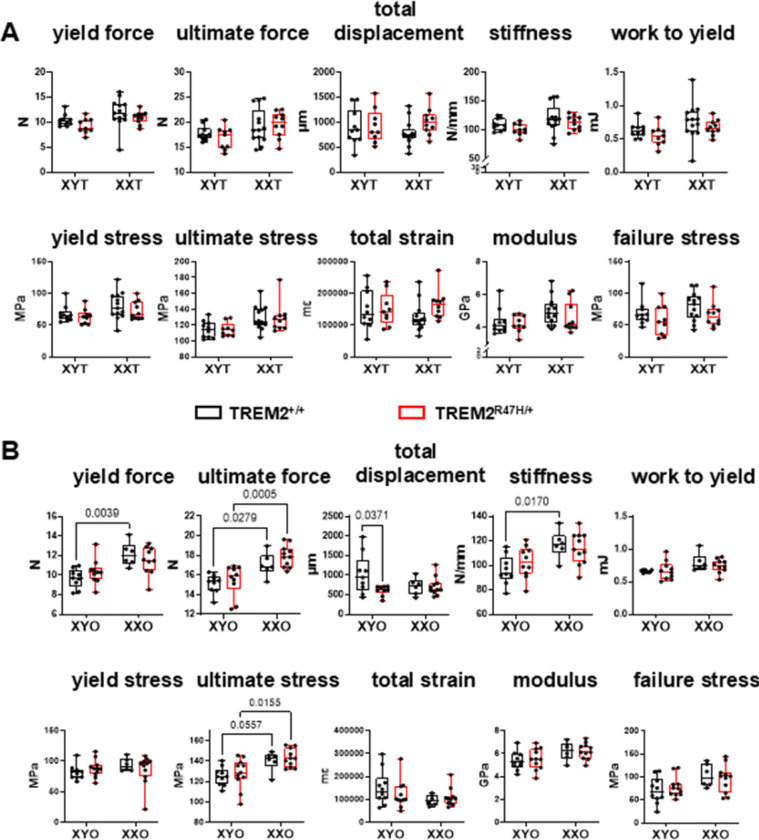 Figure 7
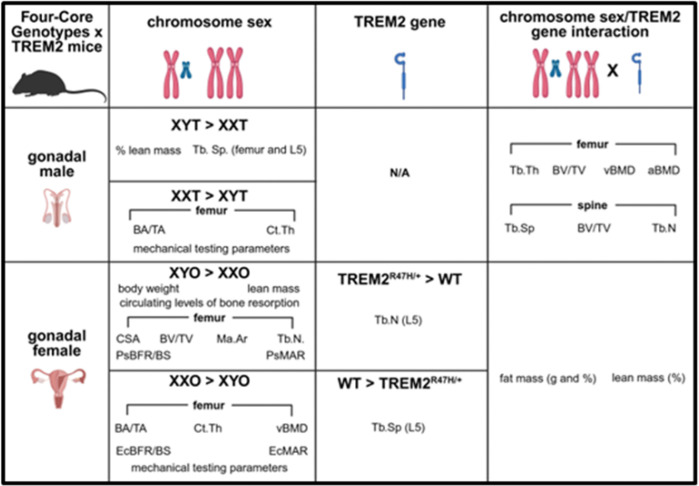 Figure 8
Peer Reviews
No public reviews on file for this paper yet. If you reviewed it on a platform where reviews are public (OpenReview, ICLR, NeurIPS, ICML), you can paste yours below so the community can read it here.
Videos
No videos yet. Explain this paper in a talk, walkthrough, or lecture? Add one.
Taxonomy
TopicsNeuroinflammation and Neurodegeneration Mechanisms · Inflammation biomarkers and pathways · Neurological Disease Mechanisms and Treatments