Engineered Bi-Specific AChR CAAR T Cells for Selective Elimination of Myasthenia Gravis B Cells
Niels von Wardenburg, Gregorio Spagni, S. Momsen Reincke, Stephanie Wernick, Hans-Christian Kornau, Viktoria Zinnow, Amelya Keles, Lucie Y. Li, Marie A. Homeyer, Sonja Blumenau, Maria Stecklum, Dietmar Schmitz, Andreas Pelz, Valentina Damato, Nicholas Sanderson, Tobias Derfuß

TL;DR
Researchers developed a new type of T cell therapy that specifically targets and eliminates harmful B cells in myasthenia gravis, a neuromuscular autoimmune disease.
Contribution
The novelty lies in engineering bi-specific AChR CAAR T cells that selectively target B cells producing anti-AChR autoantibodies.
Findings
AChR CAAR T cells efficiently secreted cytokines and lysed target cells upon activation.
In vivo, the therapy reduced pathogenic B cells and autoantibody levels at the neuromuscular junction.
The approach shows potential for durable remission in refractory myasthenia gravis patients.
Abstract
Myasthenia gravis (MG) is an autoimmune neuromuscular disorder caused by autoantibodies targeting the nicotinic acetylcholine receptor (nAChR), which can lead to severe disability and life-threatening crises. Current therapies rely on broad immunosuppression and fail to achieve sustained remission in the majority of patients. Here, we report the development of AChR chimeric autoantibody receptor (CAAR) T cells engineered to selectively eliminate autoreactive B cells producing anti-AChR autoantibodies. T cells were co-transduced with CAARs expressing extracellular domains of the AChR α1 or β1 subunits, enabling recognition of a broad range of pathogenic antibodies. AChR CAAR T cells selectively secreted effector cytokines upon activation, and efficiently lysed target cells. In vivo, they depleted pathogenic B cell lines and reduced autoantibody levels in the circulation and at the…
Genes, proteins, chemicals, diseases, species, mutations and cell lines named across the full text — each resolved to its canonical identifier and authoritative record.
Click any figure to enlarge with its caption.
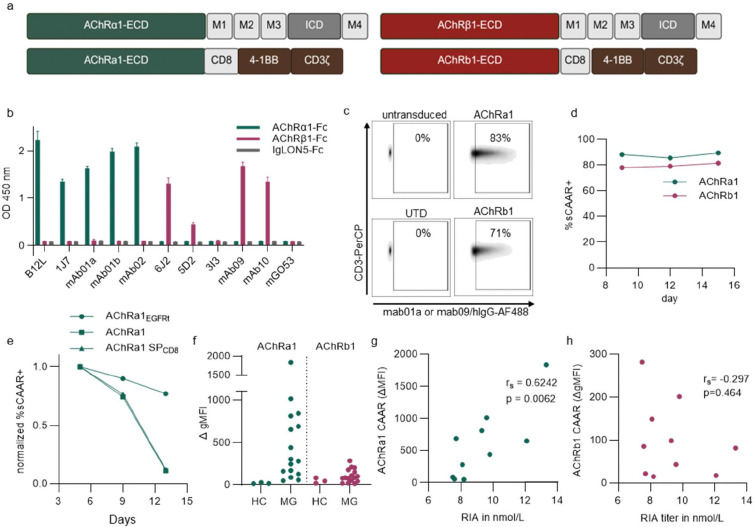 Figure 1
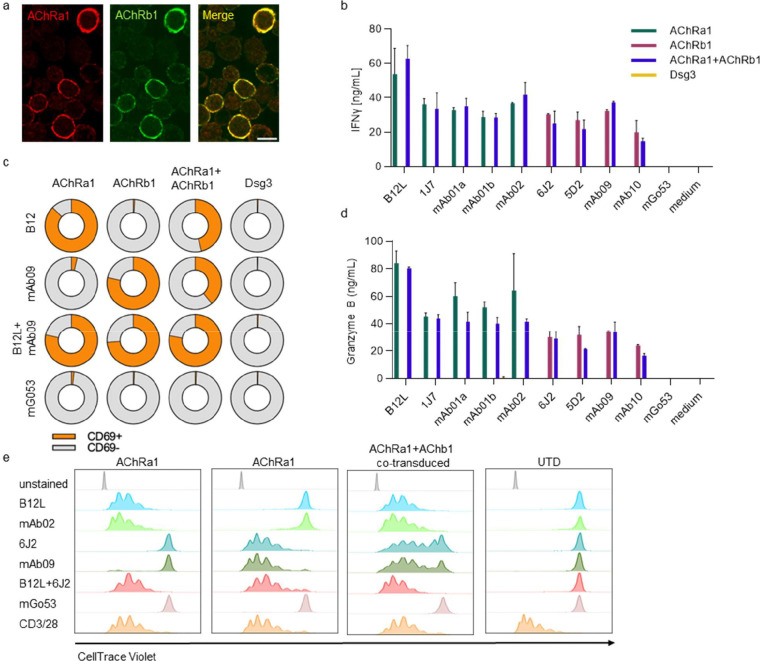 Figure 2
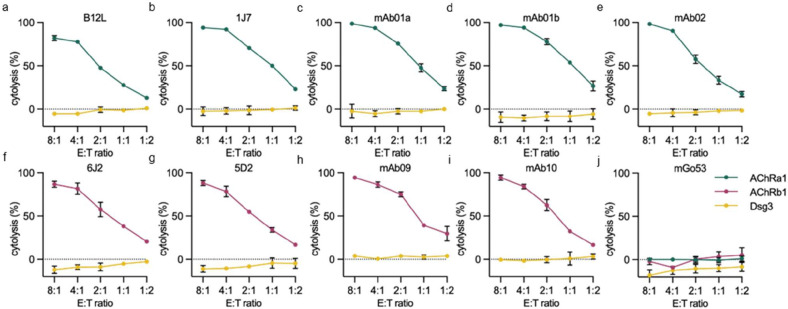 Figure 3
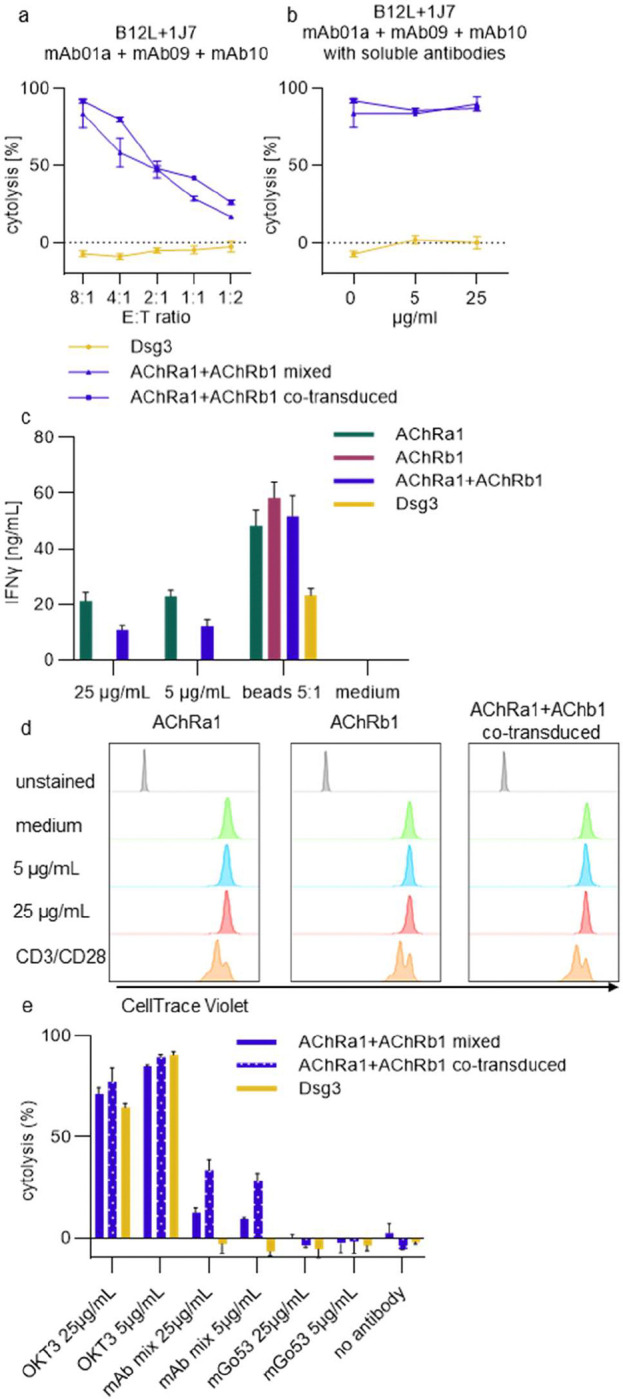 Figure 4
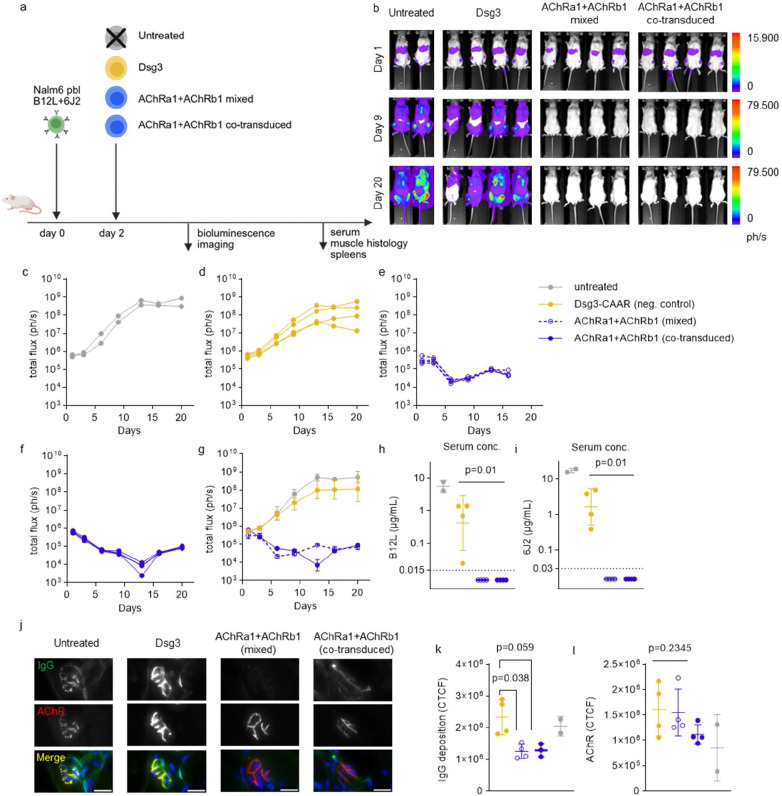 Figure 5
Peer Reviews
No public reviews on file for this paper yet. If you reviewed it on a platform where reviews are public (OpenReview, ICLR, NeurIPS, ICML), you can paste yours below so the community can read it here.
Videos
No videos yet. Explain this paper in a talk, walkthrough, or lecture? Add one.
Taxonomy
TopicsCAR-T cell therapy research · Myasthenia Gravis and Thymoma · Monoclonal and Polyclonal Antibodies Research