Mast cell specific receptor Mrgprb2/X2 regulates bladder immunity during urinary tract infections
Waris Muhammad Khuwaja, Colin Guth, Sudeshna Rakshit, Linghui Nie, Zahra Janjua, Nicole De Nisco, Priyanka Pundir, Dustin Green, Xintong Dong

TL;DR
This study shows that the Mrgprb2/MRGPRX2 receptor in mast cells worsens bladder infections and could be a target for better UTI treatments.
Contribution
The study reveals a conserved role of Mrgprb2/MRGPRX2 in UTI pathogenesis and identifies it as a therapeutic target.
Findings
Mrgprb2 activation by cathelicidin causes mast cell degranulation during UTI.
Mrgprb2 knockout mice show reduced inflammation and bacterial burden in UTI.
Pharmacological inhibition of Mrgprb2 with osthole improves infection outcomes.
Abstract
Urinary tract infections (UTIs) are the most common bacterial infections in women. During UTI, the host mounts a rapid immune response to clear the invading pathogen. Mast cells are tissue resident immune cells found in the bladder lamina propria and can serve as first responders to bacterial infections. We investigated the role of the mouse mast cell receptor Mrgprb2 and its human homologue MRGPRX2 in UTI. During acute UTI, Mrgprb2 is activated by the antimicrobial peptide cathelicidin and mediates mast cell degranulation. Using Mrgprb2 knockout mice, we demonstrated that Mrgprb2 promotes immune cell recruitment and amplifies inflammation, leading to epithelial damage and increased bacterial burden. Pharmacological inhibition of Mrgprb2 with its antagonist osthole improved infection outcomes. Using a humanized MRGPRX2 knock-in mouse, we show conserved functions of the mouse and human…
Genes, proteins, chemicals, diseases, species, mutations and cell lines named across the full text — each resolved to its canonical identifier and authoritative record.
Click any figure to enlarge with its caption.
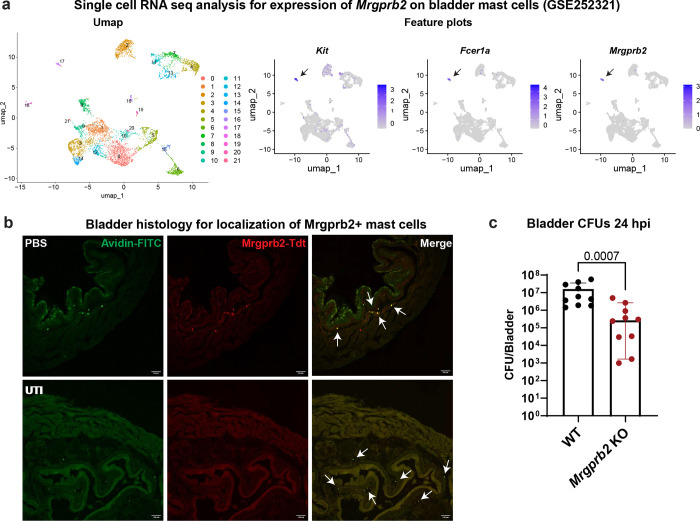 Figure 1
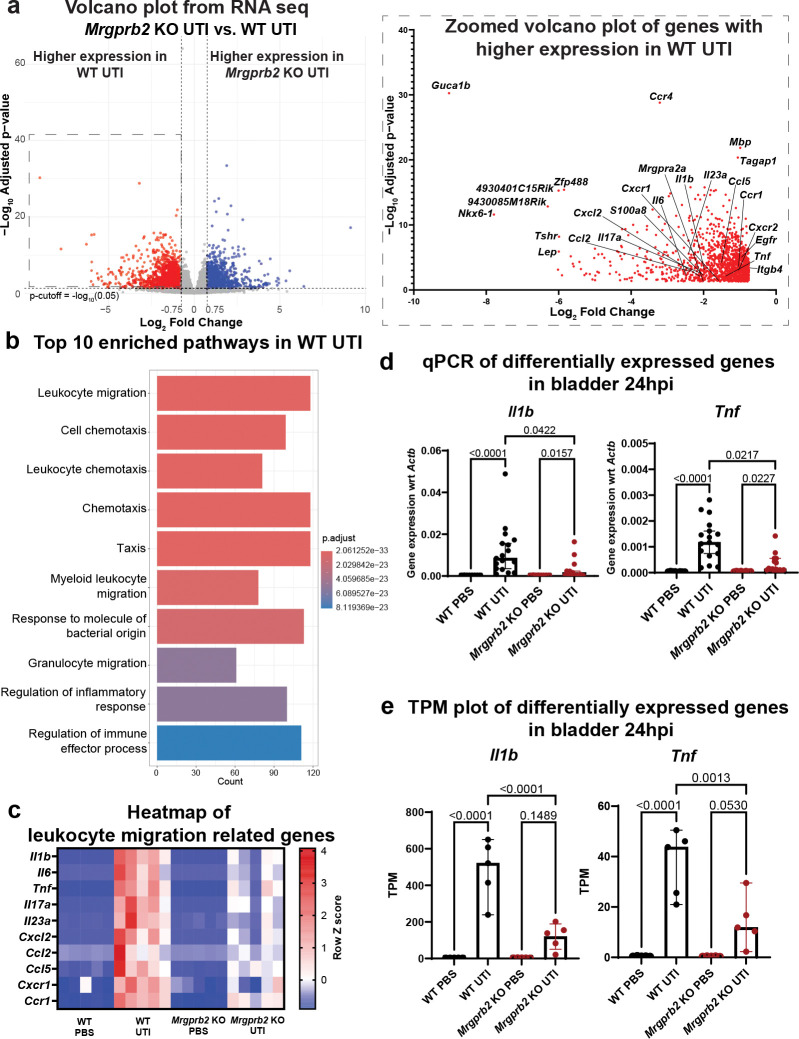 Figure 2
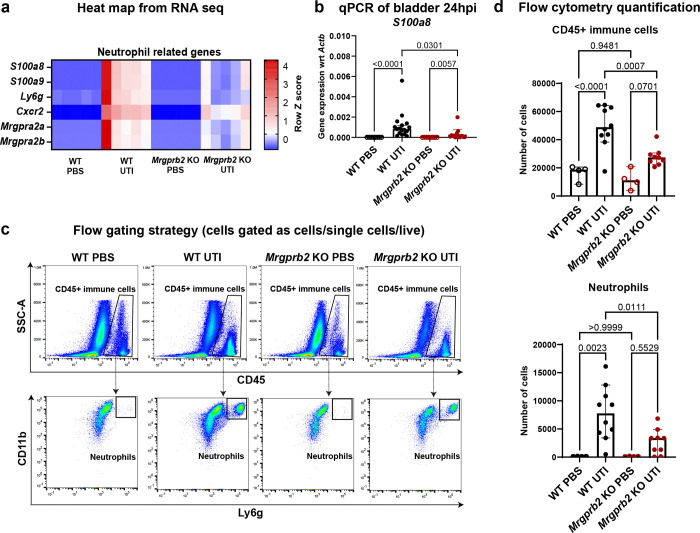 Figure 3
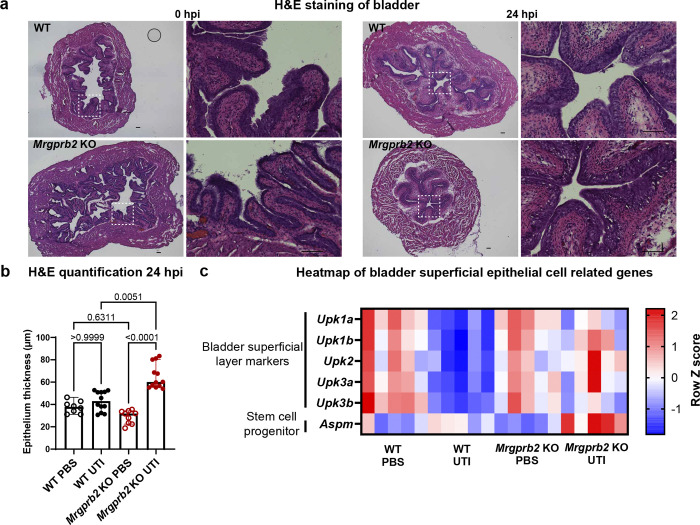 Figure 4
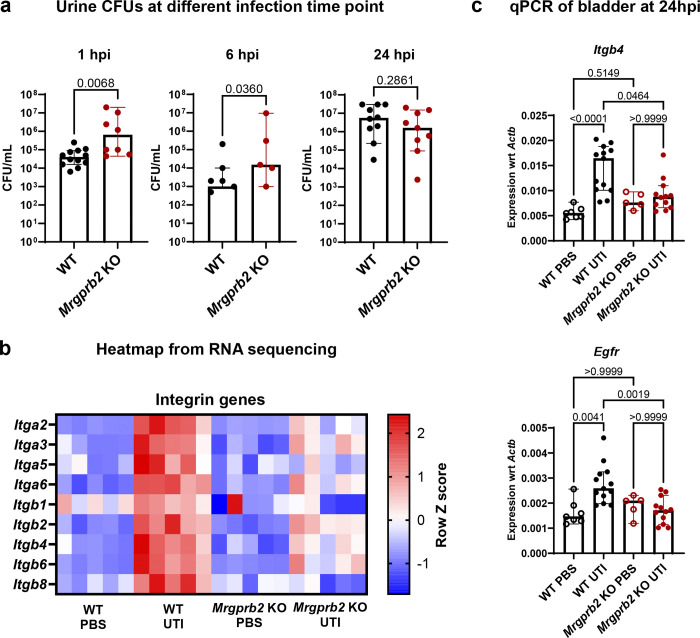 Figure 5
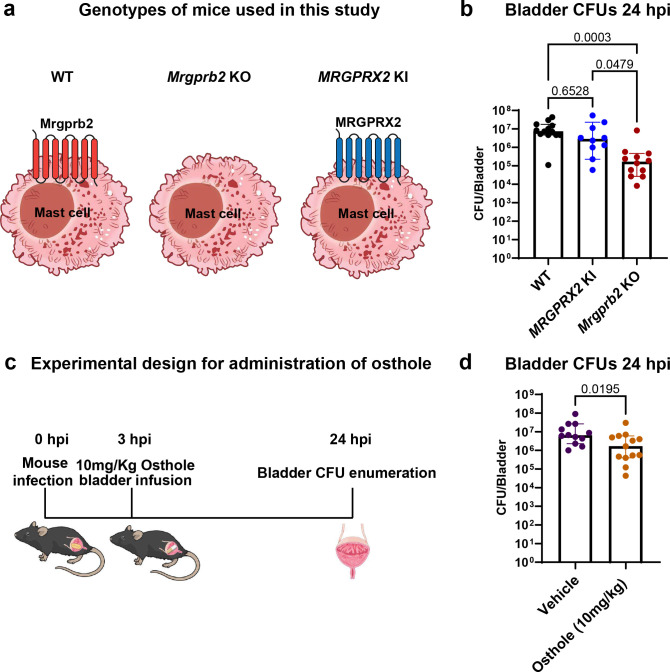 Figure 6
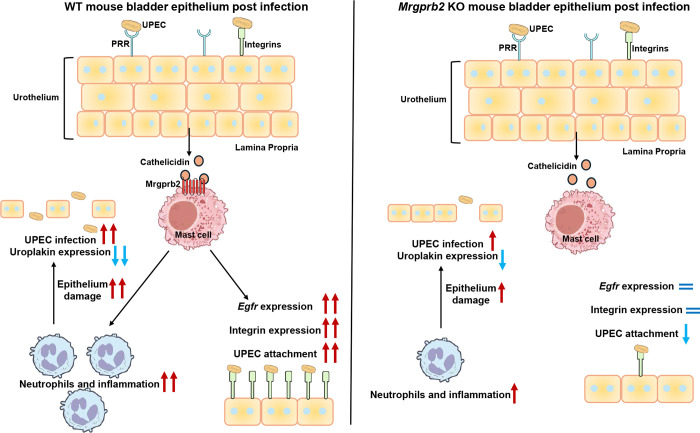 Figure 7
Peer Reviews
No public reviews on file for this paper yet. If you reviewed it on a platform where reviews are public (OpenReview, ICLR, NeurIPS, ICML), you can paste yours below so the community can read it here.
Videos
No videos yet. Explain this paper in a talk, walkthrough, or lecture? Add one.
Taxonomy
TopicsMast cells and histamine · Dermatology and Skin Diseases · IL-33, ST2, and ILC Pathways