Operant behavior is reliably impaired in a mouse model of Angelman syndrome
Caleigh D. Guoynes, Devante D. Kerr, Zahraa S. Hotait, Joseph K. Tanas, Michael S. Sidorov

TL;DR
A mouse model of Angelman syndrome shows consistent learning impairments in operant tasks, suggesting these tasks can help evaluate potential treatments.
Contribution
Operant behavior testing is shown to reliably detect cognitive impairments in Angelman syndrome mouse models across sexes.
Findings
Ube3am−/p+ mice showed impairments in operant task acquisition and extinction phases.
Operant testing improved genotype clustering in behavioral assessments.
Operant tasks are a reliable method to quantify learning impairments in Angelman syndrome models.
Abstract
Angelman syndrome (AS) is a neurodevelopmental disorder characterized by cognitive impairment, absent speech, seizures, motor and sleep impairments, and caused by loss of function of the maternal copy of the UBE3A gene. Modeling the AS phenotype in preclinical models across behavioral domains is critical for testing of new therapeutics. Our previous work reported behavioral phenotypes in male Ube3am−/p+ (AS model) mice on a cognitive-like operant extinction task. Here, we evaluated operant task performance in male and female Ube3am−/p+ mice across two cohorts, and correlated operant performance with performance on a battery of other widely used behavioral tests for Ube3a mutants. Ube3am−/p+ mice showed impairments in both the acquisition and extinction phases of operant testing that were not sex-specific. Inclusion of operant testing in the existing Ube3am−/p+ behavioral battery was…
Genes, proteins, chemicals, diseases, species, mutations and cell lines named across the full text — each resolved to its canonical identifier and authoritative record.
Click any figure to enlarge with its caption.
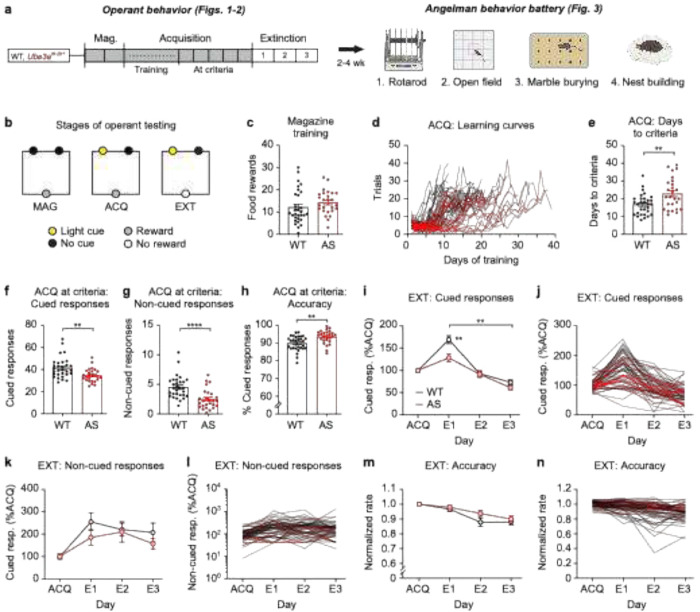 Figure 1
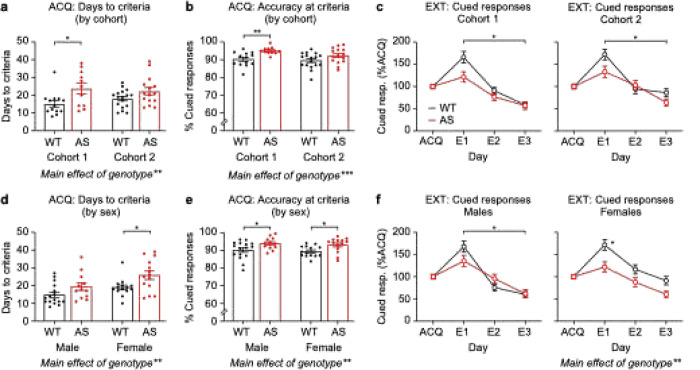 Figure 2
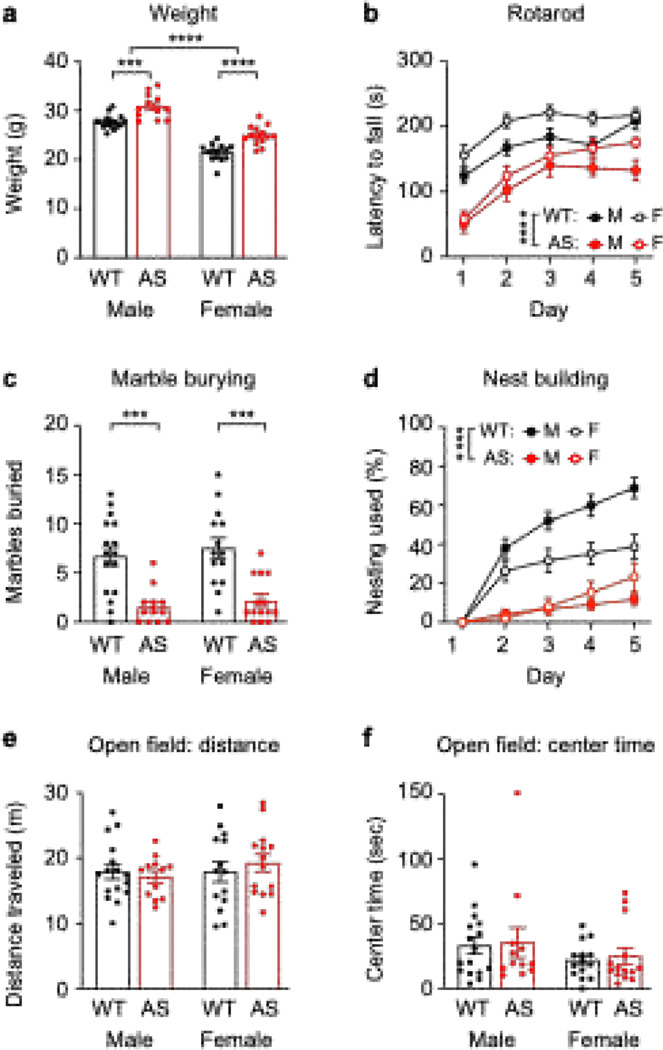 Figure 3
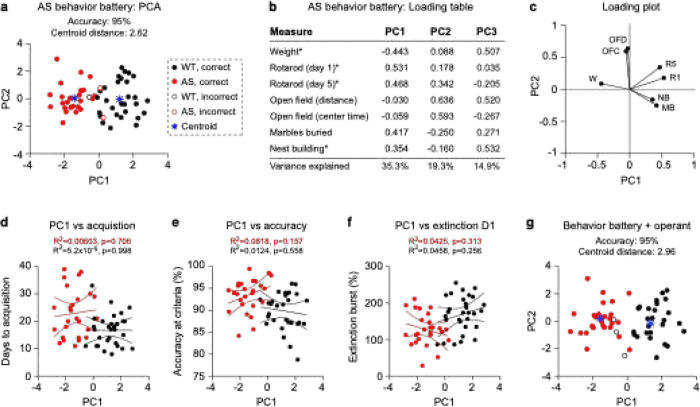 Figure 4
Peer Reviews
No public reviews on file for this paper yet. If you reviewed it on a platform where reviews are public (OpenReview, ICLR, NeurIPS, ICML), you can paste yours below so the community can read it here.
Videos
No videos yet. Explain this paper in a talk, walkthrough, or lecture? Add one.
Taxonomy
TopicsGenetic Syndromes and Imprinting · Gynecological conditions and treatments · Genetic and Clinical Aspects of Sex Determination and Chromosomal Abnormalities