Structure-aware graph learning predicts RNA editability across tissues and species
Zohar Rosenwasser, Michael Levitt, Erez Levanon, Gal Oren

TL;DR
This paper introduces ADAREDIT, a new model that predicts RNA editability by considering RNA structure, outperforming other methods and working across species.
Contribution
ADAREDIT is a structure-aware graph-attention framework that improves RNA editability prediction using dsRNA geometry and transfers across species.
Findings
ADAREDIT outperformed sequence-only models in predicting RNA editability across tissues.
The model's graph representation transferred well to non-Alu species like sea urchin and octopus.
Attention profiles revealed structural influences on editing, including upstream guanosine suppression.
Abstract
Programmable A-to-I RNA editing using endogenous ADAR enzymes is emerging as a therapeutic strategy, but editability remains difficult to predict because ADAR recognition depends on double-stranded RNA geometry and stability rather than sequence alone. We present ADAREDIT, a structure-explicit graph-attention framework that represents each dsRNA substrate as a nucleotide graph with backbone and base-pair edges and augments this representation with typed interactions and a motif-sensitive sequence branch. We trained and evaluated the model on high-confidence inverted Alu duplexes (n = 905) with secondary structures predicted by RNAfold and editing levels measured across 8,603 GTEx RNA-seq samples spanning 47 tissues. Across five tissue contexts and comprehensive cross-tissue transfer experiments, ADAREDIT consistently outperformed sequence-only CNN, transformer, and RNA language model…
Genes, proteins, chemicals, diseases, species, mutations and cell lines named across the full text — each resolved to its canonical identifier and authoritative record.
Click any figure to enlarge with its caption.
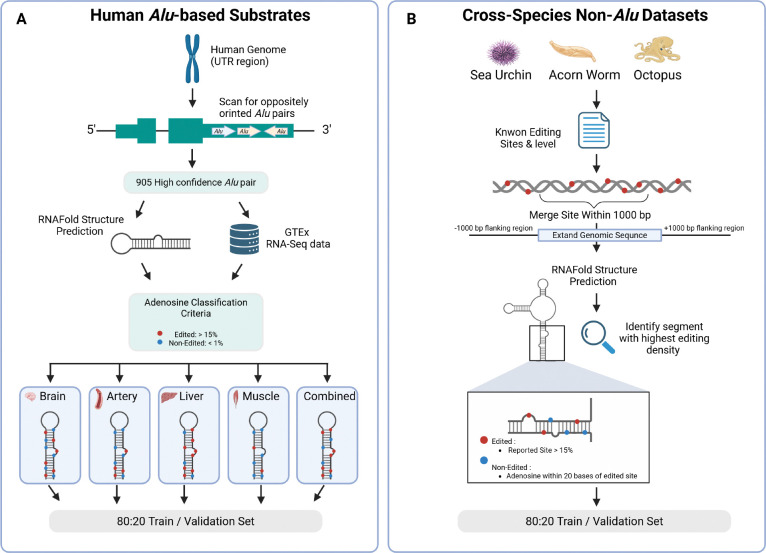 Figure 1
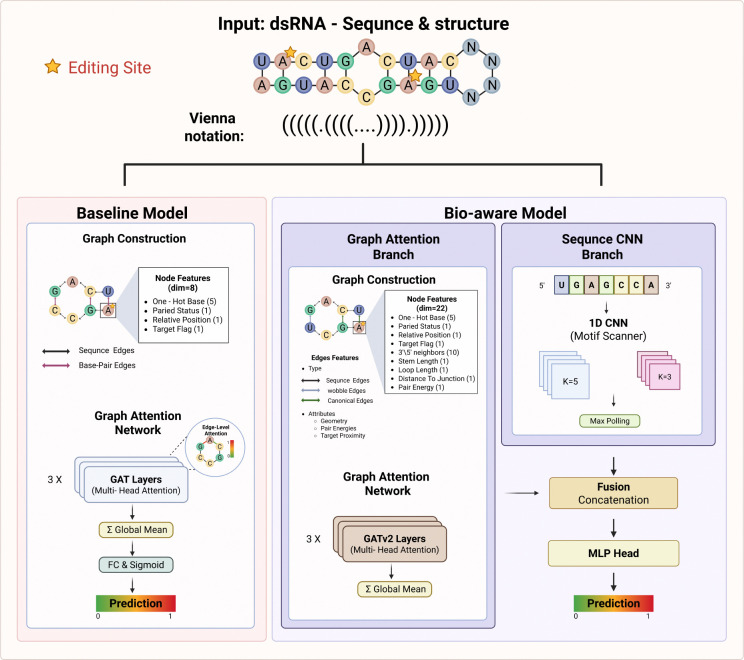 Figure 2
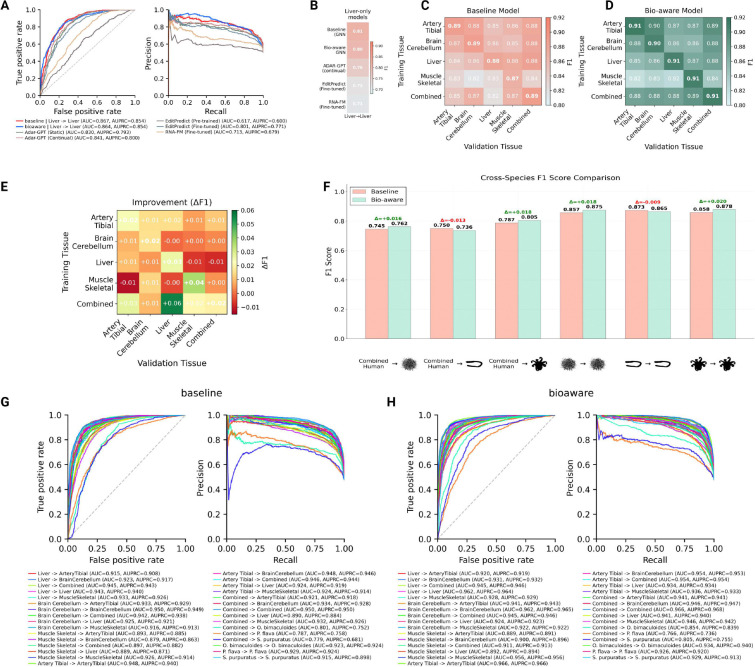 Figure 3
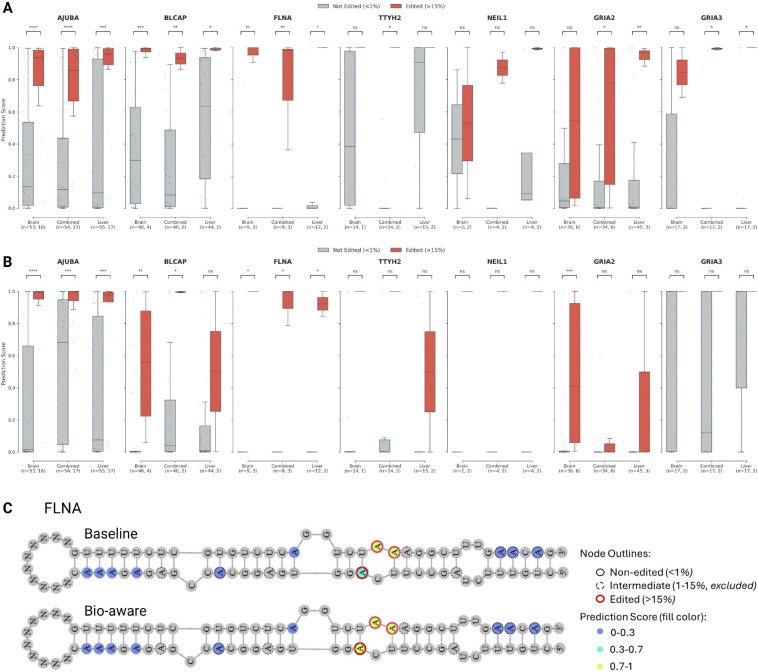 Figure 4
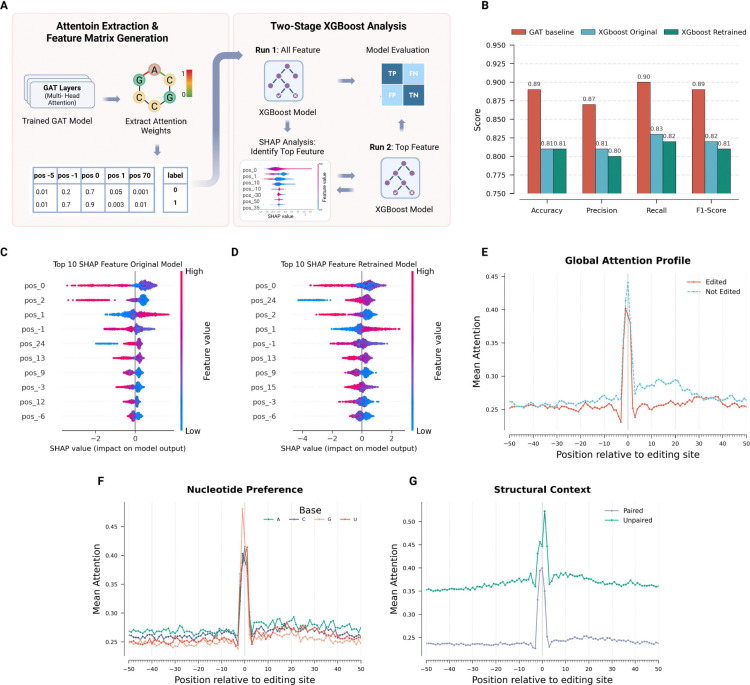 Figure 5
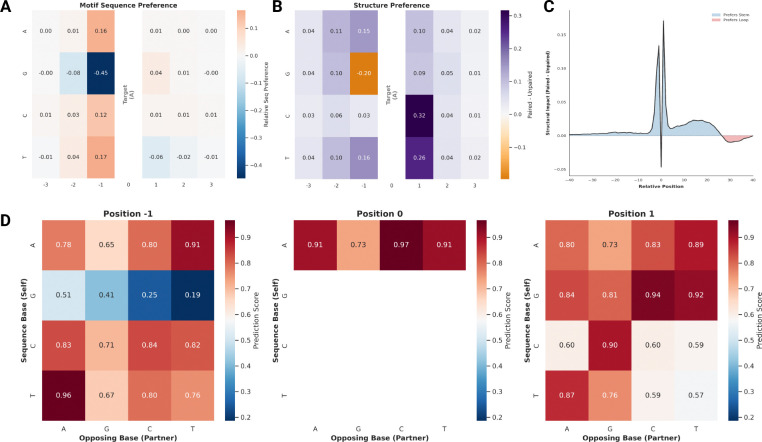 Figure 6
 Figure 7
Peer Reviews
No public reviews on file for this paper yet. If you reviewed it on a platform where reviews are public (OpenReview, ICLR, NeurIPS, ICML), you can paste yours below so the community can read it here.
Videos
No videos yet. Explain this paper in a talk, walkthrough, or lecture? Add one.
Taxonomy
TopicsRNA regulation and disease · RNA and protein synthesis mechanisms · Machine Learning in Bioinformatics