Phosphorylation of inner core heptose is a major determinant of bacterial surface lipopolysaccharide recognition by the innate immune protein hSP-D
Harry M. Williams, Alastair Watson, Jens Madsen, Howard W. Clark, Derek W. Hood, Stefan Oscarson, Trevor J. Greenhough, Annette K. Shrive

TL;DR
This study shows how the immune protein hSP-D recognizes bacterial lipopolysaccharides, with heptose phosphorylation playing a key role in immune evasion.
Contribution
The study reveals that heptose phosphorylation is a major determinant in bacterial LPS recognition by hSP-D.
Findings
SP-D preferentially recognizes the reducing terminal heptose (HepI) via the glyceryl group.
Heptose phosphorylation significantly affects immune recognition of bacterial LPS.
HepI O4′ phosphorylation can prevent preferred HepI recognition by hSP-D.
Abstract
The innate immune protein human surfactant protein D (SP-D) recognizes pathogens in the lungs via binding to carbohydrate surface structures. SP-D targets gram-negative bacterial lipopolysaccharide via calcium-dependent binding, preferentially to the inner core heptose (HepI). To further investigate this recognition, we have determined the high-resolution crystal structures of a trimeric recombinant fragment of human SP-D complexed with synthetic di-saccharide and trisaccharides, HepI-Kdo, HepIII-HepII-HepI, and HepII-HepI phosphorylated at either HepI or HepII, inner core lipopolysaccharide motifs common to many gram-negative bacteria. In contrast to acid-hydrolyzed lipopolysaccharide used in several previous studies, these synthetic saccharides allow the presentation of both the innermost Kdo in its natural pyranose form and heptose phosphorylation. The structures confirm the…
Genes, proteins, chemicals, diseases, species, mutations and cell lines named across the full text — each resolved to its canonical identifier and authoritative record.
Click any figure to enlarge with its caption.
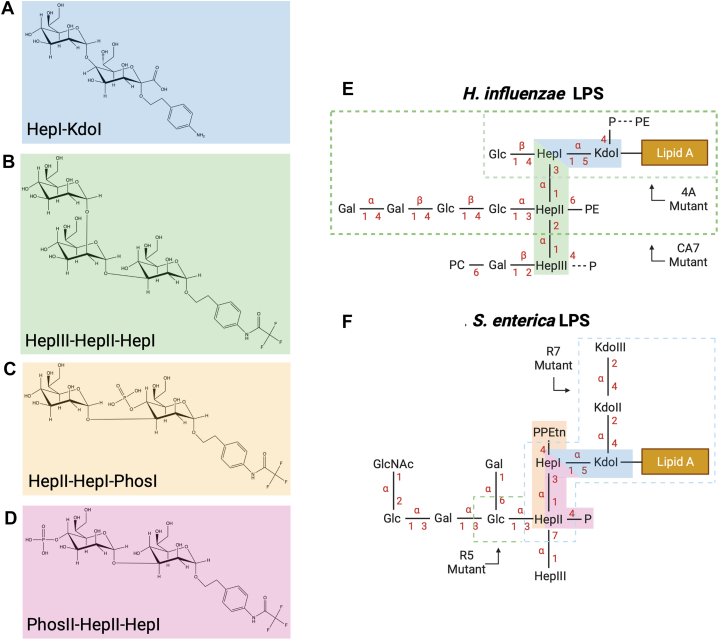 Figure 1
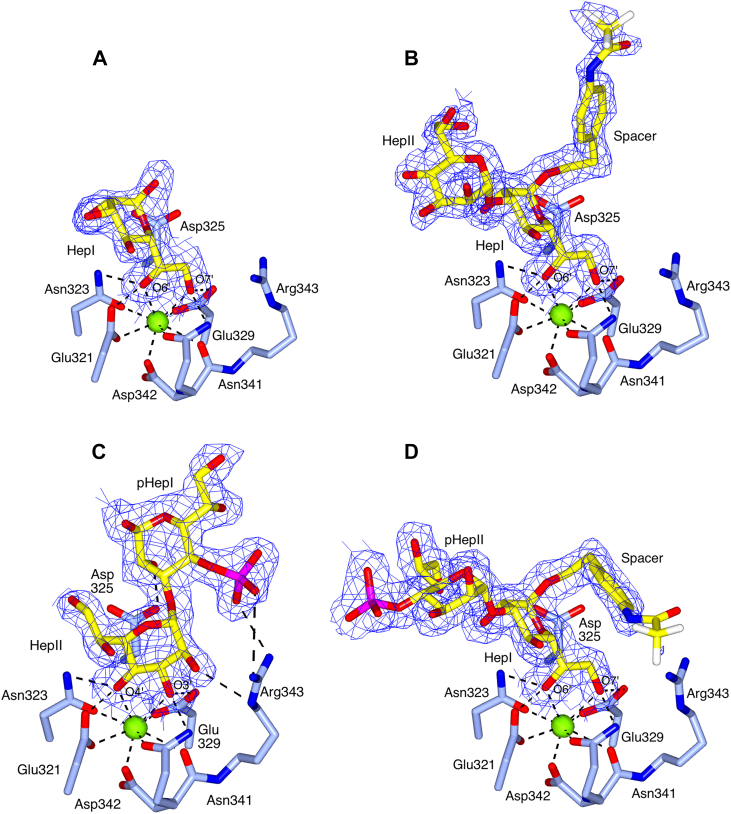 Figure 2
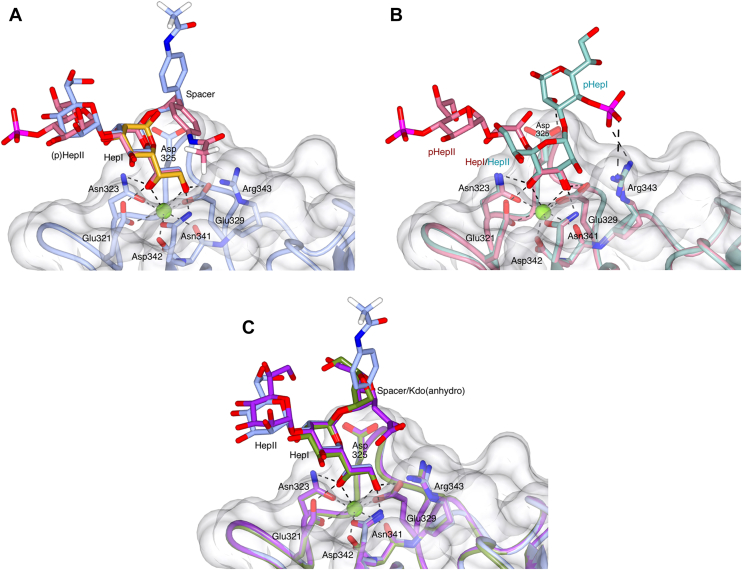 Figure 3
Peer Reviews
No public reviews on file for this paper yet. If you reviewed it on a platform where reviews are public (OpenReview, ICLR, NeurIPS, ICML), you can paste yours below so the community can read it here.
Videos
No videos yet. Explain this paper in a talk, walkthrough, or lecture? Add one.
Taxonomy
TopicsNeonatal Respiratory Health Research · Immune Response and Inflammation · Bacterial biofilms and quorum sensing