Ki-67 staining pattern as a prognostic biomarker for advanced acral melanoma
Marcel Arakaki Asato, Isabeli Joaquim Contel, Francisco Alves Moraes Neto, Juliana Polizel Ocanha-Xavier, Nathália Silva Carlos Oliveira, Maxwell A. Fung, Mariangela Esther Alencar Marques, José Cândido Caldeira Xavier-Júnior

TL;DR
This study explores how Ki-67 staining patterns in advanced acral melanoma may predict patient outcomes, suggesting certain patterns are linked to worse survival.
Contribution
The study introduces Ki-67 staining pattern classification as a novel prognostic tool for advanced acral melanoma.
Findings
Ki-67 staining patterns NP1, NP4, and NP5 were associated with worse patient outcomes.
Differences in nuclear patterns were statistically significant between survival groups.
Higher Ki-67 positive nuclei correlated with melanoma-related death.
Abstract
Acral cutaneous melanoma (ACM) is an aggressive skin cancer, especially when diagnosed in the advanced stage. The Ki-67 is a rapid tool for proliferation rate analysis. Previous data indicated that its staining pattern is distinct during the several stages of the cell cycle among epithelial cells. To evaluate the prognostic impact of Ki-67 expression pattern classification among advanced acral cutaneous melanoma cases. Two pathologists classified staining nuclear patterns of Ki-67 in the hot spot of scanning slides of advanced ACM (pT4): NP1 (randomly Ki-67 immunopositive fine or coarse granules), NP2 (Ki-67 stained in one or two well defined and centralized nodules), NP3 (Ki-67 seen as granules or nodules occupying most of the nucleus), NP4 (nucleoplasm with intense and homogeneous Ki-67 staining) and NP5 (empty central area with peripheral Ki-67). For analysis, seven cases per group…
Genes, proteins, chemicals, diseases, species, mutations and cell lines named across the full text — each resolved to its canonical identifier and authoritative record.
Click any figure to enlarge with its caption.
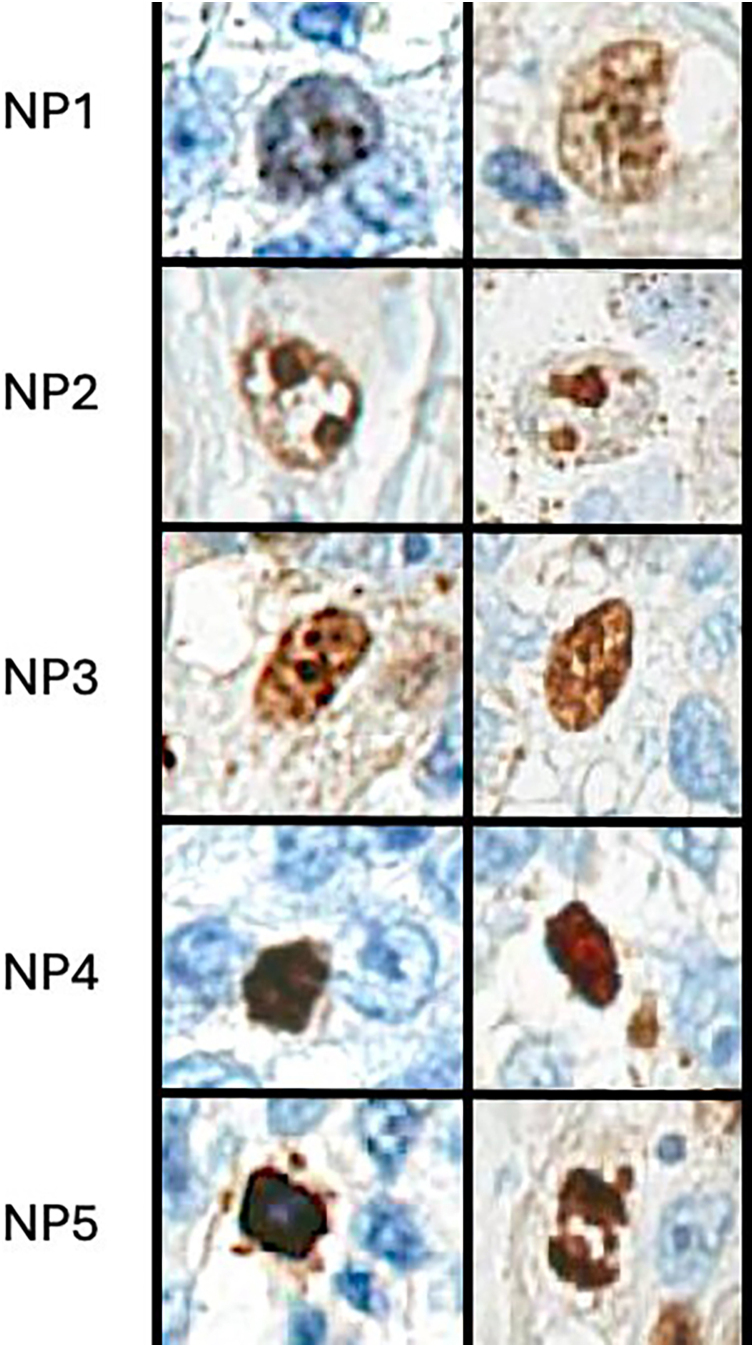 Figure 1
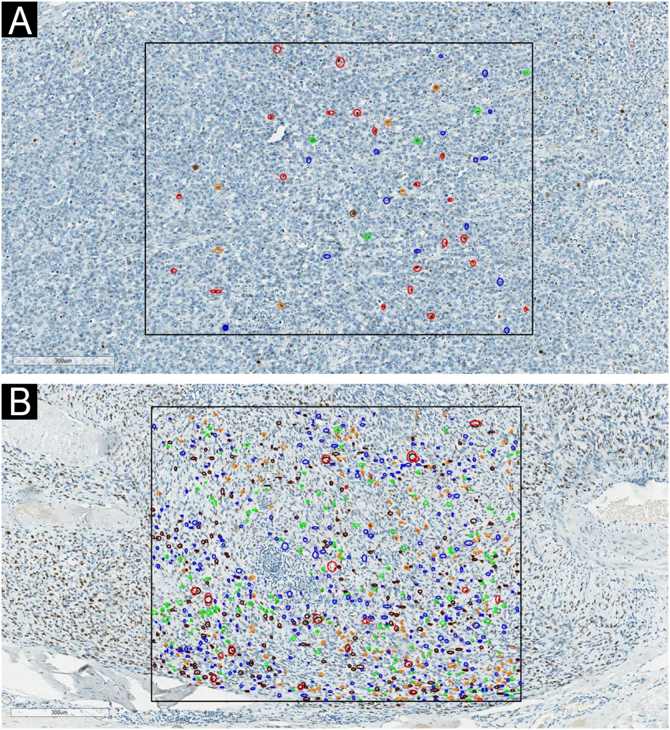 Figure 2
 Figure 3
Peer Reviews
No public reviews on file for this paper yet. If you reviewed it on a platform where reviews are public (OpenReview, ICLR, NeurIPS, ICML), you can paste yours below so the community can read it here.
Videos
No videos yet. Explain this paper in a talk, walkthrough, or lecture? Add one.
Taxonomy
TopicsCutaneous Melanoma Detection and Management · Nonmelanoma Skin Cancer Studies · Cancer and Skin Lesions