Atomic/molecular layer deposition of p-type conducting copper–sulfur–organic coordination polymer thin films for thermoelectric applications
Mari Heikkinen, Malar Auxilia Francis, Kristoffer Meinander, Girish C. Tewari, Mikko Nisula, Maarit Karppinen

TL;DR
Researchers developed a new method to create copper-based thin films with high thermoelectric performance using atomic/molecular layer deposition.
Contribution
A three-precursor ALD/MLD process for fabricating p-type poly[Cu-ETT] thin films with high Seebeck coefficient.
Findings
The process yields p-type poly[Cu-ETT] thin films with a high growth-per-cycle of ~11 Å per cycle.
XPS confirmed the Cu:S ratio of 0.246, close to the ideal 0.25.
The films showed a Seebeck coefficient of 88 µV K−1 and resistivity of 0.17 Ω m−1 at room temperature.
Abstract
Here we report a three-precursor atomic/molecular layer deposition (ALD/MLD) process for the fabrication of copper-based coordination polymer thin films for thermoelectric applications. This process mimics the wet chemical synthesis of poly[metal-ethenetetrathiolate] (poly[M-ETT]) polymers based on a trans-metalation reaction. In our ALD/MLD process the Cu-for-Li trans-metalation is realized upon the pulsing of the three precursors, 1,3,4,6-tetrathiapentalene-2,5-dione (TPD), lithium hexamethyldisilazide (Li-HMDS) and copper(ii) acetylacetonate (Cu(acac)2), in a cyclic manner. The process yields p-type electrically conducting poly[Cu-ETT] thin films with an appreciably high growth-per-cycle (GPC) of ∼11 Å per cycle at a deposition temperature of 220 °C. The targeted chemical composition was confirmed with XPS measurements, which verified the Cu : S ratio at 0.246 (i.e. very close to the…
Genes, proteins, chemicals, diseases, species, mutations and cell lines named across the full text — each resolved to its canonical identifier and authoritative record.
Click any figure to enlarge with its caption.
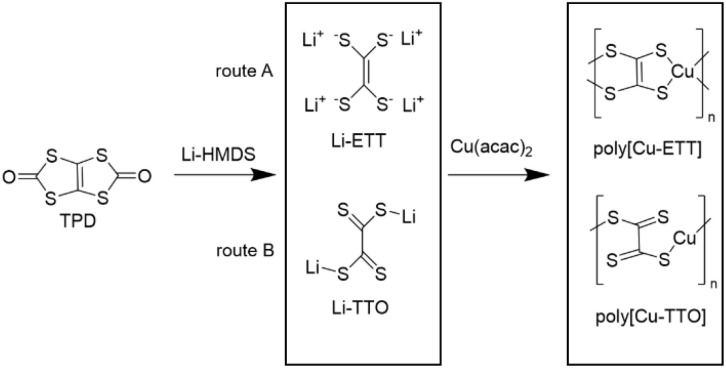 Figure 1
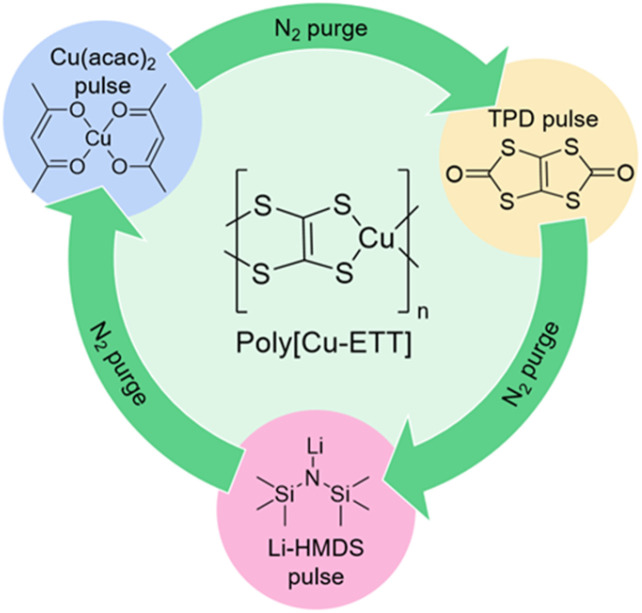 Figure 2
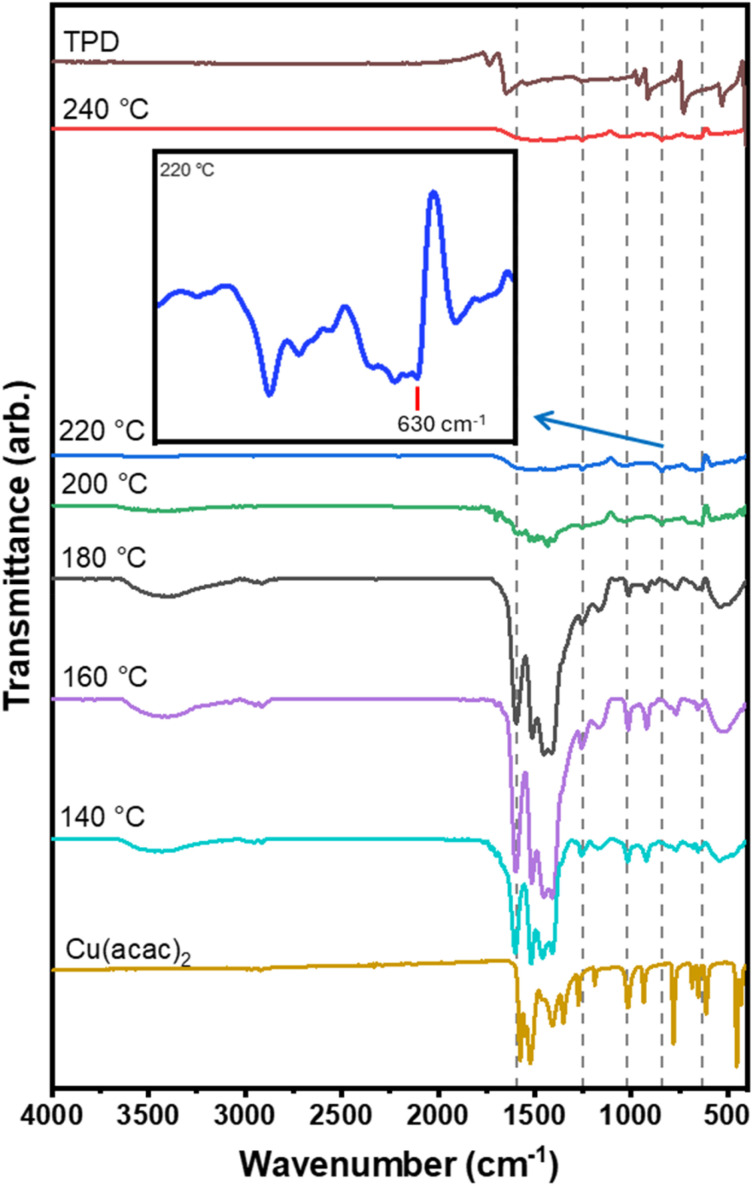 Figure 3
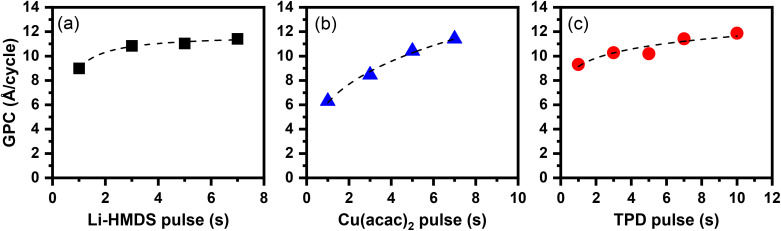 Figure 4
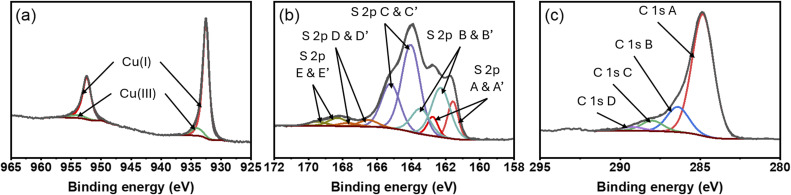 Figure 5
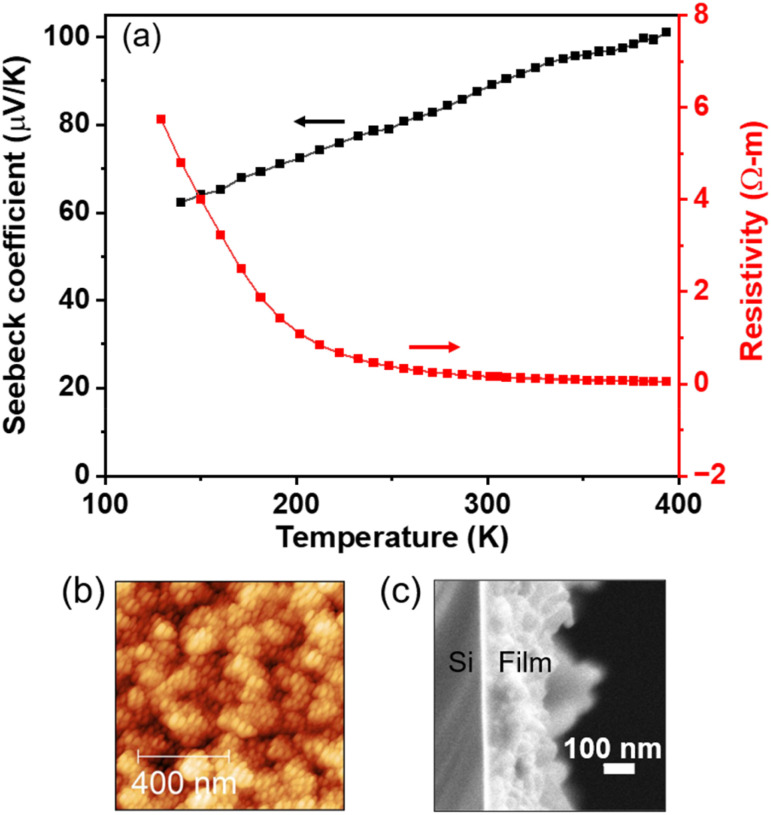 Figure 6
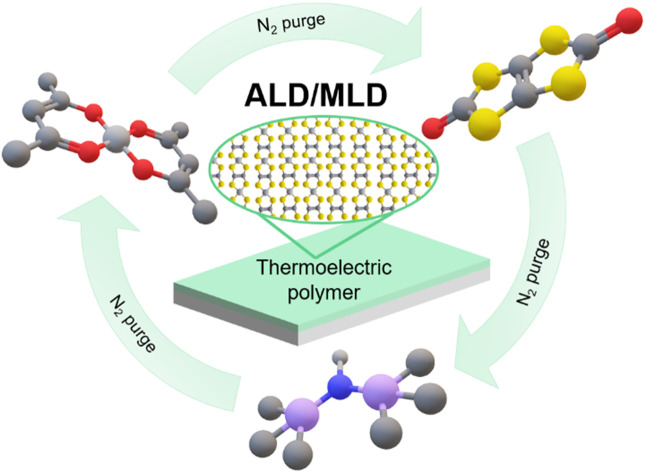 Figure 7
Peer Reviews
No public reviews on file for this paper yet. If you reviewed it on a platform where reviews are public (OpenReview, ICLR, NeurIPS, ICML), you can paste yours below so the community can read it here.
Videos
No videos yet. Explain this paper in a talk, walkthrough, or lecture? Add one.
Taxonomy
TopicsCopper Interconnects and Reliability · Semiconductor materials and devices · Organic Electronics and Photovoltaics