Boundary-associated propagation of a processed pseudogene dissects pre-existing limitations of genome annotation in the T2T era
Min-Gyu Lee

TL;DR
This study shows how processed pseudogenes can be misinterpreted due to genomic duplication patterns revealed by T2T assemblies, highlighting the need for better genome annotations.
Contribution
The study demonstrates that processed pseudogene copies can propagate structurally and be misclassified if evolutionary and structural context is not considered.
Findings
Processed pseudogenes like CICP12 are dispersed across great ape genomes within segmental duplication blocks.
Purifying selection on SEPTIN14 suggests its terminal exon is conserved, not newly duplicated.
Secondary propagation of RNA-derived insertions can lead to multiple annotated loci in duplication-rich regions.
Abstract
Processed pseudogenes and retrogenes are defined by their RNA-mediated origin and, by virtue of this origin-based definition, are often interpreted as discrete genomic insertions. The completion of telomere-to-telomere (T2T) reference assemblies has substantially improved the resolution of segmental duplication architectures and centromeric satellite sequences that were previously inaccessible, allowing genomic structural contexts that were effectively invisible in earlier references to be directly examined. Using the SEPTIN14P-CICP locus family as a case study, chain-based comparative analyses showed that a genomic window spanning the SEPTIN14 3′ terminal exon and the adjacent processed pseudogene CICP12 is dispersed into multiple segmental duplication-associated units across great apes, rather than being maintained as a single orthologous locus. Genome-wide analyses further indicated…
Genes, proteins, chemicals, diseases, species, mutations and cell lines named across the full text — each resolved to its canonical identifier and authoritative record.
Click any figure to enlarge with its caption.
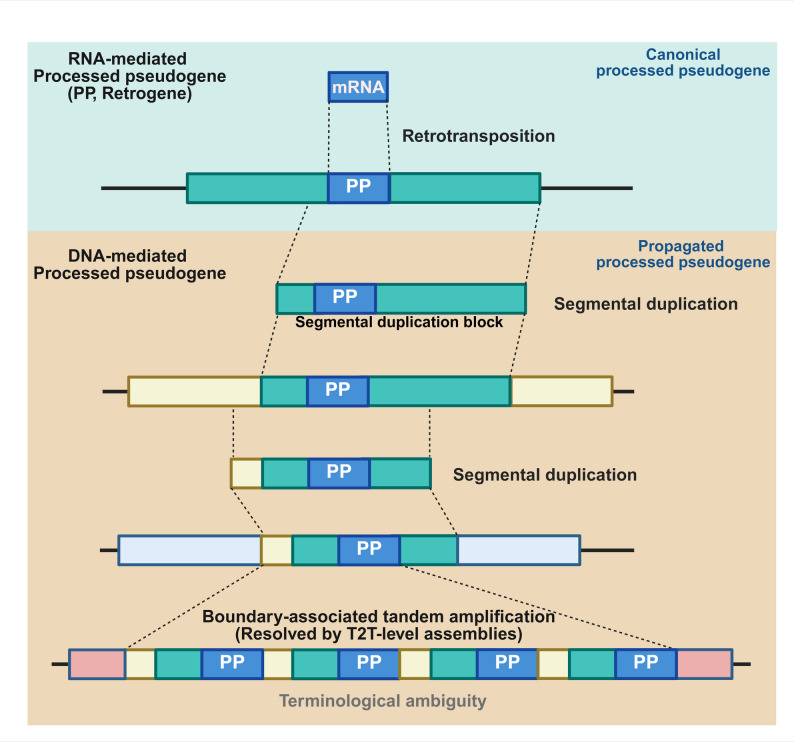 Figure 1
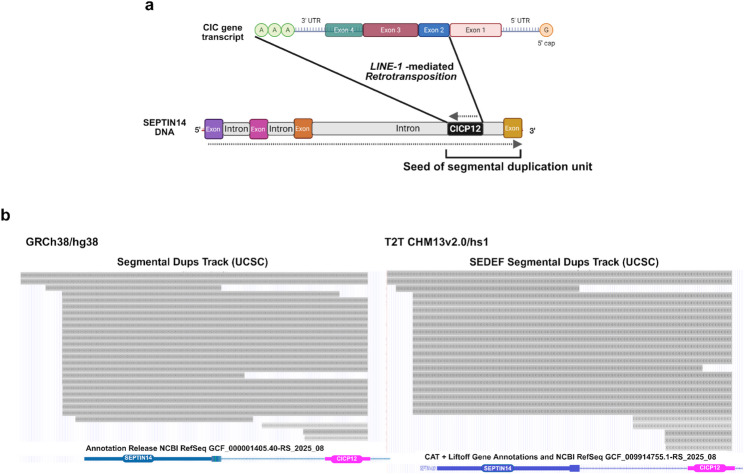 Figure 2
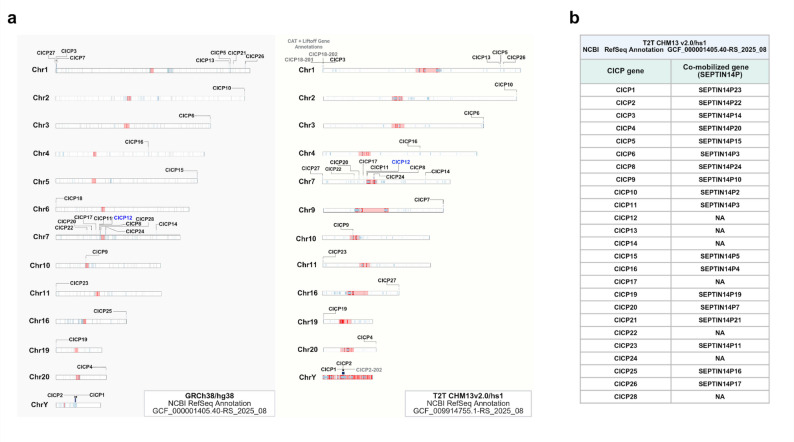 Figure 3
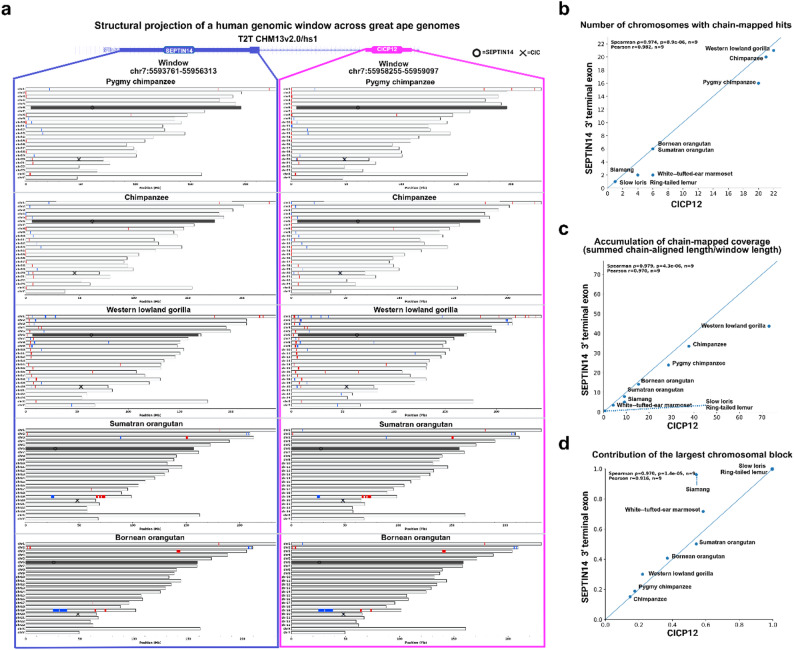 Figure 4
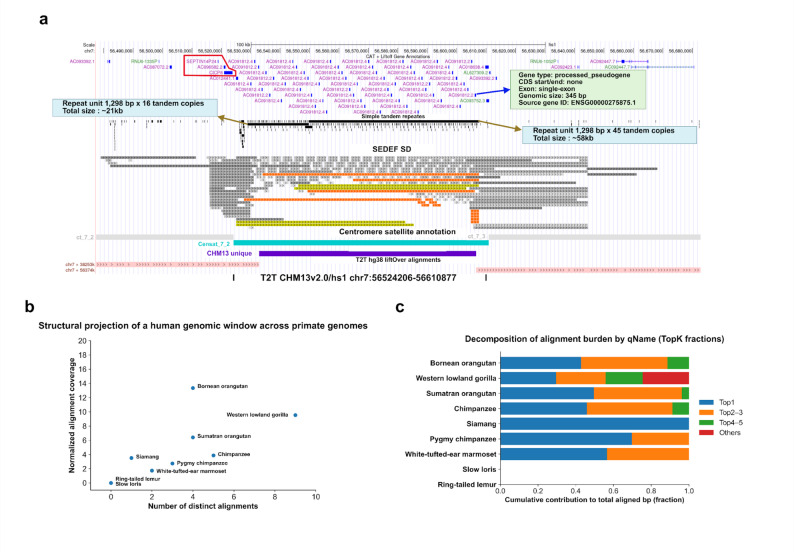 Figure 5
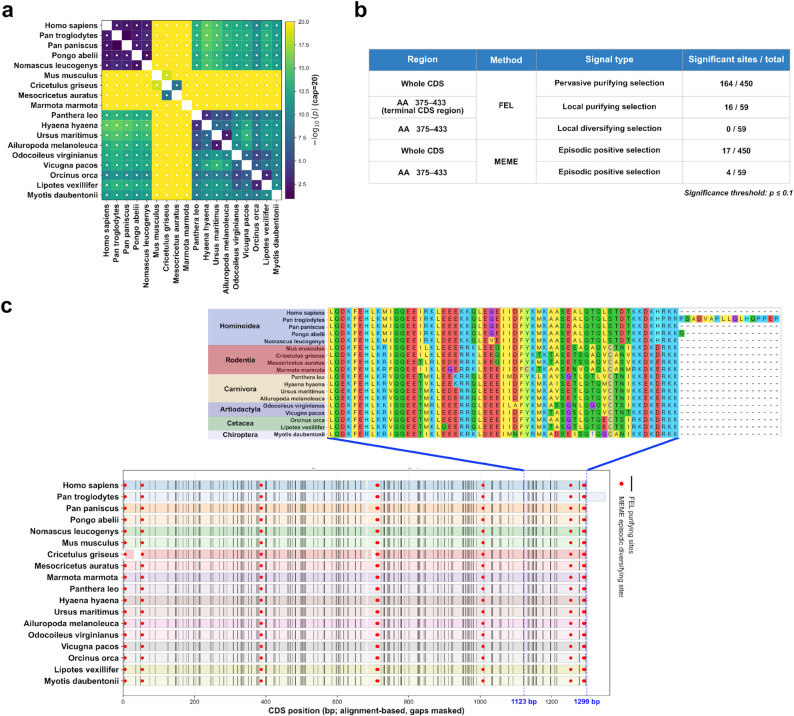 Figure 6
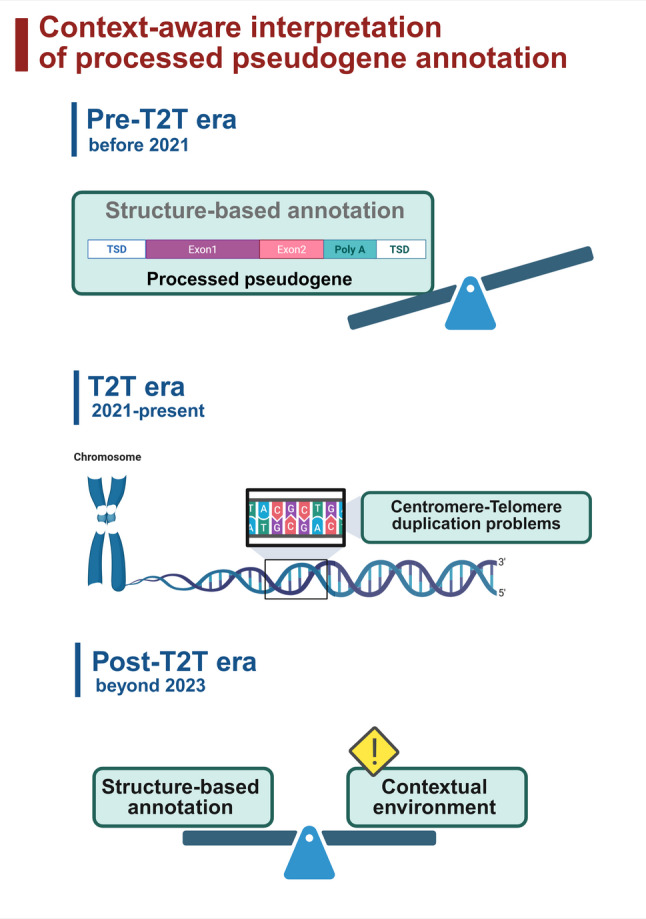 Figure 7
Peer Reviews
No public reviews on file for this paper yet. If you reviewed it on a platform where reviews are public (OpenReview, ICLR, NeurIPS, ICML), you can paste yours below so the community can read it here.
Videos
No videos yet. Explain this paper in a talk, walkthrough, or lecture? Add one.
Taxonomy
TopicsChromosomal and Genetic Variations · Genomic variations and chromosomal abnormalities · Genomics and Phylogenetic Studies