Swallowing development in infants and toddlers with spinal muscular atrophy following therapy compared to healthy controls: the prospective controlled DySMA trial
Jana Zang, Charlotte Dumitrascu, Julia Glinzer, Deike Weiss, Jonas Denecke, Christina Pflug, Almut C. Niessen, Paula Steffens, Jessika Johannsen

TL;DR
This study compares swallowing development in infants and toddlers with spinal muscular atrophy and healthy controls, showing how early treatment and genetic factors influence outcomes.
Contribution
The study introduces a controlled comparison of swallowing development in SMA patients and healthy controls, highlighting the impact of treatment timing and SMN2 copy number.
Findings
Children with SMA showed significantly different swallowing development trajectories compared to healthy controls.
Presymptomatic treatment led to early swallowing progress similar to healthy controls but declined after 15–17 months.
Higher SMN2 copy number was associated with better early swallowing development resembling healthy controls.
Abstract
Swallowing development is a crucial outcome measure for evaluating the effectiveness of disease-modifying therapies (DMT) in children with spinal muscular atrophy (SMA). However, data on this aspect remain limited due to a lack of assessment tools. This study aimed to evaluate swallowing development in infants and toddlers with SMA, compare it with healthy controls (HC), and investigate the influence of initial symptom status at start of DMT and SMN2 copy number. An observational study was conducted with infants and toddlers diagnosed with SMA at a single neuropediatric center and a HC group. Swallowing development was primarily assessed using the DySMA scale. Group differences and the impact of initial symptom status and SMN2 copy number on swallowing were analyzed using linear mixed-effects models. The study included 127 infants and toddlers, 35 with SMA (0–36 months, 19 girls), who…
Genes, proteins, chemicals, diseases, species, mutations and cell lines named across the full text — each resolved to its canonical identifier and authoritative record.
Click any figure to enlarge with its caption.
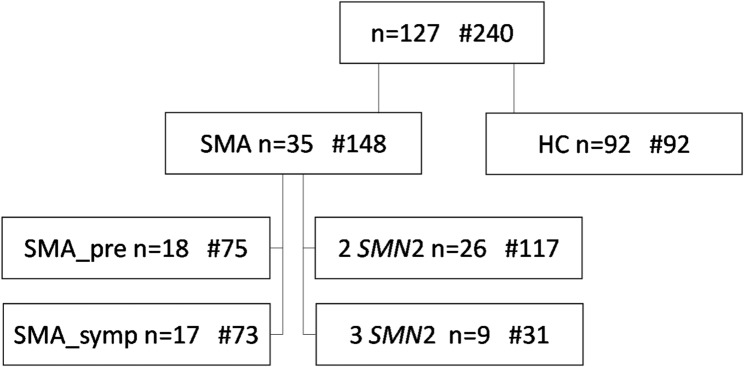 Figure 1
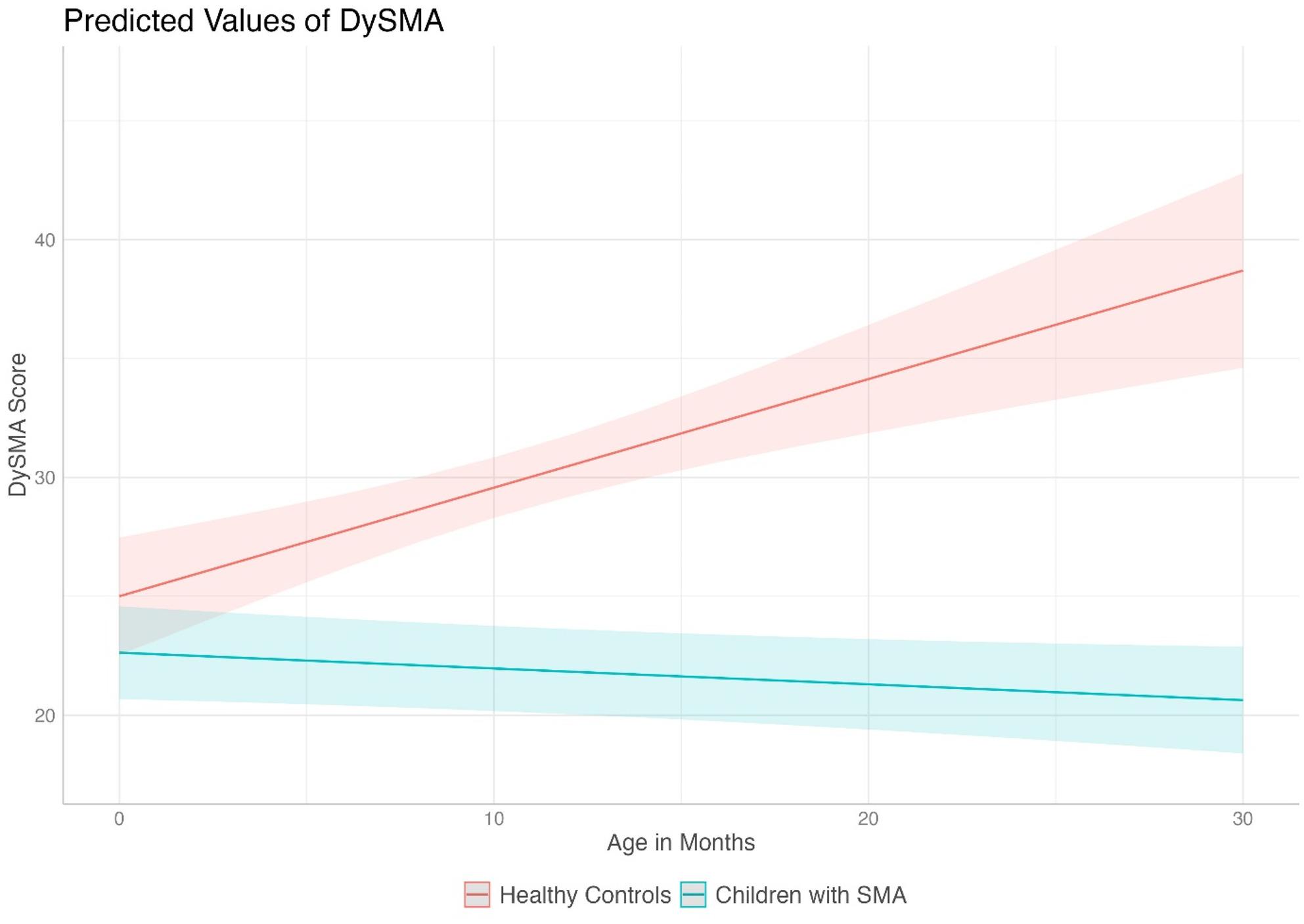 Figure 2
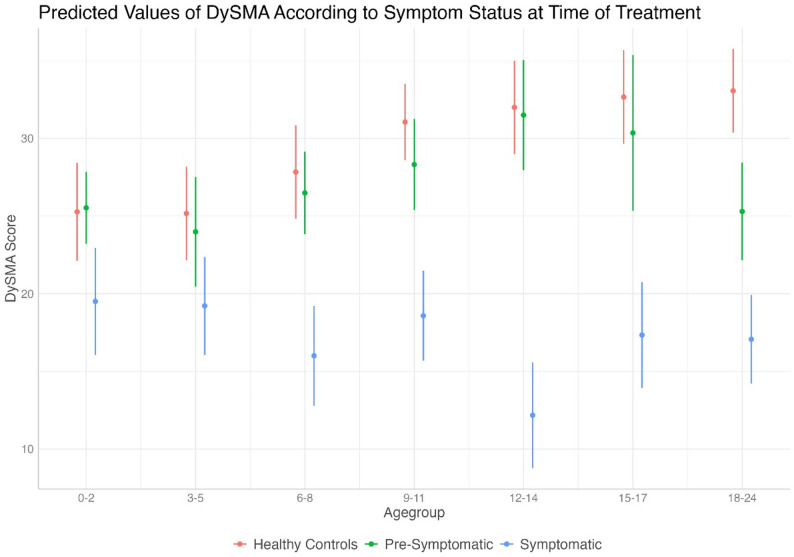 Figure 3
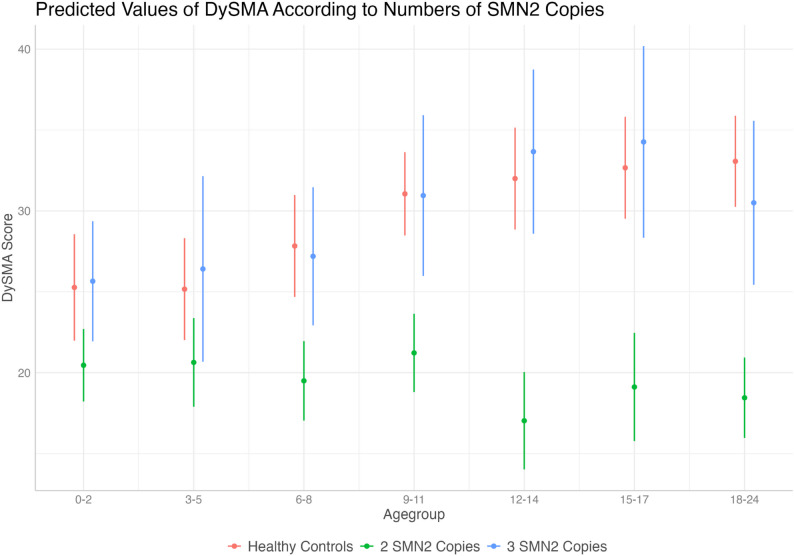 Figure 4
Peer Reviews
No public reviews on file for this paper yet. If you reviewed it on a platform where reviews are public (OpenReview, ICLR, NeurIPS, ICML), you can paste yours below so the community can read it here.
Videos
No videos yet. Explain this paper in a talk, walkthrough, or lecture? Add one.
Taxonomy
TopicsNeurogenetic and Muscular Disorders Research · Cerebral Palsy and Movement Disorders · Nerve Injury and Rehabilitation