An environmental physical activity and nutrition intervention in early childhood education and care settings: process evaluation of the NAPSACC UK multi-centre cluster RCT
Jemima Cooper, Kim Hannam, Stephanie Chambers, Tom Reid, Russell Jago, Zoi Toumpakari, Sharon Anne Simpson, Miranda Pallan, Madeleine Cochrane, Ruth Kipping, Rebecca Langford

TL;DR
This study evaluated a UK version of the NAPSACC program to improve nutrition and physical activity in nurseries, finding high engagement but challenges in sustaining changes due to staffing issues.
Contribution
The study adapts and evaluates the NAPSACC intervention for the UK context, providing insights into its implementation and sustainability in early childhood education settings.
Findings
Three-quarters of intervention nurseries implemented the NAPSACC program across one cycle, but only 40% completed a second cycle due to staffing delays.
Most nutrition and physical activity goals were achieved, with greater improvements in settings that completed two cycles of the intervention.
Nursery managers intended to maintain changes but varied in continuing self-assessment and goal-setting processes.
Abstract
Most children attend early childhood education care settings (ECEC settings), commonly known as nurseries in the United Kingdom. ECEC settings provide opportunities to improve health through improved nutritional quality and physical activity for young children. There is evidence from the US that the NAPSACC intervention improves nutrition and physical activity in ECEC settings. We adapted NAPSACC for the UK and investigated its fidelity, acceptability and sustainability within a multi-centre trial. Embedded process evaluation within a 12-month cluster randomised controlled trial with 52 ECEC settings (25 intervention and 27 control). The NAPSACC UK intervention comprised two six-month cycles of nutrition and activity self-assessment, staff workshops and goal setting, supported by public health practitioners. Data included: observations during training and workshop delivery,…
Genes, proteins, chemicals, diseases, species, mutations and cell lines named across the full text — each resolved to its canonical identifier and authoritative record.
Click any figure to enlarge with its caption.
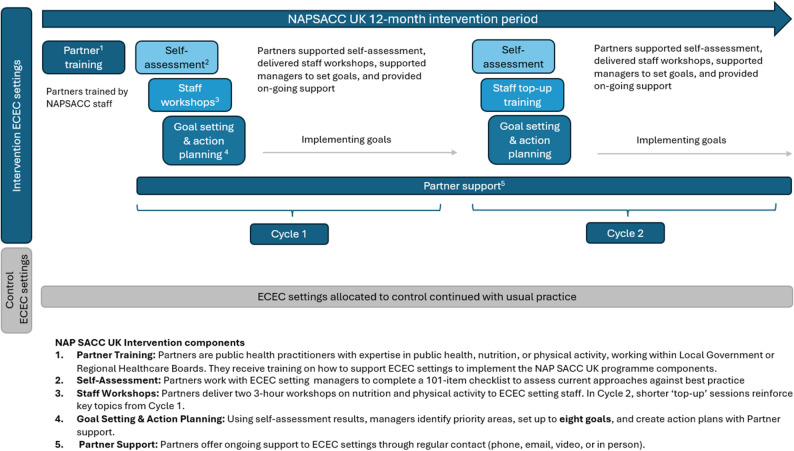 Figure 1
 Figure 2
 Figure 3
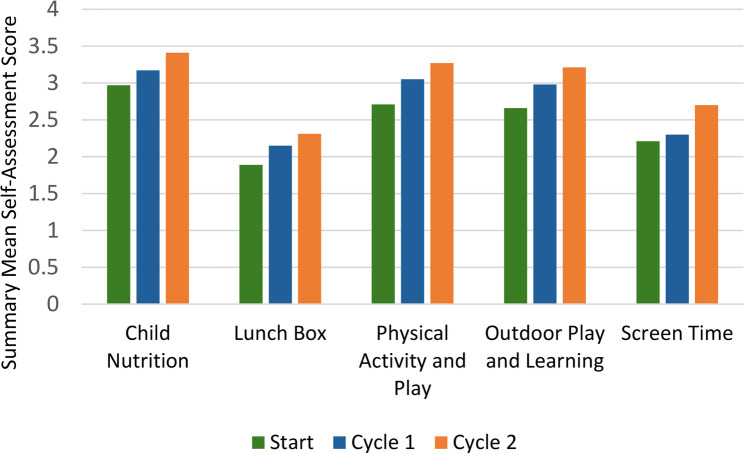 Figure 4
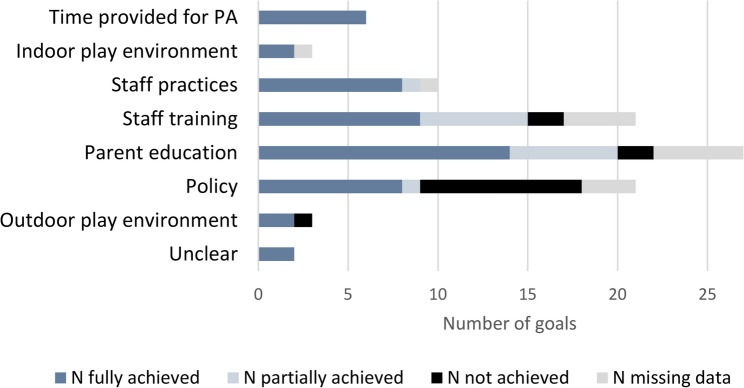 Figure 5
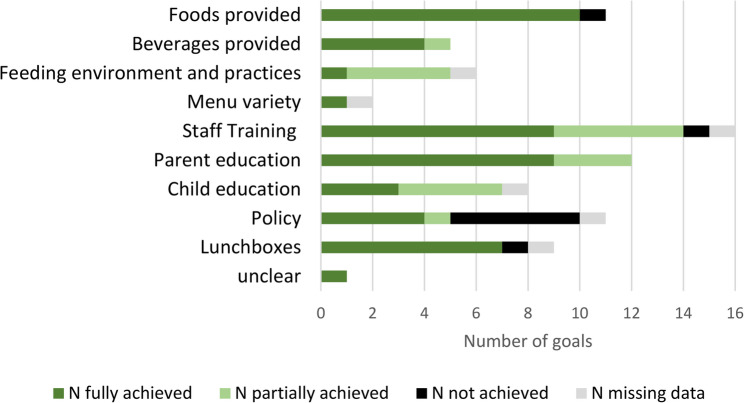 Figure 6
Peer Reviews
No public reviews on file for this paper yet. If you reviewed it on a platform where reviews are public (OpenReview, ICLR, NeurIPS, ICML), you can paste yours below so the community can read it here.
Videos
No videos yet. Explain this paper in a talk, walkthrough, or lecture? Add one.
Taxonomy
TopicsObesity, Physical Activity, Diet · Health Policy Implementation Science · School Health and Nursing Education