Balancing anatomical limits and dynamic adaptation: Understanding the determinants of successful vaginal breech delivery
Maria Serena Rothkamm, Sabine Katharina Maschke, Lena Steinkasserer, Diane Renz, Anna Lena Biermann, Lena Radomsky, Vivien Dütemeyer, Constantin von Kaisenberg, Peter Hillemanns, Lars Brodowski

TL;DR
This study explores factors influencing successful vaginal breech delivery, finding that labor dynamics are more predictive than anatomical measurements.
Contribution
The study identifies intrapartum labor dynamics as stronger predictors of vaginal breech delivery success compared to MRI pelvimetry measurements.
Findings
Women who had vaginal delivery had larger pelvimetric dimensions like obstetric conjugate and pubic angle.
Prolonged active first stage of labor was significantly associated with cesarean delivery after adjustment.
Neonatal outcomes correlated with longer labor stages but not with pelvimetric measures.
Abstract
To evaluate the association between obstetric parameters, MRI pelvimetry findings, and delivery outcomes in term singleton breech pregnancies attempting vaginal birth. This retrospective observational study included 80 women with singleton breech presentations who underwent MRI pelvimetry and attempted vaginal delivery at Hannover Medical School between August 2021 and December 2024. The primary outcome was the mode of delivery (vaginal vs. intrapartum cesarean). Secondary analyses explored associations between obstetric parameters, neonatal outcomes, and the need for obstetric maneuvers. Statistical analyses included univariable logistic regression and receiver operating characteristic (ROC) curve assessment, to provide descriptive context for the observed univariable associations. Of 80 cases, 57 (71.3%) achieved vaginal delivery and 23 (28.7%) required intrapartum cesarean section.…
Genes, proteins, chemicals, diseases, species, mutations and cell lines named across the full text — each resolved to its canonical identifier and authoritative record.
Click any figure to enlarge with its caption.
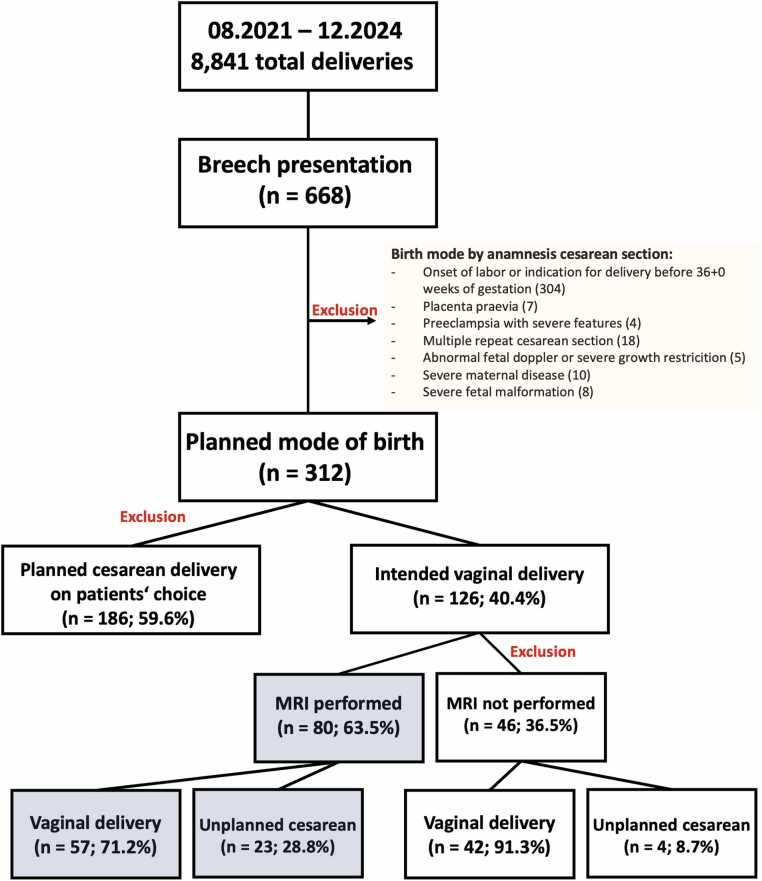 Figure 1
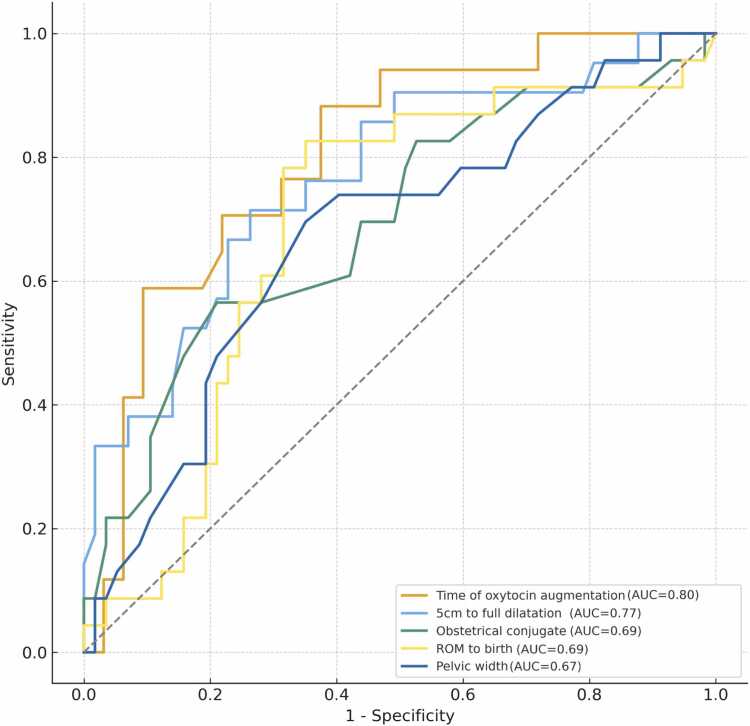 Figure 2
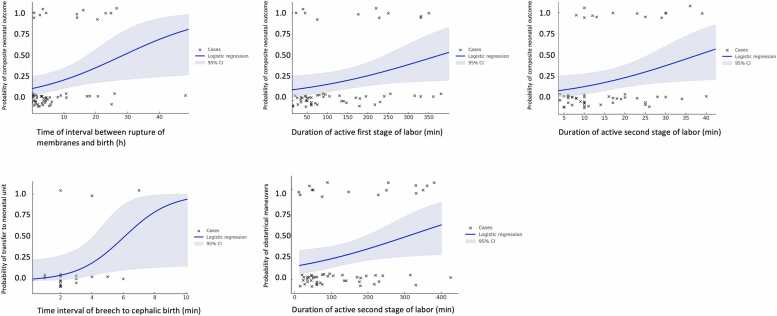 Figure 3
Peer Reviews
No public reviews on file for this paper yet. If you reviewed it on a platform where reviews are public (OpenReview, ICLR, NeurIPS, ICML), you can paste yours below so the community can read it here.
Videos
No videos yet. Explain this paper in a talk, walkthrough, or lecture? Add one.
Taxonomy
TopicsMaternal and Perinatal Health Interventions · Pelvic floor disorders treatments · Preterm Birth and Chorioamnionitis