Moving towards optimized treatment for children and adolescents with juvenile idiopathic arthritis in sustained remission randomized to continue stable treatment, methotrexate withdrawal or tumor necrosis factor inhibitor withdrawal: study protocol for the Norwegian multi-center MOVE-JIA trial
Siri Opsahl Hetlevik, Vibke Lilleby, Maiju Pesonen, Ellen Nordal, Marite Rygg, Cathrine Austad, Maria Karolina Jonsson, Maria Bilstad, Hege Kilander Høiberg, Nina Krafft Sande, Berit Flatø, Siri Lillegraven, Espen A. Haavardsholm, Athimalaipet V. Ramanan, Øyvind Molberg

TL;DR
This study aims to find the best way to safely reduce or stop medications in children with juvenile arthritis who are in long-term remission.
Contribution
The study introduces a novel randomized trial comparing methotrexate and TNFi withdrawal strategies in JIA patients in sustained remission.
Findings
The trial will assess the rate of disease flare after medication withdrawal compared to stable treatment.
It will provide evidence for safe tapering and withdrawal strategies in JIA patients.
Results will inform new treatment recommendations for JIA care.
Abstract
Juvenile idiopathic arthritis (JIA) used to be a joint-destroying disease, but thanks to modern treatment strategies and medications, many patients with JIA today reach inactive disease. However, once disease remission is achieved, there is a lack of knowledge and recommendations regarding maintenance therapy. Drug-free remission is the ultimate goal in JIA, but withdrawal of medications increases the risk of disease flare. Clinical approaches vary widely, underscoring a need for knowledge about maintenance treatment strategies that allow for safe tapering and withdrawal of medications in JIA patients in sustained remission. The MOVE-JIA study is a randomized, controlled trial with the primary objective to compare the effect of two different treatment withdrawal strategies, to a stable dose of methotrexate (MTX) and tumor necrosis factor inhibitors (TNFi), based on the risk of flares in…
Genes, proteins, chemicals, diseases, species, mutations and cell lines named across the full text — each resolved to its canonical identifier and authoritative record.
Click any figure to enlarge with its caption.
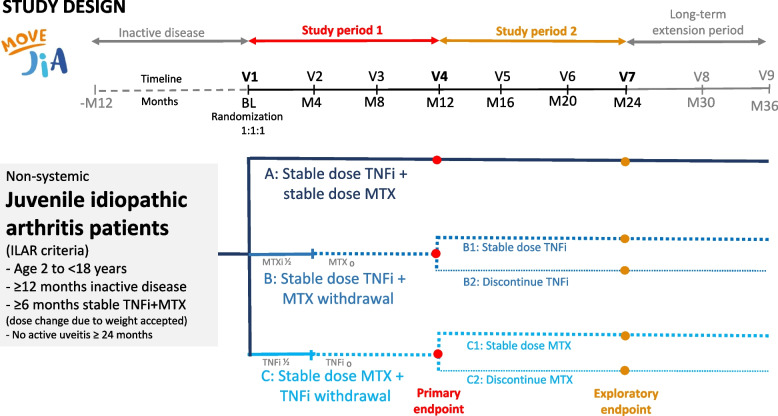 Figure 1
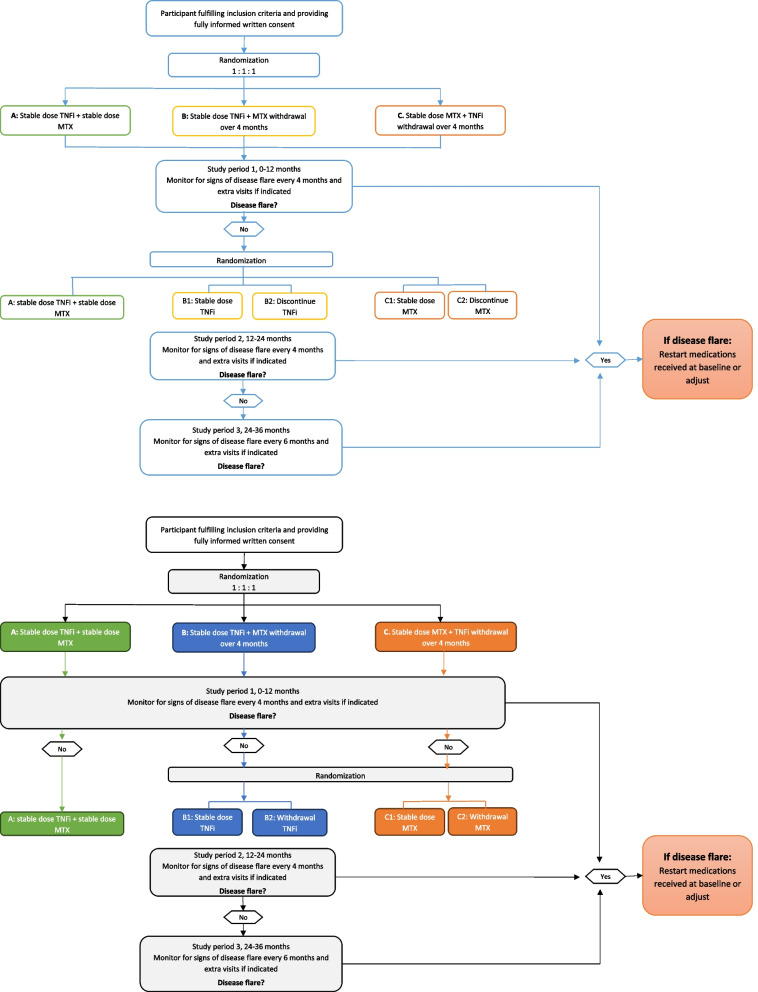 Figure 2
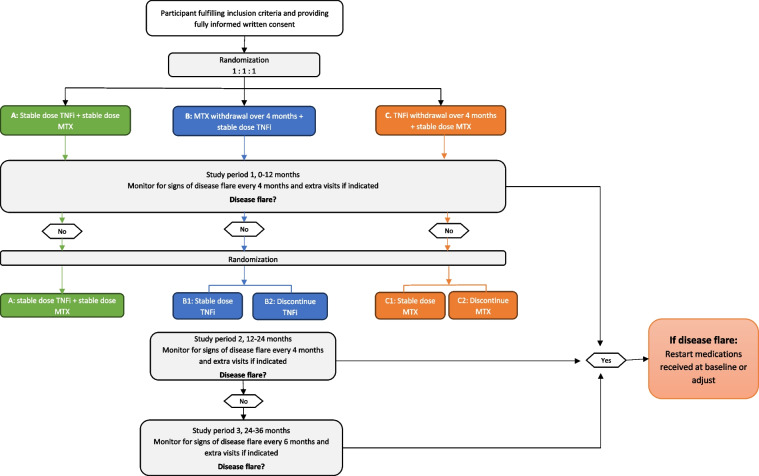 Figure 2
Peer Reviews
No public reviews on file for this paper yet. If you reviewed it on a platform where reviews are public (OpenReview, ICLR, NeurIPS, ICML), you can paste yours below so the community can read it here.
Videos
No videos yet. Explain this paper in a talk, walkthrough, or lecture? Add one.
Taxonomy
TopicsAutoimmune and Inflammatory Disorders Research · Ocular Diseases and Behçet’s Syndrome · Adolescent and Pediatric Healthcare