Learning Covariate Relations in Disease Progression Models Using Symbolic Neural Networks
Jesper Sundell, Ylva Wahlquist, Maria C. Kjellsson, Mats O. Karlsson, Kristian Soltesz

TL;DR
This paper introduces a new method using symbolic neural networks to improve disease progression models by automatically identifying covariate relations without predefined functions.
Contribution
The novel method uses symbolic neural networks to automate covariate model identification in disease progression models, avoiding predefined parametric functions.
Findings
The method produces human-readable covariate functions by pruning dense symbolic networks.
The resulting model achieves similar predictive performance as state-of-the-art models but uses fewer covariates.
Abstract
Covariate modeling provides individual predictions of outcomes by disease progression models. Current methodology for mapping covariates onto model parameters is limited by predefined parametric functions which can result in inadequate covariate selection and biased predictions by the final model. Furthermore, present methodology scales poorly to high‐dimensional data due to combinatorial limitations. In the present study, a novel method for automation of covariate model identification in disease progression models is described. Symbolic neural networks are used to simultaneously identify the parametric covariate functions and optimize model parameters of a Markov chain. By stepwise pruning of initially fully connected dense symbolic networks, humanly readable functions representing the covariate relations are produced. The presented methodology is applied to a dataset containing…
Genes, proteins, chemicals, diseases, species, mutations and cell lines named across the full text — each resolved to its canonical identifier and authoritative record.
Click any figure to enlarge with its caption.
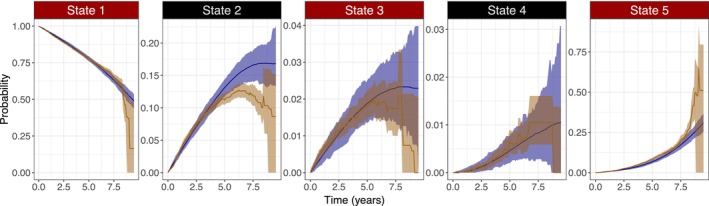 Figure 1
 Figure 2
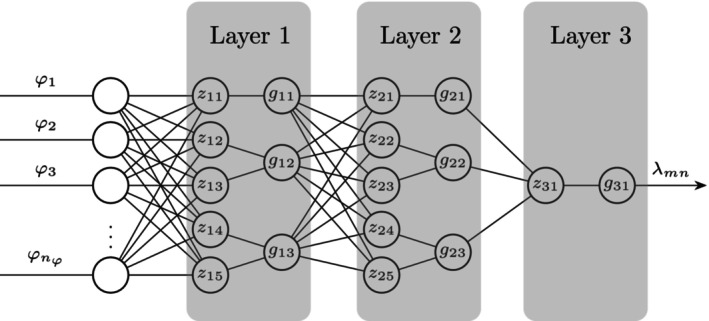 Figure 3
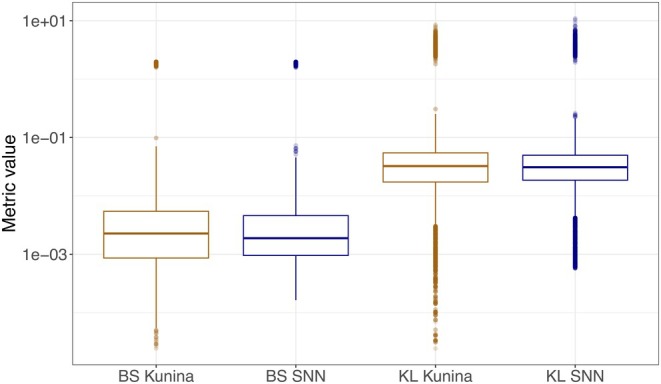 Figure 4
Peer Reviews
No public reviews on file for this paper yet. If you reviewed it on a platform where reviews are public (OpenReview, ICLR, NeurIPS, ICML), you can paste yours below so the community can read it here.
Videos
No videos yet. Explain this paper in a talk, walkthrough, or lecture? Add one.
Taxonomy
TopicsMachine Learning in Healthcare · Artificial Intelligence in Healthcare · Bayesian Methods and Mixture Models