Lifestyle physical activity coaching in outpatients with major depressive disorder (PACOUTPAT): study protocol for a randomized controlled trial on physical activity, depression, and quality of life
Céline Stark, Johannes Beck, Anja Oswald, Anja Rogausch, Ann-Katrin Schreiner, Robyn Cody, Vivien Hohberg, Florian Knappe, Jan-Niklas Kreppke, Sebastian Ludyga, Markus Gerber

TL;DR
This study tests a new physical activity coaching program to improve depression and quality of life in outpatients with major depressive disorder.
Contribution
A novel PA coaching approach combining affective and cognitive components is introduced and tested in a randomized controlled trial.
Findings
The study investigates the effects of a 10-week PA coaching program supported by wearable technology.
A follow-up phase of 26 weeks is added to examine long-term behavior change and mental health outcomes.
Primary outcomes include changes in physical activity measured via accelerometers over time.
Abstract
Major depressive disorder (MDD) is highly prevalent and associated with substantial disease burden and significantly reduced life expectancy. Physical activity (PA) has been shown to reduce depressive symptoms to a similar extent as antidepressant medication. Despite this evidence, individuals with MDD engage in lower levels of PA and exhibit higher levels of sedentary behavior. Structural, physical, and psychological barriers hinder PA engagement. PA coaching offers a promising strategy to overcome these barriers and promote sustainable behavior change. Previous research highlights the importance of addressing affective responses to PA in interventions. Moreover, the support of technology-based tools, such as wearables, seems promising. This study aims to investigate the short- and long-term effects of a new PA coaching approach on PA behavior, depression severity, and quality of life…
Genes, proteins, chemicals, diseases, species, mutations and cell lines named across the full text — each resolved to its canonical identifier and authoritative record.
Click any figure to enlarge with its caption.
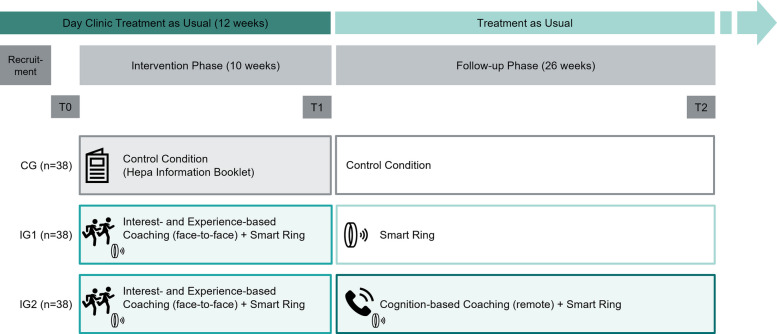 Figure 1
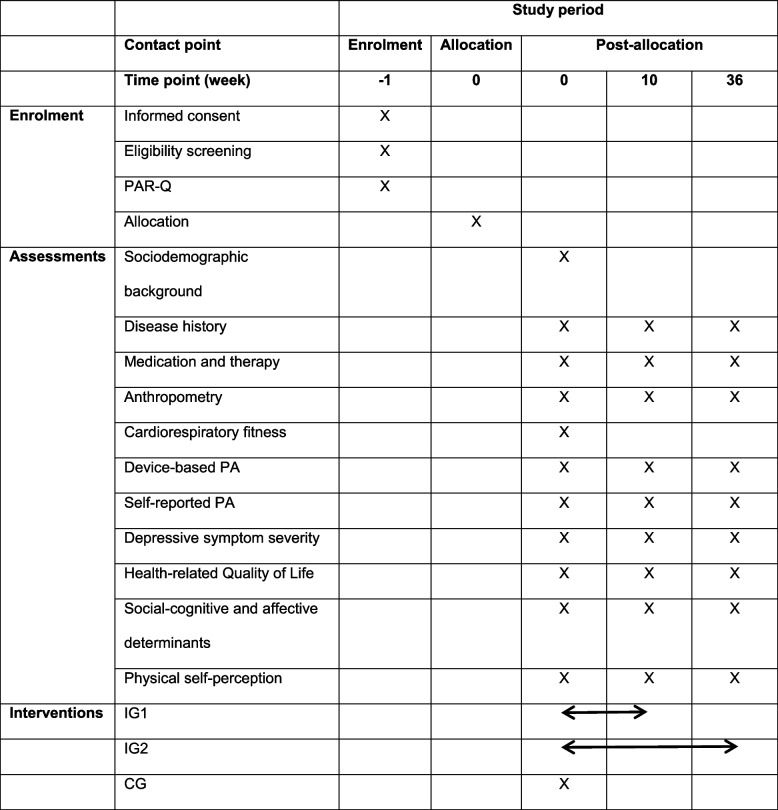 Figure 2
Peer Reviews
No public reviews on file for this paper yet. If you reviewed it on a platform where reviews are public (OpenReview, ICLR, NeurIPS, ICML), you can paste yours below so the community can read it here.
Videos
No videos yet. Explain this paper in a talk, walkthrough, or lecture? Add one.
Taxonomy
TopicsPhysical Activity and Health · Digital Mental Health Interventions · Innovative Human-Technology Interaction