Two-stitch versus one-stitch cervical cerclage in women with high risk for preterm birth: a stratified exploratory randomized controlled trial in China
Zhi-Min Xu, Yi-Jing Zheng, Wen-Xin Yan, Cai-Hong Jiang, Hai-Bo Li, Jun Zhang, Mian Pan

TL;DR
This study compared two surgical techniques for preventing early birth in high-risk pregnancies in China, finding no major difference in most cases but a hint that one method might help prevent very early births.
Contribution
The study is the first stratified RCT comparing two-stitch and one-stitch cerclage techniques in both therapeutic and emergency settings for preterm birth prevention.
Findings
In therapeutic cerclage, two-stitch did not reduce preterm birth before 34 weeks compared to one-stitch.
Emergency cerclage with two-stitch was linked to fewer births before 28 weeks, though not for the primary outcome.
Neonatal survival rates were similar between groups in both cohorts.
Abstract
Cervical insufficiency or sonographic short cervix is a major cause of preterm birth (PTB). The efficacy of two-stitch versus one-stitch cerclage remains controversial, with limited evidence from randomized controlled trial (RCT), especially stratified by indication. We conducted a single-centre, stratified, exploratory RCT at Fujian Maternal and Child Health Hospital, Fuzhou, China. Women with singleton pregnancies were enrolled into two parallel cohorts: a therapeutic cohort (ultrasound-indicated; cervical length ≤ 25 mm at 16–28 weeks) and an emergency cohort (physical examination-indicated; painless cervical dilatation with or without membrane exposure at 16–28 weeks). Within each cohort, participants were randomly assigned (1:1) to receive McDonald cerclage with either two-stitch or one-stitch. The primary outcome was spontaneous PTB < 34 weeks. RR with 95% CI was calculated as…
Genes, proteins, chemicals, diseases, species, mutations and cell lines named across the full text — each resolved to its canonical identifier and authoritative record.
Click any figure to enlarge with its caption.
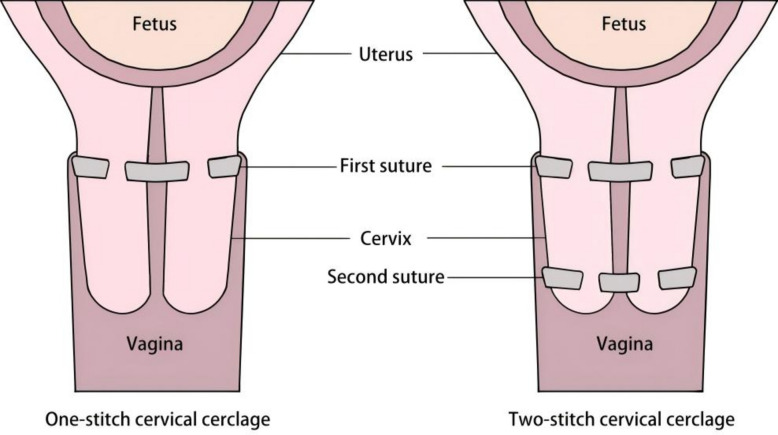 Figure 1
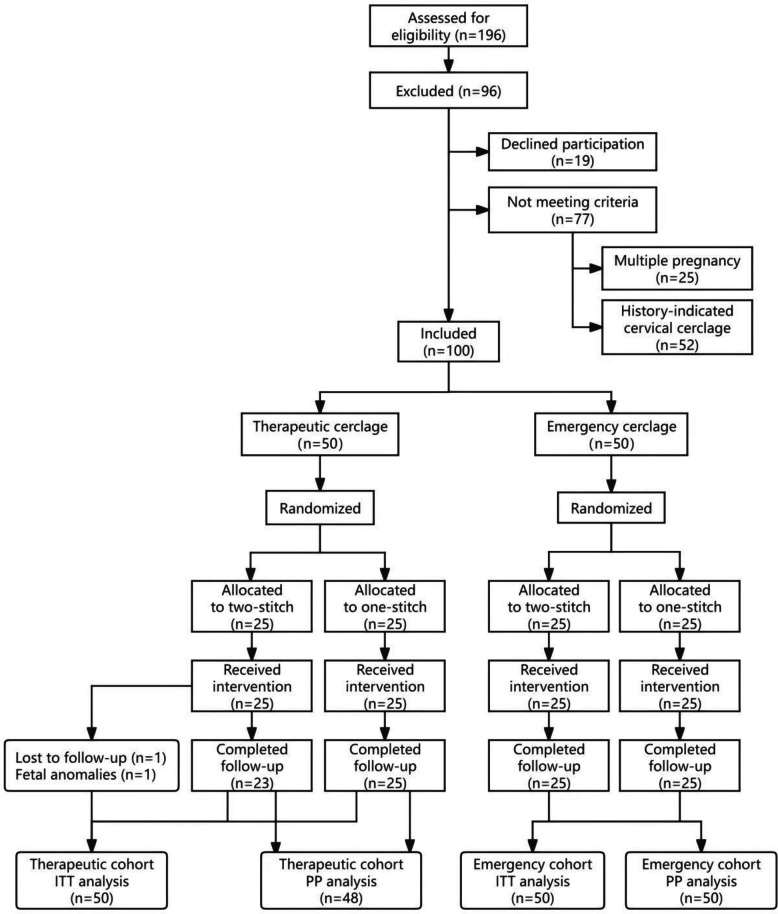 Figure 2
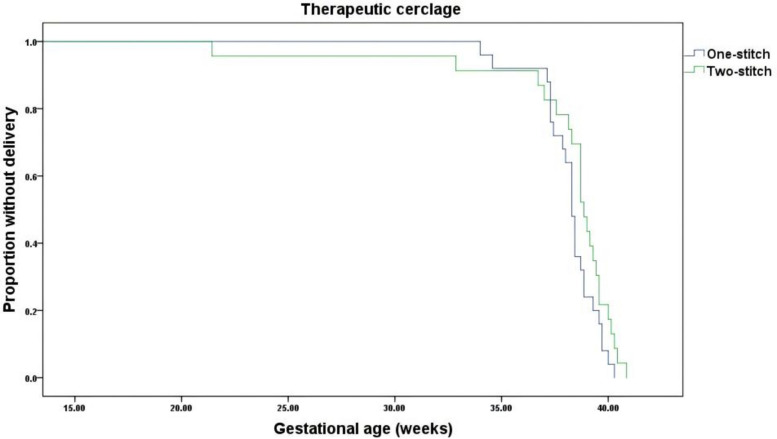 Figure 3
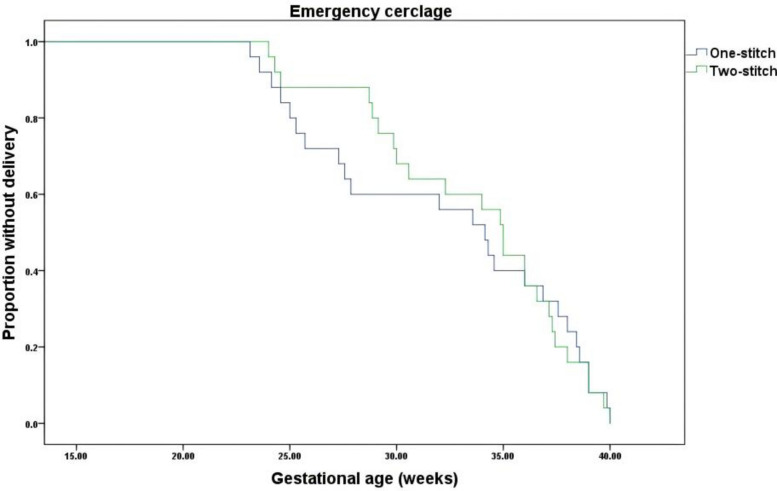 Figure 4
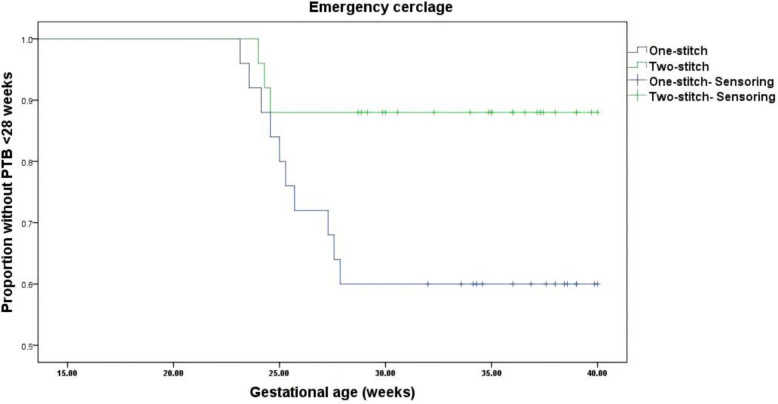 Figure 5
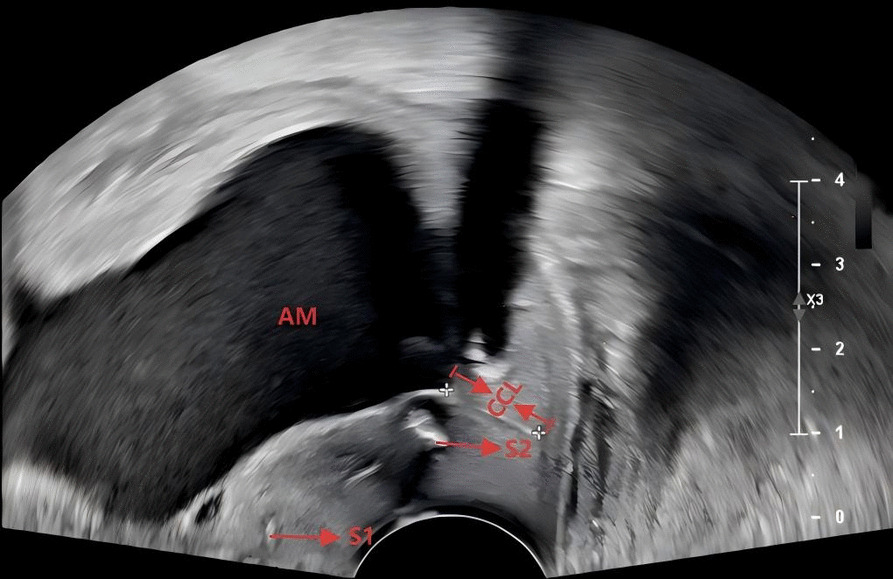 Figure 6
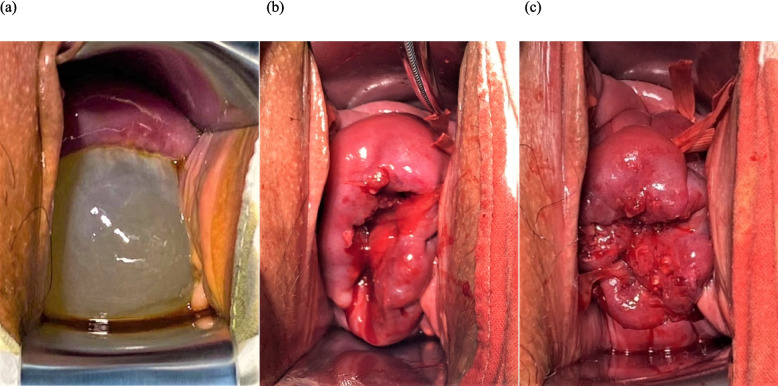 Figure 7
Peer Reviews
No public reviews on file for this paper yet. If you reviewed it on a platform where reviews are public (OpenReview, ICLR, NeurIPS, ICML), you can paste yours below so the community can read it here.
Videos
No videos yet. Explain this paper in a talk, walkthrough, or lecture? Add one.
Taxonomy
TopicsPreterm Birth and Chorioamnionitis · Maternal and Perinatal Health Interventions · Reproductive tract infections research