Integration of deep intronic and RNA sequencing enhances molecular diagnosis in genetically unsolved Pompe cases
Huseyin Onay, Deniz Kor, Fatma Derya Bulut, Ezgi Irmak Burgac, Bahadir Onay, Irem Kaplan, Halise Neslihan Onenli Mungan

TL;DR
This paper describes how combining deep intronic and RNA sequencing helped diagnose a Pompe disease case that was previously genetically unsolved.
Contribution
The study introduces a new diagnostic workflow using deep intronic and RNA sequencing for genetically unresolved Pompe disease cases.
Findings
A novel homozygous variant c.1327–419 A > G in the GAA gene was identified in a Pompe patient.
RNA sequencing confirmed that the variant creates a new donor splice site, leading to exon extension.
The proposed workflow successfully diagnosed a case previously undetected by standard genetic tests.
Abstract
We describe a diagnostic workflow integrating deep intronic and RNA sequencing to resolve genetically unsolved Pompe cases. A five-year-old girl with hypertrophic cardiomyopathy, muscle weakness, recurrent respiratory tract infections, elevated CK levels, and low alpha-glucosidase enzyme activity was referred to the metabolism department. Genetic tests for Pompe disease, conducted by two different genetic laboratories, failed to detect any mutation. Two years later, the patient was referred for further genetic testing. As the third-step genetic test in our diagnostic algorithm, following exonic sequencing and MLPA, the GAA whole gene sequencing test was performed and revealed the homozygous NM_000152.5: c.1327–419 A > G variant. RNA sequencing confirmed exon extension, showing that this novel variant created a new donor splice site. Ultimately, the patient was genetically diagnosed and…
Genes, proteins, chemicals, diseases, species, mutations and cell lines named across the full text — each resolved to its canonical identifier and authoritative record.
Click any figure to enlarge with its caption.
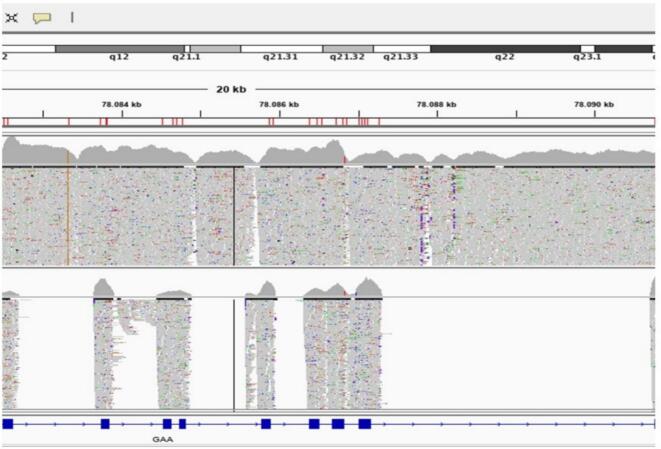 Figure 1
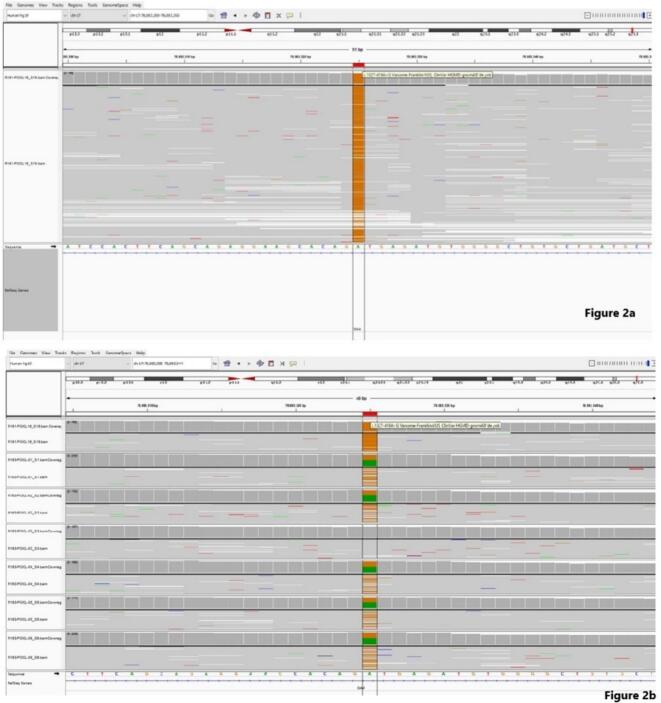 Figure 2
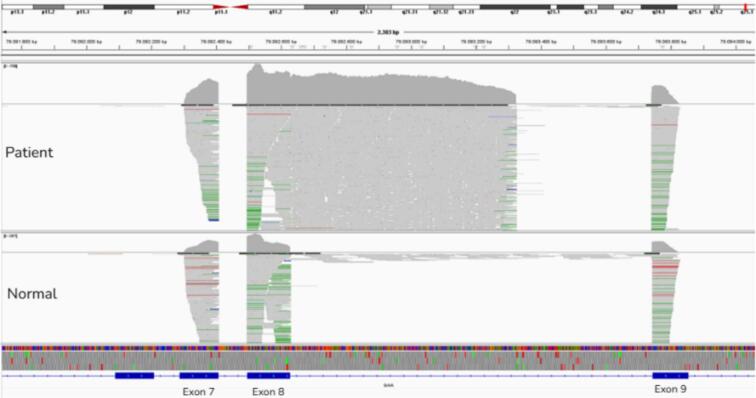 Figure 3
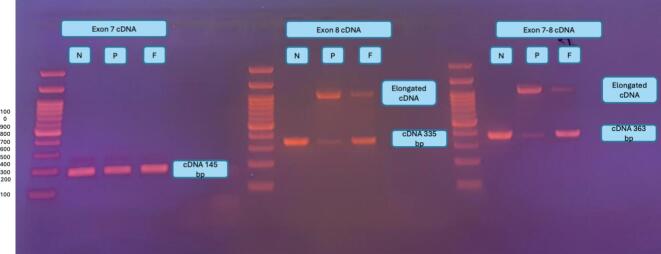 Figure 4
Peer Reviews
No public reviews on file for this paper yet. If you reviewed it on a platform where reviews are public (OpenReview, ICLR, NeurIPS, ICML), you can paste yours below so the community can read it here.
Videos
No videos yet. Explain this paper in a talk, walkthrough, or lecture? Add one.
Taxonomy
TopicsLysosomal Storage Disorders Research · Glycogen Storage Diseases and Myoclonus · Trypanosoma species research and implications